Shepherdson, C. (2003) “Lacan and Philosophy.” In: J. Rabaté (ed.) The Cambridge Companion to Lacan. New York, London: Cambridge University Press, pp. 116-152.
Phallic Jouissance
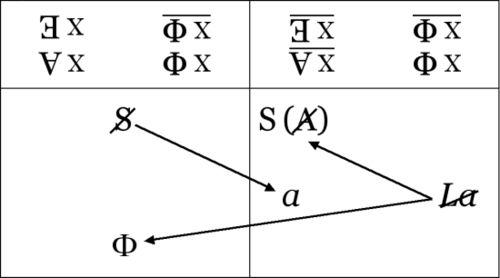
First path: the sexuation graph. Having taken this step towards the “Other jouissance,” in which the general law of symbolic castration is no longer the whole story, Lacan now develops Freud’s claim by means of symbolic logic, in the “sexuation graph” which maps out two modes of relation to the Other, correlated with sexual difference.
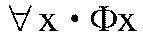
On the “male” side, the “normal” or “phallic” position is defined through the proposition that all subjects, being unmoored from nature, are destined to find their way through the symbolic order. Lacan expresses this claim in symbolic notation, with the formula
“All subjects are submitted to the phallic signifier”.
 Now this position (the universal law of symbolic existence) is paradoxically held in place by an exception to the law, which Lacan elaborates in keeping with Freud’s analysis of the primal horde in Totem and Taboo, where Freud explains that the sons all agree to abide by the law (to accept symbolic castration), precisely in contrast to the “primal father,” who stands as the exception to the rule, in relation to which the law is to be secured. Thus, the “male” side of the sexuation graph includes another formula
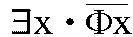 “There is one subject who is not submitted to the phallic signifier”
and this second formula, which forms part of the law of castration on the male side, is cast as an excluded position, an exception to the law, as Freud also claims when he explains that the primal father must always be killed, since his expulsion from the community by murder insures that the symbolic community will be established.
The two formulae thus appear to present a simple contradiction, logically speaking, but in a clinical sense they are intended to define the antinomy that structures masculine or phallic sexuality, in the sense that the exception to the law, where the possibility of an unlimited jouissance is maintained, is precisely the jouissance that must be sacrificed, expelled, or given up for the field of desire and symbolic exchange to emerge.
Such is the logic of symbolic castration. It would obviously be possible to play out this “logic of masculinity” in some detail, with reference to Arnold Schwarzenegger and others, whose films represent the masculine fantasy in which the law of the civilized community can only be upheld, paradoxically, by an exceptional figure who is able to command an absolute power of violence, which is itself used to expel the monstrous, mechanical, or demonic figure (the uncontrollable machine or corrupt corporate demagogue) whose absolute jouissance threatens the space of democracy and capitalistic exchange.
In masculinity, democracy and totalitarianism are not simply contradictory, as though they could not exist together, but are on the contrary twins, logically defining and supporting one another.
Such elaborations – always too quick in any case – are not our purpose here, but we can at least note Lacan’s attempt to provide a rigorous theoretical account, through symbolic logic, of the “contradictions” of masculinity. 138
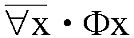 “Not all of a woman is subject to symbolic castration.”
While the “masculine” side of the graph provides a relation to symbolic castration which is total (“All men are subject,” etc.), the “feminine” side, by contrast, provides a second pair of formulae in which the subject is not altogether subjected to the law.
The second of these formulae, can be read as “Not all of a woman is subject to symbolic castration.” The universal, which functions on the masculine side (“All men”), is thus negated on the side of femininity (“Not all”).
Something of woman may thus escape symbolic castration, or does not entirely submit to the symbolic law (“they show less sense of justice than men” and “their super-ego is never so inexorable”).
“Feminine jouissance” is thereby distinguished from “phallic jouissance” by falling partly outside the law of the signifier. Subjected to the symbolic order like all speaking beings, the “feminine” position is nevertheless “not-all” governed by its law.
And as was the case on the masculine side, so here we find a second formula, but in this case it is not an exception to the law (as with the primal father). Instead, we find a formula that indicates an inevitable inscription within the law
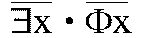
“There is no subject that is not subjected to the symbolic law”
[…] it is worth noting that in this second formula, which articulates the feminine version of subjection to the law, we do not find a universal proposition, a statement that could be distributed across all subjects (“All men,” etc.).
Instead, we find a formulation that relies on the particular (“There is no woman who is not” etc.). The universal quantifier “all” (∀) is thus replaced with a quasi-existential “there is” (∃) …
Lacan remarks on the “strangeness” of this feminine mode of being: it is ´etrange, Lacan says, playing on the word for “angel” (ˆetre ange means “to be an angel”), this mode of being which falls outside the grasp of the proposition (“it is . . .”). We cannot say that “it is” or “it exists,” just like that, because it does not all belong to the domain of symbolic predication, and yet, this same impasse in symbolization means that we cannot say “it is not” or it “does not exist” (or indeed that “there is only one libido”).
Beyond the “yes” and “no” of the signifier, beyond symbolic predication and knowledge (is/is not), this mode of being, presented through the Other jouissance, would thus be like God, or perhaps (peut-ˆetre – a possible-being) more like an angel. Thus, as Lacan suggests, and as Irigaray also notes, though in a very different way, the question of feminine sexuality may well entail a theology and an ontological challenge in which the law of the father is not the whole truth.
“It is insofar as her jouissance is radically Other that woman has more of a relationship to God” (S XX, p. 83).