Verhaeghe, Paul. (1998). Causation and Destitution of a Pre-ontological Non-entity: On the Lacanian Subject. Key Concepts of Lacanian Psychoanalysis. Ed. Dany Nobus. 1999. 164-189.
Until the early 1960 ‘s, Lacan focused upon this opposition between the imaginary and the symbolic.
Yet there is a shift in attention: instead of the opposition and division between ego and subject, the division and splitting within the subject itself comes to the fore. Instead of the term ‘subject,’ the expression ‘divided subject’ appears — that is, divided by language.
With the conceptualisation of the category of the real, another major shift occurs. From the 1964 Seminar Xl onwards, the real becomes a genuine Lacanian concept, within a strictly Lacanian theory, and changes the theory of the subject in a very fundamental way.
In the first part, we will study the causal background of the subject: how does it come into being? It will be demonstrated that the causation of the subject has everything to do with the drive, and that it has strong links with the status of the unconscious.
In the second part, we will discuss the ontological status of the subject, which is radically different from the traditional conceptions. Lacan ‘s ontology is an ‘alterology,’ alienation being the grounding mechanism and identity always coming from the Other
Moreover, the subject has a mere pre-ontological status, which is again closely linked to the status of the unconscious. The ever divided subject is a fading, a vacillation, without any substantiality.
In the third and final part, we will discuss the link between Lacan’s theory of the subject and his theory of the aims and goals of psychoanalysis. Here, the central mechanism is separation, as first formalized by Lacan in Seminar Xl and further developed during the 1960’s. 165
Freud assumed that there is an original state of primary satisfaction, which he considered to be a state of homeostasis .
The inevitable loss of this state sets the development in motion and provides us with the
basic characteristic of every drive: the tendency to return to an original state.
Thus, the entire development is motivated by a central loss,around which the ego is constituted. The lack is irrevocable. Freud’s key denomination for this lack is castration.
Freud’s key denomination for this lack is castration, which is his attempt at formulating the link between the original, pregenital loss and the oedipal elaboration thereof. For several reasons, the Freudian castration theory itself will never be fully satisfying. Freud’s focus on the real, that is to say the biological basis of castration, did not help him any further either, and inevitably brought him to the pessimistic conclusion of 1 937, concerning the ‘biological bedrock’ as the limit of psychoanalysis .
Freud’s theory is quite unidimensional and Freud himself remained remarkably obstinate in this respect. He refused to take other losses than the loss of a penis into account – with one exception, as becomes clear from his affirmation of Aristophanes’ fable about the search for the originally lost counterpart. This one-sidedness was directed by his conviction regarding the universality of the pleasure principle, i .e. of the desire to restore the original homeostasis. Things became more complicated once he discovered that there is a ‘beyond’ to the pleasure principle, in which yet another kind of drive is at work, also striving to restore an original condition, ·albeit a totally different one.
Things became more complicated once he discovered that there is a ‘beyond’ to the pleasure principle, in which yet another kind of drive is at work, also striving to restore an original condition, ·albeit a totally different one.
The duality of life versus death drives opened up a dimension beyond the one-sidedness of neurosis, castration and desire.
It is this dimension that is taken into account by Lacan. Indeed, Lacan’s starting-point is also the very idea of lack and loss, but he will recognize a double loss and a double lack.
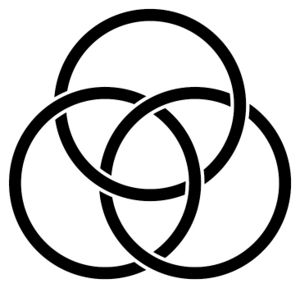
Moreover, the interaction between those two losses will determine the constitution of the subject. 165
(to be continued Sept 17 2014)