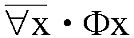
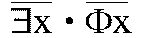
Alenka Zupančič Sexual Difference and Ontology This paper was originally presented at the 2011 Summer School EGS
And here is a general discussion of ontology and realism: “One Divides Into Two: Negativity, Dialectics, and Clinamen,” held at the Institute for Cultural Inquiry Berlin in March 2011.
July 4, 2012 both Zupančič and Copjec particpated in a forum in Spain. Audio is here.
Traditional ontologies and traditional cosmologies were strongly reliant on sexual difference, taking it as their very founding, or structuring, principle. Ying-yang, water-fire, earth-sun, matter-form, active-passive—this kind of (often explicitly sexualized) opposition was used as the organizing principle of these ontologies and/or cosmologies, as well as of the sciences—astronomy, for example—based on them.
And this is how Lacan could say,“primitive science is a sort of sexual technique.”
At some point in history, one generally associated with the Galilean revolution in science and its aftermath, both science and philosophy broke with this tradition. And if there is a simple and most general way of saying what characterizes modern science and modern philosophy, it could be phrased precisely in terms of the “desexualisation” of reality, of abandoning sexual difference, in more or less explicit form, as the organizing principle of reality, providing the latter’s coherence and intelligibility.
The reasons why feminism and gender studies find these ontologizations of sexual difference highly problematic are obvious. Fortified on the ontological level, sexual difference is strongly anchored in essentialism—it becomes a combinatory game of the essences of masculinity and femininity. Such that, to put it in the contemporary gender-studies parlance, the social production of norms and their subsequent descriptions finds a ready-made ontological division, ready to essentialize “masculinity” and “femininity” immediately. Traditional ontology was thus always also a machine for producing “masculine” and “feminine” essences, or, more precisely, for grounding these essences in being.
When modern science broke with this ontology it also mostly broke with ontology tout court. (Modern) science is not ontology; it neither pretends to make ontological claims nor, from a critical perspective on science, recognizes that it is nevertheless making them. Science does what it does and leaves to others to worry about the (ontological) presuppositions and the (ethical, political, etc.) consequences of what it is doing; it also leaves to others to put what it is doing to use.
Rather, the sexual in psychoanalysis is something very different from the sense-making combinatory game—it is precisely something that disrupts the latter and makes it impossible. What one needs to see and grasp, to begin with, is where the real divide runs here.
Psychoanalysis is both coextensive with this desexualisation, in the sense of breaking with ontology and science as sexual technique or sexual combinatory, and absolutely uncompromising when it comes to the sexual as the irreducible real (not substance). There is no contradiction here.
The lesson and the imperative of psychoanalysis is not, “Let us devote all of our attention to the sexual (meaning) as our ultimate horizon”; it is instead a reduction of the sex and the sexual … to the point of ontological inconsistency, which, as such, is irreducible.
Here is her start on Judith Butler:
One of the conceptual deadlocks in simply emphasizing that gender is an entirely social, or cultural, construction is that it remains within the dichotomy nature/culture.
Judith Butler saw this very well, which is why her project radicalizes this theory by linking it to the theory of performativity. As opposed to expressivity, indicating a preexistence and independence of that which is being expressed, performativity refers to actions that create, so to speak, the essences that they express. Nothing here preexists: Sociosymbolic practices of different discourses and their antagonisms create the very “essences,” or phenomena, that they regulate.
The time and the dynamics of repetition that this creation requires open up the only margin of freedom (to possibly change or influence this process in which sociosymbolic constructions, by way of repetition and reiteration, are becoming nature — “only natural,” it is said.
What is referred to as natural is the sedimentation of the discursive, and in this view the dialectics of nature and culture becomes the internal dialectics of culture. Culture both produces and regulates (what is referred to as) nature. We are no longer dealing with two terms: sociosymbolic activity, and something on which it is performed; but instead, we are dealing with something like an internal dialectics of the One (the discursive) that not only models things but also creates the things it models, which opens up a certain depth of field. Performativity is thus a kind of onto-logy of the discursive, responsible for both the logos and the being of things.
To a large extent, Lacanian psychoanalysis seems compatible with this account, and it is often presented as such. The primacy of the signifier and of the field of the Other, language as constitutive of reality and of the unconscious (including the dialectics of desire), the creationist aspect of the symbolic and its dialectics (with notions such as symbolic causality, symbolic efficiency, materiality of the signifier) …
All of these (undisputed) claims notwithstanding, Lacan’s position is irreducibly different from the above performative ontology. In what way exactly? And what is the status of the real that Lacan insists upon when speaking of sexuality?
Lacan also starts with a One (not with two, which he would try to compose and articulate together in his theory).
He starts with the One of the signifier. But his point is that, while this One creates its own space and beings that populate it (which roughly corresponds to the space of performativity described above), something else gets added to it. It could be said that this something is parasitic of performative productivity; it is not produced by the signifying gesture but together with and “on top of” it.
It is inseparable from this gesture, but, unlike how we speak of discursive creations/beings, it is not created by it. It is neither a symbolic entity nor one constituted by the symbolic; rather, it is collateral to the symbolic. Moreover, it is not a being: It is discernable only as a (disruptive) effect within the symbolic field, yet it is not an effect of this field, (it is NOT) an effect of the signifier; the emergence of the signifier is not reducible to, or exhausted by the symbolic.
The signifier does not only produce a new, symbolic reality (including its own materiality, causality, and laws); it also “produces,” or opens up, the dimension that Lacan calls the Real. This is what irredeemably stains the symbolic, spoils its supposed purity, and accounts for the fact that the symbolic game of pure differentiality is always a game with loaded dice. This is the very space, or dimension, that sustains the previously mentioned “vital” phenomena (the libido or jouissance, the drive, sexualized body) in their out-of-jointness with the symbolic.
Sexuality (as the Real) is not some being that exists beyond the symbolic; it “exists” solely as the curving of the symbolic space that takes place because of the additional something produced with the signifying gesture.
This, and nothing else, is how sexuality is the Real.
Starting from sexuality’s inherent contradictions — from its paradoxical ontological status, which precisely prevents us from taking it as any kind of simple fact — psychoanalysis came to articulate its very concept of the Real as something new.
The Real is not predicated on sexuality; it is not that “sexuality is the real” in the sense of the latter defining the ontological status of the former. On the contrary, the psychoanalytic discoveries regarding the nature of sexuality (and of its accomplice, the unconscious) have led to the discovery and conceptualization of a singularly curved topological space, which it named the Real.
The antagonism conceptualized by psychoanalysis is not related to any original double, or original multiple, but to the fact that a One introduced by the signifier is always a “One plus” — it is this unassignable plus that is neither another One nor nothing that causes the basic asymmetry and divide of the very field of the One .
The most general, and at the same time precise, Lacanian name for this plus is jouissance, defined by its surplus character. …
The Other is not the Other of the One ; it is the Lacanian name for the “One plus,” which is to say, for the One in which this plus is included and for which it thus has considerable consequences. This, by the way, is also why the Other referred to by Lacan is both the symbolic Other (the treasury of signifiers) and the Other of jouissance, of sexuality.
The first and perhaps most striking consequence of this is that human sexuality is not sexual simply because of its including the sexual organs (or organs of reproduction). Rather, the surplus (caused by signification) of jouissance is what sexualizes the sexual activity itself, endows it with a surplus investment (one could also say that it sexualizes the activity of reproduction).
This point might seem paradoxical, but if one thinks of what distinguishes human sexuality from, let’s say, animal or vegetal sexualities, is it not precisely because of the fact that human sexuality is sexualized in the strong meaning of the word (which could also be put in a slogan like, “sex is sexy”)? It is never “just sex.” Or, perhaps more precisely, the closer it gets to “just sex,” the further it is from any kind of “animality” (animals don’t practice recreational sex).
This constitutive redoubling of sexuality is what makes it not only always already dislocated in respect to its reproductive purpose but also and foremost in respect to itself. The moment we try to provide a clear definition of what sexual activity is, we get into trouble. We get into trouble because human sexuality is ridden with this paradox: The further the sex departs from the “pure” copulating movement (i.e., the wider the range of elements it includes in its activity), the more “sexual” it can become. Sexuality gets sexualized precisely in this constitutive interval that separates it from itself.