For me, the task is not to find a single or synthetic framework, but to find a way of thinking in alliance.
https://www.versobooks.com/blogs/3718-thinking-in-alliance-an-interview-with-judith-butler
not-all Žižek
For me, the task is not to find a single or synthetic framework, but to find a way of thinking in alliance.
https://www.versobooks.com/blogs/3718-thinking-in-alliance-an-interview-with-judith-butler
Varoufakis outlines his views on the current state of the global economy. Ignore Bolton.
Review of Cass’s book The Once and Future Worker This review appeared in french in Paris, and has been translated by Emmanuel Todd
In a world without manufacturing, based uniquely on the tertiary economy, one sees neither gains in productivity nor increases in purchasing power. As Cass reminds us in a felicitous formulation: “Everyone can’t just serve each other coffee.” The production of tangible, exportable goods remains indispensable.
The Ezra Klein Show, July 16 2020
Five years ago, Oren Cass sat at the center of the Republican Party. Cass is a former management consultant who served as the domestic policy director for the Mitt Romney campaign and then as a senior fellow at the conservative Manhattan Institute.
But then he launched an insurgency. Today, Cass is the founder and executive director of American Compass, a new think tank created to challenge the right-wing economic orthodoxy. Cass thinks conservatism has lost its way, becoming obsessed with low tax rates and a quasi-religious veneration of markets.
What conservatives need, he thinks, are clear social goals that can structure a radically new economic agenda: a vision that puts families first, eschews economic growth as the be-all-end-all of policy making, and recognizes the inescapability of government intervention in the economy.
Trump is likely — though not certain — to lose in 2020. And then, Cass thinks, Republicans will face a choice: to return to a “pre-Trump” consensus, or to build a “post-Trump future” — one that, he hopes, will prevent more Trump-like politicians from rising.
In this conversation, Cass and I discuss how current economic indicators fail, the relationship between economics and culture, why Cass believes production — not consumption — should be the central focus of public policy, the problems with how our society assigns status to different professions, the role that power plays in determining market outcomes, the conservative case against market fundamentalism, why Cass supports labor unions and industrial policy but not a job guarantee or publicly funded childcare, what the future of the Republican Party after Donald Trump looks like, whether Cass’s policies are big enough to solve the problems he identifies, and more.
References: The Once and Future Worker by Oren Cass “Removing the Blinders from Economic Policy” by Oren Cass. Book recommendations: The Closing of the American Mind by Allan Bloom The Value of Everything by Mariana Mazzucato Anna Karenina by Leo Tolstoy
Aggregate GDP: Pay less attention to this indicator. We do a lot of analysis at aggregate level, but any given group or place isn’t looked at, need to focus in at those not doing as well. Measure consumption, increases in consumption when it is size of your television isn’t correlated with healthy families and communities through to the next generation.
Are people being able to achieve self-sufficiency, creating stable families
Basket of Indicators: Savings rate, not aggregate savings rate. Savings rate of typical household with children. Not reliant on transfer payments, but are net economic contributors.
Median Wage. Family Status. Divorce rate is not the way to look at it .. its families not being formed in the first place, instead marriage rate and fertility rate. Share of kids being raised in stable households.
Look at the health of local economies and communities. NY Times looked at county by county and share of personal income came from transfer payments. in the 1970s you were at 10 to 20% income from gov’t transfers, now you get 30-40% in some places and up to 50% in others. This shows economy is not working.
Finance: cut up and merge companies or go on to work and make real things in the economy
Culture and economics and the black community: family breakdown, fleeing of manufacturing from where black people live, economic devastation made it hard for families to remain stable. Now it’s happening to white communities. Divorce rates, drug addiction .. exposed white people to same economic conditions, they followed along the same trends, but treated differently. For instance the way crack and opioid are treated.
Post 2012: Slow recovery from recession. Post-Romney, Pre-Trump… academic research confirming shocks to labour markets deeply damage communities that they have trouble recovering from.
A labour market in which workers can support strong families and communities is the central determinant of long term prosperity and should be the central focus of public policy.
For most of the country, and most conversations, ivy league degree and job in investment banking, has very little status value, and is very negatively associated with a lot of things.
Klein: But hold it, what I’m getting at there, is that who holds status in society is important. The professions that attract the most powerful and selective cohorts, I think problem in the economy is that we mis-classify status.
Cass: In every human society you will have status, and positions of authority, that’s why they are high status. We want is a society is that anybody whereever they live can find work, feel they are a productive contributor and support a family that can sustain itself. Stable job paying $40 – $50,000 per year. This is what we should be talking about as policy goals.
Klein: Some of what you’re saying is severed from a power analysis. Wall St. players get their voices in the op-eds. Their voices set policy.
A society is going to have an elite thta exercises power. The 2 most important levers to pull.
1. what is the pool in which they all swim. ideas matter, trace way people opted different policies to get where we are today. Economic Piety Story (get a big pie for all)
2. At end of day, whoever is exercising power, is still subject to the coalition that their power is built on. The way coalition is structured is focused on certain groups and not others, so a realignment is needed.
opposed to any public funding for child care, the household should take care of child care. move toward an economy in which a single earner could earn enough so that both parents don’t have to work to support a household. Even a quite poor paying job that a second earner, is still going to earn more enough to pay child care. what is least affordable is to stay at home.
NONAME BOOK CLUB
https://nonamebooks.com/Free-Reading-Program#combahee-river-collective-statement
We are excited to announce the launch of our political education series! Each month we will offer 1 essay as an alternative to our monthly book picks. For #BlackAugust we will read “Until Black Women Are Free, None of Us Will Be Free”.
Until Black Women Are Free, None of Us Will Be Free: Barbara Smith and the Black feminist visionaries of the Combahee River Collective
by Keeanga-Yamahtta Taylor
Reference reading:
The Combahee River Collective Statement
by The Combahee River Collective
Ezra Klein Show, October 24 2019
Wendy Brown is a professor of political theory at UC Berkeley, author of Undoing the Demos and In the Ruins of Neoliberalism, and one of the foremost critics of neoliberalism, not only as a set of economic policies but a “governing rationality” that infects almost all aspects of our existence.
Noah Smith is an economist, a columnist at Bloomberg, and is known for his robust defenses of some (though not all) neoliberal positions, which earned him the prestigious title of Chief Neoliberal Shill of 2018.
Communism or Neo-feudalism, the Ursula Franklin Inaugural Lecture at University of Toronto, Knowledge Media Design Institute December 2019
2014
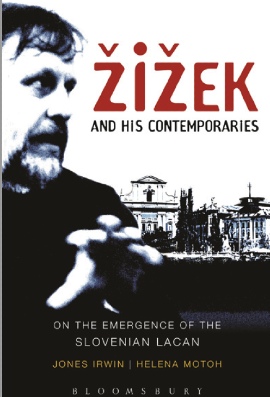
Alenka Zupančič : The Lacanian concept of the Real allows for a problematization of this opposition which had become paralysing and unproductive philosophically. We must of course be wary of the tendency to see in this Lacanian move a simple affirmation of a naive realism – the Real understood in this objectivist fashion. The ‘Real’ for Lacan is not reducible to the discursive but neither is it simply an advocation of an ontological realism, understood unproblematically. Especially since Lacan introduces a key difference between the notion of the Real and that of being. They are related via a ‘third dimension’, that of the ‘signifier’, but they do not coincide.
What Lacan wants to tell us is that the signifier has ontological significance, the signifier tells us about ontology in a way that the notion of the signified is unable to (this latter being the usual realist referent; the object as the signified).
The signifier is interesting not because we could reduce everything to it and to different signifying operations (this reductionist question is completely false), but because there is something in the signifier and its operations that cannot be reduced back to the signifier and its operations.
This is the crucial point, and not some mythical or original outside of the signifier, irreducible to it. This is also what the ‘materialism of the signifier’ amounts to. Not simply to the fact that the signifier can have material consequences, but rather that the materialist position needs to do more than to pronounce matter the original principle. It has to account for a split or contradiction that is the matter. It has to grasp the concept of the matter beyond that imaginary notion of ‘something thick and hard’. I’m not saying: ‘For Lacan, the signifieris the real matter’, not at all.
I’m saying that, for Lacan, the signifier is what enables us to perceive the non-coincidence between being and the Real, and that this is what eventually leads to a new kind of materialism.
From this point of view, we can say that Lacan develops the modern moment in philosophy, but as Žižek says, ‘he develops it with a twist’. Then there is the new concept of the subject – another Lacanian ‘revolution’ in philosophy, retroactively relating the subject of the unconscious to the Cartesian cogito. This is often one of the great misunderstandings of Lacan (and psychoanalysis), that it jettisons the cogito, that it is anti-Cartesian pure and simple. This is a significant misunderstanding of the psychoanalytical concept of the ‘subject’ which was one of the main concepts for the delineation of a specific Lacanian orientation in the first place. This concept of ‘subject’ distinguished Lacan from the wider structuralist movement and their notion of a ‘subjectless structure’.
But somehow this conception of ‘subject’ is interpreted as anti-cogito, as the ‘subject’ is the unconscious subject. Therefore, it was important to clarify the connection between cogito and the unconscious and for example, there is an important anthology from the Ljubljana School of Psychoanalysis, where we explore this problematic in detail (Cogito and the Unconscious edited by Žižek [1998a] and including essays by all three thinkers as well as others in the Slovenian wider group of theorists). There is also the question of the radical break with premodern metaphysics involved in the Cartesian gesture, which Lacan judges crucial for the emergence of the subject of the unconscious.
This theme is crucial also for his understanding of ethics. In his important early seminar, Seminar VII, The Ethics of Psychoanalysis (Lacan 1992), he is discussing the history of ethical thought as it related for example to the metaphysical tradition. His specific example is Aristotle and there is obviously a debt here on one level to Aristotle’s Ethics as a text and conceptual scheme. However, there is also a clear and radical parting of the ways.
In my own work on ethics, in The Ethics of the Real: Kant, Lacan (Zupančič 2000), I draw out some of these themes. For example, I put forward a critique of what I term ‘bio-morality’ and which, in its contemporary developments, represents an allegiance (albeit in rather reduced ways) to Aristotle’s eudaimonistic ethics and metaphysics of being. This is not simply a criticism of Aristotle, but rather of what a revival of his conceptual paradigm today amounts to.
In relationship to the theme of ethics, I want to stress that what I develop out of Kant’s ethics must not be opposed or seen as completely distinct from politics. As Žižek very rightly pointed out, the contemporary fashion of playing (‘good’) ethics against (‘bad’) politics is more often than not a direct pendant of the ideology of late capitalism and its conception of democracy. Any rigorous political thought is conceived as potentially dangerous and leading to a possible ‘disaster’ (that is to say to a more fundamental change in how the present order functions), whereas ethics seems to be much safer, and centred mostly on our individual responsibility, rather than any kind of collective engagement. My own work on Kant and ethics already went against this tendency, pointing both at an unsettling dimension of Kantian ethics, as well as at its emphasis on the universal, rather than simply individual.
It is similar with psychoanalysis which supposedly also focuses on individual destinies and problems. Here, am I allowed to tell my joke about the grain of seed, or the man who thinks he is one?
He gets cured by the psychoanalysts and then he comes running back, crying that he has just been chased by a chicken. Don’t you know you are a human being, they say? Yes, I am cured. I know that I am a human being, and not a grain of seed. But, please, does the chicken know this? This is the crux of the politics (which is also an ethics) in the Ljubljana School of Psychoanalysis. It is not enough simply to deal with the plight of the ‘subject’ and fantasy, through psychoanalysis.
Rather, we must seek to transform the structures of the symbolic which sustain a given order, determine the Impossible-Real that they grapple with.
Alenka Zupančič: Yes, when we understand the question ‘why Freud and Lacan?’, or the question ‘why psychoanalysis?’, we come close to an understanding of the paradigmatic role which a revised notion of ‘sexuality’ must play in this discussion. Joan Copjec succinctly pointed out how, for example, in the term ‘sexual difference’ the term ‘sex’ has been replaced by the more neutered category of ‘gender’. As Joan – an allied member of the ‘Ljubljana School’ – put it: Gender theory performed one major feat: it removed the sex from sex. For awhile, gender theorists continued to speak of sexual practices, they ceased to question what sex or sexuality is; sex was no longer the subject of an ontological inquiry and reverted instead to being what it was in common parlance: some vague sort of distinction, but basically a secondary characteristic (when applied to the subject), a qualifier added to others, or (when applied to an act) something a bit naughty.
This is very far from what both Freud (from his early, 1905 text Three Essays on the Theory of Sexuality [Freud 1977]) and Lacan have been saying. For Freud, the notion of the ‘sexual’ is significantly broader than contemporary notions of sex. It is not a substance to be properly described and understood (by psychoanalysis), but more like an impasse that generates and structures different discursive edifices trying to respond to it. It is linked to a notion of a fundamental ontological impasse; this impasse is irreducible for Freud.
But we also see here all the accusations against psychoanalysis, that ‘Freud reduces everything to sex’. In one sense, this accusation is true but what it misses is the complexification and radicalization of what we mean by ‘sexuality’. Freud discovered human sexuality as a problem (in need of explanation), and not as something with which one could eventually explain every (other) problem. He ‘discovered’ sexuality as intrinsically meaningless, and not as the ultimate horizon of all humanly produced meaning. A clarification of this point is one of my ‘interventions’ in Why Psychoanalysis? Three Interventions (Zupančič 2008b). Lately, I dedicated a whole book to these questions – it came out in 2011 in Slovenia, but I’m still working on its English version.
The materialism of psychoanalysis is not simply materialism of the body;
and Lacan has learnt the philosophical lesson that is essential in this
respect: in order to be ‘materialist’ it is not enough to refer to the matter
as the first principle from which everything develops.
For, in this, we easily succumb to a rather idealistic notion of a somehow always-already spirited (‘vibrant’) matter. In recent debates, psychoanalysis – in the same package with all of the so-called post-structuralist thought – is often accused of relying on the formula ‘always-already’ as its magical formula. But this accusation misses the whole point: for psychoanalysis, ‘always-already’ is a retroactive effect of some radical contingency that changes given symbolic coordinates.
What a materialism worthy of this name has to do today is to propose a conceptualization of contingency (a break that comes from nowhere, ‘ex-nihilo’ so to say) in its complex relation to the structuring of the world.
Also, thinking is not simply opposed to things (and to matter), it is part of the thing it thinks, without being fully reducible to it. To advocate materialism and the ‘Real’ is not to advocate anti-thought. Quite the contrary, we might say – it calls for more and more thinking. And this is a problem that I sometimes detect in the recent flourishing of ‘new materialisms’ – a kind of abdication of thinking when it comes to more complex structures and arguments, as if common sense simplicities were inherently more ‘materialist’ than something
which is more complex and perhaps paradox ridden.
Alenka Zupančič: A key part of the Nietzschean legacy is I think working against the ‘moralisation’ of the symbolic, which Nietzsche describes so well in The Genealogy of Morals, for example, and which for example is also a key theme in relation to the thematic of the ‘moralisation of politics’, which I mentioned earlier.
Concerning nihilism and to quote Ray Brassier, from his text Nihil Unbound, there are things to be said for nihilism. It depends, of course, on what we mean by nihilism. If we mean by it a certain materialist position which recognizes contingency of, for example, our being in the world, and which points to a limit of ‘making sense of (all) things’, then we must say that to a great extent we cannot go beyond nihilism.
Yet this does not imply for Nietzsche that we sink in the depressive feelings of ‘worthlessness of all things’. On the contrary, it rather implies what he calls ‘gay science’. But, we must simultaneously avoid what Nietzsche calls ‘reactive nihilism’ and this is, of course, bound up with his whole critique of ressentiment (or ‘acting against’, reactiveness). To say that there is no ultimate cause of things is not to say that nothing itself is the ultimate cause of things, which amounts to putting the Nothing in the office of the Absolute.
Describing the difference between active and passive nihilism, Nietzsche famously says that man would ‘rather will nothingness than not will’ (On the Genealogy of Morals). And we could say that what defines (contemporary) passive nihilism is precisely that man would rather not will than will anything too strongly (because the latter supposedly inevitably leads to some kind of ‘nihilist’ catastrophe). And this seems to become synonymous with what ‘ethics’ now is in contemporary culture and society and the wider ‘moralisation of politics’, ‘biomorality’ etc. (to which I strongly oppose an ‘ethics of the Real’). There is a ‘deactivation’ of the will, which is also a deactivation of the ‘political will’, of the political as such as a paradigmatic space and temporality of antagonism, of the ‘Real’.
In my view, the genuinely new Nietzschean notion of nothingor n egativity is not simply that of ‘active nihilism’ as opposed to ‘passive nihilism’, but rather a transfiguration of nothing. Nothing/negativity is not a kind of ultimate absolute, but rather the smallest yet irreducible difference that is inscribed in being qua being. This is what I argue in my book. I use Nietzsche’s own metaphor of ‘the shortest shadow’. When speaking of going beyond the opposition real world/apparent world, Nietzsche describes this moment as ‘Midday; moment of the shortest shadow’ (Twilight of Idols).
Midday is thus not for him the moment when the sun embraces everything,
makes all shadows and all negativity disappear, and constitutes an undivided Unity of the world; it is the moment of the shortest shadow. And, what is the shortest shadow of a thing, if not this thing itself? Yet, for Nietzsche, this does not mean that the two becomes one, but, rather, that one becomes two. Why?
The thing (as one) no longer throws its shadow upon another thing; instead, it throws its shadow upon itself, thus becoming, at the same time, the thing and
its shadow, the real and its appearance. When the sun is at its zenith, things are not simply exposed (‘naked’, as it were); they are, so to speak, dressed in their own shadows. In other words: it is not simply that our representations do not coincide with things, it is rather that things do not simply coincide with themselves. There is thus an imperative to ‘think through’ this negativity. We
need to philosophize, as Žižek has said, philosophy is now more important than ever. It is not a game of textualism as some postmodernists would like to suggest perhaps.
Alenka Zupančič: We can say that subject is ‘the answer of the Real’, as Lacan puts it somewhere, or that it is the effect of the rift/inconsistency of the structure. And we can indeed contrast this with the structuralist notion that there is a ‘structure without a subject’, a subjectless structure.
But what is at stake is above all a profound reconfiguration of what both ‘structure’ and ‘subject’ mean, refer to. We can begin with the notion of the structure which differs in Lacan from the classical structuralist notion. Very simply put: for Lacan, structure is ‘not-all’ (or ‘not whole’), which is what he articulates with the concept of the ‘barred Other’. This implies a lack, a contradiction as – so to say – ‘structuring principle of the structure’. Structure is always and at the same time more and less than structure. And this is where the new notion of the subject comes in. Subject is not the opposite of the structure, it is not some intentionality which uses structure to express itself, or which tries to get its more or less authentic voice heard through it.
Subject is a singular torsion produced by the inconsistency of the structure.
Take the simple example of the slips of the tongue: for Freud and Lacan, they do not bear witness to a hidden(unconscious) force repressed by the structure, which nevertheless betrays its presence by these slips.
Rather, they are singular existences of structure’s own inherent negativity. This is also the argument that I want to make in the context of the contemporary debates concerning realism, which often disqualify thought or thinking as something merely subjective (facing external reality). Put in a couple of formulas: Instead of taking it as something situated vis-à-vis being, we should conceive of thought as an objectivized (and necessarily dislocated) instance of the non-relation (contradiction, inconsistency) and rift inherent in being (in ‘objective reality’). Thinking is a necessarily displaced objectification (‘objective existence’) of this rift, that is, of the relation of being to its own
‘non-’, to its own negativity.
Although being is indeed independent of thinking, the rift that structures it only objectively exists as thought, and this perspective opens a new way of conceiving realism and/or materialism. This is precisely how I would also read the Lacanian subject. And this is why if we remove subject from the structure, we do not get closer to objective reality, but rather further away from it.
We can also say that the subject for Lacan is ‘objectively subjective’, there is an asymmetry in the subject, something in the subject which is not just subjective but which is also inaccessible to the subject.
We can see the connection back to Kant. The Kantian subject I would endorse is that ‘pure something, X, which thinks’, the transcendental unity of apperception. The point where subjectivity is not fully assumable and the point where the object is not reducible to or is ‘not yet’ objectivity (this is Lacan’s notion of objet petit a). Here, we see also that the Lacanian subject radicalizes the traditional ‘object’. The concept of the ‘object a’ is perhaps the most significant Lacanian conceptual invention.
Alenka Zupančič: No, the notions of good and evil are not simply irrelevant to ethics, I would say, although they are indiscernible in advance. The responsibility we have is to decide what is good. It is difficult to overstate Kant’s significance in this respect. He did two things which may look incompatible: first, he founded ethics exclusively in human reason: no God or any other pre-established Good can serve as basis of morality. But instead of this leading to a kind of ‘relativised’, finitude-bound morality, it led to the birth of the modern thought of the absolute, the unconditional, and of the infinite as the possible, even imperative dimension of the finite.
Whatever objections we may raise to the Kantian ethics –for example, and already, from Hegel’s perspective – it was with Kant that the standing oppositions like absolute/contingent, lawful/unconditional, finite/infinite broke down, and the path was opened for a truly modern reconfiguration of these terms.
In the twentieth century, Kantian ethics has been largely domesticated to serve as an important ideological foundation of the contemporary democratic liberalism and of the gradual replacement of an emancipatory politics with the discourse of human rights or simply ethics.
I’ve always been astonished by the fact that a really radical, uncompromising and excess-ridden writing like Kant’s could be referred to in order to pacify the excess (of the political or something else). When the Nazi criminal Eichmann infamously defended himself by saying that in his doing he has been simply following the Kantian categorical imperative, this was of course an obscene perversion of Kant’s thought.
As Žižek succinctly formulated: what follows from Kant is not that we can use moral law as an excuse for our actions (‘oh, I wouldn’t do it, but the moral law commanded so’), we are absolutely responsible for the very law we are ‘executing’.
But Eichmann’s perverse defence did point at the unsettling core exposed by Kant: the unconditional law is one with (the excess of) freedom.
Lacan was probably the first to properly recognize this unsettling, excessive moment that Kant discovered at the very core of ethics.
When he wrote his famous essay ‘Kant with Sade’ (Lacan 2002b), the point was not that Kant is in truth as excessive as Sade, but rather that Sade is already a ‘taming’, a pacification – in terms perversion – of the impossible/real circumscribed by Kant. This is the thread I tried to follow in my book: Kant’s discovery of this unsettling, excessive negativity at the very core of Reason. I was not interested so much in ethics as ethics, as in this thing that Kant has formulated through his considerations of ethics.
Helena Motoh and Jones Irwin: Does this mean that the ‘ethics of psychoanalysis’ simply pits the Real against the symbolic or is there something else going on here? Also, how does the concept of ‘drive’ and especially the concept of ‘death drive’, which Žižek emphasizes,relate to an ethical dimension? Finally, what does the Lacanian concept of ‘desire’ (as he describes it in The Ethics of Psychoanalysis) have to do with this? Is ‘desire’ simply jettisoned in the later work?
Alenka Zupančič: In respect to the relation between symbolic and the Real, there are certainly oscillations and shifts at work already in Lacan, as well as in the work of the three of us (together and separately). The idea that the Real is a kind of unbearable, repulsive thickness beyond the symbolic, left out of it and inaccessible to it, may have had some presence in our work at some point. But I think it is fair to say that for many years now we are all struggling precisely with the problem of a different way of relating them as absolutely crucial. There are some differences in the way we go about it,
but the main and shared shift of perspective that orientates our work could be perhaps summed up as follows: the Real is not any kind of substance or being. It pertains to being (and to the symbolic) as its inherent contradiction/antagonism.
I started working on this issue first by getting a bit more into Nietzsche (the first, Slovene version of the Nietzsche book was published in 2001). Borrowing from Badiou his notion of the ‘minimal difference’ and relating it to Nietzsche’s notion of the ‘shortest shadow’, I tried to develop the notion of the Real as not that of some Thing, but of the fundamental non-coincidence of things with themselves. This non-coincidence is not caused by the symbolic; rather, the symbolic is already a response to it: it is discursivity as necessarily biased by the constraints of the contradiction in being.
Parallel to this work on Nietzsche was also my working on the theme of love, and later on comedy as possible ways of articulating what is at stake in the relation between the symbolic and the real. Lately, and for some time now, I have been working on this through the question of the ontological implications of the psychoanalytic notion of the sexual. I could perhaps put it in one formula: The real is part of being which is not being (or which is not qua being), but which as such dictates the (symbolic) logic of its appearance.
The real is part of being which is not being (or which
is not qua being), but which as such dictates the (symbolic) logic of
its appearance.the Real is not any kind of substance or being. It pertains to being (and to the symbolic) as its inherent contradiction/antagonism.
Helena Motoh and Jones Irwin: Can you say a bit more about the two key Lacanian concepts (not without political ramifications of course) of ‘desire’ and ‘drive’. You have already explicated these, to some extent, but can you develop some of the tensions between them? Also, how do these concepts develop in your work, as they seem to have a paradigmatic status while undergoing some transformation for example from the ‘Ethics of the Real’ book to the book on ‘comedy’. Finally, are there philosophical tensions between your work and the other members of the troika on this fraught relationship between ‘desire’ and ‘drive’?
Alenka Zupančič: Certainly, you are right to point to these concepts as paradigmatic, and they are also crucial when it comes to the articulation of the relationship of the symbolic, the imaginary and the Real You are also correct that there are some differences here – one would expect nothing less in a philosophical movement worth its salt.
In my own work, I take up the themes of desire and drive throughout. In Ethics of the Real I focused mostly, although not exclusively, on Lacan from The Ethics of Psychoanalysis and The Transference (Seminars VII and VIII). The concept of desire is in the foreground in both, but there is also a shift that starts taking place there, a conceptual move from das Ding as the impossible/Real as the focal point of desire, to the introduction of the object a. This shift then gets a further and very complex elaboration in Lacan’s subsequent seminars. But to formulate what is at stake very briefly and simply, we could say that what is involved here is a move from the Real as the abyssal beyond of the symbolic,
to a concept (of the object a) which undermines the very logic and nature of the difference on which the previous conception of the Real was based.
Object a is neither symbolic nor Real (in the previous sense of the term). It refers to the very impossibility to sustain this kind of difference between the symbolic and the Real, and it is this impossibility that is now the Real.
This also opens the door for a more systematic introduction of the concept of the drive. The notion of the object a is crucial both for desire and drive, they are different ways of relating this impossible non-ontological dimension (a) to what is, to being. In the Seminar X (Anxiety) Lacan provides a formula that I think is absolutely crucial and which I also took as the guiding line of my work after Ethics: he says that love is a sublimation, and then defines sublimation in a very surprising way, namely that sublimation is what makes it possible for jouissance to condescend to desire. If one remembers the famous definition of sublimation from Lacan’s seminar on The Ethics of Psychoanalysis (‘sublimation is what elevates an object to the dignity of the Thing’) then the shift is indeed dramatic and surprising. This new notion of sublimation becomes directly associated with the question of the drive, for sublimation is also defined as a ‘nonrepressive satisfaction of the drive’.
Now, in Lacan, as well as in our reading of him, there is indeed perceptible a turn from the logic of desire to that of the drive as somehow truer. But this is not simply a turn (of interest) from the symbolic to the Real, as it sometimes seems. What is at stake is rather the recognition of the fact that the status of the Real as the impossible Beyond of the symbolic is actually an effect of desire and its logic. Desire casts the internal contradiction that drives it in terms of the inaccessible Beyond to which it can only approach asymptomatically. With drive, the contradiction remains internal, and the impossible remains accessible as the impossible. This, I think, is absolutely crucial, and this is what
I tried to formulate with the formula the ‘Real happens’: the point of Lacan’s identification of the Real with the impossible is not simply that the Real is some Thing that is impossible to happen. On the contrary, and in this reading, the whole point of the Lacanian concept of the Real is that the impossible happens. This is what is so surprising, traumatic, disturbing, shattering – or funny – about the Real. The Real happens precisely as the impossible. It is not something that happens when we want it, or try to make it happen, or expect it, or are ready for it. It is always something that doesn’t fit the (established or the anticipated) picture, or fits it all too well. The Real as impossible means that there is no ‘right’ time or place for it, and not that it is impossible for it to happen (‘On love as comedy’, Zupančič 2000).
The Real happens precisely as the impossible. It is not something that happens when we want it, or try to make it happen, or expect it, or are ready for it.
So what is important to stress in this whole ‘turn’ to the logic of the drive is the following: this is not simply a turn to the drive on account of its supposedly being closer, truer to the Real (as established independently), but rather a turn toward a different conception of the Real as such.
With drive, the Real is no longer a relational notion (sustaining questions like ‘what is our attitude toward the Real?’). It rather suggests something like: our relation to the Real is already in the Real. This is why questions like ‘How to get outside to the Real?’ seem to be the wrong kind of questions.
This is because there is no outside of the Real from which one would approach the Real.
LRB Vol. 42 No. 7 · 2 April 2020
Too early or too late?
David Runciman on political timing and the pandemic
But it isn’t just Johnson. In the fights about crisis management we have all been following our political instincts, even when we insist we’re just talking about the science. It’s true that there has been a big difference between the response of the British government – which appears genuinely to have been guided by the scientific advice it received – and that of the US government, which for a long time seemed to be operating on a wing and a prayer. Yet there’s no such thing as simply doing what the science says. This is partly because the science itself is political – how could it not be, when so much of it is the science of human behaviour? […]
If you believe that most citizens are more or less capable of doing what is asked of them at the appropriate time then a more interventionist approach will almost certainly save lives in the long run. This is a real argument, based on real evidence. But it still starts with an ‘if’.
Hayek was wrong about the slippery slope. If planning inevitably led to public demands for more and more preferential treatment and therefore to more and more planning we would hardly be where we are today, trying to deal with a crisis for which we are so ill-prepared, with government bureaucracies stripped of many of the capabilities they are going to need. But the reason we’re in this situation is that Hayek won the argument. Some Western democracies elected Hayekians to government, beginning with Thatcher, who once banged down a copy of Hayek’s The Constitution of Liberty in a meeting and declared: ‘This, gentlemen, is what we believe!’ The direction of travel over the last forty years has been in the Hayekians’ favour: towards deregulation, market competition, global interdependence and winner-take-all economies. The 2008 financial crisis arrested the momentum of that movement but didn’t fundamentally alter its course. Now, though, the future may be more open to lasting change. If this crisis does represent a turning point towards the assertion of greater government control over economic outcomes it won’t be because we were on that slippery slope all along. It will be because – as Hayek claimed to believe, without ever seeming to think the lesson applied to him – politics is never predictable.
The Invisible Hand Wants You Dead
Rick Santelli has apologized for suggesting the populace should be infected with coronavirus, but his sadistic worldview is still a threat.
By ADAM KOTSKO
March 6, 2020
Rick Santelli is at it again. Speaking from the floor of the Chicago Mercantile Exchange on Thursday, the stock trader and frequent CNBC commentator shared his views about the best way to handle the coronavirus. Dismissing the possibility of containing it through quarantines, he suggested that “maybe we’d be just better off if we gave it to everybody, and then in a month it would be over.” He went on to make the questionable claim that “the mortality rate of this probably isn’t going to be any different if we did it that way than the long-term picture.”
The extreme optimism of Santelli’s armchair epidemiology notwithstanding, it’s clear that his real concern isn’t public health at all. Compared to his brutally efficient plan of mass infection, his seeming problem with the more drawn-out containment attempts was that they “[wreak] havoc on global and domestic economies.” So, whoever is going to die from coronavirus had better get it over with as quickly as possible—for the sake of capitalism.
It would be too easy to dismiss this unforeseen outburst as the ranting of a sociopath, or even a sick attempt at humor. Santelli’s ravings reflect a coherent worldview, one that has previously demonstrated its appeal by kicking off an entire social movement. I am speaking, of course, of the Tea Party, which Santelli summoned into existence in an infamous 2009 harangue that found an enthusiastic reception among conservative commentators.
Raging against what he saw as the Obama administration’s excessive generosity, and claiming that government largesse was “promoting bad behavior,” Santelli called for the tech-savvy administration to “put up a website to have people vote on the internet as a referendum to see if we really want to subsidize the losers’ mortgages; or, would we like to at least buy cars and buy houses in foreclosure and give ’em to people that might have a chance to actually prosper down the road?” Exclaiming, “This is America!” he built to a crescendo, ultimately calling for a “Chicago Tea Party” to head off the nation’s decline into Cuban-style collectivism.
In his Tea Party rant, Santelli’s “get it over with” philosophy is not stated quite so baldly as it is in his more recent statement on the coronavirus. Santelli nevertheless makes it clear that he would prefer the undeserving to be kicked out of their homes as quickly as possible, so that they will stop draining resources that others could use more productively. Such an approach, he contended, would “reward people that could carry the water instead of drink the water.”
What would happen to the thirsty people deprived of water? In typical fashion, Santelli didn’t care enough to make it explicit. Instead, he turned his attention to the “silent majority” represented by the stock traders who stood in the background of CNBC’s live coverage, cheering his Tea Party oration. Those colleagues, he averred, are “a pretty good statistical cross-section of America,” showing the same fast-and-loose approach to statistics as in his claims that intentionally infecting all Americans with coronavirus would lead to a similar death rate as attempting to contain it. Still, we should resist our impulse to dismiss Santelli as ignorant here. This is not a simple error, but a statement about who really counts—namely, people like him and his fellow stewards of the market, who are never going to be underwater on their mortgage, just as they will presumably never be among the unwashed masses dying of coronavirus.
Capitalism has always created winners and losers, of course, and capitalist ideology has always aimed to portray those outcomes as legitimate and just. Hence we should not be surprised that a privileged person like Santelli views himself and his colleagues as uniquely deserving. What is surprising, indeed disturbing, is the element of malice toward the losers. Santelli travels far beyond the more conventional view that acknowledges the destruction wrought by the market—the job losses, the failed businesses, the bad bets—as a necessary evil that is outweighed by the benefits of economic growth overall. Within such a framework, even ardent pro-market theorists like Friedrich Hayek and Milton Friedman concede that society owes something to those left behind. For Santelli, by contrast, the fact that some people are harmed by the market is a positive good, to the point where offering aid and comfort to the losers can appear as an injustice worthy of the condemnation of an enraged overclass.
Back in 2009, many Americans among the hoi polloi were willing to be drafted into Santelli’s aristocratic revolution, dressing up in Founding Fathers drag for their contemporary Tea Party. There were serious questions about the extent to which the Tea Party was an authentic grassroots movement or a corporate-sponsored “astroturf” campaign, but it is undeniable that it was, at the time, the most effective American protest movement in this young century. The Tea Party tipped the balance of power in Congress and within the Republican Party itself, putting Obama on the defensive for the rest of his presidency. More than that, with its anti-intellectualism and its vulgar provocations (most notably on the topic of rape), it cleared the way for Trump, who has shown just as much malice toward society’s “losers.” It may not represent a numerical majority, but enough Americans are on board with a program of vengeance against society’s most vulnerable to allow the anti-democratic aspects of our system to stymie any movement toward a less punitive society.
How could such a cruel and seemingly irrational view gain such purchase? Once more, we need to resist purely individualistic explanations—such as the idea that Tea Party or Trump supporters are simply bad people whose negative urges have finally found an outlet. Santelli’s remarks do not reflect the universal facts of human nature, but a very specific historical situation: the aftermath of the global financial crisis, which produced a permanent ratcheting down of incomes and life chances for entire populations. The usual bromides about hard work and individual virtue could not make sense of such a system-wide shock. And to add insult to injury, many of the victims got into trouble by pursuing homeownership, which is supposed to be the ultimate sign of personal responsibility and prosperity.
All of this had the potential to call the legitimacy of the system as a whole into question. In that context, Santelli’s rant and its subsequent embrace by conservatives represents a desperate attempt to harness this populist rage and declare that the suffering the crisis inflicted was a feature, not a bug. We realize in retrospect that Santelli’s fears were groundless, because no shift toward collectivism was on the Democrats’ agenda under Obama. We are living in the aftermath of the right’s cruel preemptive assault against a program of radical reform that never came.
Thankfully, Santelli’s novel idea of infecting the populace with the coronavirus was greeted with the opprobrium it deserved, compelling him to apologize for his suggestion Friday morning. Nevertheless, we should not let that distract us from the fact that the conservative movement has successfully taken his earlier vision to stratospheric heights. We may be spared a forced pandemic, but they will keep on doubling down and doubling down, until we do what Santelli feared the most: make the choice to improve the lives of others, whether they “deserve” it or not. Until that day comes, we cannot be surprised that, with no prospect of any positive change, a vocal plurality of our fellow citizens will continue to be seduced by the consolations of sadism.
Adam Kotsko teaches in the Shimer Great Books School of North Central College. He is the author, most recently, of Neoliberalism’s Demons: On the Political Theology of Late Capital.
Psychopolitics: Neoliberalism and New Technologies of Power. 2017 Verso
True happiness comes from what runs riot, lets go, is exuberant and loses meaning — the excessive and superfluous. That is, it comes from what luxuriates, what has taken leave of all necessity, work, performance and purpose.
page 52

The art of living is the art of killing psychology, of creating with oneself and with others unnamed individualities, being, relations, qualities. If one can’t manage to do that in one’s life, that life is not worth living
Michel Foucault cited in Byung-Chul Han
The art of living stands opposed to the ‘psychological terror’ through which subjugating subjectivation occurs.
Neoliberal psychopolitics is a technology of domination that stabilizes and perpetuates the prevailing system by means of psychological programming and steering. Accordingly, the art of living, as the praxis of freedom, must proceed by way of de-psychologization. This serves to disarm psychopolitics, which is a means of effecting submission. When the subject is de-psychologized — indeed, de-voided — it opens onto a mode of existence that still has no names: an unwritten future. 79
Countries with high levels of robotization are not necessarily the ones that have lost the most industrial jobs.
Automation isn’t wiping out jobs. It’s that our engine of growth is winding down.
‘Our collective sense that the pace of labor-saving technological change is accelerating is an illusion.’
https://www.theguardian.com/commentisfree/2020/jan/23/robots-economy-growth-wages-jobs
An army of robots now scrub floors, grow microgreens and flip burgers. Due to advances in artificial intelligence, computers will supposedly take over much more of the service sector in the coming decade, including jobs in law, finance and medicine that require years of education and training.
Will automation-induced job loss tear society apart? The question has even influenced the US presidential race. Candidate Andrew Yang blames automation for a long-simmering crisis of underemployment. He plans to hand out free money to every American citizen in the form of a monthly “dividend” of $1,000.
Poor job quality and stagnant wages are major problems in America and across much of the world, but it is wrong to blame these problems on an accelerating pace of automation, which is hardly in evidence.
Automation Cassandras often point to the manufacturing sector as the precedent for what will happen to the rest of the economy. It is true that, for the manufacturing industry, a jobs apocalypse has already taken place.
And this process is occurring across the world: according to the UN, the share of all workers employed in manufacturing is falling globally, even as industrial production per person continues to rise. This is the case in wealthy and poor countries. Yet it is hasty to ascribe these trends to accelerating automation.
While machines now make everything from shoes and shirts to cars and computers, there has been no significant uptick in the pace of labor-saving productivity growth in industry in recent decades.
On the contrary, industrial efficiency has been improving at a sluggish pace for decades, leading the Nobel-prize-winning economist Robert Solow to quip, in 1987: “We see the computer age everywhere except in the productivity statistics.”
Our collective sense that the pace of labor-saving technological change is accelerating is an illusion. It’s like the feeling you get when looking out of the window of a train car as it slows down at a station: passing cars on the other side of the tracks appear to speed up. Labor-saving technical change appears to be happening at a faster pace than before only when viewed from across the tracks – that is, from the standpoint of our ever more slow-growing economies.
That is the real problem: a pervasive and increasingly global economic stagnation – affecting industry especially – that is marked by low rates of investment, low rates of economic growth and hence low rates of job creation.
In the context of economic stagnation, even small increases in productivity are enough to destroy more manufacturing jobs than are created.
The best explanation for this worsening economic stagnation is that, since the 1970s, more and more countries adopted export-led growth strategies, built up manufacturing sectors and began to compete in global markets.
That led in turn to heightened competition, making fast-paced industrial expansion – and fast-paced economic growth – much more difficult to achieve.
In this context, countries with high levels of robotization are not necessarily the ones that have lost the most industrial jobs. On the contrary, Germany, Japan and South Korea have some of the highest levels of robots per manufacturing worker but also boast higher manufacturing employment shares.
In Germany and Japan, automation helps firms preserve jobs in manufacturing in the face of intense international competition. Chinese firms have been investing heavily in robotics in the past few years, to preserve jobs as domestic wages rise and competition from even lower-cost countries intensifies.
Meanwhile, no other sector has replaced industry as a major economic growth engine. In country after country, slowing industrial expansion has been accompanied by falling rates of economic growth.
Some services like wholesale trade have seen spurts of rapid productivity growth, but these fail to coalesce into sustained, sector-wide efficiency gains like those endemic to manufacturing over the history of its development.
The wider environment of slowing growth explains the prevailing low labor demand largely by itself.
Once again, the major problem in labor markets is a slowing pace of job creation, associated with this sluggish economic expansion, rather than an accelerating pace of automation-induced job destruction.
From the 1970s, when industrial competition began to heat up and economic growth rates deteriorated, unemployment levels in many countries first rose and then stubbornly refused to fall. Politicians began to push for weakened job protections and scaled-back unemployment benefits.
Workfare came to serve as the main response to job loss. Outside of a few countries that still provide generous benefits to the unemployed, such as France, few workers can afford to remain unemployed for long. Job-losers tend to join young labour-market entrants in part-time, temporary or no-contract work.
In most countries, these “non-standard” workers have few legal protections and are economically precarious. They are forced to moderate their demands in slow-growing economies. Workers who are not protected by powerful unions or labor laws find it difficult to pressure employers to raise their wages or improve working conditions.
As long as underemployment persists, inequality is likely to intensify. An expanding gap between the growth of real wages and productivity levels has contributed to a 9% shift from labor income to capital income in the G20 countries over the past 50 years.
In sluggish economies periodically racked by economic crisis and austerity, it is easier to blame the resulting social deterioration on robots, or on vulnerable sections of the workforce such as immigrants, women, and racial or religious minorities, than to face its true causes.
Given the winding down of the industrial-growth engine – which has accompanied the spread of productive capacities around the world – restoring previously prevailing rates of economic growth will prove difficult if not impossible. Unless we find some way to share the work that remains, beggar-thy-neighbor politics really will tear our societies apart.
Aaron Benanav is a researcher in the social sciences at the University of Chicago. He is writing a book about the global history of unemployment. This is an abridged version of his New Left Review article on automation
Automation and the future of work: Part 1
Automation and the future of work: Part 2
As economic growth decelerates, job creation slows, and it is this, not technology-induced job destruction, which is depressing the global demand for labour.
it is crucial that we reconceive of the present situation as marked not by the imminent arrival of mass unemployment, as automation theorists suggest, but by continuously rising under-employment.
we are heading towards a ‘good job-less future’ rather than a ‘jobless’ one: ‘workers have to keep working in order to feed themselves, so they take any jobs in sight’, even those offering poor pay, limited hours or terrible working conditions. Automation theorists interpret this as a consequence of growing technological unemployment, occurring somewhere offstage. In reality, rapid automation of production is hardly taking place at all—offstage or anywhere else
Yet only about 17 per cent of the global labour force works in manufacturing, with an additional 5 per cent in mining, transportation and utilities. The vast majority of the world’s under-employed workers therefore end up finding jobs in the highly heterogeneous service sector, which accounts for between 70 and 80 per cent of total employment in high-income countries, and the majority of workers in Iran, Nigeria, Turkey, the Philippines, Mexico, Brazil and South Africa.
The post-industrial economy we have inherited—now finally on a world scale—is, however, rather unlike the one whose emergence Daniel Bell first predicted in 1973: instead of an economy of researchers, tennis instructors and Michelin-rated chefs, ours is predominantly a world of side-street barbers, domestic servants, fruit-cart vendors and Walmart shelf-stackers.
the key to explaining this phenomenon is not the rapid pace of job destruction in specific branches, if it occurs, but the absence of a corresponding pace of job creation in the wider economy.
The main explanation for that is not rising productivity-growth rates, as the automation theorists claim, but inadequate output demand, due to the proliferation of industrial capacities across the world, an associated over-accumulation of capital, and a consequent downshift in rates of manufacturing expansion and economic growth overall. These remain the primary economic and social causes of the slack in the labour market that is wracking workers across the world.
The basic pattern of employment growth in services, described by Princeton economist William Baumol in the early 1960s, helps explain why under-employment in the sector is such a major feature of today’s economy—and why the automation theorists’ account falls askew.26 Baumol explained rising service-sector employment by pointing out that service occupations see lower rates of mechanization and productivity growth than the industrial sector. If demand for services increases, employment does too, and by almost as much (Figures 2 and 3)—unlike in manufacturing, where most output growth is generated by rising productivity rather than expanding employment
Service-sector demand must thus rely on income effects for its expansion—the growth of demand for services depends on the growth of incomes across the wider economy. This means that as the rate of overall economic growth slows with the dilapidation of the industrial growth-engine, the pace of service-sector employment growth should slacken, too.
But despite advanced economies growing more slowly, service-sector employment expanded quickly in certain low-wage, precarious occupations. It is at this point that logics of under-employment come into play. It turned out to be possible to lower the prices of these services—and so to expand demand for them—without raising levels of productivity, by paying workers less, or suppressing the growth of their wages relative to whatever meagre increases in their productivity were achieved over time.28 The same principle applies to self-employed workers, who, by offering to work for less, are able to create demand for their labour at the expense of their incomes. The service sector is the choice site for job creation through super-exploitation because the wages of service workers make up a relatively large share of their final price.
As inequality intensifies, opportunities for super-exploitation expand; it begins to make sense for richer households to hire the poor to perform tasks they would otherwise do for themselves—solely because of the extreme difference in the price of their respective labours.
Given this context, in which a capital strike would quickly push the economy deeply into crisis, we need to set our sights higher: on the conquest of production. Taking the power to control investment decisions away from capitalists and rendering the capital strike inoperative forms an essential precondition of our collective progress toward a post-scarcity future.
Harbouring a vision is crucial to reviving an emancipatory project today, not least because its future realization seems so far away. Nineteenth-century socialists knew they were far from achieving their goals, but they were nevertheless possessed by an idea of a freer future which animated their struggle. As late as 1939, Brecht could still write: ‘our goal lay far in the distance / it was clearly visible’.49 Few would say that today. Not only are we living in an era of stubbornly entrenched neoliberalism, provoking angry ethno-nationalisms and climate-induced catastrophes of growing frequency and scale, we also lack a concrete idea of a real alternative. Centralized state planning turned out to be both economically irrational and ecologically destructive, filling warehouses with shoddy products and proving susceptible to autocratic bureaucratization. European welfare states and Keynesian full-employment policies proved unable to adapt to a context of slowing growth and ongoing deindustrialization
not the free giving of money, as the automation theorists have it, but rather the abolition of private property and monetary exchange. One of the reasons for their relinquishing this key objective is that they tend to begin from the wrong transitional questions: starting from the assumption that full automation will be achieved, they go on to ask how we would need to transform society in order to save humanity from the mass joblessness it would cause and create a world of generalized human dignity.
But it is possible to reverse this thought experiment, so that instead of presupposing a fully automated economy and imagining the possibilities for a better and freer world created out of it, we begin from a world of generalized human dignity and then consider the implications for technical change in working to realize that world.