neill calum phallus sexuation

Neill, C. (2009) ‘Who Wants to be in Rational Love?’, Annual Review of Critical Psychology, 7, pp. 140-150.

We can understand that part of what Lacan is pointing to here in his invocation of the phallus as something which cannot be reduced to a mere physical appendage is that sexual difference is never simply a matter of the difference between two complimentary entities (in the sense of ying-yang).

There is always a necessary third party; the phallus. We are sexed in terms of our relation with or to this third position and, therefore, the difference between the sexes is always more than a simple difference. Rather the differences themselves are different. The phallus as a moment of the Other comes radically between the male and female subject. There is no direct relation between them but only distinct relations to a third. […]

In saying that there is no ratio between the sexes, then, we could understand Lacan to be saying that while there clearly is a relating of some sorts between the sexes, there is a conjunction, there is no stability and there is no way of notating this; “the sexual relation cannot be written” (Lacan 1998: 35), which would be to say that it is beyond comprehension

An important question we might raise here is, if there is no saying it all, no unproblematic communication between the sexes, then does this imply that there might be such an unproblematic communication between subjects of the same sex?

Clearly, the answer would be no. Language is necessarily a medium and thus mediator. So why emphasise that there is no rapport between the sexes when there is no rapport between subjects? […]

while perhaps obvious, needs to be stated simply because it is here, in the sexual relation that we hope to find the communicative success which eludes us in other areas of life. Even here, there is no rapport. The Other is always the third party. We might hope to, in our ideal of sex, engage in a true coming together, a communication without or outwith language but such an idea is never anything more than a fantasy;
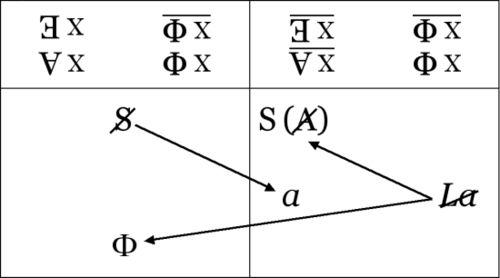
Sexuation_La

The four logical statements presented at the top of the diagram can be read as follows:

1.  ExceptionToCastration
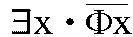
there exists at least one of those in category x who is not subject to the phallic function

2. AllSubjectCastrated
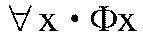
all of those in the category of x are subject to the phallic function

3. Feminine_X_not determinedbyPhallic
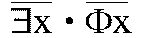
there is not one of those in category x who is not subject to the phallic function

4.  Feminine_NotAll_x_subject
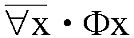
not all of those in category x are subject to the phallic function

*********

What this produces, then, are two seemingly contradictory or logically impossible statements on each side of the graph. The left side is the side of man, while the right side is the side of woman. Together they describe possible positions available to speaking beings, which is to say “Every speaking being situates itself on one side or the other” (Lacan, 1998: 79).

The logical statements on the left side can be understood to tell the story, or the logic, of the myth of the primal horde (Freud, 1950: 141-143). The one who would exist who is not subject to the phallic function, who has not undergone castration, would be the primal father.

Category x in this instance would then refer to the male position and all those in this position are subject to the phallic function, that is, they have undergone castration. There is, then, one man, the primal father, who is not subject to the function of castration which is the condition of possibility for all those in the male position. The contradiction here can be understood in the sense of an exception to a rule, in that it is the exception which is the condition of possibility for the rule to be a rule.

The statements on the right side can be understood to describe something of the tension between universals and particulars. The two statements might appear to present a blunt contradiction. If none of those in the category is not subject to the phallic function, then this would seem to suggest that all those in the category are subject to the phallic function.

But this is precisely what the second statement refuses. Taken separately, however, we can perhaps begin to make some sense of this. If the function of castration is the condition of possibility of entry into the symbolic order, then all speaking beings in order to be speaking beings would have to be subject to this function.

We can understand this first statement, then, as referring to each member on a one-by-one basis. Each woman – for this is the side of woman – in order to be a speaking being, must be subject to the phallic function. The second statement – the universal statement – should then be understood to refer to the group. The group as a whole, as a category, is not subject to the phallic function. What would this mean?

That, as a universal category, The Woman cannot be located within the symbolic order;  La femme n’existe pas.

If one side of the supposed relation between the sexes can be said not to exist, if one side cannot be collapsed into a signified totality, while the other side can only assume a signified position as incomplete, then clearly the model of equal partners balanced in a neutral or exteriorly moderated system of exchange becomes manifestly inappropriate.

Lacan’s claim that there is no rapport between the sexes, that they cannot be composed into a ratio, that they have no relation, furnishes us with a step beyond the superficial and reductive assumptions which so apparently benignly dominate the social sciences.

In reducing intersubjectivity and sexual relations to modes of economy, one not only assumes an untenable equality of status between the supposed operators, but one also misses the crucial point that the pleasure, the jouissance,which might be the currency of such an exchange is never itself so easily quantifiable.

Just as actual economic exchange is problematised with the inescapable notion of surplus value, so intersubjective relations are properly rendered more complex with a notion of surplus jouissance. This surplus of jouissance, the fact that relations can never be collapsed into a whole, a oneness, or even into a two, insofar as there is always, necessarily, the insistence of objet petit a, means that the accounting we would impose on relations always already fails.

Moreover, this failure is inscribed already in our attempts to know – to corral in knowledge – how the relation works, what the ratio is, what mediates the rapport.

It is in stepping beyond this limit that the social sciences might begin to explore, without seeking to end in a finite knowledge, what goes on between the sexes.
Fink love desire pt 1

Fink, B. (2015). Lacan on Love An Exploration of Lacan’s Seminar VIII, Transference. Cambridge: Polity.

The father’s intent may be to convey to his son that he must seek out a woman of his own, yet the son may take it as a prohibition of all love for women or even as a prohibition of all love, period.

This possible explanation of the cleavage between love and desire clearly involves no fall on the mother’s part. The great divide arises owing to the father’s perceived castration threat, which may be understood by the child literally or figuratively — that is, as a loss of the real, physical organ or as a loss of the father’s esteem and love. 22
[…]
If we bring together several of Freud’s formulations, then, a man’s love and desire can converge on one and the same woman, perhaps even durably, if and only if

(1) his feeling of having been betrayed by his mother has been worked through;

(2) He is no longer shocked that he might be inhabited by sexual desire for his mother and sister(s) and has seen through the incest taboo insofar as he realizes there is something incestuous involved in his relations with every woman; and

(3) has come to grips with castration, that is, has allowed himself to be separated from his primary source of jouissanc as a child without constantly striving to get it back. How any of these, much less all three, could be accomplished, without a thoroughgoing analysis is hard to imagine! 24

verhaeghe pt 3 alienation separation

Verhaeghe, P. (1998). Causation and Destitution of a Pre-ontological Non-entity: On the Lacanian Subject. In D. Nobus (Ed.),  Key Concepts of Lacanian Psychoanalysis (pp. 164-189). New York: State University of New York Press.

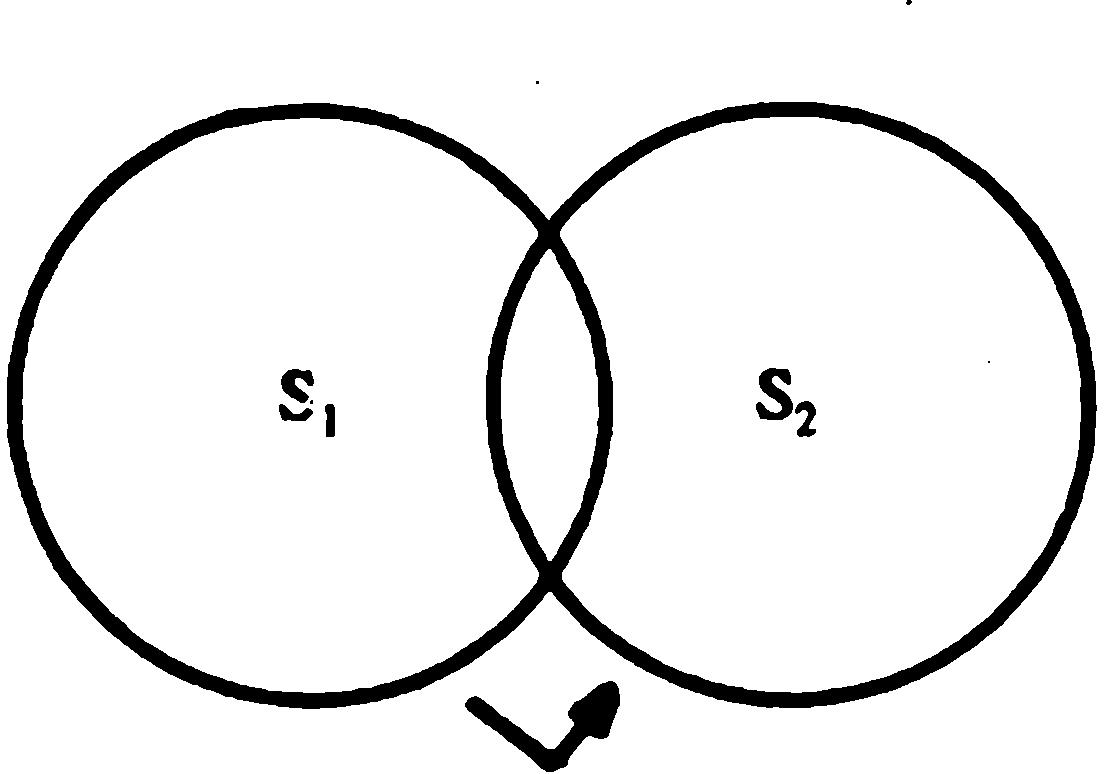
In the first part, we demonstrated how the subject is caused by the primary experience of a lack. The attempt at solving this lack by using signifiers entails a confrontation with another lack, this time within the chain of signifiers.

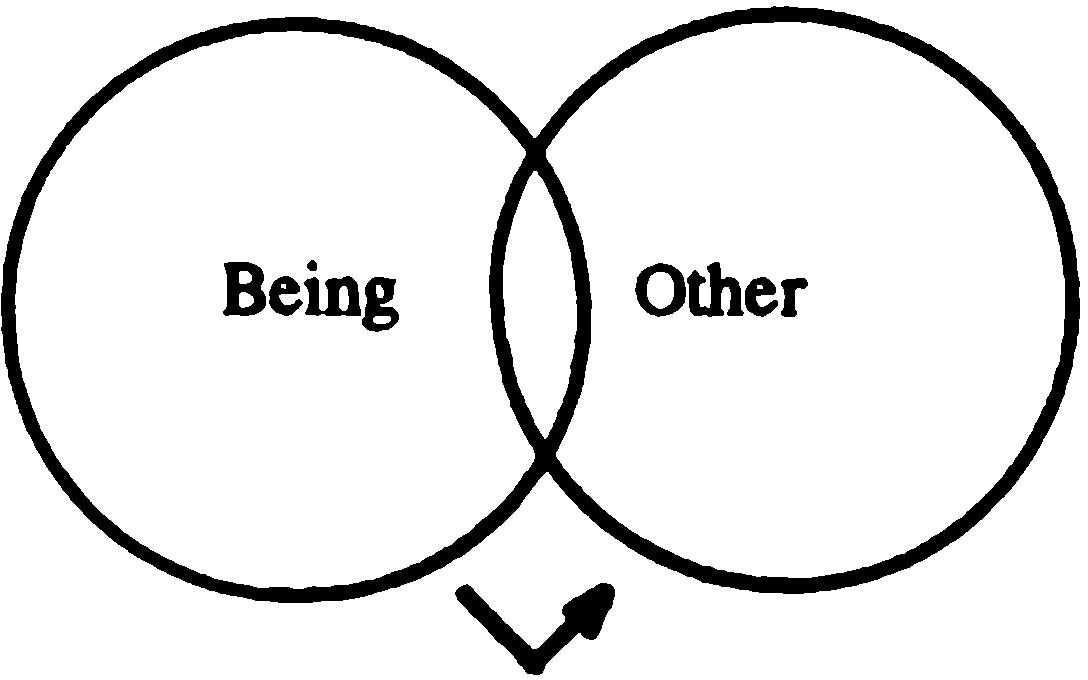
In this second part, we will concentrate on the two constitutive processes within this causation of the subject: alienation and separation. The first one is fully elaborated by Lacan and can easily by traced back to Freud . The second one concerns Lacan’s interpretation of the end and the finality of the analytic treatment. His theoretical development in these matters comprises an ever shifting interpretation of this idea of separation.

Being_Otheraaaa

asdfasdf

s1s2

Verhaeghe pre-ontological pt 2

Verhaeghe, P. (1998). Causation and Destitution of a Pre-ontological Non-entity: On the Lacanian Subject. In D. Nobus (Ed.),  Key Concepts of Lacanian Psychoanalysis (pp. 164-189). New York: State University of New York Press.

Verhaeghe part 1
Verhaeghe part 1a

In Seminar XI, Lacan began his discussion of the causation of the subject with something that was already well-known to his audience: the drive, being always a partial drive, revolves around a lack. However, at that point, Lacan surprised his audience by stating that there are two lacks.

The first one is the lack in the chain of signifiers, the interval between two signifiers.

This is the typically hysterical – and thus Freudian – level in which desire can never be fully expressed, let alone satisfied . In Lacanian terms, this reads that the subject, confronted with the enigma of the desire of the Other, tries to verbalise this desire and thus constitutes itself by identifying with the signifiers in the field of the Other, without ever succeeding in filling the gap between subject and Other.

Hence, the continuous movement from signifier to signifier, in which the subject alternately appears and disappears. The ensuing alienation is a continuous flywheel movement around the lack in the chain of signifiers, resulting in what Lacan called l’avènement du sujet, the advent of the subject. 168

 Phylogeny: the evolutionary history of a kind of organism, the evolution of a genetically related group of organisms as distinguished from the development of the individual organism; the evolutionary history of a group of organisms, especially as depicted in a family tree.

Ontogeny:  the development or course of development especially of an individual organism; the development or developmental history of an individual organism.

*****
A total aside from Adrian Johnston

Lacanian theory does not require, as Butler vehemently alleges, a dubious dichotomy between the symbolic and the social. An easy way to clarify matters is to invoke the Freudian distinction between phylogeny and ontogeny.

The symbolic order is a historically contingent formation at the phylogenetic level, the level transcending the ontogenetic life history of the individual. In an inverse correlation, for the particular subject whose self-identity is mediated by this pre-existent system, this same symbolic order is effectively transcendental in that it serves as a possibility condition for this form of subjectivity itself.

Without a symbolic order, the individual would not be a proper subject. The massive time lag between the different diachronic speeds of phylogeny and ontogeny is partially responsible for this dual status of the symbolic as paradoxically both historical (with respect to the phylogenetic collective) and transcendental (with respect to the ontogenetic individual).

This temporal discrepancy makes it seem, from the vantage point of the individual subject’s perspective, as if the symbolic order is synchronic, which it de facto is given the slowness of its rates of change versus the comparative brevity and rapidity of the individual’s life history.

Butler fails to fully appreciate Lacan’s philosophical audacity in tacitly relying upon a rigid distinction between the historical and the transcendental to critique him. But, what about Butler’s key assertion that the Lacanian transcendental emperor wears no clothes, in other words, that the binding force of the symbolic rests upon an empty performative act? Is there no other reason for the symbolic’s authority apart from the bald, blunt assertion of this authority by those theorizing about it?

Again, the transcendence of the symbolic order in relation to particular subjects is of paramount importance here. Individuals neither choose what kind of symbolic order to be born into nor have the liberty to capriciously forge their own idiosyncratic symbolic orders ex nihilo. Furthermore, beyond Lacanian theory itself, psychoanalysis in general is committed to the notion that, as the saying goes, “the child is the father of the man.”
*****

The innovation begins when Lacan surprises his audience by stating that there is yet another lack, which he calls anterior and real in comparison to its counterpart.

Furthermore, the lack in the chain of signifiers is only a retake on this primal lack, the originality of which resides in the fact that it has to be understood in the context of [ ‘avenement du vivant (the advent of the living being) .

This entails the emergence of sexual reproduction in phylogeny, which is repeated with every ontogeny.

At this point, the level of Unbegriff (incomprehension), beyond the psychological comprehensibility of the previous lack, is reached .

The anterior lack concerns the price life has to pay for the acquisition of sexual reproduction. From the moment an organism becomes capable of reproducing itself in a sexual way, it loses its individual immortality and death becomes an unavoidable necessity .

At birth, the individual loses something and this loss will be represented later on by
all other substitute objects. 168

The subject encounters a lack in the discourse of the Other, in which the desire of the Other ‘crawls, slips, escapes, like the ferret, ‘ producing an enigma to which the subject has to produce an answer.

It is at that point that the subject recurs to the anterior lack which entails its own disappearance. As an answer to the riddle of the desire of the Other, it presents itself and thus its disappearance: does the Other desire me, can s/he afford to lose me?

This fantasy, in which one’s own death is depicted as a form of testing the limits of the love
of the Other, is fairly well-known in adults and children alike: Veut-il me perdre ?, Does he want to lose me?

zupančič sublimation pt 2

Zupančič, A. (2003) The Shortest Shadow: Nietzsche’s Philosophy of the Two. MIT Press

Here we come to the last grand narrative from the era of the end of grand narratives: there is no Real, everything is convention, language games, a labyrinth of different possibilities that, at least in principle, are all of equal value. What is the effect of this thesis?

Its effect is not exactly the disappearance of the Real, but, rather, its full coincidence with reality. In other words, the reality principle is now conceived of as the only and ultimate Real.

This is what Nietzsche calls “modern nihilism” and the “crisis of values,” the latter being precisely the “crisis of sublimation” in the sense described above.

At issue is not a complaint about the corruption of values, and lack of respect for them, but a diagnosis concerning the weakening of the sublimatory force, the force that could produce or create some distance toward the reality principle and its claims.

It entails the closure of the very space of creativity. This is why it is very important to keep insisting upon the notion of the Real that, in turn, has to be defined in terms other than those of some “authentic Real” lurking behind the deceptive appearances. And the (late) Lacanian notion of the Real can help us to do precisely that.

The Real is not some authentic Beyond, constituting the truth of the reality. The Real is not the Beyond of reality, but its own blind spot or dysfunction—that is to say, the Real is the stumbling block on account of which reality does not fully coincide with itself. The Real is the intrinsic division of reality itself.

zupančič sublimation pt 1

Zupančič, A. (2003) The Shortest Shadow: Nietzsche’s Philosophy of the Two. MIT Press

If this man were to act as Kant suggests (and thus to renounce spending the night with the Lady), he would embrace the pleasure principle as the ultimate principle of his action.

On the other hand, his decision to spend the night with his Lady, regardless of the consequences, testifies to the opposite… “to spend the night with the desired Lady,” even if we are to hang for it, is a perfect example of sublimation

“To raise an object to the dignity of the Thing,” as a fundamental gesture of sublimation, thus enables us to accept as possible something the possibility of which is excluded from the realm of the reality principle.

The  [reality principle] normally functions as the criterion of possible transgressions of the pleasure principle. That is to say: the reality principle sets limits to transgressions of the pleasure principle; it tolerates, or even imposes, certain transgressions, and excludes
others.

For instance, it [reality principle] demands that we accept some displeasure as the condition of our survival, and of our social well being in general, whereas it excludes some other transgressions of the pleasure principle that serve no such purpose (or no purpose at all).

Its [reality principle] function of criterion hence consists in setting limits within the field governed by the binary system pleasure/pain. Sublimation is what enables us to challenge this criterion, and eventually to formulate a different one.

The important thing to point out here is that the reality principle is not simply some kind of natural way associated with how things are, to which sublimation would oppose itself
in the name of some Idea.

The reality principle itself is ideologically mediated; one could even claim that it constitutes the highest form of ideology, the ideology that presents itself as empirical fact or (biological, economic . . .) necessity (and that we tend to perceive as nonideological).

Thus, the Lacanian theory of sublimation does not suggest that sublimation turns away from the Real in the name of some Idea; rather, it suggest that sublimation gets closer
to the Real than the reality principle does.

It [sublimation] aims at the Real precisely at the point where the Real cannot be reduced to reality.

One could say that sublimation opposes itself to reality, or turns away from it, precisely in the name of the Real.

To raise an object to the dignity of the Thing is not to idealize it, but, rather, to “realize” it, that is, to make it function as a stand-in for the Real.

Sublimation is thus related to ethics insofar as it is not entirely subordinated to the reality principle, but liberates or creates a space from which it is possible to attribute certain values to something other than the recognized and established “common good.”

The creative act of sublimation is not only a creation of some new good, but also (and principally) the creation and maintenance of a certain space for objects that have no place in the given, extant reality, objects that are considered “impossible.” Sublimation gives
value to what the reality principle does not value.

If Antigone raises her brother’s funeral to the dignity of the Thing, Sophocles raises to the dignity of the Thing the very passion or desire that supports Antigone in her act.

In the play Antigone, we have Antigone’s act, but we also have Sophocles’ act, which consists in giving an uncontestable value to the “irrational passion” of Antigone’s act.

We are thus dealing with a rather unusual meaning of the term sublimation: it concerns the creation of a certain space, scene, or “stage” that enables us to value something that is situated beyond the reality principle, as well as beyond the principle of the common good. It is at this point that sublimation is related to ethics.

However, another remark is necessary here. The attribution of value to the beyond of the reality principle is never a direct, immediate one. In other words, what sublimation allows us to value or to appreciate is never the Thing (das Ding) itself, but always some more or less banal, everyday object, a quotidian object elevated to the dignity of the Thing (and an object that also somehow always masks the Thing as the central void): the night spent with the Lady; a brother’s burial. . . .

In Lacanian terms, sublimation stages a parade, displaying a series of objets petit a that have it in their power not only to evoke the Thing, but also to mask or veil it. They obfuscate the difference between themselves and the void to which they give body, the void to which they owe what appears to be their most intrinsic feature of value.

From there emerges the other significant theme that Lacan develops in relation to sublimation: the theme of delusion or lure. It is no coincidence that the chapter introducing the discussion of sublimation bears the title “Drives and Lures.”

freeland ethics Sem VII pt. 2 Desire borne by death

Freeland, C. 2013. Antigone in Her Unbearable Splendour: New Essays on Jacques Lacan’s The Ethics of Psychoanalysis. Albany: State University of New York Press.

borne: to bring, transported, transmitted by, spread by, carried by

Lacan probably ses the traditional philosophical persepectives on ethics as framed and trapped in the theater of a philosophical mirror stage wherein the human, ethical subject is conceived as born prematurely, a fragile, helpless and fragmented body confronting and recognizing its wholeness in the other of the mirror image before it and longing to be that wholenes.  Is Lacan’s psychoanalytic ethic not first and essentially the critical attempt to move beyond this ethical mirror stage, to move beyond the search for the anticipated wholeness of a “meaning of life”?  39

ethics for Lacan is ethics of speech … then the ethical, psychoanalytical Truth that arises in the psychoanalytic brushes with death would not wish to install or monumentalize Truth or Death itself as the ultimate and hidden meaning in life.

Its pronouncements would not articulate either a timeless Truth or a terrifying Death as the “one” meaning of life, for this might make psychoanalysis a type of hermeneutics, and “death” would then be something, a “meaning,” that, given the proper methodology, the proper hermeneutic, could somehow be brought from the depth to the surface of language and stated — phenomenalized, made to appear — perhaps in the form of a proposition, or in a form of life, as the statement of a Truth that would guarantee that life is not “for nothing.”

In Lacan’s work, the relationship between language and death is completely different than this familiar scheme. The Lacanian ethics of psychoanalysis is therefore first a disruption of this hermeneutical scheme a form of resistance to the systematic statement of philosophical meaning of life taken as the key element and link in the triumvirate of the True, the Good, and the Beautiful. Must the Lacanian ethic not first and fundamentally be a resistance to the Hegelian way of taking up death, …

Is the Lacanian ethic not undermining the very meaning of “oneness” and “meaning” in life? Is the “one meaning” always going to be “not one”?  Is Lacan’s statement not the instauration of the ethical necessity of confronting the disruption and the destitution of life that abides in every such statement, a death that takes place in language, that is to say, in desire?

Disruption rather than salvation in and through the systematic statement of the ultimately religious telos of Truth and Oneness: is this not Lacan’s desire, a desire borne by the death of philosophy. 40

freeland ethics Sem 7

Freeland, C. 2013. Antigone in Her Unbearable Splendour: New Essays on Jacques Lacan’s The Ethics of Psychoanalysis. Albany: State University of New York Press.

More than a “yearning,” the death drive is a drive unbound and immeasurable, a drive that defines human life.

As a work of poetic art, Antigone’s work is thus the work of truth, where gtruth in this case is the truth of desire, the death drive.  … a “zeropint” of word and image, a pooint where the word equals zero, where signification stumbles and comes to a halt. 7

his heroically implring his audience against any giving up or “giving way” on desire. and while it may not at first seem to be much, it is also here that he leveraged the only remaining posibilites for human fredom and self-assertion in the face of seemingly impcable necessity 11

il n’y a pas de sujet connaissant  there is no such thing as a knowing subject. Beyond the measured articulations of the philosophical subject “who  knows,” and who first of all has “self-knowledge,” Lacan approached through the neologism lalangue another dimension of the enoyment of speaking that he calls the jouissance of speech, “an enjoying of speech qua jouissance of speech (parole jouissance en tant que jouissance de parole),” that is quite beyond and inaccessible to the measured articulations of the philosophical subject who knows what he/she wants. But this reference to jouissance requires that not only the enjoyment but also the suffering introduced by language be stressed.

The effects of the introduction of language into the living human being are not always so salutary in Lacan’s view as they may be for the philosophical ethical tradition, where the measured eloquence of truth brings self-mastery and has a healing effect, for language in the Lacanian universe introduces not only mastery an salvation, it also brings subjection.

It can even be seen as a parasite, a disease, virulence, an Other in which the subject from the day it is named, from the day it is a subject, is captured and defined. 19-20

The individual who is affected by the unconscious is the same individual who constitutes what I call the subject of a signifier. It is this subject — and not the subject as one “who knows” (connaissance) — that must also become the ethical subject caught in the knots of desire and moral-ethical law, a subject that is bound by the limits of language and that is inscirbed within the limits of the symbolic order.

Among the affects of the unconscious on the subject, would also include a desire to transgress those limits, a desire, and an unavowed passion to get back behind or beyond the limits of language, to exceed the limits of the law. This is a desire for the “Real,” … With the insciption in to the symbolic order comes order, comes regulations, and the reign of moral. law. The real is whatever disrupts that order and that law; whatever breaks the operation of the symbolic order.

Access to the real is difficult and perhaps danbgerous, but also not without a certain enjoyment, a certain jouissance  23

Todestrieb

Badioiu marks this lmit and present the psychoanalytic rupture with Platonic ontology by way of a resonance he brings into view between Lacan and the pre-Socratic philosophers, especially Heraclitus. deconstructs Plato by going back behind him, or before him, to a pre-Platonic thinking, … that came before the ontological metaphysics of Plato, and that may have in fact conditioned it, but which was subsequently silenced, left in fragments by the tradition of thought that emerged from Plato. … where Plato is the philosopher of the great higher unity of a transcendental Eidos, a true philosopher of the infinite, Hereclitus is a thinker of difference and of the gap, a philosopher of the enigmas of finitude and of the lack of final resolution andclosure in being. 36

It is in tragic drama, not philosophy, according to Lacan, that one encountes the drive and the distress of death. It is by “digging into verse,” as Mallarmé put it, that one encounters the abyss of death and the absence of God, forfeits the sureties of being, and is thereby brought to the limit where one must break with everything, even the traditional horizons of truth and the promise of futurity.

johnston vicious super-ego part 2 of 2

Johnston, A. (2001) The vicious Circle of the Super-Ego: The Pathological Trap of Guilt and the Beginning of Ethics. Psychoanlytic Studes (3): 3/4. 411-424.

Lacan is not so much interested in proposing a new prescriptive ethics as in comprehending the precise nature of moral masochism’, in fully grasping how the constellation of the id, the super-ego, and the socio-symbolic Umwelt of reality ‘pathologize’ the ethical field.

At most, this Lacanian analytic diagnosis of moral masochism should be interpreted as a preparatory clearing of the ground for a genuine ethics, as a mapping out of the obstacles hindering the construction and enactment of a non-pathological ‘metaphysics of morals’.

The introduction of the Law generates desire ex nihilo. Instead of forbidding a pre-existent set of urges in the individual, it teaches the subject what to covet, if only as an inaccessible vanishing point whose appearance of possible accessibility is a mirage engendered by the seemingly contingent nature of the Law and its authority.

Lacan is not so much interested in proposing a new prescriptive ethics as in comprehending the precise nature of ‘moral masochism’,

in fully grasping how the constellation of the id, the super-ego, and the socio-symbolic Umwelt of reality ‘pathologize’ the ethical field. At most, this Lacanian analytic diagnosis of moral masochism should be interpreted as a preparatory clearing of the ground for a genuine ethics, as a mapping out of the obstacles hindering the construction and enactment of a non-pathological ‘metaphysics of morals’.

At the beginning of this quotation, Lacan alludes to an observation that Freud formulates in his 1924 paper ‘The economic problem of masochism’. In the concluding paragraphs of that essay, Freud notes that the more the subject complies with reality’s prohibition of aggression, the greater the guilt the subject feels, the harsher the demands of the super-ego become.

Unlike external authorities, which can only observe and punish externalized acts of transgression, the super-ego sees and judges the subject’s ‘inner’ intentions. Freud pinpoints this as a paradox of sorts: the more the subject overtly obeys the rules of reality, the more the super-ego (unconsciously) inflicts the negative affect of guilt.

This paradox is illuminated by the theory of the super-ego as presented in Civilization and Its Discontents: the super-ego is a subliminatory channel for the id’s sadism; the id diverts the aggressive drives onto the subject’s own ego when the reality principle prevents it from discharging this aggression against others;

thus, the more the ‘moral’ subject refrains from enacting these aggressive drives in reality (i.e., the more he/she heeds the ‘ethical’ principles of his/her social milieu), the more the id is compelled to utilize the super-ego to ‘work off’ aggression against the ego (hence, the greater the feeling of guilt, since Freud claims that guilt is the ‘pain’ consciously experienced by the ego as a result of the unconscious subliminatory dynamic occurring at the level of id and super-ego). How does Lacan integrate this line of Freudian reasoning?

it isn’t simply a matter of claiming that the Law arouses desire out of nowhere through its prohibitions: it’s also the case that obedience to the Law is cemented in place by the struggle to fend off these desires, that the more rigid the subject’s adherence to the rules, the presumably greater is his/her need to repress increasingly powerful urges to contravene it.

Consequently, when Lacan speaks about being guilty for having ‘ceded’ or ‘given ground’ relative to one’s desire, what he really means is the following:

the more the subject surrenders (to) his/her desires by obeying the restrictions of the Law, the more guilty he/she feels,

since such concessions only aggravate the (unconscious) volatility and intensity of these same desires (namely, ‘internal’ repressed desires which never fail to escape the notice of the omniscient authority of the sadistic super-ego). 419

Near the end of his 1974 television interview, Lacan clearly advances this claim in saying that, “Freud reminds us that it’s not evil, but good, that engenders guilt” (Lacan, p. 45). At no point does Lacan contest the Freudian definition of guilt as a negative affect resulting from the super-ego’s punishment of the ego.

Hence, Lacan, in following Freud here, isn’t treating guilt as a properly ethico-moral sentiment, but, rather, as a symptom of super-ego aggression (with this aggression itself being acknowledged as arising from ceded, aim-inhibited desires whose intensity increases the longer and more severely they’re held in check).

Consequently, one can be ‘guilty’ before the tribunal of the super-ego without, for all that, being actually guilty in an ethico-moral sense per se. 419

Lacan merely brings one to the point where the essential question that must be answered if a psychoanalytic ethics is to be possible at all poses itself:

Can conscience function beyond the super-ego, namely, is the subject able to break out of the cycle running from Law to desire to guilt?

If not, then the Freudian diagnosis of conscience as a symptomatic by-product of the superego’s id-driven sadism really does represent the end of ethics in any meaningful, philosophically consistent mode.

Both Freud and Lacan have made signiŽficant inroads into demystifying the origins and mechanisms of feeling guilty. However, it remains doubtful if psychoanalysis has yet pronounced its deŽfinitive verdict as regards being guilty.

vanheule

Metaphor in psychosis: on the possible convergence of Lacanian theory and neuro-scientific research. HYPOTHESIS AND THEORY, 03 June 2015

Lacan considers the subject as an effect of this connotation and thus concludes that the subject is only half-said, which is expressed by the bar through S in the symbol for the subject: $.

In terms of the process of signification, $ is the result of a dialectical tension. At the level of the message, speech functions to build images regarding who we are. These images make up the ego, but are selective imaginary self-representations that exclude certain signifiers.

The unconscious subject consists of these“forgotten”signifiers,acrosswhichthe
subject is fundamentally scattered; hence the idea that the subject is divided.

In neurosis this division is experienced as internal, hence the neurotic tendency
to repress, where as in psychosis it is experienced as disconnected from one’s own intentions and as coming from without.

In his interpretation a special signifier is installed during the Oedipus complex: the paternal signifier or Name-of-the-Father. This signifier nominates the desire of the maternal figure with which the child is first confronted, and it opens up the
dimension of the law.

Through the Name-of-the-Father people understand themselves and others in terms of rules and standards that one should obey. They use this signifier to make sense of
desire and it helps them to experience permanency in social relations.