Boothby, R. (2001) Freud as Philosopher. New York: Routledge. Reprinted Figurations of the Objet a. In Jacques Lacan Critical Evaluations in Cultural Theory Volume II Philosophy Edited by Slavoj Zizek, London: Routledge, 2003. pp. 159-191.
In toilet training, the anus is “colonized,” to invoke a happily apt pun, by the other’s desire.
Throughout the future life of the individual, the contractions and relaxations of the anal muscle will inevitably call up immensely more global connotations of mastery or submission, independence or dependence. Taken up into this physiologico-emotional complex, the fecal material becomes freighted with significance that utterly outstrips all natural or animal attitudes toward excrement. In accord with a symbolic equivalence already familiar to Freud, the feces become privileged tokens in an exchange of love — excrement as primordial gift.
Lacan extends this distinction between eye and gaze to propose a general theory of vision in which the act of seeing functions precisely to avoid the gaze.
He thus suggests that painting produces a “pacifying, Apollinian effect” that feeds the eye with reassuringly stable objects in order to allow the viewer to put the gaze out of play.
In painting, “something is given not so much to the gaze as to the eye, something that involves the abandonment, the laying down, of the gaze” (FFC, 101). How are we to understand this laying down of the gaze? The painter offers the picture to molify the gaze of the spectator, as if the gesture of painting were a matter of escaping from a predator by distracting it with a piece of meat.
The painter gives something to the person who must stand in front of his painting which, in part, at least, of the painting, might be summed up thus — You want to see? Well, take a look at this! he gives something for the eye to feed on, but he invites the person to whom this picture is presented to lay down his gaze there as one lays down one’s weapons. (Lacan, 101)
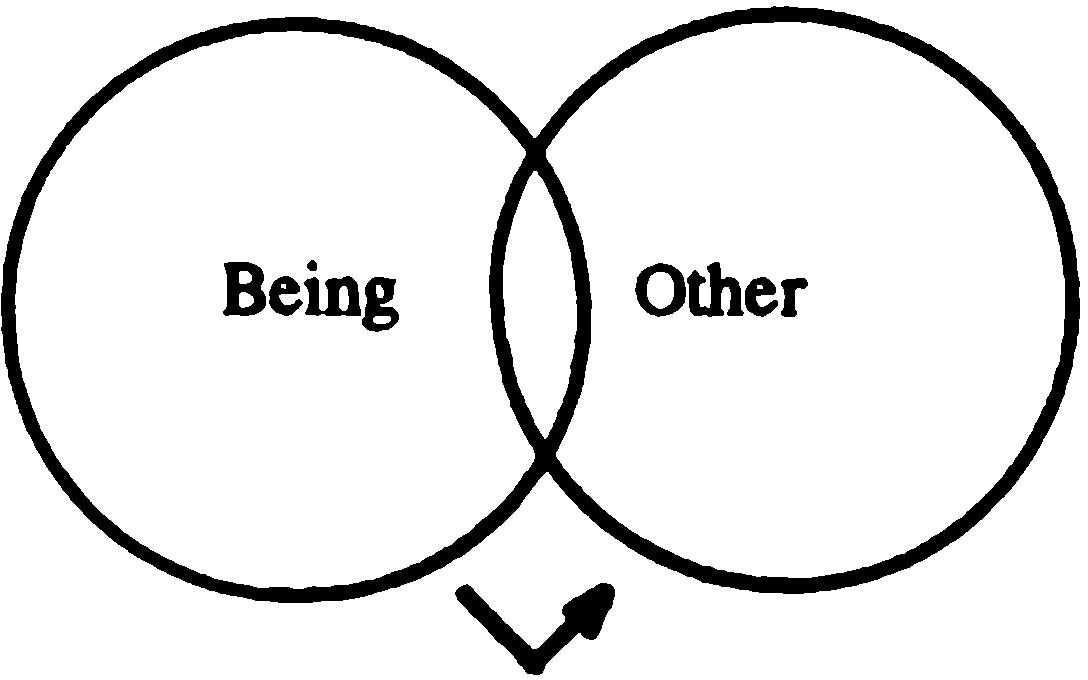
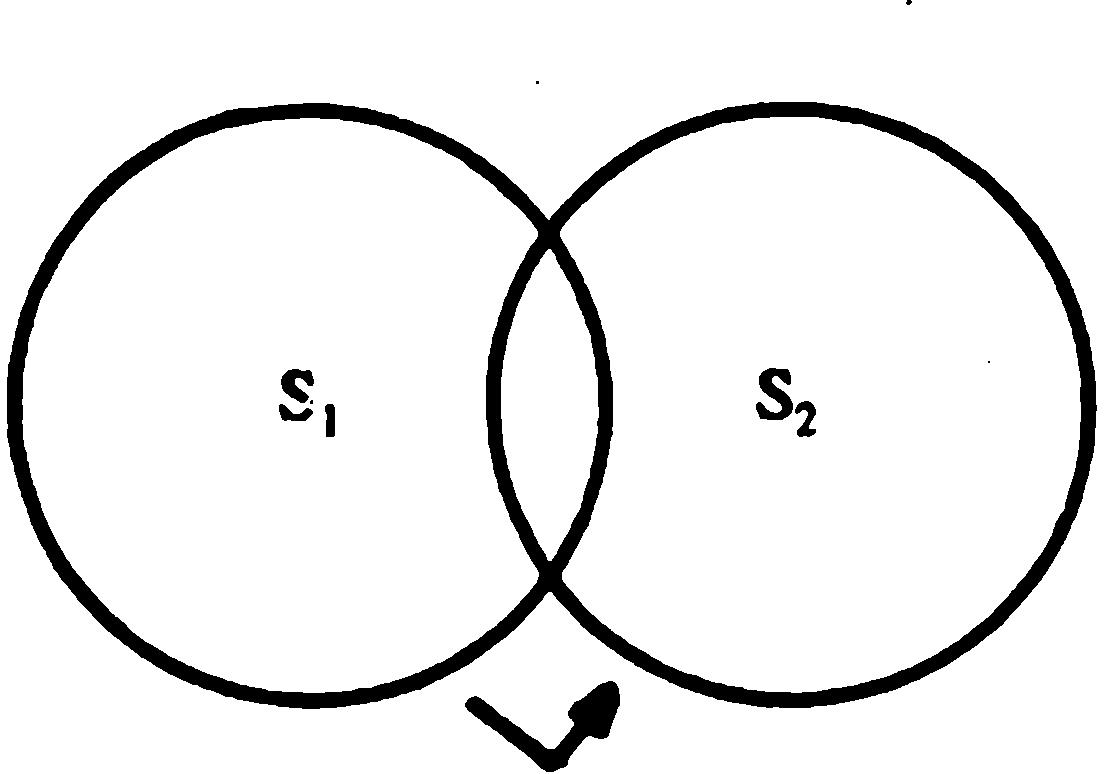
By referring the act of seeing to some third point off the axis of seer and seen, Lacan succeeds in revealing the internal complexity of the scopic drive. The third position, itself invisible yet functioning continually to reenergize the subject’s investment in the object of sight, is none other that the objet a.
Its presence-by-absence serves to produce “the ambiguity that affects anything that is inscribed in the register of the scopic drive” (FFC, 83). To illustrate this point, we can return to the example of the voyeur who, relentlessly goaded on by the scopic drive, is most completely reclaimed by the force of the drive precisely when he fails to see what he is looking for.
That is to say, as a search for the objet a, an object that by definition cannot be given, the scopic drive is most surely reinforced and recreated at the moment when it appears to draw closest to its objective, yet fails to grasp it.
It is as if this very failure is the evidence that the objet a is there. The point is perfectly demonstrated by the essential pose, the veritable sine qua non, of soft-core pornographic magazines: the so-called spread shot.
The centerpiece of this shot is the vulva spread wide for the camera to inspect. Seeking to explain the appeal of this defining image we might naively suppose that the spread shot satisfies insofar as it “shows all.” It leaves nothing to the imagination.
The viewer has finally won unimpeded visual access to the inner secret of the feminine. From a Lacanian point of view, however, the conclusion is exactly the opposite.
What attracts the scopic drive to the vaginal spread shot is precisely what it doesn’t show, to what in fact cannot be shown. The result of the “show all” strategy is to create even more intense hunger for the thing that cannot be imaged: the objet a.
The more you see, the less you find what you are really looking for. The “proof” of the Lacanian view lies in the compulsiveness with which the consumer of pornography moves from one girlie image to another, to another, and so on.
If the spread shot really succeeded in “showing all,” then one image would be enough. But the pornographic drive shows its real essence less in the excitement created by one image than by the insatiable hunger it generates for yet another image.
The enormous commercial potency of pornography derives in part from the fact that it succeeds in continually restimulating the very hunger it promises to satisfy.
The investment of interest in pornography depends upon the subject’s relation to something that ceaselessly escapes the roving, lustful eye, some moment of ultimate satisfaction that is continually promised but never fully given.
In this way, the example of the pornographic image shows very well what Lacan means by saying that the objet a is not the aim of the drive but rather the perpetually eccentric point around which the drive revolves.
The point of crucial theoretical importance in all of this concerns the way in which the objet a irrecoverably triangulates the subject’s relation to the aim of the drive.
The Lacanian gaze is thus understandable only in the triadic structure of desire, the Oedipal structure in which the subject is faced with the question of the Other’s desire.
In the actual experience of the Oedipal stage, the experience of the gaze begins to unfold when the mother no longer simply presents an image to the child but is seen to be looking for something herself, the moment when the suspicion dawns that the mother’s desire is directed beyond the child itself to some third position.
Said otherwise, the gaze is one of the prime figures in which the imaginary relation opens out upon a symbolic horizon.
It is by virtue of its capacity to excite an experience of this dimension of the gaze, precisely through preventing the analysand from seeing the eyes of the analyst, that psychoanalysis sets up the special force field of the transference.
Its place will come to be occupied by the entirety of the symbolic order. In the place of the gaze, the subject will come to experience the call of the signifier.
Correlatively, it is a certain suspension or avoidance of the gaze that founds the entirety of the imaginary register, both the ego and its objects. This elision of the gaze is the very essence of imaginary méconnaissance