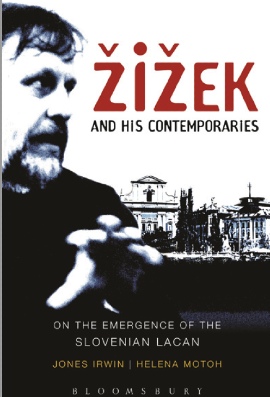
Interview with Alenka Zupančič

Philosophy or Psychoanalysis? Yes, please!
Agon Hamza & Frank Ruda Crisis and Critique Volume 7 Issue 1.

Here is a talk by Zupančič at Freud Museum June 2019

Download here

At the moment when philosophy was just about ready to abandon some of its key central notions as belonging to its own metaphysical past, from which it was eager to escape, along came Lacan, and taught us an invaluable lesson: it is not these notions themselves that are problematic; what can be problematic in some ways of doing philosophy is the disavowal or effacement of the inherent contradiction, even antagonism, that these notions imply, and are part of. That is why, by simply abandoning these notions (like subject, truth, the real…), we are abandoning the battlefield, rather than winning any significant battles.

The Clinic should not be considered as a kind of holy grail providing the practitioners with automatic superiority when it comes to working theoretically, with psychoanalytic concepts.

Psychoanalysis is not a science, or “scientific” in the usual sense of this term, because it insists on a dimension of truth which is irreducible to “accuracy” or to simple opposition true/false. At the same time the whole point of Lacan is that this insistence doesn’t simply make it unscientific (unverifiable, without any firm criteria…), but calls for a different kind of formalization and situates psychoanalysis in a singular position in the context of science. And here philosophy, which is also not a science in the usual sense of the term, can and should be its ally, even partner. They are obviously not the same, but their often very critical dialogue shouldn’t obfuscate the fact that there are also “sisters in arms”.

My claim is that the Freudian notion of sexuality is above all a concept, a conceptual invention, and not simply a name for certain empirical “activities” that exist out there and that Freud refers to when talking about sexuality. As such, this concept is also genuinely “philosophical”. It links together, in a complex and most interesting way, language and the drives, it compels us to think a singular ontological form of negativity, to reconsider the simplistic human/animal divide, and so on…

One of the fundamental claims of my book is that there is something
about sexuality that is inherently problematic, “impossible”, and is not
such simply because of external obstacles and prohibitions. What we have
been witnessing over more than half a century has been a systematic obliteration, effacement, repression of this negativity inherent to sexuality
– and not simply repression of sexuality.

I’m not interested in sexuality as a case of “local ontology,” but as possibly providing some key conceptual elements for the ontological interrogation as such.

What we have been witnessing over more than half a century has been a systematic obliteration, effacement, repression of this negativity inherent to sexuality – and not simply repression of sexuality.

Sexuality has been, and still is, systematically reduced, yes, reduced, to a self-evident phenomenon consisting simply of some positive features, and problematic only because caught in the standard ideological warfare: shall we “liberally” show and admit everything, or “conservatively” hide and prohibit most of it? But show or prohibit what exactly, what is this “it” that we try to regulate when we regulate sexuality? This is what the title of my book tries to ask: What IS this sex that we are talking about? Is it really there, anywhere, as a simply positive entity to be regulated in this or that way? No, it is not. And this is precisely why we are “obsessed” with it, in one way or another, also when we want to get rid of it altogether.

this is probably the most daring philosophical proposition of the book. Namely, that sexuality is the point of a short circuit between ontology and epistemology. If there is a limit to what I can know, what is the status of this limit? Does it only tell us something about our subjective limitations on account of which we can never fully grasp being such as it is in itself? Or is there a constellation in which this not-knowing possibly tells us something about being itself, its own “lapse of being”?

There is, I believe; it is the constellation that Freud conceptualized under the name of the unconscious. Sexuality is not simply the content of the unconscious, understood as a container of repressed thoughts. The relationship between sex and the unconscious is not that between a content and its container. Or that between some primary, raw being, and repression (and other operations) performed on it. The unconscious is a thought process, and it is “sexualized” from within, so to say. The unconscious is not sexual because of the dirty thoughts it may contain or hide, but because of how it works. If I keep emphasizing that I’m interested in the psychoanalytical concept of sexuality, and not simply in sexuality, it is because of the fundamental link between sexuality and the unconscious discovered by Freud.

Sexuality enters the Freudian perspective strictly speaking only in so far as it is “unconscious sexuality”. Yet “unconscious sexuality” does not simply mean that we are not aware of it, while it constitutes a hidden truth of most of our actions.

Unconsciousness does not mean the opposite of consciousness, it refers to an active and ongoing process, the work of censorship, substitution, condensation…, and this work is itself “sexual”, implied in desire, intrinsic to sexuality, rather than simply performed in relation to it.

Tracy McNulty

Demanding the Impossible: Desire and Social Change

Volume 20, Number 1 2009
doi 10.1215/10407391-2008-015
d i f f e r e n c e s : A Journal of Feminist Cultural Studies

What is the relationship between desire and social change?

the ethical stance or subjective position of an individual might incite a change of position in other people

The larger question these examples raise is whether the subjective stance of one person can initiate broad change or inspire collective action by means other than the group psychology: in other words, not by appealing to a particular set of values or ideals, or by cementing the group through identification or libidinal cathexes, or by offering some kind of external or even transcendental foundation for the ego, but by foregrounding the experience of the willing subject.

One can be determined to live a good or a moral or a selfless life, and yet this determination often fails inasmuch as it is fundamentally in conflict with an unconscious position, which it attempts to repress or control.

Desire, on the other hand, supposes the subject of the unconscious: it is not sustained by identification with something “outside” the subject that would allow it to repress the drives or facilitate its refusal to know anything about the unconscious. When Lacan offers as a formulation of the ethics of psychoanalysis the imperative not to give up on one’s desirene pas céder sur son désir—he suggests that desire is what admits of no compromise or concession, and that it therefore always bears some relation to death (Ethics 319).

Hallward is interested not in the role of the ideal in soliciting identification, but in the force of will and the voluntarist dimension of change. His examples are all the more provocative in that they include not only the great leaders who have given their names to religious and political movements but individuals working in relative obscurity whose apparently very modest acts have unexpectedly brought about important social transformations

I propose to take a more psychoanalytic approach to the problem by considering the individual act not principally as an instance of will or determination, but for the way it lays bare the stakes of desire. What distinguishes desire from determination or will?

What distinguishes desire from determination or will?

The interest of the question “What would Jesus do?” for example, is that it makes an implicit distinction between Jesus as a support for identification and Jesus as a subject of desire. The question supposes a kind of immovability in the desire of Jesus, something nonnegotiable: it implies that Jesus would not make concessions, that he would not waver.

If the answer to the question is somehow obvious, it is not because it concerns some specific content or principle, but because desire is an orientation or a stance with respect to the impossible object that causes it, and not a response to a particular case or circumstance.

The question is of a very different order than “What would Jesus say?” or “What would Jesus teach?” because it isn’t a matter of ideals, agendas, or programs.

It is also different from “What would Jesus want?” or “What would Jesus tell you to do?” because it is not a matter of demands or of satisfying a leader or an idealized role model by doing what we think he wants.

Desire gives rise to a new object, an object that did not exist before, that intervenes in the world so as to transform it

it is fidelity to an impossible cause of desire, not fidelity to a constituency

Desire is an orientation or a stance with respect to the impossible object that causes it, and not a response to a particular case or circumstance

Desire presents a challenge because it concerns the status of the act and not the affirmation of ideals or beliefs. It makes us aware of how the ideals we espouse make it possible not to act.

how desire differs from the idealizing love at stake in identification and therefore about its transformative potential.

Anxiety is the affect of psychoanalysis, because it responds to the analyst’s desire to know by overcoming the censorship applied to unconscious thoughts. Only by traversing this anxiety can the subject come to have another knowledge about what is happening to him or her, and thus find liberation from the repetition-compulsion of the fantasy.

Desire must find expression in an act or in the production of a new object that intervenes in the world so as to transform it.

This is the essence of sublimation, in which the absolutely singular and subjective nature of desire manages to find expression in the production of an object that is collectively valorized.

The “great man” is someone whose object constitutes a sublimation not only for himself but for his age.

Each of the examples I have discussed bears witness to the tension between the anxiety induced by desire and the effects it produces, and the restorative tendency to silence or efface that desire and to shore up the ego. They also qualify the possible optimism about social change by reinforcing the extent to which this change occurs at an individual level, through a painstaking process of self-overcoming that is by no means certain and that only occurs in a minority of cases.

Religious history in particular suggests that it is much easier to hide behind the ideal ego or to take comfort in the illusion of the all-powerful father than to confront the Other’s desire or absence. This is why psychoanalysis is ultimately pessimistic about the possibility of social change and hesitates to affirm the social beyond the “minimal social link” inaugurated by the transference. If the members of the group do not also traverse castration, the anxiety that results from the confrontation with the Other’s desire will simply provoke repression and violence, and not a change of position.

anxiety is the affect of freedom

But while the desire of the founder may not be sufficient in and of itself to incite change, these examples also make clear that the anxiety it induces can have a transformative effect.

This is because it exposes the profound freedom of an act founded on desire, in and beyond the castration or lack it implies. Translated into a more existential idiom, my argument is really that anxiety is the affect of freedom.

Freud sees in Moses a free man, one who threw off the shackles of superstition and nature worship to create a space for the subject as something other than a product of nature or the object of a capricious deity.

Desire is what is most free in the subject, because it involves a liberation from the fantasy of seduction and its particular colonization of the psychic object. Freud sees in Moses a free man, one who threw off the shackles of superstition and nature worship to create a space for the subject as something other than a product of nature or the object of a capricious deity.

While Jewish legend promotes the idea that Moses is the chosen instrument of God, the much more interesting truth is that the man Moses invents something new for civilization: something we can all draw upon and that no God can take away. The difference between ideals and desire is the difference between ascribing their freedom to an omnipotent God and assuming responsibility for that freedom themselves.

In the same way, Freud himself will attempt to free the subject of the unconscious from the shackles of morality and to prevent its reduction to an object of scientific observation.

But he makes clear that this freedom can come only through traversing anxiety and not avoiding it. It is a difficult freedom, whose stakes are nowhere better expressed than in the words imputed to Jesus: “I lay down my life in order to take it up again.”

While these words have been interpreted by many as a promise of eternal life, I believe that the anxiety and solitude with which Jesus approaches his own death points to a more difficult interpretation. His act emphasizes that there is something more than “mere life” and that desire opens onto a life that can be accessed only by traversing death. In a similar vein, the practice of psychoanalysis is founded on the supposition that true freedom comes only from traversing the death drive and not repressing or avoiding it.

desire finds expression in an act or in the production of a new object that intervenes in the world so as to transform it

Freud invents a mechanism that allows the analysand to free himself by confronting castration. But the end of analysis could be construed not merely as a liberation but as a call to change the world by demanding that it make place for a new object.

It involves the assumption of the truth that there is no object for desire, but more importantly, the necessity of constructing a new object: if there is no object or aim that would satisfy desire, this also means that desire is not bound by any existing object and is therefore innately transcendent. The logical conclusion of an analysis supposes that desire finds expression in an act or in the production of a new object that intervenes in the world so as to transform it.

But as Hallward reveals through the simple example of a man who clears space for a new soccer field, this new object need not be something so lofty. What is important is that it create a space for the subject, a space that was not there before. The creation of this new object gives rise to social change without even aspiring to do so, because it is not guided by ideals or goals, but by the desire of a subject.

The creation of this new object gives rise to social change without even aspiring to do so, because it is not guided by ideals or goals, but by the desire of a subject.

Tracy McNulty 2013

The New man’s Fetish The Southern Journal of Philosophy Volume 51, Spindel Supplement 2013

McGowan

Why Loss?

Enjoyment and Sacrifice.

Constantly engage in self-destructive behaviour, humans fight wars, unleash loss on ourselves and others. Loss becomes enjoyable and produces something enjoyable, objects only have their worth through sacrifice and loss.

If we sacrifice something, we give the object transcendent value, in the process of losing it. Loss gives us something to desire. There are no values that just are, values come into existence through sacrifice.

Loss and sacrifice create an object to desire.

Loss gives us something to desire, it creates a value, value comes into existence through the act of sacrifice or loss.

Interview with Todd McGowan, Crisis and Critique Volume 7.2 Issue 2.

We can see now that there is no such thing as bare life. All life is politicized.
Even the attempt to protect or promote life is part of a political form of life, to use Agamben’s terms. The reluctance of conservative leaders to impose strict regulations reveals that regulating life is not inherently a conservative or ideological operation. The logic of capital demands the flow of commodities so that nothing gets in the way of accumulation. The outbreak interrupts this flow, thereby exposing how protecting life puts one at odds with the logic of capital. This means that we can see how the state—in its role of protecting life—is not just the servant of capital. If it were, we would not see the arrest of the flow of commodities. The catastrophe shows us that the state can be our friend, not just our enemy. The great revelation of the coronavirus catastrophe is the emancipatory power of the state, the ability of the state to serve as the site for collectivity rather than acting as just the handmaiden of capital. This is something that the theory of biopower can never accept. The anarchic tendencies behind this theory need to be shown as fundamentally libertarian, not leftist. This is what the virus has demonstrated to us.

Mladen Dolar Substance as Subject

On Hegel

Hegel’s Phenomenology of Spirit

The Break that the French Revolution posed, and continuation of French Revolution throughout Europe. Emblematic moment, defeat of conservative Prussian monarchy by Napoleon, who rode through Jena the day after Hegel finished the Phenomenology.

This is a book that could only be written now at this historical moment. Hegel’s aim, this particular kind of philosophy could only be done at this particular historical conjuncture. It is only from the contingent historical moment that one could reach for Absolute Knowledge.

It’s only missing the mark which creates the mark as such.

The path to truth is truth itself.

Hegel 1807

The whole thing is on the path. What you reach in the end is a vector which points backwards, all these failures, is the path to truth. You don’t learn anything knew with Absolute Knowledge, you only learn the Absolute Knowledge was the journey.

Substance is Subject

European University at St. Petersburg December 4 2018

Hegel famously maintained that no philosophy can be summed up in a single proposition or a first principle. As he said in the Phenomenology of Spirit: “Any so-called basic proposition or principle of philosophy, if true, is also false, just because it is only a principle.” Its truth can only lie in its development, its deployment, ultimately in a system, not in the assessment of some foundational proposition. Still, once in his career he nevertheless sinned against this view and proposed such a foundational proposition of his own philosophy: “In my view, which must be justified by the exposition of the system itself, everything hangs on apprehending and expressing the truth not merely as substance but also equally as subject.” Or briefly: ‘Substance is subject’.

Continue reading “Mladen Dolar Substance as Subject”

McGowan

On ‘symbolic disinvestment’ as a way to resist the obscene excess of capitalism

Freedom through Conversion

Rupture with my given identity. Not all conversions are the same. No one is self-identical. But if no-one converts, this lack of self-identity never becomes evident, this act of conversion attests to this self-division and makes it explicit, and this freedom that self-division gives you.

Self-division makes us free. Conversion makes self-division or division of subject apparent.

Leap into some new form of satisfaction. Without security that this new form of authority will ground yourself like the old authority it is a Leap Of Faith. The problem is most conversions, are conversions into new forms of certainty. We convert into something that will give us even a more secure form that the old identity.

Radical Openness. Michael Clayton the movie. As a example of conversion, it leaves him a blank slate. It doesn’t give him a new sense of security, sense of wholeness.

Problem with conversion: Looking for a new form of satisfaction that will fill in their lack. Overcome their self-division. Richard Dawkins is one of the most renowned atheists in the world. Even though in that conversion to atheism, there is a way to recoup self-division, in security, he can fill in the lack with his belief in atheism. Atheism will increase one’s satisfaction, will give the person more marvels to look at in the world. Whole vistas of possibility will open up. Conversion becomes a more satisfying form of satisfaction, one without any LACK at all.

Continue reading “McGowan”

Alenka Zupančič Hamlet Desire Law

Ethics and tragedy in Lacan in The Cambridge Companion to Lacan Edited by Jean-Michel Rabaté, Cambridge University Press 2003

Analysis is not here to help us come to terms with the sacrifices that society inflicts upon us, nor to compensate for these sacrifices with the narcissistic satisfaction linked to our awareness of the “tragic split” that divides us and prevents us from ever being fully satisfied.

Psychoanalysis is not here to repair the damage, to help the social machine to function more smoothly and to reconstruct whatever was ill-constructed. It is there to take us further along the path that our “problems” have put us on,

Continue reading “Alenka Zupančič Hamlet Desire Law”

Alenka Zupančič interview

2014

Alenka Zupančič : The Lacanian concept of the Real allows for a problematization of this opposition which had become paralysing and unproductive philosophically. We must of course be wary of the tendency to see in this Lacanian move a simple affirmation of a naive realism – the Real understood in this objectivist fashion. The ‘Real’ for Lacan is not reducible to the discursive but neither is it simply an advocation of an ontological realism, understood unproblematically. Especially since Lacan introduces a key difference between the notion of the Real and that of being. They are related via a ‘third dimension’, that of the ‘signifier’, but they do not coincide.

What Lacan wants to tell us is that the signifier has ontological significance, the signifier tells us about ontology in a way that the notion of the signified is unable to (this latter being the usual realist referent; the object as the signified).

The signifier is interesting not because we could reduce everything to it and to different signifying operations (this reductionist question is completely false), but because there is something in the signifier and its operations that cannot be reduced back to the signifier and its operations.

This is the crucial point, and not some mythical or original outside of the signifier, irreducible to it. This is also what the ‘materialism of the signifier’ amounts to. Not simply to the fact that the signifier can have material consequences, but rather that the materialist position needs to do more than to pronounce matter the original principle. It has to account for a split or contradiction that is the matter. It has to grasp the concept of the matter beyond that imaginary notion of ‘something thick and hard’. I’m not saying: ‘For Lacan, the signifieris the real matter’, not at all.

I’m saying that, for Lacan, the signifier is what enables us to perceive the non-coincidence between being and the Real, and that this is what eventually leads to a new kind of materialism.

From this point of view, we can say that Lacan develops the modern moment in philosophy, but as Žižek says, ‘he develops it with a twist’. Then there is the new concept of the subject – another Lacanian ‘revolution’ in philosophy, retroactively relating the subject of the unconscious to the Cartesian cogito. This is often one of the great misunderstandings of Lacan (and psychoanalysis), that it jettisons the cogito, that it is anti-Cartesian pure and simple. This is a significant misunderstanding of the psychoanalytical concept of the ‘subject’ which was one of the main concepts for the delineation of a specific Lacanian orientation in the first place. This concept of ‘subject’ distinguished Lacan from the wider structuralist movement and their notion of a ‘subjectless structure’.

But somehow this conception of ‘subject’ is interpreted as anti-cogito, as the ‘subject’ is the unconscious subject. Therefore, it was important to clarify the connection between cogito and the unconscious and for example, there is an important anthology from the Ljubljana School of Psychoanalysis, where we explore this problematic in detail (Cogito and the Unconscious edited by Žižek [1998a] and including essays by all three thinkers as well as others in the Slovenian wider group of theorists). There is also the question of the radical break with premodern metaphysics involved in the Cartesian gesture, which Lacan judges crucial for the emergence of the subject of the unconscious.

This theme is crucial also for his understanding of ethics. In his important early seminar, Seminar VII, The Ethics of Psychoanalysis (Lacan 1992), he is discussing the history of ethical thought as it related for example to the metaphysical tradition. His specific example is Aristotle and there is obviously a debt here on one level to Aristotle’s Ethics as a text and conceptual scheme. However, there is also a clear and radical parting of the ways.

In my own work on ethics, in The Ethics of the Real: Kant, Lacan (Zupančič 2000), I draw out some of these themes. For example, I put forward a critique of what I term ‘bio-morality’ and which, in its contemporary developments, represents an allegiance (albeit in rather reduced ways) to Aristotle’s eudaimonistic ethics and metaphysics of being. This is not simply a criticism of Aristotle, but rather of what a revival of his conceptual paradigm today amounts to.

In relationship to the theme of ethics, I want to stress that what I develop out of Kant’s ethics must not be opposed or seen as completely distinct from politics. As Žižek very rightly pointed out, the contemporary fashion of playing (‘good’) ethics against (‘bad’) politics is more often than not a direct pendant of the ideology of late capitalism and its conception of democracy. Any rigorous political thought is conceived as potentially dangerous and leading to a possible ‘disaster’ (that is to say to a more fundamental change in how the present order functions), whereas ethics seems to be much safer, and centred mostly on our individual responsibility, rather than any kind of collective engagement. My own work on Kant and ethics already went against this tendency, pointing both at an unsettling dimension of Kantian ethics, as well as at its emphasis on the universal, rather than simply individual.

It is similar with psychoanalysis which supposedly also focuses on individual destinies and problems. Here, am I allowed to tell my joke about the grain of seed, or the man who thinks he is one?

He gets cured by the psychoanalysts and then he comes running back, crying that he has just been chased by a chicken. Don’t you know you are a human being, they say? Yes, I am cured. I know that I am a human being, and not a grain of seed. But, please, does the chicken know this? This is the crux of the politics (which is also an ethics) in the Ljubljana School of Psychoanalysis. It is not enough simply to deal with the plight of the ‘subject’ and fantasy, through psychoanalysis.

Rather, we must seek to transform the structures of the symbolic which sustain a given order, determine the Impossible-Real that they grapple with.

Sexuality

Alenka Zupančič: Yes, when we understand the question ‘why Freud and Lacan?’, or the question ‘why psychoanalysis?’, we come close to an understanding of the paradigmatic role which a revised notion of ‘sexuality’ must play in this discussion. Joan Copjec succinctly pointed out how, for example, in the term ‘sexual difference’ the term ‘sex’ has been replaced by the more neutered category of ‘gender’. As Joan – an allied member of the ‘Ljubljana School’ – put it: Gender theory performed one major feat: it removed the sex from sex. For awhile, gender theorists continued to speak of sexual practices, they ceased to question what sex or sexuality is; sex was no longer the subject of an ontological inquiry and reverted instead to being what it was in common parlance: some vague sort of distinction, but basically a secondary characteristic (when applied to the subject), a qualifier added to others, or (when applied to an act) something a bit naughty.

This is very far from what both Freud (from his early, 1905 text Three Essays on the Theory of Sexuality [Freud 1977]) and Lacan have been saying. For Freud, the notion of the ‘sexual’ is significantly broader than contemporary notions of sex. It is not a substance to be properly described and understood (by psychoanalysis), but more like an impasse that generates and structures different discursive edifices trying to respond to it. It is linked to a notion of a fundamental ontological impasse; this impasse is irreducible for Freud.

But we also see here all the accusations against psychoanalysis, that ‘Freud reduces everything to sex’. In one sense, this accusation is true but what it misses is the complexification and radicalization of what we mean by ‘sexuality’. Freud discovered human sexuality as a problem (in need of explanation), and not as something with which one could eventually explain every (other) problem. He ‘discovered’ sexuality as intrinsically meaningless, and not as the ultimate horizon of all humanly produced meaning. A clarification of this point is one of my ‘interventions’ in Why Psychoanalysis? Three Interventions (Zupančič 2008b). Lately, I dedicated a whole book to these questions – it came out in 2011 in Slovenia, but I’m still working on its English version.

On Materialism

The materialism of psychoanalysis is not simply materialism of the body;
and Lacan has learnt the philosophical lesson that is essential in this
respect: in order to be ‘materialist’ it is not enough to refer to the matter
as the first principle from which everything develops.

For, in this, we easily succumb to a rather idealistic notion of a somehow always-already spirited (‘vibrant’) matter. In recent debates, psychoanalysis – in the same package with all of the so-called post-structuralist thought – is often accused of relying on the formula ‘always-already’ as its magical formula. But this accusation misses the whole point: for psychoanalysis, ‘always-already’ is a retroactive effect of some radical contingency that changes given symbolic coordinates.

What a materialism worthy of this name has to do today is to propose a conceptualization of contingency (a break that comes from nowhere, ‘ex-nihilo’ so to say) in its complex relation to the structuring of the world.

Also, thinking is not simply opposed to things (and to matter), it is part of the thing it thinks, without being fully reducible to it. To advocate materialism and the ‘Real’ is not to advocate anti-thought. Quite the contrary, we might say – it calls for more and more thinking. And this is a problem that I sometimes detect in the recent flourishing of ‘new materialisms’ – a kind of abdication of thinking when it comes to more complex structures and arguments, as if common sense simplicities were inherently more ‘materialist’ than something
which is more complex and perhaps paradox ridden.

On Nietzsche

Alenka Zupančič: A key part of the Nietzschean legacy is I think working against the ‘moralisation’ of the symbolic, which Nietzsche describes so well in The Genealogy of Morals, for example, and which for example is also a key theme in relation to the thematic of the ‘moralisation of politics’, which I mentioned earlier.

Concerning nihilism and to quote Ray Brassier, from his text Nihil Unbound, there are things to be said for nihilism. It depends, of course, on what we mean by nihilism. If we mean by it a certain materialist position which recognizes contingency of, for example, our being in the world, and which points to a limit of ‘making sense of (all) things’, then we must say that to a great extent we cannot go beyond nihilism.

Yet this does not imply for Nietzsche that we sink in the depressive feelings of ‘worthlessness of all things’. On the contrary, it rather implies what he calls ‘gay science’. But, we must simultaneously avoid what Nietzsche calls ‘reactive nihilism’ and this is, of course, bound up with his whole critique of ressentiment (or ‘acting against’, reactiveness). To say that there is no ultimate cause of things is not to say that nothing itself is the ultimate cause of things, which amounts to putting the Nothing in the office of the Absolute.

Describing the difference between active and passive nihilism, Nietzsche famously says that man would ‘rather will nothingness than not will’ (On the Genealogy of Morals). And we could say that what defines (contemporary) passive nihilism is precisely that man would rather not will than will anything too strongly (because the latter supposedly inevitably leads to some kind of ‘nihilist’ catastrophe). And this seems to become synonymous with what ‘ethics’ now is in contemporary culture and society and the wider ‘moralisation of politics’, ‘biomorality’ etc. (to which I strongly oppose an ‘ethics of the Real’). There is a ‘deactivation’ of the will, which is also a deactivation of the ‘political will’, of the political as such as a paradigmatic space and temporality of antagonism, of the ‘Real’.

In my view, the genuinely new Nietzschean notion of nothingor n egativity is not simply that of ‘active nihilism’ as opposed to ‘passive nihilism’, but rather a transfiguration of nothing. Nothing/negativity is not a kind of ultimate absolute, but rather the smallest yet irreducible difference that is inscribed in being qua being. This is what I argue in my book. I use Nietzsche’s own metaphor of ‘the shortest shadow’. When speaking of going beyond the opposition real world/apparent world, Nietzsche describes this moment as ‘Midday; moment of the shortest shadow’ (Twilight of Idols).

Midday is thus not for him the moment when the sun embraces everything,
makes all shadows and all negativity disappear, and constitutes an undivided Unity of the world; it is the moment of the shortest shadow. And, what is the shortest shadow of a thing, if not this thing itself? Yet, for Nietzsche, this does not mean that the two becomes one, but, rather, that one becomes two. Why?

The thing (as one) no longer throws its shadow upon another thing; instead, it throws its shadow upon itself, thus becoming, at the same time, the thing and
its shadow, the real and its appearance. When the sun is at its zenith, things are not simply exposed (‘naked’, as it were); they are, so to speak, dressed in their own shadows. In other words: it is not simply that our representations do not coincide with things, it is rather that things do not simply coincide with themselves. There is thus an imperative to ‘think through’ this negativity. We
need to philosophize, as Žižek has said, philosophy is now more important than ever. It is not a game of textualism as some postmodernists would like to suggest perhaps.

The Subject

Alenka Zupančič: We can say that subject is ‘the answer of the Real’, as Lacan puts it somewhere, or that it is the effect of the rift/inconsistency of the structure. And we can indeed contrast this with the structuralist notion that there is a ‘structure without a subject’, a subjectless structure.

But what is at stake is above all a profound reconfiguration of what both ‘structure’ and ‘subject’ mean, refer to. We can begin with the notion of the structure which differs in Lacan from the classical structuralist notion. Very simply put: for Lacan, structure is ‘not-all’ (or ‘not whole’), which is what he articulates with the concept of the ‘barred Other’. This implies a lack, a contradiction as – so to say – ‘structuring principle of the structure’. Structure is always and at the same time more and less than structure. And this is where the new notion of the subject comes in. Subject is not the opposite of the structure, it is not some intentionality which uses structure to express itself, or which tries to get its more or less authentic voice heard through it.

Subject is a singular torsion produced by the inconsistency of the structure.

Take the simple example of the slips of the tongue: for Freud and Lacan, they do not bear witness to a hidden(unconscious) force repressed by the structure, which nevertheless betrays its presence by these slips.

Rather, they are singular existences of structure’s own inherent negativity. This is also the argument that I want to make in the context of the contemporary debates concerning realism, which often disqualify thought or thinking as something merely subjective (facing external reality). Put in a couple of formulas: Instead of taking it as something situated vis-à-vis being, we should conceive of thought as an objectivized (and necessarily dislocated) instance of the non-relation (contradiction, inconsistency) and rift inherent in being (in ‘objective reality’). Thinking is a necessarily displaced objectification (‘objective existence’) of this rift, that is, of the relation of being to its own
‘non-’, to its own negativity.

Although being is indeed independent of thinking, the rift that structures it only objectively exists as thought, and this perspective opens a new way of conceiving realism and/or materialism. This is precisely how I would also read the Lacanian subject. And this is why if we remove subject from the structure, we do not get closer to objective reality, but rather further away from it.

We can also say that the subject for Lacan is ‘objectively subjective’, there is an asymmetry in the subject, something in the subject which is not just subjective but which is also inaccessible to the subject.

We can see the connection back to Kant. The Kantian subject I would endorse is that ‘pure something, X, which thinks’, the transcendental unity of apperception. The point where subjectivity is not fully assumable and the point where the object is not reducible to or is ‘not yet’ objectivity (this is Lacan’s notion of objet petit a). Here, we see also that the Lacanian subject radicalizes the traditional ‘object’. The concept of the ‘object a’ is perhaps the most significant Lacanian conceptual invention.

Ethics

Alenka Zupančič: No, the notions of good and evil are not simply irrelevant to ethics, I would say, although they are indiscernible in advance. The responsibility we have is to decide what is good. It is difficult to overstate Kant’s significance in this respect. He did two things which may look incompatible: first, he founded ethics exclusively in human reason: no God or any other pre-established Good can serve as basis of morality. But instead of this leading to a kind of ‘relativised’, finitude-bound morality, it led to the birth of the modern thought of the absolute, the unconditional, and of the infinite as the possible, even imperative dimension of the finite.

Whatever objections we may raise to the Kantian ethics –for example, and already, from Hegel’s perspective – it was with Kant that the standing oppositions like absolute/contingent, lawful/unconditional, finite/infinite broke down, and the path was opened for a truly modern reconfiguration of these terms.

In the twentieth century, Kantian ethics has been largely domesticated to serve as an important ideological foundation of the contemporary democratic liberalism and of the gradual replacement of an emancipatory politics with the discourse of human rights or simply ethics.

I’ve always been astonished by the fact that a really radical, uncompromising and excess-ridden writing like Kant’s could be referred to in order to pacify the excess (of the political or something else). When the Nazi criminal Eichmann infamously defended himself by saying that in his doing he has been simply following the Kantian categorical imperative, this was of course an obscene perversion of Kant’s thought.

As Žižek succinctly formulated: what follows from Kant is not that we can use moral law as an excuse for our actions (‘oh, I wouldn’t do it, but the moral law commanded so’), we are absolutely responsible for the very law we are ‘executing’.

But Eichmann’s perverse defence did point at the unsettling core exposed by Kant: the unconditional law is one with (the excess of) freedom.

Lacan was probably the first to properly recognize this unsettling, excessive moment that Kant discovered at the very core of ethics.

When he wrote his famous essay ‘Kant with Sade’ (Lacan 2002b), the point was not that Kant is in truth as excessive as Sade, but rather that Sade is already a ‘taming’, a pacification – in terms perversion – of the impossible/real circumscribed by Kant. This is the thread I tried to follow in my book: Kant’s discovery of this unsettling, excessive negativity at the very core of Reason. I was not interested so much in ethics as ethics, as in this thing that Kant has formulated through his considerations of ethics.

Helena Motoh and Jones Irwin: Does this mean that the ‘ethics of psychoanalysis’ simply pits the Real against the symbolic or is there something else going on here? Also, how does the concept of ‘drive’ and especially the concept of ‘death drive’, which Žižek emphasizes,relate to an ethical dimension? Finally, what does the Lacanian concept of ‘desire’ (as he describes it in The Ethics of Psychoanalysis) have to do with this? Is ‘desire’ simply jettisoned in the later work?

Alenka Zupančič: In respect to the relation between symbolic and the Real, there are certainly oscillations and shifts at work already in Lacan, as well as in the work of the three of us (together and separately). The idea that the Real is a kind of unbearable, repulsive thickness beyond the symbolic, left out of it and inaccessible to it, may have had some presence in our work at some point. But I think it is fair to say that for many years now we are all struggling precisely with the problem of a different way of relating them as absolutely crucial. There are some differences in the way we go about it,

but the main and shared shift of perspective that orientates our work could be perhaps summed up as follows: the Real is not any kind of substance or being. It pertains to being (and to the symbolic) as its inherent contradiction/antagonism.

I started working on this issue first by getting a bit more into Nietzsche (the first, Slovene version of the Nietzsche book was published in 2001). Borrowing from Badiou his notion of the ‘minimal difference’ and relating it to Nietzsche’s notion of the ‘shortest shadow’, I tried to develop the notion of the Real as not that of some Thing, but of the fundamental non-coincidence of things with themselves. This non-coincidence is not caused by the symbolic; rather, the symbolic is already a response to it: it is discursivity as necessarily biased by the constraints of the contradiction in being.

Parallel to this work on Nietzsche was also my working on the theme of love, and later on comedy as possible ways of articulating what is at stake in the relation between the symbolic and the real. Lately, and for some time now, I have been working on this through the question of the ontological implications of the psychoanalytic notion of the sexual. I could perhaps put it in one formula: The real is part of being which is not being (or which is not qua being), but which as such dictates the (symbolic) logic of its appearance.

The real is part of being which is not being (or which
is not qua being), but which as such dictates the (symbolic) logic of
its appearance.

the Real is not any kind of substance or being. It pertains to being (and to the symbolic) as its inherent contradiction/antagonism.

Helena Motoh and Jones Irwin: Can you say a bit more about the two key Lacanian concepts (not without political ramifications of course) of ‘desire’ and ‘drive’. You have already explicated these, to some extent, but can you develop some of the tensions between them? Also, how do these concepts develop in your work, as they seem to have a paradigmatic status while undergoing some transformation for example from the ‘Ethics of the Real’ book to the book on ‘comedy’. Finally, are there philosophical tensions between your work and the other members of the troika on this fraught relationship between ‘desire’ and ‘drive’?

Alenka Zupančič: Certainly, you are right to point to these concepts as paradigmatic, and they are also crucial when it comes to the articulation of the relationship of the symbolic, the imaginary and the Real You are also correct that there are some differences here – one would expect nothing less in a philosophical movement worth its salt.

In my own work, I take up the themes of desire and drive throughout. In Ethics of the Real I focused mostly, although not exclusively, on Lacan from The Ethics of Psychoanalysis and The Transference (Seminars VII and VIII). The concept of desire is in the foreground in both, but there is also a shift that starts taking place there, a conceptual move from das Ding as the impossible/Real as the focal point of desire, to the introduction of the object a. This shift then gets a further and very complex elaboration in Lacan’s subsequent seminars. But to formulate what is at stake very briefly and simply, we could say that what is involved here is a move from the Real as the abyssal beyond of the symbolic,

to a concept (of the object a) which undermines the very logic and nature of the difference on which the previous conception of the Real was based.

Object a is neither symbolic nor Real (in the previous sense of the term). It refers to the very impossibility to sustain this kind of difference between the symbolic and the Real, and it is this impossibility that is now the Real.

This also opens the door for a more systematic introduction of the concept of the drive. The notion of the object a is crucial both for desire and drive, they are different ways of relating this impossible non-ontological dimension (a) to what is, to being. In the Seminar X (Anxiety) Lacan provides a formula that I think is absolutely crucial and which I also took as the guiding line of my work after Ethics: he says that love is a sublimation, and then defines sublimation in a very surprising way, namely that sublimation is what makes it possible for jouissance to condescend to desire. If one remembers the famous definition of sublimation from Lacan’s seminar on The Ethics of Psychoanalysis (‘sublimation is what elevates an object to the dignity of the Thing’) then the shift is indeed dramatic and surprising. This new notion of sublimation becomes directly associated with the question of the drive, for sublimation is also defined as a ‘nonrepressive satisfaction of the drive’.

Now, in Lacan, as well as in our reading of him, there is indeed perceptible a turn from the logic of desire to that of the drive as somehow truer. But this is not simply a turn (of interest) from the symbolic to the Real, as it sometimes seems. What is at stake is rather the recognition of the fact that the status of the Real as the impossible Beyond of the symbolic is actually an effect of desire and its logic. Desire casts the internal contradiction that drives it in terms of the inaccessible Beyond to which it can only approach asymptomatically. With drive, the contradiction remains internal, and the impossible remains accessible as the impossible. This, I think, is absolutely crucial, and this is what

I tried to formulate with the formula the ‘Real happens’: the point of Lacan’s identification of the Real with the impossible is not simply that the Real is some Thing that is impossible to happen. On the contrary, and in this reading, the whole point of the Lacanian concept of the Real is that the impossible happens. This is what is so surprising, traumatic, disturbing, shattering – or funny – about the Real. The Real happens precisely as the impossible. It is not something that happens when we want it, or try to make it happen, or expect it, or are ready for it. It is always something that doesn’t fit the (established or the anticipated) picture, or fits it all too well. The Real as impossible means that there is no ‘right’ time or place for it, and not that it is impossible for it to happen (‘On love as comedy’, Zupančič 2000).

The Real happens precisely as the impossible. It is not something that happens when we want it, or try to make it happen, or expect it, or are ready for it.

So what is important to stress in this whole ‘turn’ to the logic of the drive is the following: this is not simply a turn to the drive on account of its supposedly being closer, truer to the Real (as established independently), but rather a turn toward a different conception of the Real as such.

With drive, the Real is no longer a relational notion (sustaining questions like ‘what is our attitude toward the Real?’). It rather suggests something like: our relation to the Real is already in the Real. This is why questions like ‘How to get outside to the Real?’ seem to be the wrong kind of questions.

This is because there is no outside of the Real from which one would approach the Real.
Zupančič reviews McGowan

Alenka Zupančič reviews Todd McGowan’s Capitalism and Desire: The Psychic Cost of Free Markets, 2016 Columbia University Press

“With the onset of capitalism, the speaking being enters a system that promises relief from the absence that inheres within the basic structure of signification.”

According to McGowan this promise (whichs also the promise of a better future) is an essential feature of capitalism. It is also what m akes critique of it very difficult: for how are we to criticize capitalism without (at least implicitly) proposing a better (alternative) future? Yet the moment we do this, we get entrapped into the logic of capital: “The task is thus that of freeing critique from the promise of a better future.”

Interestingly, German philosopher Frank Ruda dedicates his recently published book Abolishing Freedom almost entirely to a very similar task, formulated by Ruda in slightly different terms, namely as an attack on the concept of freedom as potentiality (to be realized). Freedom as possibility, as potentiality, as capacity to do something (exemplified in the liberal capitalist freedom of choice), argues Ruda, has become a signifier of oppression and functions as the best antidote to actual freedom.

Once the mode of possibility enters the game and structures it, one should resist understanding or presenting the stakes simply in terms of possibility versus actuality (actual action), that is, in terms of the opposition between a possibility and its realization.

For this is precisely how freedom as oppression works in practice. It works following the logic of the superego, most concisely defined by Žižek as the reversal of the Kantian “you must, therefore you can” into “you can, therefore you must.”

Possibilities are here to be taken, realized, by all means an at any price: You can do it, therefore you must!

The culture (and economy) of possibilities is not suffocating simply because there are so many possibilities, but because we are supposed not to miss out on any of them. A person who just sits at home, relishing in the idea of all the possibilities and opportunities capitalism has to offer and doing nothing to realize them is not the kind of person this system needs.

What we are expected to do is to realize as many possibilities as possible (to act), but never to question the framework of these possibilities as possibilities. Which is precisely where “actual” freedom has to be situated: not simply in the actual realisation of possibilities, but in “unscrewing” the very framework which is based on the idea of freedom as possibility to be (yet) realized.

Ruda proposes to do this by advocating what he calls “comic fatalism.” He formulates several slogans of such fatalism: they suggest that a way out of this freedom-as-oppression is to act as if there were no future

  • “Act as if the apocalypse has already happened!”
  • “Act as if you were dead!”
  • “Act as if everything were always already lost!”

There is thus an interesting connection between the way in which both McGowan and Ruda see the dismantling of the promise/potentiality (set in the future) as a crucial step in undermining the ideological and libidinal power of capitalism.

This proximity goes very far, for the way in which McGowan proposes to go about this undermining could actually be formulated in a single maxim coined upon Ruda’s examples:

“Act as if you were already satisfied!”

As he notes explicitly, McGowan sees the most important novelty of his approach to the critique of capitalism in conceiving the core of the problem not in terms of the injustice or inequality (following Marx), nor in terms of repression (following the Frankfurt school) – including the Foucauldian reversal of the “repressive hypothesis” – , but it terms of satisfaction.

The promise of a better future is the promise of a future (full) satisfaction which drives our desire. Yet what we don’t see is that the repetition of the failure to find full satisfaction is precisely the real s ource of satisfaction. This real source of satisfaction is traumatic in its nature, and capitalism – with both its economic and ideological structuring – allows this traumatic source to remain unconscious. It provides a gigantic armature for the metonymy of our desire, and hence protects us against confronting the trauma of loss as constitutive (and not empirical).

The ultimate commodity sold (to us) by capitalism is not this or that commodity, but its dissatisfaction as such: “No matter how attractive it appears, there is no commodity that holds the appeal of a lasting dissatisfaction.”

Dissatisfaction, and the repetition of the failure to find full satisfaction is the very source of satisfaction that accompanies capitalism. It is the reason what we cling to it so tightly.

By accepting the psychic or psychoanalytic perspective adopted by McGowan there nevertheless remains one question that concerns what we may call “material conditions of the reproduction of our psyche”. This question is intrinsic to the psychoanalytic theory itself.

The unconscious is out there

Jacques Lacan

Lacan is famous for his statement that “the unconscious is out there”, which implies that we can perhaps also change it only out there. Commodity functions as it does because of our attitude to it, but such an attitude is already part of the commodity as its objective functioning, and this functioning continues pretty much independently of what we think and know about the object in the first instance.

Enjoy Your Work

Thomas J. Catlaw & Gary S. Marshall (2018): Enjoy Your Work! The Fantasy
of the Neoliberal Workplace and Its Consequences for the Entrepreneurial Subject, Administrative Theory & Praxis
https://doi.org/10.1080/10841806.2018.1454241

Knights and Clarke find three emergent types of fragile or insecure identities in the academic workplace: impostors, aspirants, and existentialists.

Impostors are plagued by the feeling that they are getting away with something. Their position is a result of luck or hard work rather than ability, and they are perpetually on the verge of being “found out.” They fall short of the ideal academic almost to the point of wanting to distance themselves from academic work itself. Impostors feel a strong sense of guilt for not measuring up in light of the many and varied audiences that constantly evaluate and judge them.

Continue reading “Enjoy Your Work”

Alenka 5 min interview

Alenka Zupančič – Europeand Graduate School, Faculty Interview – June 2019

Alenka Zupančič – June 15, 2019

Real and its passions

Philosophy and Psychoanalysis

Looking at obstacles, impediments imminent in this same reality, and the passions and affects that circulate and are signs of this REAL (these impediments, obstacles). All these are situated in different social settings so cannot be situated strictly in an individualistic or subjective relation but looking at the social configurations in which this takes place, art, philosophy and politics.

Hegelian transformation of quantity into quality, I don’t simply mean lower or higher quality, but produces a very different texture of the very substance that you are teaching. It’s very gratifying when you can see this happen. As you teach you are responsible for the choice of what you’re teaching. You can’t pretend to be the instrument for the transmission of preexisting knowledge to students, you are responsible for how to transmit and what to transmit. This works to different degrees, its a challenge. At the end even though your choice was contingent, at the end all the working through that you do with students, it all seems that the choice was or becomes a necessary choice, a gratifying experience, proof that it was successful.

Byung-Chul Han

Psychopolitics: Neoliberalism and New Technologies of Power. 2017 Verso

True happiness comes from what runs riot, lets go, is exuberant and loses meaning — the excessive and superfluous. That is, it comes from what luxuriates, what has taken leave of all necessity, work, performance and purpose.

page 52
Byung-Chul Han

The art of living is the art of killing psychology, of creating with oneself and with others unnamed individualities, being, relations, qualities. If one can’t manage to do that in one’s life, that life is not worth living

Michel Foucault cited in Byung-Chul Han

The art of living stands opposed to the ‘psychological terror’ through which subjugating subjectivation occurs.

Neoliberal psychopolitics is a technology of domination that stabilizes and perpetuates the prevailing system by means of psychological programming and steering. Accordingly, the art of living, as the praxis of freedom, must proceed by way of de-psychologization. This serves to disarm psychopolitics, which is a means of effecting submission. When the subject is de-psychologized — indeed, de-voided — it opens onto a mode of existence that still has no names: an unwritten future. 79