neill calum phallus sexuation

Neill, C. (2009) ‘Who Wants to be in Rational Love?’, Annual Review of Critical Psychology, 7, pp. 140-150.

We can understand that part of what Lacan is pointing to here in his invocation of the phallus as something which cannot be reduced to a mere physical appendage is that sexual difference is never simply a matter of the difference between two complimentary entities (in the sense of ying-yang).

There is always a necessary third party; the phallus. We are sexed in terms of our relation with or to this third position and, therefore, the difference between the sexes is always more than a simple difference. Rather the differences themselves are different. The phallus as a moment of the Other comes radically between the male and female subject. There is no direct relation between them but only distinct relations to a third. […]

In saying that there is no ratio between the sexes, then, we could understand Lacan to be saying that while there clearly is a relating of some sorts between the sexes, there is a conjunction, there is no stability and there is no way of notating this; “the sexual relation cannot be written” (Lacan 1998: 35), which would be to say that it is beyond comprehension

An important question we might raise here is, if there is no saying it all, no unproblematic communication between the sexes, then does this imply that there might be such an unproblematic communication between subjects of the same sex?

Clearly, the answer would be no. Language is necessarily a medium and thus mediator. So why emphasise that there is no rapport between the sexes when there is no rapport between subjects? […]

while perhaps obvious, needs to be stated simply because it is here, in the sexual relation that we hope to find the communicative success which eludes us in other areas of life. Even here, there is no rapport. The Other is always the third party. We might hope to, in our ideal of sex, engage in a true coming together, a communication without or outwith language but such an idea is never anything more than a fantasy;
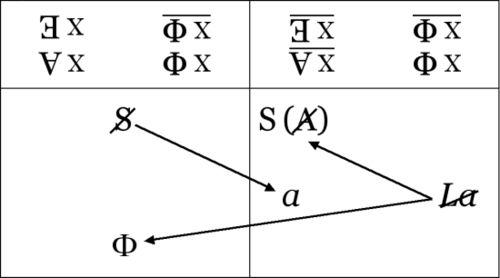
Sexuation_La

The four logical statements presented at the top of the diagram can be read as follows:

1.  ExceptionToCastration
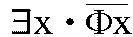
there exists at least one of those in category x who is not subject to the phallic function

2. AllSubjectCastrated
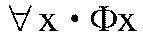
all of those in the category of x are subject to the phallic function

3. Feminine_X_not determinedbyPhallic
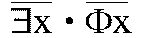
there is not one of those in category x who is not subject to the phallic function

4.  Feminine_NotAll_x_subject
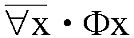
not all of those in category x are subject to the phallic function

*********

What this produces, then, are two seemingly contradictory or logically impossible statements on each side of the graph. The left side is the side of man, while the right side is the side of woman. Together they describe possible positions available to speaking beings, which is to say “Every speaking being situates itself on one side or the other” (Lacan, 1998: 79).

The logical statements on the left side can be understood to tell the story, or the logic, of the myth of the primal horde (Freud, 1950: 141-143). The one who would exist who is not subject to the phallic function, who has not undergone castration, would be the primal father.

Category x in this instance would then refer to the male position and all those in this position are subject to the phallic function, that is, they have undergone castration. There is, then, one man, the primal father, who is not subject to the function of castration which is the condition of possibility for all those in the male position. The contradiction here can be understood in the sense of an exception to a rule, in that it is the exception which is the condition of possibility for the rule to be a rule.

The statements on the right side can be understood to describe something of the tension between universals and particulars. The two statements might appear to present a blunt contradiction. If none of those in the category is not subject to the phallic function, then this would seem to suggest that all those in the category are subject to the phallic function.

But this is precisely what the second statement refuses. Taken separately, however, we can perhaps begin to make some sense of this. If the function of castration is the condition of possibility of entry into the symbolic order, then all speaking beings in order to be speaking beings would have to be subject to this function.

We can understand this first statement, then, as referring to each member on a one-by-one basis. Each woman – for this is the side of woman – in order to be a speaking being, must be subject to the phallic function. The second statement – the universal statement – should then be understood to refer to the group. The group as a whole, as a category, is not subject to the phallic function. What would this mean?

That, as a universal category, The Woman cannot be located within the symbolic order;  La femme n’existe pas.

If one side of the supposed relation between the sexes can be said not to exist, if one side cannot be collapsed into a signified totality, while the other side can only assume a signified position as incomplete, then clearly the model of equal partners balanced in a neutral or exteriorly moderated system of exchange becomes manifestly inappropriate.

Lacan’s claim that there is no rapport between the sexes, that they cannot be composed into a ratio, that they have no relation, furnishes us with a step beyond the superficial and reductive assumptions which so apparently benignly dominate the social sciences.

In reducing intersubjectivity and sexual relations to modes of economy, one not only assumes an untenable equality of status between the supposed operators, but one also misses the crucial point that the pleasure, the jouissance,which might be the currency of such an exchange is never itself so easily quantifiable.

Just as actual economic exchange is problematised with the inescapable notion of surplus value, so intersubjective relations are properly rendered more complex with a notion of surplus jouissance. This surplus of jouissance, the fact that relations can never be collapsed into a whole, a oneness, or even into a two, insofar as there is always, necessarily, the insistence of objet petit a, means that the accounting we would impose on relations always already fails.

Moreover, this failure is inscribed already in our attempts to know – to corral in knowledge – how the relation works, what the ratio is, what mediates the rapport.

It is in stepping beyond this limit that the social sciences might begin to explore, without seeking to end in a finite knowledge, what goes on between the sexes.
Fink love desire pt 1

Fink, B. (2015). Lacan on Love An Exploration of Lacan’s Seminar VIII, Transference. Cambridge: Polity.

The father’s intent may be to convey to his son that he must seek out a woman of his own, yet the son may take it as a prohibition of all love for women or even as a prohibition of all love, period.

This possible explanation of the cleavage between love and desire clearly involves no fall on the mother’s part. The great divide arises owing to the father’s perceived castration threat, which may be understood by the child literally or figuratively — that is, as a loss of the real, physical organ or as a loss of the father’s esteem and love. 22
[…]
If we bring together several of Freud’s formulations, then, a man’s love and desire can converge on one and the same woman, perhaps even durably, if and only if

(1) his feeling of having been betrayed by his mother has been worked through;

(2) He is no longer shocked that he might be inhabited by sexual desire for his mother and sister(s) and has seen through the incest taboo insofar as he realizes there is something incestuous involved in his relations with every woman; and

(3) has come to grips with castration, that is, has allowed himself to be separated from his primary source of jouissanc as a child without constantly striving to get it back. How any of these, much less all three, could be accomplished, without a thoroughgoing analysis is hard to imagine! 24

calum neill wo es war

Neill, C. (2011) Lacanian Ethics and the Assumption of Subjectivity, New York: Palgrave Macmillan.
Neill on signifer represents the subjectt for another signifier

The ethical invocation of Wo Es war, soll Ich werden is not something than can be responded to once and for all in an attainment of subjective security.

Rather it is momentary and perpetual. It is momentary insofar as it manifests in conscious life only fleetingly. It is perpetual insofar as it is indicative of the unconscious processes which necessarily continue unobserved. 20

What Descartes does not adequately answer here, but what is nonetheless raised in his text, is the question of what is going on when I am not thinking, i.e. when ‘I’ is not (re)presented in thought.

verhaeghe pt 3 alienation separation

Verhaeghe, P. (1998). Causation and Destitution of a Pre-ontological Non-entity: On the Lacanian Subject. In D. Nobus (Ed.),  Key Concepts of Lacanian Psychoanalysis (pp. 164-189). New York: State University of New York Press.

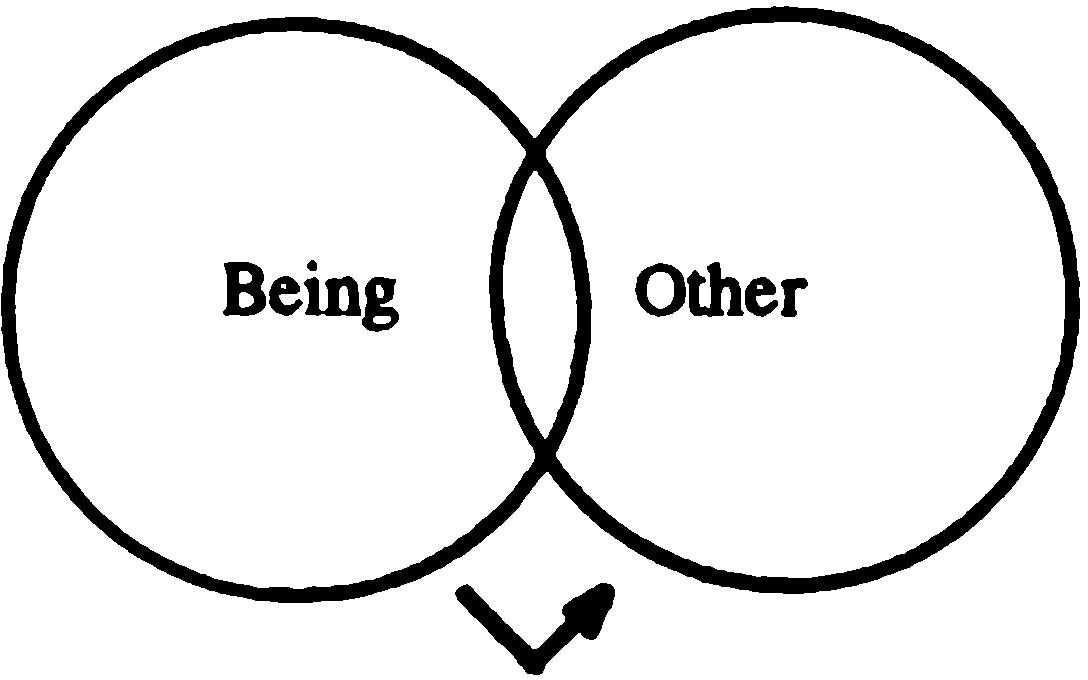
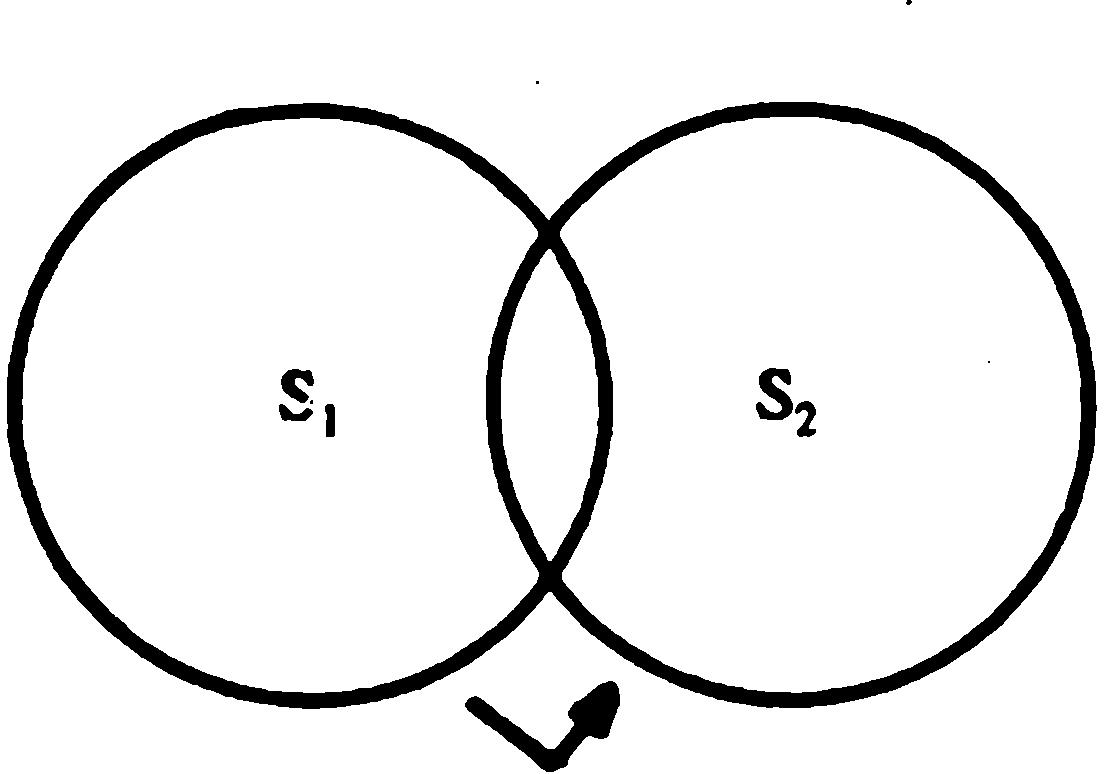
In the first part, we demonstrated how the subject is caused by the primary experience of a lack. The attempt at solving this lack by using signifiers entails a confrontation with another lack, this time within the chain of signifiers.

In this second part, we will concentrate on the two constitutive processes within this causation of the subject: alienation and separation. The first one is fully elaborated by Lacan and can easily by traced back to Freud . The second one concerns Lacan’s interpretation of the end and the finality of the analytic treatment. His theoretical development in these matters comprises an ever shifting interpretation of this idea of separation.

Being_Otheraaaa

asdfasdf

s1s2

Verhaeghe pre-ontological pt 2

Verhaeghe, P. (1998). Causation and Destitution of a Pre-ontological Non-entity: On the Lacanian Subject. In D. Nobus (Ed.),  Key Concepts of Lacanian Psychoanalysis (pp. 164-189). New York: State University of New York Press.

Verhaeghe part 1
Verhaeghe part 1a

In Seminar XI, Lacan began his discussion of the causation of the subject with something that was already well-known to his audience: the drive, being always a partial drive, revolves around a lack. However, at that point, Lacan surprised his audience by stating that there are two lacks.

The first one is the lack in the chain of signifiers, the interval between two signifiers.

This is the typically hysterical – and thus Freudian – level in which desire can never be fully expressed, let alone satisfied . In Lacanian terms, this reads that the subject, confronted with the enigma of the desire of the Other, tries to verbalise this desire and thus constitutes itself by identifying with the signifiers in the field of the Other, without ever succeeding in filling the gap between subject and Other.

Hence, the continuous movement from signifier to signifier, in which the subject alternately appears and disappears. The ensuing alienation is a continuous flywheel movement around the lack in the chain of signifiers, resulting in what Lacan called l’avènement du sujet, the advent of the subject. 168

 Phylogeny: the evolutionary history of a kind of organism, the evolution of a genetically related group of organisms as distinguished from the development of the individual organism; the evolutionary history of a group of organisms, especially as depicted in a family tree.

Ontogeny:  the development or course of development especially of an individual organism; the development or developmental history of an individual organism.

*****
A total aside from Adrian Johnston

Lacanian theory does not require, as Butler vehemently alleges, a dubious dichotomy between the symbolic and the social. An easy way to clarify matters is to invoke the Freudian distinction between phylogeny and ontogeny.

The symbolic order is a historically contingent formation at the phylogenetic level, the level transcending the ontogenetic life history of the individual. In an inverse correlation, for the particular subject whose self-identity is mediated by this pre-existent system, this same symbolic order is effectively transcendental in that it serves as a possibility condition for this form of subjectivity itself.

Without a symbolic order, the individual would not be a proper subject. The massive time lag between the different diachronic speeds of phylogeny and ontogeny is partially responsible for this dual status of the symbolic as paradoxically both historical (with respect to the phylogenetic collective) and transcendental (with respect to the ontogenetic individual).

This temporal discrepancy makes it seem, from the vantage point of the individual subject’s perspective, as if the symbolic order is synchronic, which it de facto is given the slowness of its rates of change versus the comparative brevity and rapidity of the individual’s life history.

Butler fails to fully appreciate Lacan’s philosophical audacity in tacitly relying upon a rigid distinction between the historical and the transcendental to critique him. But, what about Butler’s key assertion that the Lacanian transcendental emperor wears no clothes, in other words, that the binding force of the symbolic rests upon an empty performative act? Is there no other reason for the symbolic’s authority apart from the bald, blunt assertion of this authority by those theorizing about it?

Again, the transcendence of the symbolic order in relation to particular subjects is of paramount importance here. Individuals neither choose what kind of symbolic order to be born into nor have the liberty to capriciously forge their own idiosyncratic symbolic orders ex nihilo. Furthermore, beyond Lacanian theory itself, psychoanalysis in general is committed to the notion that, as the saying goes, “the child is the father of the man.”
*****

The innovation begins when Lacan surprises his audience by stating that there is yet another lack, which he calls anterior and real in comparison to its counterpart.

Furthermore, the lack in the chain of signifiers is only a retake on this primal lack, the originality of which resides in the fact that it has to be understood in the context of [ ‘avenement du vivant (the advent of the living being) .

This entails the emergence of sexual reproduction in phylogeny, which is repeated with every ontogeny.

At this point, the level of Unbegriff (incomprehension), beyond the psychological comprehensibility of the previous lack, is reached .

The anterior lack concerns the price life has to pay for the acquisition of sexual reproduction. From the moment an organism becomes capable of reproducing itself in a sexual way, it loses its individual immortality and death becomes an unavoidable necessity .

At birth, the individual loses something and this loss will be represented later on by
all other substitute objects. 168

The subject encounters a lack in the discourse of the Other, in which the desire of the Other ‘crawls, slips, escapes, like the ferret, ‘ producing an enigma to which the subject has to produce an answer.

It is at that point that the subject recurs to the anterior lack which entails its own disappearance. As an answer to the riddle of the desire of the Other, it presents itself and thus its disappearance: does the Other desire me, can s/he afford to lose me?

This fantasy, in which one’s own death is depicted as a form of testing the limits of the love
of the Other, is fairly well-known in adults and children alike: Veut-il me perdre ?, Does he want to lose me?

zizek will have been

Žižek, S. (2015). Afterword: The Minimal Event: From Hystericization to Subjective Destitution.  In A. Hamza (Ed.), Repeating Žižek. (pp. 269-285). Durham: Duke University Press.

The void filled in by fantasmatic content (by the “stuff of the I,” as Lacan called fantasy) is opened up by the ultimate failure of the subject’s symbolic representation:

it is not that every symbolic representation simply fails, is inadequate to the subject it represents (“words always betray me . . .”); much more radically, the subject is the retroactive effect of the failure of its representation.

It is because of this failure that the subject is divided—not into something and something else, but into something (its symbolic representation) and nothing, and fantasy fills in the
void of this nothingness.

And the catch is that this symbolic representation of the subject is primordially not its own: prior to speaking, I am spoken, identified as a name by the parental discourse, and my speech is from the very outset a kind of hysterical reaction to being-spoken-to: “Am I really then, that name, what you’re saying I am?”

The speaking subject persists in this in-between: prior to nomination, there is no subject, but once it is named, it already disappears in its signifier—the subject never is, it always will have been.

I am the enigma for the Other, so that I find myself in the strange position (as in detective novels) of someone who all of a sudden finds himself persecuted, treated as if he knows (or owns) something, bears a secret, but is totally unaware what this secret is.

The formula of the enigma is thus: “What am I for the Other? What as an object of the Other’s desire am I?”

Because of this gap, the subject cannot ever fully and immediately identify with his or her symbolic mask or title; the subject’s questioning of his or her symbolic title is what hysteria is about: “Why am I what you’re saying that I am?” Or, to quote Shakespeare’s Juliet: “What’s in a name?” (Romeo and Juliet, Act II, scene 2).

We are dealing here with what Louis Althusser called “ideological interpellation”: the symbolic identity conferred on us is the result of the way the ruling ideology “interpellates” us—as citizens, democrats, or patriots.

Hysteria emerges when a subject starts to question or to feel discomfort in his or her symbolic identity: “You say I am your beloved— what is there in me that makes me that? What do you see in me that causes you to desire me in that way?”

The hysterical subject is the subject whose very existence involves radical doubt and questioning, his or her entire being is sustained by the uncertainty as to what he is for
the Other; insofar as the subject exists only as an answer to the enigma of the Other’s desire, the hysterical subject is the subject par excellence.

In contrast to it, the analyst stands for the paradox of the desubjectivized subject, of the subject who fully assumes what Lacan calls “subjective destitution,” that is, who breaks out of the vicious cycle of intersubjective dialectics of desire and turns into an acephalous being of pure drive.

With regard to this subjective destitution, Shakespeare’s Richard II has in store a further surprise in store for us: not only does the play enact the gradual hystericization of the unfortunate king; at the lowest point of his despair, before his death, Richard enacts a further shift of his subjective status that brings him to subjective destitution …

chiesa I think where I am not and am where I do not think

Chiesa, L. (2007). Subjectivity and Otherness: A Philosophical Reading of Lacan. Massachusetts: MIT Press.

Chiesa on Chapter 2

The discovery of a structural split in/of the subject subverts the Cartesian cogito while, at the same time, revealing its intimate relation to psychoanalysis. As Lacan repeatedly states, “I think where I am not, therefore I am where I do not think.” (39)

This is to say that the unconscious I, the subject of the enunciation, really thinks at the unconscious level: it (ça) thinks where the I qua ego and qua subject of the statement is not (conscious).

Conversely, the I qua linguistic ego is (conscious) where it, the unconscious subject, does not think.

Most importantly, the subversion of the Cartesian ego shows that its illusion of unity is possible only because of its strict interdependence with the Spaltung. There is no self consciousness without the unconscious, and vice versa.

Descartes’s formulation of a fundamental principle of self-consciousness could be said contemporaneously to decree, at the level of the history of thought, the formal birth of the unconscious (although this birth will remain implicit until Freud). Consequently, it is strictly speaking senseless to speak of a pre-Cartesian notion of the unconscious.

Žižek desire Other pt2

Žižek, S. (2005). Connections of the Freudian Field to Philosophy and Popular Culture. Interrogating the Real. In R. Butler & S. Stephens (Eds.), Interrogating the Real (pp. 62-88). New York, NY: Continuum.

First, already in the 1940s, ‘Desire is the desire of the Other’ alludes simply to the paranoiac structure of desire, to the structure of envy, to put it simply.

Here, the desire of the subject is the desire of the Other; it is simply this kind of transitive, imaginary relationship. It’s basically the structure of envy – 1 desire an object only insofar as it is desired by the Other, and so on.This is the first level, let us say the imaginary level.

Then we have the symbolic level where ‘Desire is the desire of the Other’ involves this dialectic of recognition and, at the same time, the fact that what I desire is determined by the symbolic network within which I articulate my subjective position, and so on. So it is simply the determination of my desire: the way my desire is structured through the order of the big Other. This is well known.

But I think Lacan’s crucial final formulation arrives only when the position of the analyst is no longer defined as starting from the place of the big Other (A), that is to say, the analyst as embodiment of symbolic order, but when the analyst is identified with the small other (a), with the fantasmatic object. In other words, when the analyst gives body to the enigma of the impenetrability of the Other’s desire.

Here, ‘Desire is the desire of the Other’ means I can arrive at my desire only through the complication of the Other’s desire precisely insofar as this desire is impenetrable, enigmatic for me. I think this is the first crucial point, usually forgotten, about fantasy: how true fantasy is an attempt to resolve the enigma of the Other’s desire. That’s the desire that is staged in fantasy. It’s not simply that I desire something, that I make a fantasy. No.

Žižek desire Other pt1

Žižek, S. (2005). Connections of the Freudian Field to Philosophy and Popular Culture. Interrogating the Real. In R. Butler & S. Stephens (Eds.), Interrogating the Real (pp. 62-88). New York, NY: Continuum.

So, in this subjective destitution, in accepting my non-existence as subject, I have to renounce the fetish of the hidden treasure responsible for my unique worth. I have to accept my radical externalization in the symbolic medium. As is well known, the ultimate support of what I experience as the uniqueness of my personality is provided by my fundamental fantasy, by this absolutely particular, non-universalizable formation.

Now, what’s the problem with fantasy? I think that the key point, usually overlooked, is the way that Lacan articulated the notion of fantasy which is, ‘OK, fantasy stages a desire, but whose desire?

My point is: not the subject’s desire, not their own desire. What we encounter in the very core of the fantasy formation is the relationship to the desire of the Other: to the opacity of the Other’s desire. The desire staged in fantasy, in my fantasy, is precisely not my own, not mine, but the desire of the Other.

Fantasy is a way for the subject to answer the question of what object they are for the Other, in the eyes of the Other, for the Other’s desire. That is to say, what does the Other see in them? What role do they play in the Other’s desire?

What is their role in the desire of the Other?’ This is, I think, absolutely crucial, which is why, as you probably know, in Lacan’s graph of desire, fantasy comes as an answer to that question beyond the level of meaning, ‘What do you want?’, precisely as an answer to the enigma of the Other’s desire.

Here, again, I think we must be very precise. Everybody knows this phrase, repeated again and again, Desire is the desire of the Other.’ But I think that to each crucial stage of Lacan’s teaching a different reading of this well-known formula corresponds.

zupančič sublimation pt 2

Zupančič, A. (2003) The Shortest Shadow: Nietzsche’s Philosophy of the Two. MIT Press

Here we come to the last grand narrative from the era of the end of grand narratives: there is no Real, everything is convention, language games, a labyrinth of different possibilities that, at least in principle, are all of equal value. What is the effect of this thesis?

Its effect is not exactly the disappearance of the Real, but, rather, its full coincidence with reality. In other words, the reality principle is now conceived of as the only and ultimate Real.

This is what Nietzsche calls “modern nihilism” and the “crisis of values,” the latter being precisely the “crisis of sublimation” in the sense described above.

At issue is not a complaint about the corruption of values, and lack of respect for them, but a diagnosis concerning the weakening of the sublimatory force, the force that could produce or create some distance toward the reality principle and its claims.

It entails the closure of the very space of creativity. This is why it is very important to keep insisting upon the notion of the Real that, in turn, has to be defined in terms other than those of some “authentic Real” lurking behind the deceptive appearances. And the (late) Lacanian notion of the Real can help us to do precisely that.

The Real is not some authentic Beyond, constituting the truth of the reality. The Real is not the Beyond of reality, but its own blind spot or dysfunction—that is to say, the Real is the stumbling block on account of which reality does not fully coincide with itself. The Real is the intrinsic division of reality itself.