Category: sub destitute
Metastases of Enjoyment
September 20, 2011
Metastases of Enjoyment. New York: Verso, 1994.
[T]he problem that confronted Lacan was: how do we pass from animal coupling led by instinctual knowledge and regulated by natural rhythms to human sexuality possessed by a desire which is eternalized and, for that very reason, insatiable, inherently perturbed, doomed to fail, and so on? …
So the answer to Lacan’s problem is: we enter human sexuality through the intervention of the symbolic order qua heterogeneous parasite that disrupts the natural rhythm of coupling. 155
Ž on Kant undead
Nov 17, 2012
A quote from Zizek (Tarrying with the Negative, pp.113-4):
Invoking the “living dead” is no accident here: in our ordinary language, we resort to indefinite judgments precisely when we endeavor to comprehend those borderline phenomena which undermine established differences, such as those between living and being dead. In the texts of popular culture, the uncanny creatures which are neither alive nor dead, the “living dead” (vampires, etc.), are referred to as “the undead”; although they are not dead, they are clearly not alive like us, ordinary mortals. The judgment “he is undead” is therefore an indefinite-limiting judgment in the precise sense of a purely negative gesture of excluding vampires from the domain of the dead, without for that reason locating them in the domain of the living (as in the case of the simple negation “he is not dead”). The fact that vampires and other “living dead” are usually referred to as “things” has to be rendered with its full Kantian meaning: a vampire is a Thing which looks and acts like us, yet it is not one of us. Continue reading “Ž on Kant undead”
verhaeghe pt 3 alienation separation
Verhaeghe, P. (1998). Causation and Destitution of a Pre-ontological Non-entity: On the Lacanian Subject. In D. Nobus (Ed.), Key Concepts of Lacanian Psychoanalysis (pp. 164-189). New York: State University of New York Press.
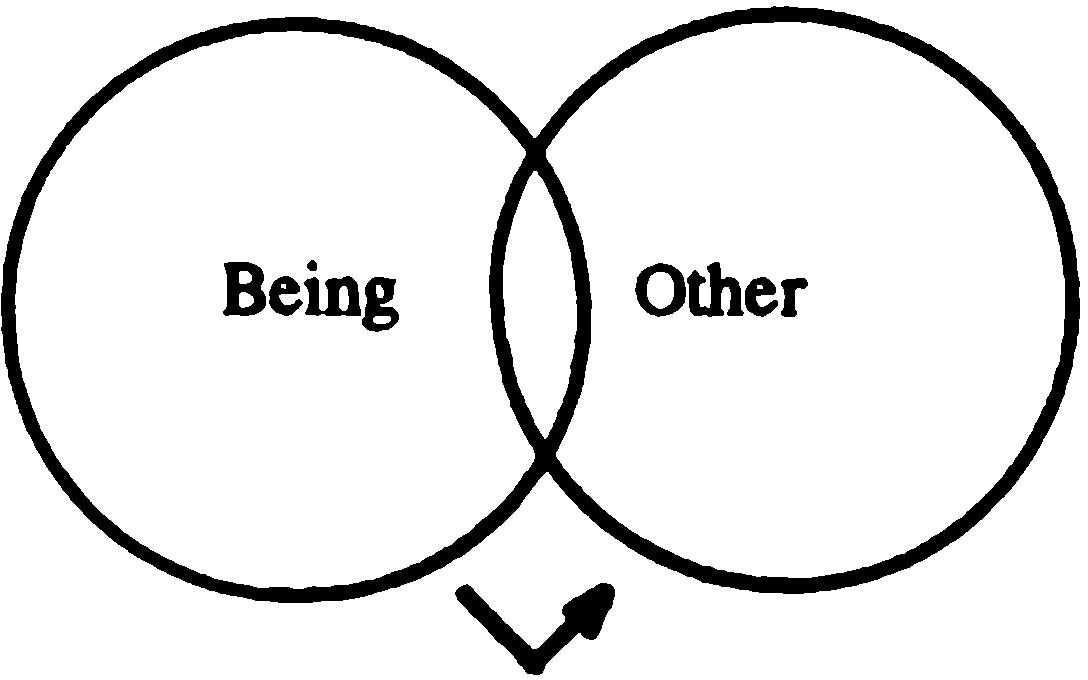
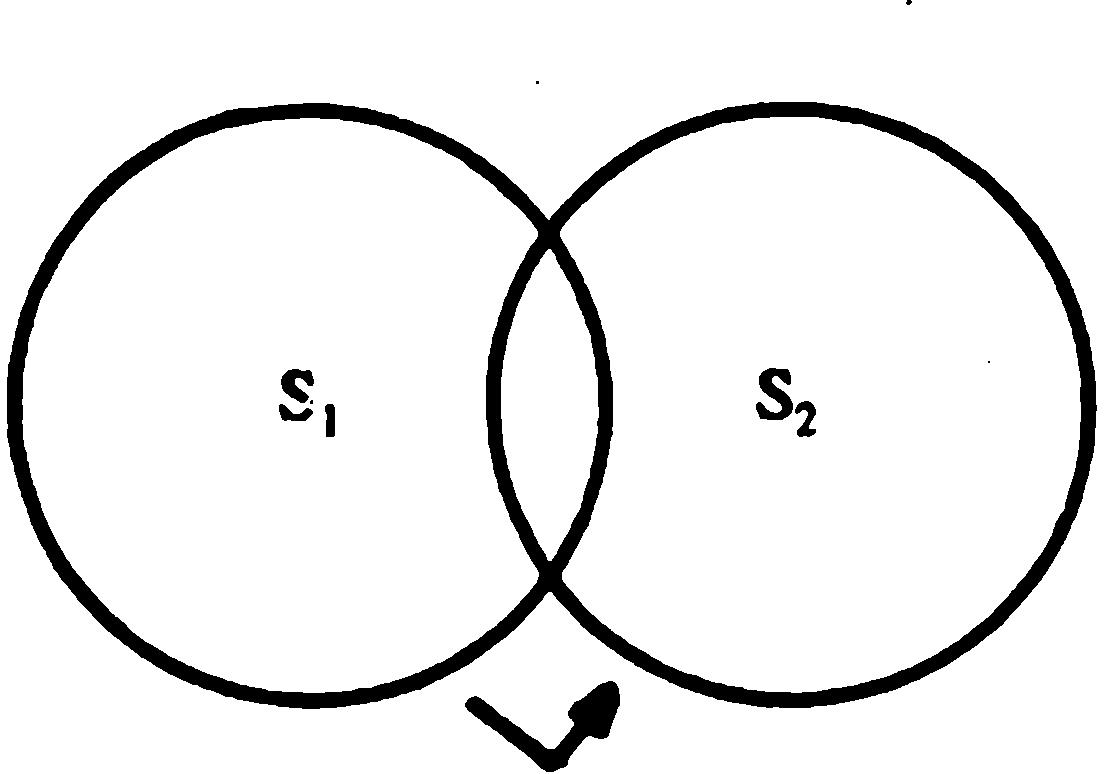
In the first part, we demonstrated how the subject is caused by the primary experience of a lack. The attempt at solving this lack by using signifiers entails a confrontation with another lack, this time within the chain of signifiers.
In this second part, we will concentrate on the two constitutive processes within this causation of the subject: alienation and separation. The first one is fully elaborated by Lacan and can easily by traced back to Freud . The second one concerns Lacan’s interpretation of the end and the finality of the analytic treatment. His theoretical development in these matters comprises an ever shifting interpretation of this idea of separation.
 aaaa
aaaa
asdfasdf
Verhaeghe pre-ontological pt 2
Verhaeghe, P. (1998). Causation and Destitution of a Pre-ontological Non-entity: On the Lacanian Subject. In D. Nobus (Ed.), Key Concepts of Lacanian Psychoanalysis (pp. 164-189). New York: State University of New York Press.
Verhaeghe part 1
Verhaeghe part 1a
In Seminar XI, Lacan began his discussion of the causation of the subject with something that was already well-known to his audience: the drive, being always a partial drive, revolves around a lack. However, at that point, Lacan surprised his audience by stating that there are two lacks.
The first one is the lack in the chain of signifiers, the interval between two signifiers.
This is the typically hysterical – and thus Freudian – level in which desire can never be fully expressed, let alone satisfied . In Lacanian terms, this reads that the subject, confronted with the enigma of the desire of the Other, tries to verbalise this desire and thus constitutes itself by identifying with the signifiers in the field of the Other, without ever succeeding in filling the gap between subject and Other.
Hence, the continuous movement from signifier to signifier, in which the subject alternately appears and disappears. The ensuing alienation is a continuous flywheel movement around the lack in the chain of signifiers, resulting in what Lacan called l’avènement du sujet, the advent of the subject. 168
Phylogeny: the evolutionary history of a kind of organism, the evolution of a genetically related group of organisms as distinguished from the development of the individual organism; the evolutionary history of a group of organisms, especially as depicted in a family tree.
Ontogeny: the development or course of development especially of an individual organism; the development or developmental history of an individual organism.
*****
A total aside from Adrian Johnston
The symbolic order is a historically contingent formation at the phylogenetic level, the level transcending the ontogenetic life history of the individual. In an inverse correlation, for the particular subject whose self-identity is mediated by this pre-existent system, this same symbolic order is effectively transcendental in that it serves as a possibility condition for this form of subjectivity itself.
Without a symbolic order, the individual would not be a proper subject. The massive time lag between the different diachronic speeds of phylogeny and ontogeny is partially responsible for this dual status of the symbolic as paradoxically both historical (with respect to the phylogenetic collective) and transcendental (with respect to the ontogenetic individual).
This temporal discrepancy makes it seem, from the vantage point of the individual subject’s perspective, as if the symbolic order is synchronic, which it de facto is given the slowness of its rates of change versus the comparative brevity and rapidity of the individual’s life history.
Butler fails to fully appreciate Lacan’s philosophical audacity in tacitly relying upon a rigid distinction between the historical and the transcendental to critique him. But, what about Butler’s key assertion that the Lacanian transcendental emperor wears no clothes, in other words, that the binding force of the symbolic rests upon an empty performative act? Is there no other reason for the symbolic’s authority apart from the bald, blunt assertion of this authority by those theorizing about it?
Again, the transcendence of the symbolic order in relation to particular subjects is of paramount importance here. Individuals neither choose what kind of symbolic order to be born into nor have the liberty to capriciously forge their own idiosyncratic symbolic orders ex nihilo. Furthermore, beyond Lacanian theory itself, psychoanalysis in general is committed to the notion that, as the saying goes, “the child is the father of the man.”
*****
The innovation begins when Lacan surprises his audience by stating that there is yet another lack, which he calls anterior and real in comparison to its counterpart.
Furthermore, the lack in the chain of signifiers is only a retake on this primal lack, the originality of which resides in the fact that it has to be understood in the context of [ ‘avenement du vivant (the advent of the living being) .
This entails the emergence of sexual reproduction in phylogeny, which is repeated with every ontogeny.
At this point, the level of Unbegriff (incomprehension), beyond the psychological comprehensibility of the previous lack, is reached .
The anterior lack concerns the price life has to pay for the acquisition of sexual reproduction. From the moment an organism becomes capable of reproducing itself in a sexual way, it loses its individual immortality and death becomes an unavoidable necessity .
At birth, the individual loses something and this loss will be represented later on by
all other substitute objects. 168
The subject encounters a lack in the discourse of the Other, in which the desire of the Other ‘crawls, slips, escapes, like the ferret, ‘ producing an enigma to which the subject has to produce an answer.
It is at that point that the subject recurs to the anterior lack which entails its own disappearance. As an answer to the riddle of the desire of the Other, it presents itself and thus its disappearance: does the Other desire me, can s/he afford to lose me?
This fantasy, in which one’s own death is depicted as a form of testing the limits of the love
of the Other, is fairly well-known in adults and children alike: Veut-il me perdre ?, Does he want to lose me?
zizek will have been
Žižek, S. (2015). Afterword: The Minimal Event: From Hystericization to Subjective Destitution. In A. Hamza (Ed.), Repeating Žižek. (pp. 269-285). Durham: Duke University Press.
The void filled in by fantasmatic content (by the “stuff of the I,” as Lacan called fantasy) is opened up by the ultimate failure of the subject’s symbolic representation:
it is not that every symbolic representation simply fails, is inadequate to the subject it represents (“words always betray me . . .”); much more radically, the subject is the retroactive effect of the failure of its representation.
It is because of this failure that the subject is divided—not into something and something else, but into something (its symbolic representation) and nothing, and fantasy fills in the
void of this nothingness.
And the catch is that this symbolic representation of the subject is primordially not its own: prior to speaking, I am spoken, identified as a name by the parental discourse, and my speech is from the very outset a kind of hysterical reaction to being-spoken-to: “Am I really then, that name, what you’re saying I am?”
The speaking subject persists in this in-between: prior to nomination, there is no subject, but once it is named, it already disappears in its signifier—the subject never is, it always will have been.
I am the enigma for the Other, so that I find myself in the strange position (as in detective novels) of someone who all of a sudden finds himself persecuted, treated as if he knows (or owns) something, bears a secret, but is totally unaware what this secret is.
The formula of the enigma is thus: “What am I for the Other? What as an object of the Other’s desire am I?”
Because of this gap, the subject cannot ever fully and immediately identify with his or her symbolic mask or title; the subject’s questioning of his or her symbolic title is what hysteria is about: “Why am I what you’re saying that I am?” Or, to quote Shakespeare’s Juliet: “What’s in a name?” (Romeo and Juliet, Act II, scene 2).
We are dealing here with what Louis Althusser called “ideological interpellation”: the symbolic identity conferred on us is the result of the way the ruling ideology “interpellates” us—as citizens, democrats, or patriots.
Hysteria emerges when a subject starts to question or to feel discomfort in his or her symbolic identity: “You say I am your beloved— what is there in me that makes me that? What do you see in me that causes you to desire me in that way?”
The hysterical subject is the subject whose very existence involves radical doubt and questioning, his or her entire being is sustained by the uncertainty as to what he is for
the Other; insofar as the subject exists only as an answer to the enigma of the Other’s desire, the hysterical subject is the subject par excellence.
In contrast to it, the analyst stands for the paradox of the desubjectivized subject, of the subject who fully assumes what Lacan calls “subjective destitution,” that is, who breaks out of the vicious cycle of intersubjective dialectics of desire and turns into an acephalous being of pure drive.
With regard to this subjective destitution, Shakespeare’s Richard II has in store a further surprise in store for us: not only does the play enact the gradual hystericization of the unfortunate king; at the lowest point of his despair, before his death, Richard enacts a further shift of his subjective status that brings him to subjective destitution …
Žižek desire Other pt2
Žižek, S. (2005). Connections of the Freudian Field to Philosophy and Popular Culture. Interrogating the Real. In R. Butler & S. Stephens (Eds.), Interrogating the Real (pp. 62-88). New York, NY: Continuum.
First, already in the 1940s, ‘Desire is the desire of the Other’ alludes simply to the paranoiac structure of desire, to the structure of envy, to put it simply.
Here, the desire of the subject is the desire of the Other; it is simply this kind of transitive, imaginary relationship. It’s basically the structure of envy – 1 desire an object only insofar as it is desired by the Other, and so on.This is the first level, let us say the imaginary level.
Then we have the symbolic level where ‘Desire is the desire of the Other’ involves this dialectic of recognition and, at the same time, the fact that what I desire is determined by the symbolic network within which I articulate my subjective position, and so on. So it is simply the determination of my desire: the way my desire is structured through the order of the big Other. This is well known.
But I think Lacan’s crucial final formulation arrives only when the position of the analyst is no longer defined as starting from the place of the big Other (A), that is to say, the analyst as embodiment of symbolic order, but when the analyst is identified with the small other (a), with the fantasmatic object. In other words, when the analyst gives body to the enigma of the impenetrability of the Other’s desire.
Here, ‘Desire is the desire of the Other’ means I can arrive at my desire only through the complication of the Other’s desire precisely insofar as this desire is impenetrable, enigmatic for me. I think this is the first crucial point, usually forgotten, about fantasy: how true fantasy is an attempt to resolve the enigma of the Other’s desire. That’s the desire that is staged in fantasy. It’s not simply that I desire something, that I make a fantasy. No.
Žižek desire Other pt1
Žižek, S. (2005). Connections of the Freudian Field to Philosophy and Popular Culture. Interrogating the Real. In R. Butler & S. Stephens (Eds.), Interrogating the Real (pp. 62-88). New York, NY: Continuum.
So, in this subjective destitution, in accepting my non-existence as subject, I have to renounce the fetish of the hidden treasure responsible for my unique worth. I have to accept my radical externalization in the symbolic medium. As is well known, the ultimate support of what I experience as the uniqueness of my personality is provided by my fundamental fantasy, by this absolutely particular, non-universalizable formation.
Now, what’s the problem with fantasy? I think that the key point, usually overlooked, is the way that Lacan articulated the notion of fantasy which is, ‘OK, fantasy stages a desire, but whose desire?’
My point is: not the subject’s desire, not their own desire. What we encounter in the very core of the fantasy formation is the relationship to the desire of the Other: to the opacity of the Other’s desire. The desire staged in fantasy, in my fantasy, is precisely not my own, not mine, but the desire of the Other.
Fantasy is a way for the subject to answer the question of what object they are for the Other, in the eyes of the Other, for the Other’s desire. That is to say, what does the Other see in them? What role do they play in the Other’s desire?
What is their role in the desire of the Other?’ This is, I think, absolutely crucial, which is why, as you probably know, in Lacan’s graph of desire, fantasy comes as an answer to that question beyond the level of meaning, ‘What do you want?’, precisely as an answer to the enigma of the Other’s desire.
Here, again, I think we must be very precise. Everybody knows this phrase, repeated again and again, Desire is the desire of the Other.’ But I think that to each crucial stage of Lacan’s teaching a different reading of this well-known formula corresponds.
freeland ethics Sem VII pt. 2 Desire borne by death
Freeland, C. 2013. Antigone in Her Unbearable Splendour: New Essays on Jacques Lacan’s The Ethics of Psychoanalysis. Albany: State University of New York Press.
borne: to bring, transported, transmitted by, spread by, carried by
Lacan probably ses the traditional philosophical persepectives on ethics as framed and trapped in the theater of a philosophical mirror stage wherein the human, ethical subject is conceived as born prematurely, a fragile, helpless and fragmented body confronting and recognizing its wholeness in the other of the mirror image before it and longing to be that wholenes. Is Lacan’s psychoanalytic ethic not first and essentially the critical attempt to move beyond this ethical mirror stage, to move beyond the search for the anticipated wholeness of a “meaning of life”? 39
ethics for Lacan is ethics of speech … then the ethical, psychoanalytical Truth that arises in the psychoanalytic brushes with death would not wish to install or monumentalize Truth or Death itself as the ultimate and hidden meaning in life.
Its pronouncements would not articulate either a timeless Truth or a terrifying Death as the “one” meaning of life, for this might make psychoanalysis a type of hermeneutics, and “death” would then be something, a “meaning,” that, given the proper methodology, the proper hermeneutic, could somehow be brought from the depth to the surface of language and stated — phenomenalized, made to appear — perhaps in the form of a proposition, or in a form of life, as the statement of a Truth that would guarantee that life is not “for nothing.”
In Lacan’s work, the relationship between language and death is completely different than this familiar scheme. The Lacanian ethics of psychoanalysis is therefore first a disruption of this hermeneutical scheme a form of resistance to the systematic statement of philosophical meaning of life taken as the key element and link in the triumvirate of the True, the Good, and the Beautiful. Must the Lacanian ethic not first and fundamentally be a resistance to the Hegelian way of taking up death, …
Is the Lacanian ethic not undermining the very meaning of “oneness” and “meaning” in life? Is the “one meaning” always going to be “not one”? Is Lacan’s statement not the instauration of the ethical necessity of confronting the disruption and the destitution of life that abides in every such statement, a death that takes place in language, that is to say, in desire?
Disruption rather than salvation in and through the systematic statement of the ultimately religious telos of Truth and Oneness: is this not Lacan’s desire, a desire borne by the death of philosophy. 40
johnston vicious super-ego part 2 of 2
Johnston, A. (2001) The vicious Circle of the Super-Ego: The Pathological Trap of Guilt and the Beginning of Ethics. Psychoanlytic Studes (3): 3/4. 411-424.
Lacan is not so much interested in proposing a new prescriptive ethics as in comprehending the precise nature of ‘moral masochism’, in fully grasping how the constellation of the id, the super-ego, and the socio-symbolic Umwelt of reality ‘pathologize’ the ethical field.
At most, this Lacanian analytic diagnosis of moral masochism should be interpreted as a preparatory clearing of the ground for a genuine ethics, as a mapping out of the obstacles hindering the construction and enactment of a non-pathological ‘metaphysics of morals’.
The introduction of the Law generates desire ex nihilo. Instead of forbidding a pre-existent set of urges in the individual, it teaches the subject what to covet, if only as an inaccessible vanishing point whose appearance of possible accessibility is a mirage engendered by the seemingly contingent nature of the Law and its authority.
Lacan is not so much interested in proposing a new prescriptive ethics as in comprehending the precise nature of ‘moral masochism’,
in fully grasping how the constellation of the id, the super-ego, and the socio-symbolic Umwelt of reality ‘pathologize’ the ethical field. At most, this Lacanian analytic diagnosis of moral masochism should be interpreted as a preparatory clearing of the ground for a genuine ethics, as a mapping out of the obstacles hindering the construction and enactment of a non-pathological ‘metaphysics of morals’.
At the beginning of this quotation, Lacan alludes to an observation that Freud formulates in his 1924 paper ‘The economic problem of masochism’. In the concluding paragraphs of that essay, Freud notes that the more the subject complies with reality’s prohibition of aggression, the greater the guilt the subject feels, the harsher the demands of the super-ego become.
Unlike external authorities, which can only observe and punish externalized acts of transgression, the super-ego sees and judges the subject’s ‘inner’ intentions. Freud pinpoints this as a paradox of sorts: the more the subject overtly obeys the rules of reality, the more the super-ego (unconsciously) inflicts the negative affect of guilt.
This paradox is illuminated by the theory of the super-ego as presented in Civilization and Its Discontents: the super-ego is a subliminatory channel for the id’s sadism; the id diverts the aggressive drives onto the subject’s own ego when the reality principle prevents it from discharging this aggression against others;
thus, the more the ‘moral’ subject refrains from enacting these aggressive drives in reality (i.e., the more he/she heeds the ‘ethical’ principles of his/her social milieu), the more the id is compelled to utilize the super-ego to ‘work off’ aggression against the ego (hence, the greater the feeling of guilt, since Freud claims that guilt is the ‘pain’ consciously experienced by the ego as a result of the unconscious subliminatory dynamic occurring at the level of id and super-ego). How does Lacan integrate this line of Freudian reasoning?
it isn’t simply a matter of claiming that the Law arouses desire out of nowhere through its prohibitions: it’s also the case that obedience to the Law is cemented in place by the struggle to fend off these desires, that the more rigid the subject’s adherence to the rules, the presumably greater is his/her need to repress increasingly powerful urges to contravene it.
Consequently, when Lacan speaks about being guilty for having ‘ceded’ or ‘given ground’ relative to one’s desire, what he really means is the following:
the more the subject surrenders (to) his/her desires by obeying the restrictions of the Law, the more guilty he/she feels,
since such concessions only aggravate the (unconscious) volatility and intensity of these same desires (namely, ‘internal’ repressed desires which never fail to escape the notice of the omniscient authority of the sadistic super-ego). 419
Near the end of his 1974 television interview, Lacan clearly advances this claim in saying that, “Freud reminds us that it’s not evil, but good, that engenders guilt” (Lacan, p. 45). At no point does Lacan contest the Freudian definition of guilt as a negative affect resulting from the super-ego’s punishment of the ego.
Hence, Lacan, in following Freud here, isn’t treating guilt as a properly ethico-moral sentiment, but, rather, as a symptom of super-ego aggression (with this aggression itself being acknowledged as arising from ceded, aim-inhibited desires whose intensity increases the longer and more severely they’re held in check).
Consequently, one can be ‘guilty’ before the tribunal of the super-ego without, for all that, being actually guilty in an ethico-moral sense per se. 419
Lacan merely brings one to the point where the essential question that must be answered if a psychoanalytic ethics is to be possible at all poses itself:
Can conscience function beyond the super-ego, namely, is the subject able to break out of the cycle running from Law to desire to guilt?
If not, then the Freudian diagnosis of conscience as a symptomatic by-product of the superego’s id-driven sadism really does represent the end of ethics in any meaningful, philosophically consistent mode.
Both Freud and Lacan have made significant inroads into demystifying the origins and mechanisms of feeling guilty. However, it remains doubtful if psychoanalysis has yet pronounced its definitive verdict as regards being guilty.
Ž Hegel Lacan
Žižek, S. (2009) The Cunning of Reason: Lacan as a Reader of Hegel. The Harvard Review of Philosophy. XVI. 104-117.
The status of prosopopoeia in Lacan changes radically with the shift in the status of the analyst from the stand-in for the “big Other” (the symbolic order) to the “small other” (the obstacle which stands for the inconsistency, failure, of the big Other).
The analyst who occupies the place of the big Other is himself the medium of prosopopoeia: when he speaks, it is the big Other who speaks (or rather, keeps silence) through him — that is, in the intersubjective economy of the analytic process, the analyst is not just another subject, but occupies the empty place of death.
The patient talks, and the analyst’s silence stands for the absent meaning of the patient’s talk, the meaning that is supposed to be contained in the big Other.
The process ends when the patient can himself assume the meaning of his speech. The analyst as the “small other,” on the contrary, magically transforms the words of the analysand (patient) into prosopopoeia, de-subjectivizing his words, depriving them of the quality of being an expression of a consistent subject and his intention-to-mean.
The goal is here no longer for the analysand to assume the meaning of his speech, but to assume its non-meaning, its nonsensical inconsistency, which implies, with regards to his own status, his de-subjectivation, or what Lacan calls “subjective destitution.”
Zupančič ethics and tragedy pt2
Zupančič, Alenka. Ethics and tragedy in Lacan. (2003) The Cambridge Companion to Lacan. Edited by Jean-Michel Rabaté, New York: Cambridge UP. 173-190.
IT IS EASIER TO ACCEPT INTERDICTION THAN TO RUN THE RISK OF CASTRATION.
To put it simply: the law gives a signifying form to the impossibility involved in the very phenomenon of desire.
The fundamental operation of the law is always to forbid something that is in itself impossible. The fact that the law links this impossible to some particular object should not prevent us from seeing this.
By designating a certain object as forbidden, the law does two things:
1) it isolates the impossible Thing that the desire aims at but never attains, and
2) it provides an image of this Thing. This image (my neighbor’s wife, for instance) has to be distinguished from what, on the level of the symbolic, is nothing else but the signifier of the impossible as such.
The law condenses the impossible involved in desire into one exceptional “place.” Via this logic of exception, it liberates the field of the possible. This is why the intervention of the law can have a liberating effect on the subject.
It makes it possible for Achilles not to spend every minute of his life trying to figure out why he cannot catch up with the tortoise, or trying obstinately to do so. It can make him a productive member of the community.
This is the reason why Lacan, although he refuses to put analysis into the service of producing happy members of the community, also refuses to subscribe to the discourse advocating the liberation of desire from the repression and the spoils of law.
His point is that the law supplements the impossibility involved in the very nature of desire by a symbolic interdiction, and that it is thus erroneous to assume that by eliminating this interdiction, we will also eliminate the impossibility involved in the desire.
What he warned against, for instance, in the turmoil of 1968, was not some chaotic state that could result from the abolition of certain laws and prohibitions.
He didn’t warn against human desire running crazy. On the contrary, he warned against the fact that desire, tired of dealing with its own impossibility, will give up and resign to anything rather than try to find its own law. 178
We have already quoted Lacan’s thesis according to which “it is easier to accept interdiction than to run the risk of castration.” However, as should be clear from what we just developed, this does not mean that interdiction keeps us safe from being exposed to castration (that is, from undergoing a loss of something that we have).
The “fear of castration” is the fear of losing that which constitutes a signifying support for the lack involved in the experience of the desire as such. Interdiction is what provides that support; it is what gives a signifying form to the lack (or to the experience of “castration”) which is already there.
Psychoanalysis, as Lacan conceived it, is not something that will restitute the good old law where it is lacking. Although many clinical problems can indeed be traced to the failure of the law to function for the subject as a stabilizing factor, the job of psychoanalysis is in no way to make sure that the subject will finally subscribe to the ideal of this or that authority.
One should rather say that once things have gone so far (as to produce a neurosis, for instance), they can only go further.
In principle, it is easier to go by the law than to find one’s own way around desire.
But all the malfunctions and dysfunctions that appear in the clinic (as well as in the psychopathology of everyday life) remind us not only that this doesn’t always work, but also that it never works perfectly.
Psychoanalysis is not here to repair the damage, to help the social machine to function more smoothly and to reconstruct whatever was ill-constructed.
It is there to take us further along the path that our “problems” have put us on, it is there as the “guardian” of the other way, the one that consists in finding our own way around our desire.
Emblematic of this “other way” is the story of Oedipus who, although unknowingly, steps out of the shelter of interdiction, is led to give up the thing that captivated him, and enters the realm where “the absolute reign of his desire is played out . . . something that is sufficiently brought out by the fact that he is shown to be unyielding right to the end, demanding everything, giving up nothing, absolutely unreconciled” (S VII, p. 310).
This is what makes it possible for Lacan to insist upon the fact that the renunciation of goods and of power that is supposed to be a punishment, “is not, in fact, one” (S VII, p. 310).
Consequently, tragedy, at least in the perspective of what Lacan calls the tragic dimension of analytical experience, is not necessarily all that “tragic,” but can produce the kind of liberation that takes place in the case of Oedipus.