carlson pt 4

Carlson, Shanna T. “Transgender Subjectivity and the Logic of Sexual Difference” Volume 21, Number 2, 2010 d i f f e r e n c e s: A Journal of Feminist Cultural Studies

What would it look like to consider transgender identity as an expression of the logic of sexual difference?

I would like to define the transsexual subject as a person who identifies with a gender that is not consonant with the gender assigned at birth. In some cases, but certainly not all, the transsexual subject will go to whatever efforts possible (hormone therapy, sex or genital reassignment surgery, etc.) to “pass” as that gender. Inasmuch as the transsexual subject strives to pass and/or (for not all transsexuals strive to pass) identifies with one gender or another with an apparent degree of certainty, he or she is psychically no different than any other subject who lines up under one banner or the other.

Ostensibly “nontranssexual” subjects also strive to pass; they also identify with an apparent degree of certainty with one gender or another. In other words, “transsexuality” is not in and of itself any more extreme a type of symptom than is “man” or “woman.” Where transsexual subjects’ experiences may be different from those of ostensibly nontranssexual subjects, of course, arises in part from the fact that the latter have not, so far, proven particularly welcoming: from under the meager protection of their banners, they have not yet realized that they have no monopoly on the psychic experience of the semblance of “gender certainty.” Oftentimes, the upshot of this false monopoly on a piecemeal “certainty” is that transsexual subjects—particularly those who do not rigorously fit the demands of the public’s “incessant need to gender every person they see as female or male” (Serano 117)—are excluded, objectified, exploited, scapegoated, and silenced. 65

Transgenderism presents a slightly different situation, and this is the one with which this article has been occupied. For it could be argued that the
transgender subject—as someone who is not necessarily or only very strategically invested in “passing” as one gender or another (e.g., someone who could be described as “bigendered” or “gender-fluid” [Serano 27]), as someone who may be invested in embodying a gender that would attest to what he or she may define as the constructedness of gender (e.g., “genderqueer” [Serano 27])—would be the human subject as such, the unconsciously bisexual subject for whom sexual difference is only ever an incomplete, unsatisfactory solution to the failure of the sexual relation. In this way, transgenderism would figure as a solutionless solution to the impasses of sexual difference, a sort of unconscious scene of undecideability, but an undecideability fundamentally shared by all human subjects, no matter their seeming “gender.” 65

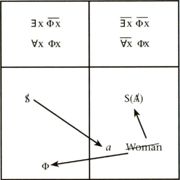
But there is another way of reading transgenderism, or another transgenderism available to subjects, wherein transgenderism figures not as a solutionless solution to the impasses of sexual difference, but rather as an expression of the logic of sexual difference: a feminine solution. Hysteria as it is defined by Lacan is a profoundly feminine phenomenon and is characterized by the question, “Am I a man, or am I woman, and what does that mean?” The hysteric tends to interrogate societal norms at large, oftentimes embodying a subversive attitude that arises in part from a profound suspicion that her own sexed and sexual body is incommensurate to cultural injunctions regarding gender identities.

As Ellie Ragland- Sullivan writes, “Lacan saw the hysteric as embodying the quintessence of the human subject because she speaks, as agent, from the lack and gaps in knowledge, language and being” (164).

The hysteric is, in some senses, interested in nothing but the lack that, for example, Dean may be read to circumvent by focusing on the apparent multiplicity of object a.

The failure, deadlock, and trauma of sexual difference returns for the hysterical/feminine transgender subject, irreducibly, in her insistent interrogation of the phallic function and in her very queer relation to the lacking Other. 66

Our question, then, might read as follows: what will the feminine/transgender subject do confronting a symbolic that she is “totally, that is, limitlessly inscribed within” (Copjec 227)?

For this, we do not have to look far—we might consider Antigone, or, if we wish to be more timely, we might pay attention to art, writings, memoirs, and scholarship by various present-day transgender or, sometimes, transsexual-identified subjects.

If part of the point this essay is trying to make, though, is that there is something transgendered about the human subject, and that this transgenderism transcends notions of gender, it follows that we need not be restricted by rigid definitions of gender identities to encounter the question, “Am I a man, or am I woman, and what does that mean?” Feminine subjects identify in multiple directions. More importantly, they demonstrate another sort of agility as well: “[Lacan] implied that for all the difficulties woman had with speech and the signifier, mistrusting its promises because they de facto fail her, a certain freedom to play was available to woman [. . .]

[A]ccording to Lacan, ‘Women are less enclosed by discourse than their partners in the cycle of discourse’” (MacCannell 198–99). When we recall that discourses are “forms of the social tie” (Lacan qtd. in MacCannell
235) and that discourses as social ties move to cover over the lack of the sexual relation, we could argue by extension that

the hysteric feminine subject in particular is structurally well situated to cycle through and fall between the cracks of discourses. Preoccupied as the hysteric is with the very question that discourse wishes to mask, she may be particularly well situated to “do something” to the social tie itself.

And yet, despite (but also because of) her “freedom to play,” the feminine/transgender subject’s speech does not stop insisting that discursive flexibility, lest it be mistaken for a merry-go-round of liberating multiplicity, is a flexibility borne of and about at least two overlapping lacks: castration and a certain exclusion.

Feminine/transgender speech materializes (sometimes, painfully silently) hollowed out by the deafening significance of what it “is” to “be” a (divided) (feminine) subject, a truth that echoes across gender divides and blurs.

Ragland cautions as well: “Given that the hysteric’s fundamental question in the signifier is ‘Am I a woman or a man?’ she is at risk of being overtaken by the real in both the symbolic and the imaginary” (69). She later adds more pointedly:

How, then, does the hysteric reveal a truth worth noting? Subversion for its own sake or acting out is not admirable […]. It is rather, this, that the subject, any subject except a psychotic, is divided. In varying ways, all individuals who are divided suffer from this. The master represses it in the place of truth. The academic puts it inthe place of repressed knowledge. The analyst interrogates it. Bu tthe hysteric lives it; it is her bade of honor that she lives castration at the surface of her life and discourse […]. The hysteric does not say, as poststructuralists would claim, I am man and woman, the difference makes no difference [. . .]. For her it is an either/or question. This is the heart of Lacanianism: either/or. Either one is masculine or one is feminine. One is not both, except in the suffering of hysteria. Both is the position of suffering, not liberation. It is this truth of the hysteric to which Lacan pays heed. (85)

If we are to dream of some liberatory remainder to this suffering subversion, it may — as Butler suggests from from a different perspective — be locatable precisely there where Antigone speaks her “aberrant” words (Psychic 58) — yes, where, sometimes, “gender is displaced” (82), but sexual difference is not. As Slavoj Žižek writes in response to Butler’s Psychic Life of Power:

“The Lacanian answer to this is clear — “to desire something other than its continued ‘social existence'” and thus to fall “into some kind of death,” that is, to risk a gesture by means of which death is “courted and pursued,” points precisely towards the way Lacan reconceptualized the Freudian death-drive as the elementary form of the ethical act. Note that the act, insofar as it is irreducible to a “speech act,” relies for its performative power on the preestablished set of symbolic rules and/or norms. Is this not the whole point of Lacan’s reading of Antigone?”

At the beginning of this essay, I asked what gender studies and Lacanian psychoanalysis have to offer one another and whether it might be possible to integrate the two domains. To answer quite simply,

Lacanian psychoanalysis offers gender studies what I read as a richly malleable framework for thinking through matters of sex, subjectivity, desire, and sexuality. Likewise, gender studies offers Lacanian psychoanalysis readers who are deeply, productively mistrustful and whose compelling perspectives on diverse social issues are driven by passionate commitment.

Integration of the two domains can only ever be a scene of fruitful contestation, but it could also go further if contemporary psychoanalytic thinkers were willing to listen to their compatriots’ desires and to redefine some of their more exclusionary “shibboleths” (Dean, Beyond 226), and if gender theorists were willing to reread psychoanalysis, again.

commodify surplus jouissance

Vighi, Fabio. On Žižek’s Dialectics. New York: Continuum, 2010.

… since the dawn of capitalism the worker’s knowledge has been progressively deprived of the surplus that originally qualified it. In the process it has become structurally identical to the knowledge of the master-capitalist inasmuch as it now perceives jouissance as incarnated in the enjoyment of the commodity (59).

A worker is not suddenly any freer (even potentially) from capitalist ideology, and therefore from the mire of value, simply because his contribution to capitalist production has become either immaterial or affective. Rather, his immersion in capitalism is aggravated by the fact that capital has managed to appropriate and commodify his surplus-jouissance, the excess consubstantial with labour itself.

… the intrinsic limit of all theories on the revolutionary/subversive role of the working-class,whether of the Fordistor post-Fordist period, has been their short-sightedness with regard to the psychoanalytic conception of surplus. (70)

In other words, the workers who can make a substantial difference are those belonging to the increasing numbers of “living dead”, whose labour-power has not yet entered the cycle of capitalist valorization. (76)

What matters here is to stress that the commodity bought back by the workers is not “all there is”, i.e. it cannot be regarded as the final outcome of capitalist dynamics. Rather, instead of stopping at circulation these dynamics are not without their own unaccounted for and unaccountable residue, their own external surplus, which is fully detached and meaningless from the perspective of capital itself.  This residue is what Lacan identified, recurring to Marx and Engels’ term, as lumpenproletariat, in spite of the fact that neither Marx nor Engels accorded it any positive political potential.  If we agree that the key step to undermine the capitalist order is to link back consumption to production with the aim of politicizing the original parallax taking place within the latter, this step should be complemented by the politicization of the external remainder of capitalist dynamics.

… More precisely, what we need to politicize is the connection between surplus qua knowledge-at-work and the lumpenproletariat as the human surplus of the profiteering logic of capital.  Ultimately we are dealing with the same surplus observed in different contexts: the knowledge extracted from the worker, i.e. the foundational surplus of any signifying operation whatsoever, returns at the end of the cycle as the structural, indigestible surplus of capitalist dynamics.  77

My central contention is therefore that the only way to bring back the focus on work and exploitation is to theorize a new link between production and the human surplus engendered by the mad escalation of capitalist dynamics.  … Rather than just politicizing production within capitalist dynamics, however, we should dare to intervene creatively by linking the political question concerning the “production parallax” to the other political question concerning the excluded masses in urgent need of organization.  Capitalism produces surplus-value by concealing the real surplus, but it simultaneously reproduces this real surplus in the form of “human waste”.  Today, the fate of millions of slumdwellers, as well as our own, depends on an intervention in the production process which rethinks the strategic role fo tis constitutive surplus, thus simultaneously preparing the ground for an alternative mode of exchange and consumption. (78)

Žižek 2001

Hanlon,Christopher. “Psychoanalysis and the Post-Political: An Interview with Slavoj .” New Literary History, 32 (2001): 1-21. PDF

Žižek: My idea is the old marxist idea that this immediate reference to experience, practice, struggle, etcetera, really relies on the most abstract and pure theory, and as an old philosopher I would say, as you said before, that we simply cannot escape theory.

I fanatically oppose this turn which has taken place in social theory, this idea that there is no longer time for great theoretical projects, that all we can do is narrativize the experience of our suffering, that all various ethnic or sexual groups can ultimately do is to narrate their painful, traumatic experience.

I think this is a catastrophe. I think that this fits perfectly the existing capitalist order, that there is nothing subversive in it. I think that this fits perfectly today’s ideology of victimization, where in order to legitimize, to gain power politically, you must present yourself, somehow, as the victim.

An anecdote of Richard Rorty’s is of some interest to me here. You know Rorty’s thesis—and you know, incidentally, I like Rorty, because he openly says what others won’t. But Rorty once pointed out—I forget where—how if you take big opponents, such as Habermas and Derrida, and ask them how they would react to a concrete social problem, whether to support this measure or that measure . . . . Are there any concrete political divisions between Habermas and Derrida, although they cannot stand each other? There are none! The same general left-ofcenter, not-too-liberal but basically democratic vision . . . practically, their positions are indistinguishable. Now, Rorty draws from this the conclusion that philosophy doesn’t matter. I am tempted to draw a more aggressive, opposite conclusion: that philosophy does matter, but that this political indifference signals the fact that although they appear opposed, they actually share a set of presuppositions at the level of their respective philosophies. Besides, not all philosophers would adopt the same position; someone like Heidegger definitely would not, and a leftwinger like [Alain] Badiou definitely would not. The big question for me today concerns this new consensus—in England it’s the “third way,” in Germany it’s the “new middle”—this idea that capitalism is here to stay, we can maybe just smooth it out a little with multiculturalism, and so on . . . . Is this a new horizon or not? What I appreciate in someone like Rorty is that at least he openly makes this point. What annoys me about some deconstructionists is that they adopt as their rhetorical post the idea that what they are doing is somehow incredibly subversive, radical, and so on. But they do not render thematic their own deep political resignation.

CH: You’ve been a long-time opponent of what you call postmodern identity politics, and especially the subversive hope some intellectuals attach to them. But with your newest book, this critique acquires a more honed feel. Now, you suggest that partisans of the identity-politics struggle have had a “depoliticizing” effect in some way. Could you hone your comments even further? Do you mean that identity politics have come to supersede what for you are more important antagonisms (such as that between capital and democracy, for instance), or do you mean something more fundamental, that politics itself has been altered for the worse?

Žižek: Definitely that it has been altered. Let me put it this way: if one were to make this reproach directly, they would explode. They would say, “My God, isn’t it the exact opposite? Isn’t it that identity politics politicized, opened up, a new domain, spheres of life that were previously not perceived as the province of politics?” But first, this form of politicization nonetheless involves a transformation of “politics” into “cultural politics,” where certain questions are simply no longer asked. Now, I’m not saying that we should simply return to some marxist fundamentalist essentialism, or whatever. I’m just saying that . . . my God, let’s at least just take note of this, that certain questions—like those concerning the nature of relationships of production, whether political democracy is really the ultimate horizon, and so on—these questions are simply no longer asked. And what I claim is that this is the necessary consequence of postmodern identity politics. You cannot claim, as they usually do, that “No, we don’t abandon those other aspects, we just add to politics proper.” No, the abandonment is always implicit. Why? Take a concrete example, like the multitude of studies on the exploitation of either African Americans or more usually illegal Mexican immigrants who work as harvesters here in the U.S. I appreciate such studies very much, but in most of them—to a point at least—silently, implicitly, economic exploitation is read as the result of intolerance, racism. In Germany, they don’t even speak of the working class; they speak of immigrants . . .

CH: “Visiting workers.”

Žižek: Right. But the point is that we now seem to believe that the economic aspect of power is an expression of intolerance. The fundamental problem then becomes “How can we tolerate the other?” Here, psychoanalysis and the post-political we are dealing with a false psychologization. The problem is not that of intrapsychic tolerance, and so I’m opposed to this way in which all problems are translated into problems of racism, intolerance, etcetera. In this sense, I claim that with so-called postmodern identity politics, the whole concept of politics has changed, because it’s not only that certain questions aren’t any longer asked. The moment you begin to talk about . . . what’s the usual triad? “Gender . . .”

CH: “Gender/Race/Class”?

Žižek: Yes. The moment you start to talk this way, this “class” becomes just one aspect within an overall picture which already mystifies the true social antagonisms. Here I disagree with Ernesto Laclau’s more optimistic picture of the postmodern age, where there are multiple antagonisms coexisting, etcetera . . .

CH: . . . But aren’t you then subordinating what is “merely cultural” to a set of “authentically” political problems?

Žižek: No, no. I’m well aware, for example, that the whole problematic of political economy also had its own symbolic dimension. . . . I’m not playing “merely cultural” problems against “real” problems. What I’m saying is that with this new proliferation of political subjects, certain questions are no longer asked. Is the state our ultimate horizon? Is capitalism our ultimate horizon? I just take note that certain concerns have disappeared.

CH: Let’s talk about another aspect of this critique you lay out. Part of your polemic against this “post-political” sphere concerns the great premium you place on the “Lacanian act,” the gesture that resituates everything, creates its own condition of possibility, and so on. Could you specify this further by way of pointing to an example of such an act? In culture or politics, is there some instance of an authentic Lacanian act that we can turn toward?

Žižek: […] You’ve got me here, in that sense. But I’m not mystifying the notion of act into some big event . . . . What I’m saying is that the way the political space is structured today more and more prevents the emergence of the act. But I’m not thinking of some metaphysical event— once I was even accused of conceiving of some protofascist, out-of nowhere intervention. For me, an act is simply something that changes the very horizon in which it takes place, and I claim that the present situation closes the space for such acts. We could even draw the pessimist conclusion—and though he doesn’t say so publicly, I know privately that Alain Badiou tends to this conclusion—that maybe politics, for some foreseeable time, is no longer a domain where acts are possible. That is, there were times during which acts did happen—the French Revolution, the October Revolution, maybe the ’68 uprisings. I can only say what will have been an act: something which would break this liberal consensus, though of course not in a fascist way. But otherwise, there are examples from culture, from individuals’ experiences; there are acts all around in this sense. The problem for me is that in politics, again, the space for an act is closing viciously.

CH: Let’s move on to another topic. I have to ask you about your reaction to what may be Derrida’s last word on his whole conflict with Lacan, published in Resistances to Psychoanalysis. Without retracting any of his original theses concerning Lacan’s seminar on “The Purloined Letter,” Derrida now insists that“ I loved him and admired him a lot,” and also that “Not only was I not criticizing Lacan, but I was not even writing a sort of overseeing or objectifying metadiscourse on Lacan,” that it was all part of a mutual dialogue . . . . What is your response to this?

Žižek: I would just like to make two points. First, I still think, as I first developed in Enjoy Your Symptom!, that “resistance” is the appropriate term here. In deconstructionist circles, you can almost feel it, this strong embarrassment about Lacan. So they can buy Lacan only, as it were, conditionally, only insofar as they can say he didn’t go far enough. I claim that the truth is the exact opposite; the only way they can appropriate Lacan is to submit him to a radical misreading. You know, all the time we hear about the “phallic signifier,” and so on, and so on, but the figure of Lacan they construct is precisely what Lacan was trying to undermine. For example, one of the standard criticisms of some deconstructionists here in the States is that Lacan elevates the “Big Other” into some kind of non-historical, a priori symbolic order … My only, perhaps naïve answer to this is that the big Lacanian thesis from the mid-fifties is that “The Big Other doesn’t exist.” He repeats this again and again, and the point of this is precisely that there is no symbolic order that would serve as a kind of prototranscendental guarantor. My second point would be a very materialist, Althusserian one. Without reducing the theoretical aspects of this conflict, let’s not forget that academia is itself an “Ideological State Apparatus,” and that all these orientations are not simply theoretical orientations, but what’s in question is thousands of posts, departmental politics, and so on. Lacanians are excluded from this. That is to say, we are not a field. You know, Derrida has his own empire, Habermasians have their own empire—dozens of departments, all connected—but with Lacanians, it’s not like this. It’s maybe a person here, a person there, usually marginal positions. So I think we should never underestimate this aspect. I think it would be much nicer, in a way, if Derrida said the opposite: not that “I really hated him,” but “there is a tension; we are irreducible to each other.” This statement you point out is the kiss of death. What’s the message in this apparently nice statement from Derrida? The message is that “the difference is really not so strong, so that our field, deconstruction, can swallow all of this; it’s really an internal discussion.” I think it is not. I’m not even saying who’s right; I’m just claiming—and I think this is more important than ever to emphasize—the tension between Derrida and Lacan and their followers is not an interfamilial struggle. It’s a struggle between two radically different global perceptions. Even when they appear to use approximately the same terms, refer to the same orders, they do it in a totally different way, and this is why all attempts to mediate between them ultimately fall short. Once, I was at a conference at Cardozo Law School where Drucilla Cornell maintained that the Lacanian Real was a good “first attempt” at penetrating beyond this ahistorical Symbolic order, but that it also retains this dimension of otherness that is still defined through the Symbolic order, and that the Derridean notion of writing incorporates this otherness into the Symbolic order itself more effectively, much more radically, so that the “real Real” lies with Derrida’s écriture, Lacan’s “Real” is still under the dimension of the metaphysical-logocentric order, and so on. This is typical of what I’m talking about. We should simply accept that there is no common language here, that Lacan is no closer to Derrida than to Hegel, than to Heidegger, than to whomever you want.

[…]   Žižek: Yeah, yeah—you know what I’m aiming at. What I’m aiming at is . . . aren’t racist, anti-Semitic pogroms also Bakhtinian carnival? That’s to say that what interests me is not so much the progressive other whom the power is controlling, but the way in which power has to disavow its own operation, has to rely on its own obscenity. The split is in the power itself. So that . . . when Butler argues very convincingly against—at least she points to the problematic aspects of—legal initiatives that would legalize gay marriages, claiming that in this way, you accept state authority, you become part of the “visible,” you lose solidarity with all those whose identity is not publicly acknowledged . . . I would say, “Wait a minute! Is there a subject in America today who defines himself as marginalized, repressed, trampled by state authority?” Yes! They are called survivalists! The extreme right! In the United States, this opposition between public state authority and local, marginalized resistances is more and more an opposition between civil society and radical rightwing groups. I’m not saying we should simply accept the state. I’m just saying that I am suspicious of the political pertinence of this opposition between the “public” system of power which wants to control, proscribe everything, and forms of resistance to subvert it. What I’m more interested in are the obscene supplements that are inherent to power itself.

CH: Has this relatively pro-State position played a role in your decision to support the ruling party in Slovenia?

Žižek: No, no . . . that was a more specific phenomenon, a very naïve one. What happened was that, ten years ago, the danger in Slovenia was the same as in all the post-Communist countries. Would there emerge one big, hegemonic, nationalist movement that would then colonize practically the entire political space, or not? That was the choice. And by making some compromises, we succeeded. In Slovenia, the scene is totally different than in other post-Communist countries, in the sense that we don’t have—as in Poland, as in Hungary—the big opposition is not between radical, right-wing, nationalist movements and ex-Communists. The strongest political party in Slovenia is neither nationalistic, nor ex-Communist . . . it was worth it. I’m far from idealizing Slovenia, but the whole scene is nonetheless much more pluralistic, much more open. It wasn’t a Big Decision; it was just a very modest, particular gesture with a specific aim: how to prevent Slovenia from falling into the Serb or Croat trap, with one big nationalist movement that controls the space? How also to avoid the oppositions I mention that define the political space of Hungary and Poland?

CH: Could we talk about Kosovo? In The Metastases of Enjoyment, when the Bosnian conflict was still raging, you insisted that the West’s inability to act was rooted in its fixation with the “Balkan victim”—-that is, with its secret desire to maintain the Balkan subject as victim. More recently, when the NATO bombings were under way, you claimed that the act came much too late. Now, the West seems to have descended into a period of waiting for a “democratic transformation” of Serbia . . .

Žižek: . . . which will not happen, I think. Let me end up with a nice provocation: the problem for me is this abstract pacifism of the West, which renders publicly its own inability to act. What do I mean by this? For the West, practically everything that happens in the Balkans is bad. When the Serbs began their dirty work in Kosovo, that was of course bad.
When the Albanians tried to strike back, it was also bad. The possibility of Western intervention was also bad, and so on and so on. This abstract moralism bothers me, in which you deplore everything on account of . . . what? I claim that we are dealing here with the worst kind of Nietzschean ressentiment. And again, we encounter here the logic of victimization at its worst, exemplified by a New York Times piece by Steven Erlanger. He presented the crisis in terms of a “truly human perspective” on the war, and picked up an ordinary [Kosovar] Albanian woman who said, “I don’t care who wins or who loses; I just want the nightmare to end; I just want peace; I want to feel good again. . . .” This, I claim, is the West’s ideal subject—not a conscious political fighter, but this anonymous victim, reduced to this almost animal craving . . . as if the ultimate political project is to “feel good again.”

CH: In other words, a subject who has no stake in whether Kosovo gains independence or not . . .

Žižek: No stake, just this abstract suffering . . . and this is the fundamental logic, that the [Kosovar] Albanians were good so long as they were suffering. Remember the images during the war, of the Albanians coming across the mountains, fleeing Kosovo? The moment they started to strike back—and of course there are Albanian excesses; I’m not idealizing them in this sense—they become the “Muslim danger,” and so on. So it’s clear that the humanitarian interventions of the West are formulated in terms of this atmosphere of the protectorate—the underlying idea is that these people are somehow not mature enough to run their lives. The West should come and organize things for them, and of course the West is surprised if the local population doesn’t find such an arrangement acceptable. Let me tell you a story that condenses what I truly believe here. About a year and a half ago, there was an Austrian TV debate, apropos of Kosovo, between three different parties: a Green pacifist, a Serb nationalist, and an Albanian nationalist. Now, the Serb and the Albanian talked—of course within the horizon of their political projects—in pretty rational terms: you know, the Serb making the claim that Kosovo was, for many centuries, the seat of the Serbian nation, blah, blah, blah; the Albanian was also pretty rational, pointing out that since they constitute the majority, they should be allowed self-determination, etcetera. . . . Then the stupid Green pacifist said, “OK, OK, but it doesn’t matter what you think politically—just promise me that when you leave here, you will not shoot at each other, that you will tolerate each other, that you will love each other.” And then for a brief moment—that was the magic moment—I noticed how, although they were officially enemies, the Albanian and the Serb exchanged glances, as if to ask, “What’s this idiot saying? Doesn’t he get it?”

My idea is that the only hope in Kosovo is for the two of them to come together and say something like the following: “Let’s shoot the stupid pacifist!”

I think that this kind of abstract pacifism, which reformulates the problem in the terms of tolerance . . . My God, it’s not tolerance which is the problem! This is what I hate so much apropos of Western interventionism: that the problem is always rephrased in terms of tolerance/intolerance. The moment you translate it into this abstract proposition which—again, my old story—depoliticizes the situation, it’s over. Another aspect I want to emphasize apropos of Serbia: here, my friend/enemy, a Serb journalist called Alexander Tijanic, wrote a wonderful essay examining the appeal of Milosevic; for the Serb people. It was practically—I wondered if I could have paid him to make my point better. He said that the West which perceives Milosevic; as a kind of tyrant doesn’t see the perverse, liberating aspect of Milosevic;. What Milosevic; did was to open up what even Tijanic calls a “permanent carnival”: nothing functions in Serbia! Everyone can steal! Everyone can cheat! You can go on TV and spit on Western leaders! You can kill! You can smuggle! Again, we are back at Bakhtin. All Serbia is an eternal carnival now. This is the crucial thing people do not get here; it’s not simply some kind of “dark terror,” but a kind of false, explosive liberation.

CH: Do you see a viable political entity in Serbia that might alter this?

Žižek: I can give you a precise answer in the guise of a triple analysis. I am afraid the answer is no. There are three options for Serbia: one possibility is that Milosevic;’s regime will survive, but the country will be isolated, ignored, floating in its own shit, a pariah. That’s one option. Another option that we dream about is that, through mass demonstrations or whatever, there will be “a new beginning,” a new opening in the sense of a Western-style democratic upheaval. But I think, unfortunately, that what will probably happen if Milosevic; falls will be what I am tempted to call the “Russia-fication” of Serbia. That is to say, if Milosevic; falls, a new regime will take over, which will consist of basically the same nationalists who are now in power, but which will present itself to the West—like Yeltsin in Russia—as open, and so on.  Within Serbia, they will play the same corrupt games that Yeltsin is now playing, so that the same mobsters, maybe even another faction of the mafia, will take over, but they will then blackmail the West, saying that “If you don’t give us economic help, all of these nationalists will take over . . . .”

CH: The “democratic resistance” in Serbia, in fact, is also deeply nationalistic, right?

Žižek: Of course! What you don’t get often through the Western media is this hypocritical . . . for instance, when there was a clash between the police and anti-Milosevic; demonstrators, you know what the demonstrators were shouting? “Why are you beating us? Go to Kosovo and beat the Albanians!” So much for the “Serb Democratic Opposition”! Their accusation against Milosevic; is not that he is un-democratic, though it’s also that: it’s “You lost Bosnia! You lost Kosovo!” So I fear the advent of a regime that would present itself to the West as open and democratic, but will play this covert game. When pressed by the West to go further with democratic reforms, they will claim that they are under pressure from radical right-wing groups. So I don’t think there will be any great transformation. Now that the Serbs have lost Kosovo, I don’t think there will be another great conflict, but neither do I think there will be any true solution. It will just drag on—it’s very sad.
the real

Zupancic, Alenka. “Psychoanalysis” Columbia Companion to Twentieth-Century Philosophies. Ed. Constantin V.Boundas, New York: Columbia University Press, 2007. 457-468.  Print

the Real is not the truth of reality, or the reality without distortion, a ‘naked reality’; the Real is not beyond the reality

the Real is nothing else but a fundamental, structural impasse to which reality gives this or that form.  It is not a realm — Lacan defines it as a register.’

If we take away the reality, no Real will be left.  The fact that reality as we experience it is always-already distorted (in the sense in which the great twentieth-century theme of ideology conceptualized this distortion, or else in the sense in which Lacan proclaimed that all reality is fantasmatic) does not mean that reality is a distortion of the Real.

The distortions of reality (that is, different narratives that structure our symbolic universe and define the ‘roles’ that we are expected to assume, starting with ‘child,’ ‘woman,’ ‘man,’ ‘mother,’ ‘father’) are different forms built to deal with the impasse of the real that constantly haunts us from within.

To say that this impasse is structural is to say that it ‘ex-sists’ as an irreducible surplus element of reality: as its inherent contradiction that may disappear from one place, yet only to reappear in the other. 463

the gaze

McGowan, Todd. The real gaze: film theory after Lacan. Albany: State University of New York Press, 2007.

Ideology constantly works to obscure the traumatic real of the gaze because this real threatens the stability of the social order that ideology protects. This stability depends on the illusion of wholeness and the power to account symbolically for everything. The real marks a point of failure, not just of the subject’s look but also of ideology’s explanatory power. That is to say, the real traumatizes not just the subject that encounters it but also the big Other as well.

The hold that symbolic authority has over subjects depends on the avoidance of the traumatic real that exposes the imposture of all authority.

When the subject experiences the traumatic real, it recognizes symbolic authority’s failure to account for everything. This is the key to the political power of the gaze. Though the encounter with the gaze traumatizes the subject, it also provides the basis for the subject’s freedom—freedom from the constraints of the big Other.(16)

The encounter reveals to the subject the nonexistence of the big Other, its inability to provide support for the subject’s own symbolic identity. The big Other sustains its hold over the subject through the creation of a world of meaning: when one accepts the meaningfulness of this world, one subjects oneself to the big Other and its authority. This process of subjection allows the subject to exist in a world where things make sense. But retaining this world of sense depends on the continued capitulation of the subject to the big Other. The subject pays the price for meaning with its freedom. The encounter with the traumatic real, which is an encounter with a point of non-sense within the big Other (what the big Other cannot render meaningful), frees the subject from its subjection. In the moment of the traumatic encounter, the subject experiences the groundlessness—and ultimately the nonexistence—of the big Other and the symbolic world that the big Other sustains. The traumatic encounter reveals the nonsensical status of our master signifier. As Paul Eisenstein puts it, “It exposes the ridiculousness or stupidity of the principle that enables us to make sense of the world. It reveals the Law as something we institute, but whose ultimate ground cannot be found within the domain of reason.”42 Our dependence on the master signifier for meaning necessarily evaporates as we witness its failure to provide any. (17)

As a result of the traumatic encounter with the real, freedom opens up for the subject. The point at which the symbolic order fails—and our relation to this point—becomes foundational for us as subjects. One finds the basis of one’s being in the failure of ideology’s master signifier rather than in its success. This transforms the ideological subject into a politicized and free subject.

Our ability to contest an ideological structure depends on our ability to recognize the real point at which it breaks down, the point at which the void that ideology conceals manifests itself. Every authentic political act has its origins in an encounter with the real. This is not to say that the encounter with the traumatic real is magical. It simply opens up the possibility of freedom for the subject, which the subject must constantly work to sustain. Film’s ability to facilitate an encounter with the real represents a threat to the power of ideology. However, the history of the film, perhaps more than the history of any other art form, is also a record of capitulation to ideological demands. Classical Hollywood cinema and its contemporary descendants consistently provide a fantasmatic support for the ideology of capitalist society. As Theodor Adorno describes it in Minima Moralia, “The film has succeeded in transforming subjects so indistinguishably into social functions, that those wholly encompassed, no longer aware of any conflict, enjoy their own dehumanization as something human, as the joy of warmth.”  At the same time that it promises an encounter with the traumatic real, film works to domesticate every trauma by producing docile subjects.  The coexistence of these countercurrents suggests that the ideological valence of film remains up for grabs—to be decided on a case-by-case basis. And we can look to a Lacanian film theory to provide a way of embarking on this kind of analysis. When we look at and analyze a particular film, the question concerns the relationship to the gaze—and, in general, to the trauma of the real—that the film takes up.

Does a particular film obscure the gaze throughout? Does it sustain the gaze as an unapproachable absence? Does it domesticate the trauma of the gaze through a fantasmatic scenario? Does it take this fantasmatic scenario so far as to undermine it from within? And perhaps most importantly, does it allow us to encounter the gaze in its full traumatic import? (17)

subject*

social change is irremediably fantasmatic (206)

The excess (*) attending the subject, to repeat, is therefore both the medium of its connection to other subjects and the obstacle to that connection. This dual function comprises the “relation of nonrelation” that undergirds the social field, a relation predicated on an obstacle to relationality.

… because the Möbius subject encompasses both its symbolic properties (elements of the set) and its formal properties (set-ness, empty set), de-personalization doesn’t rid the subject of its ontic properties but it sets them off, revealing them as contingent (rather than necessary) bearers of meaning.  By making visible the relation of nonrelation through symbolic divestiture the subject situates itself as the source of the non-orientability of the social field, without however being able to account for its own effects within that field in any predictive or comprehensive sense.

In this way, the subject takes ethical responsibility for its parallax oscillation, exposing the excess that sticks to itself (as if it were being seen from the perspective of others) and establishing distance from it, which is a prerequisite to tolerating it nondefensively (207).

As far as I can see, the suspension of the defense against excess — or the neutralization of the more destructive defenses — is the only way that the subject’s transformation of its relation to its own jouissance can affect others.  This suspension means that the subject accepts the relation of nonrelation, giving up its fruitless but often destructive efforts to locate the excess outside itself or to eradicate it.  By refusing to defend itself (or by refusing to deploy destructive defenses such as narcissism, aggression, projection, and scapegoating), the subject decreases its contribution to the affective storm in a social field that circulates excess like a hot potato.  The potentiation of affect decreases, however temporarily, when the subject absorbs some of the affective energy without releasing it back in a destructive form (207).

… in general the absorption of affect by one member of the group provides an opening for others to change their own affective posture.

In any case, no matter what the specific defense aroused, the encounter with the neosubject will make apparent the dominant identifications and defenses of others.  This display of the dominant tendencies in a particular social universe permits reflection on what works and what doesn’t, helping to aggregate and focus social energies.  These may be actions that put the brakes on violence, stymie bullies, alleviate suffering, secure privacy, promote stability and so on.  That is, the encounter with the neosubject forces into the open the rationalizations for the status-quo, and in so doing can foster the conditions under which people will have a choice to make at the level of practices — individual, familial, institutional.

The setting-off of the subject’s substantive traits — through, for example, self-deprecating humor — both exposes the contingent meaning of those traits and reflects back to others the way those traits get used as explanations for social discord. In this way, the subject brings something new into the social field — not only a de-emphasis on ontic properties and a revelation of a dimension of universality independent of such properties, but also a new way of being in the social field that nondefensively accepts the relation of nonrelation.  What is more, unlike the immanent cause or the exceptional cause, the effects of the deployment of the extimate cause, as it generates new behavior and new relations, can be tracked, studied, and analyzed (208).

relation of nonrelation

Although every subject in the field is a Möbius subject, all subjects are marked by their own history and mobilize different defenses against the experience of excess.  The individuals within the social space are diverse, even though they share the common characteristic of excess. put another way, the fact that they are subjects of excess makes it possible for them to be individuated differently and still seek out and maintain connections to one another, even as some of those connections are heavily imbued with aggression and hatred (204).

… by placing the relation of nonrelation front and center, the formal properties of the subject clearly emerge as the route to its universalization and the link to its political potential.  In order for social change to come about, something new has to enter the situation, something that is not simply a funciton of that situation’s determinates (204).

Möbius subject and the relation of nonrelation

The Möbius subject has two driving motivations, that is, motivations at the level of the drive:

1. The first is to maintain the extimacy that is the ground of its existence: as we know, the drive circulates around objet a, the missing object, established by way of the encounter with the formal negation, the Non/Nom-du-Père.

2. The second is to defend itself against the anxiety generated by its excessive status. This anxiety, understood in Lacanian terms, is simply affect itself, a function of the Möbius condition of subjectivity.

The motivations may be at odds, but they derive necessarily from the subject’s founding.  Taken together, they provide the means by which the social space itself is propagated and sustained.

Because, at the level of the drive, the subject comes into existence only if it seems as though objet a is possible, prohibited rather than impossible, the subject has a stake in the very condition that produces anxiety — its status as a signifier depends upon the impossibility of objet a and its status as a signifier makes its ultimate stability, its final meaning or self-consistency, unreachable.  In this dynamic, seen from the level of Symbolic relations, it can seem that the other’s failure to stabilize the subject’s meaning is willfully aggressive (or negligent) rather than a function of impossibility.

As a result, the Möbius subject relates to the other both as the solution and the obstacle to its own inconsistency — a relation of nonrelation.  That is, thanks to the excess that sticks to each subject, and thanks to the fantasy that the other is consistent in a way that the subject is not, the social relation necessarily emerges as a relation of nonrelation (202).

In the Levinasian version the subject seeks to overcome the radical alterity that, in this view, properly belongs to the other.  In the extimate version, the subject must perpetually seek a response from the others because, in fact the subject will never be sure of the meaning of the response it gets, yet the subject has nowhere else to go to get it.  The other is not radically other — it is close enough to the subject in kind to warrant the desire tor the relationship while distant enough in its ability to fulfill the subject’s deepest desire to maintain its otherness.

At the same time, the “other” to whom the subject relates does not truly exist in the way the subject believes: the other is a fantasmatic projection of a wish.  So the subject has a relation of nonrelation to the actual others in the social space.  It is in this relation of nonrelation that we find the sustaining of the duality of subject and other that Levinas requires for ethics but fails to provide.

The hatred and envy that can arise from the subject’s frustration at the other’s inability to repair the subject’s self-inconsistency could easily galvanize the destruction of the very space of the social … (203).  The destruction of that space, however, would spell the demise of the subject qua subject. Subjects mobilize a number of (necessarily inadequate) defenses — including perversion and hysteria — to avoid that result.  … We don’t want to feel that “we’re all in this together” if that means everyone is subject to excess.  We want to feel that someone can solve this problem or be targeted as its source.  But because these wishes do not actually resolve the excess, the best we can do is to try to send it on its rounds, even though it inevitably “returns” to us — since, of course, in reality it never left.  We are stuck with and to excess. From this point of view, it appears that the motivation for the social relation is not the preservation of the other’s distinct existence, as Levinas and Critichley would have it, but rather the need to preserve the social field itself — the field without which the subject (all subjects) as such cannot exist — from a threat of dissolution.

That is, the subject fantasizes that the continual dissolution and reassemblage of the social field made possible and necessary by excess is a threat to the field rather than the very condition of its perpetuation (203).

subject of the drive and the universal

Rothenberg, Molly. The Excessive Subject. Malden, M.A. : Politiy Press, 2010.

As long as we are fixated — as happens in multiculturalism and identity politics — on the symbolic identifiers of our personal identities, we obscure the link between the subject and the drive as the true engine of the subject’s existence.

Molly isn’t big on ‘subject of desire’
For when we focus on the symbolic dimension of identity, we are conceiving of the subject as a subject of desire, perpetually seeking to overcome its lack by finding its object of desire.  Any political action founded on this premise dooms the actors to a futile search for a utopia which, of necessity, must always be deferred (176).

In Žižek’s view, the political meaning of one’s acts has nothing to do with one’s “sincerity or hypocrisy” — that is, one’s “subjective self-experience” is irrelevant to the objective truth of one’s actions. Rather, the subject of the drive institutes a gap between itself and its symbolic subjective dimension.

The subject’s identification with objet a re-casts it, not as a set of symbolic properties, but as connected directly to the order of objectivityIntroducing a distance towards one’s own symbolic identity puts one in a position to act in an “objective-ethical” way (OWB 182).

Presumably, it is this link to the objective that makes solidarity possible.  The manifold differences or symbolic properties of individuals move to the background, while each subject, as identified with the object of the drive, finds its way to the objective order, the only terrain on which meaningful change can occur. Solidarity, then, emerges not from intersubjective relations but rather from the relations of subjects purified of their symbolic identities, subjects who meet on the ground of objectivity, as objects (177).

Non/Nom-du-Père

Rothenberg, Molly Ann. The Excessive Subject. Malden M.A. : Polity Press, 2010.

the Non/Nom-du-Père has no content, much less normative content. the addition of the negation, the Non/Nom-du-Père, makes the subject a signifier, which means that the subject does not control what s/he means to others any more than s/he can know for certain what others mean. In effect, the “paternal metaphor” places a “minus sign,” so to speak, on the immediacy of the presence f the individual, raising the question as to the meaning of the individual, and in this way makes of the individual a signifier, bringing the individual into the realm of signification from the realm of the Real. That is, the Non/Nom-du-Père is a metaphor for the process by which anything, including the child, ceases to simply be and comes to mean, which is to say that it enters into the defiles of linguistic mediation and social appropriation. No object simply means what it is; every object becomes a site of excessive meaning. To be a signifier —and a subject— is to be stuck to an irreducible excess of meaning. In other words, … at its core is the social dimension of language, an unsymbolizable excess (not an unsymbolizable exclusion) produced by the conditions in which meaning arises as perpetually ungovernable (Rothenberg, 111).

butler lacan performativity

Tuhkanen, Mikko. “Performativity and Becoming.” Cultural Critique. 72, Spring (2009): 1-35.

Footnote 26: On Lacan’s divergence from structuralism, see also Zupancic, Ethics, 29–30. While Butler tends to give undue prominence to the influence of Lévi-Strauss’s structuralist anthropology on Lacan (she repeats this in her latest work: see Undoing Gender, 45), her emphasis on the imaginary in Antigone’s Claim appears to stem from her Althusserian reading of Lacan in The Psychic Life of Power. There, too, she refers to “the unspeakable, the unsignifiable” of the symbolic order in Lacan (94), but, rather than naming this limit as the real, she, as in Antigone’s Claim, moves on to consider the imaginary. Identifying the Althusserian interpellation with Lacan’s subject formation (95), she locates the only possibility for resistance in the psychoanalytic subject’s imaginary misrecognition of the name with which the law hails her. With an imprecision that also characterizes her synthesis of the earlier and later Lacan, she writes: “For the Lacanian, then, the imaginary signifies the impossibility of the discursive—that is, symbolic—constitution of identity” (96–97; emphasis added). In this Althusserian reading of Lacan, “[t]he imaginary thwarts the efficacy of the symbolic law but cannot turn back upon the law, demanding or effecting its reformulation. In this sense, psychic resistance thwarts the law in its effects, but cannot redirect the law or its effects. Resistance is thus located in a domain that is virtually powerless to alter the law that it opposes” (98; see also 89). Here again, as in Subjects of Desire, Butler moves from the dead end she finds in Lacan to Foucault as a more productive theorist of resistance: “where Lacan restricts the notion of social power to the symbolic domain and delegates resistance to the imaginary, Foucault recasts the symbolic as relations of power and understands resistance as an effect of power” (98–99). Shepherdson complicates this reading of Lacan’s and Foucault’s differences in “History and the Real.”

page 19: The political thrust of Butler’s theory is, then, to reevaluate abjected bodies, to shape a symbolic future that would render them culturally recognized and intelligible. I think we can find a description of this Hegelian mechanism in Deleuze’s work: that of the realization of the possible. For Deleuze, who follows here Henri Bergson,

the realization of the possible refers to a materialization of as-yet nonexistent forms of life. Even if these forms do not, in Butler’s terms, “matter,” they are nevertheless prefigured as possible substitutes to, or deviations from, current forms of reality. Possibilities, then, are like a gallery of alternatives from which future reality is selected. Some possibilities are never realized, and here politics comes into existence, in the struggle over making certain possibilities available or refusing the legitimate reality of others.

For Butler, the process that grants this reality is that of recognition. Given her examples of the fag and the dyke as unrecognized, illegitimate bodies, her futurity opens as the horizon of the possible realization of alternatives that have been excluded from and by the heterosexual matrix.

page 19: But to identify the specificity and limits of Butler’s notion of becoming, we should note that, taking his cue from Bergson, Deleuze contrasts this realization of the possible (which I suggest characterizes the politics of performativity) to what he calls the actualization of the virtual. In seeing the future as so many possibilities, we imagine an emergence in which the possible, as “a phantom awaiting its hour” (Bergson, 101), is fleshed out in the process of its realization, its cominginto-being. An already existing form or ideal is given materiality; for Butler, for example, abject but nevertheless existing bodies begin to matter through the legitimizing processes of recognition. Clearly, the importance of politics that seeks to enable the full realization of lives and bodies is not to be dismissed. But quite another thing is to allow the monopolization of our understanding of futurity by this process of realization qua recognition. For Bergson, the error in thinking becoming as the realization of possibilities is that this process can imagine the future only in terms of that which has already come to be. Realization operates through a temporal loop where we retroactively posit in the past the possibilities that “will have been” realized: “the possible is only the real with the addition of an act of mind which throws its image back into the past, once it has been enacted” (100). The possible is realized as a form that, despite its insubstantiality, has been made conceptually available. It is molded according to that which is in existence. Because it is an already imaginable form, we are dealing with “preformism: the real is already preformed in the possible insofar as the real resembles the possible” (Grosz, Nick of Time, 187). According to the model of realization, where out of a plethora of possibilities some pass into existence while others are eliminated, the real resembles and is a limited version of the possible. Consequently, “[r]ealization is a process in which creativity and production have no place” (187); in it, we lose the play of “unforeseeable novelty” that, according to Bergson, only the unfolding of duration allows (Bergson, 91, 93). In thinking “possibles which would precede their own realization,” “the future is outlined in advance” (103).

Unlike the possible, what Deleuze calls the virtual is not a preformed alternative that may be realized, that may come into existence (for example, via the kind of political work that Butler advocates). Rather, it is an undifferentiated realm of potentiality that in no way predicts the actual forms of existence that it produces. As Todd May writes, the virtual can be seen “as the reservoir of difference out of which the speciWc differences that are phenomenologically accessible to us are actualized” (71).  Possible futures emerge through the processes of “resemblance and limitation” (Deleuze, Bergsonism, 97): resemblance because that which emerges is a materialization of an already existing possibility; limitation because only a certain number of the possible futures vying for existence can be realized. As opposed to the possible, “the virtual never resembles the real that it actualizes” (Grosz, “Thinking,” 27). It does not have a form, yet as an ontological realm— for Bergson, the realm of nonpsychological, nonindividual memory— it is entirely real. Its actualization takes place through “the rules . . . of difference or divergence and of creation” (Deleuze, Bergsonism, 97). [20]

Deleuze understands actualization as the potential process of radical emergence, of becoming—to borrow Bergson’s term, of creative evolution. Realization, on the other hand, is a double process of unveiling and culling: preexisting forms and models enter existence while others are eliminated (for example, in the political struggle for recognition). According to Bergson and Deleuze, the process of realization does not allow us to think duration, the dimension of becoming that undergirds their metaphysical systems. Only with the virtual can we intuit duration; reversely, it is only durée that enables the unforeseeability of the virtual’s actualization. “Duration,” as Deleuze writes, “is the virtual” (“Bergson’s Conception,” 55). Deleuze turns to Bergson as a source for articulating time as an irreducible dimension of being. For him, Bergsonian metaphysics theorizes devenir in a way that is incompatible with the Werden of Hegelian dialectics, its “false movement” (Difference, 8). Butler, too, clearly acknowledges that, as a theory of becoming, of invention and change, performativity requires and depends on time as an active dimension.

Only in duration can inaccurate repetitions introduce newness into the world.Consequently, performativity does not allow us to think forms of existence that radically diverge from what is currently available to us—forms that, unlike the gender nonconformist beings with which Butler replaces the Lacanian real, are strictly inconceivable from our present perspective.  [22]

Grosz writes:

the aim of all radical politics is the production of a future that actively transforms the dynamics of the present, and this may involve precisely an unpredictable leap into virtuality. . . . This leap into the virtual is always a leap into the unexpected, which cannot be directly planned for or anticipated, though it is clear that it can be prepared for. (Nick of Time, 186)

Grosz finds in the virtual an openness that may be useful for thinking about radical change: “perhaps the openendedness of the concept of the virtual may prove central in reinvigorating a politics embracing the future by refusing to tie it to the realization of possibilities . . . and linking it to the unpredictable, uncertain actualization of virtualities” (190). Butler’s argument about the undirectedness and divergence of performatively realized futures seems to echo this call for the unforeseeability of becoming. Yet I have suggested that her Hegelianism cannot tolerate such openness but always, despite her goal of resignifying dialectics, returns to a notion of becoming that makes accessible the possible, not the virtual. For Bergson, a constant interlocutor in Deleuze’s thinking of becoming, duration as radical becoming cannot be thought through the possible:

If this logic [of retrospection] we are accustomed to pushes the reality that springs forth in the present back into the past in the form of a possible, it is precisely because it will not admit that anything does spring up, that something is created and that time is efWcacious. It sees in a new form or quality only a rearrangement of the old—nothing absolutely new.

Žižek hegel lacan

How Hegelian is Lacan?

Žižek proposes that we trace this through the 3 stages of theorization of the Symbolic in Lacan’s thought.

1) Symbolic as intersubjective dimension, focusing on speech as place of signification, and symptoms, traumas are blank spaces, analysand cannot properly gain ‘full speech’ and the goal of “analysis is to produce the recognition of desire through ‘full speech’, to integrate desire within the universe of signification.”
2) Schema L : the structuralist Symbolic through and through, the subject is at the mercy of the “Symbolic machine.”

foreclosure (Verwerfung),

repression (Verdrängung),

denial (Verneinung

displacement (Enstellung)

3) Definitely NOT a synthesis of first 2 stages.

a barred Other () incomplete, not-all, an Other articulated against a void, an Other which carries within it an extimate, non-symbolizable kernel.

subject of the signifier ():

It is only by working from the barred Other () that one can understand the subject of the signifier (): if the Other is not fractured, if it is a complete array, the only possible relationship of the subject to the structure is that of total alienation, of a subjection without remainder; but the lack in the Other means that there is a remainder, a non-integratable residuum in the Other, objet a, and the subject is able to avoid total alienation only insofar as it posits itself as the correlative of this remainder: <> a. In this sense, one is able to conceive of a subject that is distinct from the ego, the place of Imaginary misrecognition: a subject that is not lost in the ‘process without subject’ of the structural combination.

QUOTE: At first sight, it might appear that the Lacanian reference to Hegel is fundamentally limited to the first stage, with its themes of symbolization as historicization, integration within the symbolic universe, etc. Throughout this period, the Lacanian reading of the Hegelian text is ‘mediated’ by Kojeve and Hyppolite, and the predominant themes are those of struggle and the final reconciliation in the medium of intersubjective recognition, which is speech. In effect, the achievement of symbolic realization, the abolition of the symptom, the integration of every traumatic kernel into the symbolic universe, this final and ideal moment when the subject is finally liberated from Imaginary opacity, when the blanks of its history are filled in by ‘full speech’ when the tension between ‘subject’ and ‘substance’ are finally resolved by this speech in which the subject is able to assume his desire, etc. – is it not possible to recognize this state of plenitude as a psychoanalytic version of Hegelian ‘Absolute Knowledge’: a non-barred Other, without symptom, without lack, without traumatic kernel?

In the third stage, in which Lacan places the accent on the Real as the impossible/non-symbolizable kernel, ‘death drive’ becomes the name for that which, following Sade, takes the form of the ‘second death’: symbolic death, the annihilation of the signifying network, of the text in which the subject is inscribed, through which reality is historicized – the name of that which, in psychotic experience, appears as the ‘end of the world’, the twilight, the collapse of the symbolic universe. To put it another way, ‘death drive’ designates the ahistorical possibility implied, exposed by the process of symbolization/historicization: the possibility of its radical effacement.

The Freudian concept which best designates this act of annihilation is das Ungeschehenmachen, ‘in which one action is cancelled out by a second, so that it is as though neither action had taken place’,or more simply, retroactive cancellation. And it is more than coincidence that one finds the same term in Hegel, who defines das Ungeschchenmachen as the supreme power of Spirit.*

This power of ‘unmaking’ the past is conceivable only on the symbolic level: in immediate life, in its circuit, the past is only the past and as such is incontestable; but once one is situated at the level of history qua text, the network of symbolic traces, one is able to wind back what has already occurred, or erase the past. One is thus able to conceive of Ungeschehenmachen, the highest manifestation of negativity, as the Hegelian version of ‘death drive’: it is not an accidental or marginal element in the Hegelian edifice, but rather designates the crucial moment of the dialectical process, the so-called moment of the ‘negation of negation’, the inversion of the ‘antithesis’ into the ‘synthesis’: the ‘reconciliation’ proper to synthesis is not a surpassing or suspension (whether it be ‘dialectical’) of scission on some higher plane, but a retroactive reversal which means that there never was any scission to begin with – ‘synthesis’ retroactively annuls this scission. This is how the enigmatic but crucial passage from Hegel’s Encyclopaedia must be understood:

The accomplishing of the infinite purpose consists therefore in sublating the illusion that it has not yet been accomplished.**

One does not accomplish the end by attaining it, but by proving that one has already attained it, even when the way to its realization is hidden from view. While advancing, one was not yet there, but all of a sudden, one has been there all along – ‘too soon’ changes suddenly into ‘too late’ without detecting the exact moment of their transformation. The whole affair thus has the structure of the missed encounter: along the way, the truth, which we have not yet attained, pushes us forward like a phantom, promising that it awaits us at the end of the road; but all of a sudden we perceive that we were always already in the truth. The paradoxical surplus which slips away, which reveals itself as ‘impossible’ in this missed encounter of the ‘opportune moment’, is of course objet a: the pure semblance which pushes us toward the truth, right up to the moment when it suddenly appears behind us and that we have already arrived ahead of it, a chimerical being that does not have its ‘proper time’, only ever persisting in the interval between ‘too soon’ and ‘too late’.

This essay was originally published in French in Le plus sublime des hystériques – Hegel passe, Broché, Paris, 1999. It appears in Interogating the Real, London: Continuum, 2005, Rex Butler and Scott Stephens editors.

* G. W. F. Hegel, Phenomenology of Spirit, trans. A. V. Miller, Oxford, Oxford University Press, 1977, p. 402.

** G. W. F. Hegel, The Encyclopedia of Logic: Part I of the Encyclopedia of Philosophical Sciences with the Zusädtze, trans. T. F. Geraets, W. A. Suchting and H. S. Harris, Indianapolis, Hackett, 1991, p. 286.