Johnston A.

Johnston, A. (2013). Drive Between Brain And Subject: An Immanent Critique Of Lacanian Neuropsychoanalysis.  The Southern Journal of Philosophy. Vol. 51, Spindel Supplement

I am convinced that the life sciences, in order to do real justice to the richly and unpredictably weird sorts of subjects humans are, must supplement the framing worldview of their spontaneous organicism with the notion that (phrased in Lacanian fashion) there is something in the organic more than the organic itself.

In other words, a nonorganicity is immanent to the most complex forms of the organic. This is by virtue of the reality that, above certain thresholds, complexity of various sorts (be it biological, computational, institutional, social, or whatever) tends, within its given domain(s),to generate inner antagonisms, bugs, glitches, loopholes, short circuits, and tensions (a fact to which any experienced computer programmer, tax lawyer, or government bureaucrat readily would testify).

A. Zupančič St. Petersberg Feb 2018

Alenka Zupančič (The Institute of Philosophy of the Scientific Research Centre of the Slovenian Academy of Sciences and Arts) The report will explore the encounter between psychoanalysis and philosophy at the point where the two seem to be the most incompatible.

Sex (and psychoanalytic theory of sexuality) is something that philosophy usually doesn’t know what to do with; sex is the question usually left out in even the most friendly philosophical appropriations of Lacan and his concepts.

And ontology (as since of pure being) is something that psychoanalysis doesn’t know what to do with, or is highly critical about.

The report will take these two notions and cast them, so to say, in the opposite camps. It will argue that sex is the properly philosophical (ontological) question of psychoanalysis, and present some consequences that this shift of perspective has for philosophy.


European University at St. Petersberg Russia

Philosophy and Psychoanalysis
Philosophers in postmodern fashion gave up on traditional concepts: subject, truth, real, and put in metaphysical past. Then along came Lacan, who said the concepts are not problematic in themselves, but the way we use them.

neill calum phallus sexuation

Neill, C. (2009) ‘Who Wants to be in Rational Love?’, Annual Review of Critical Psychology, 7, pp. 140-150.

We can understand that part of what Lacan is pointing to here in his invocation of the phallus as something which cannot be reduced to a mere physical appendage is that sexual difference is never simply a matter of the difference between two complimentary entities (in the sense of ying-yang).

There is always a necessary third party; the phallus. We are sexed in terms of our relation with or to this third position and, therefore, the difference between the sexes is always more than a simple difference. Rather the differences themselves are different. The phallus as a moment of the Other comes radically between the male and female subject. There is no direct relation between them but only distinct relations to a third. […]

In saying that there is no ratio between the sexes, then, we could understand Lacan to be saying that while there clearly is a relating of some sorts between the sexes, there is a conjunction, there is no stability and there is no way of notating this; “the sexual relation cannot be written” (Lacan 1998: 35), which would be to say that it is beyond comprehension

An important question we might raise here is, if there is no saying it all, no unproblematic communication between the sexes, then does this imply that there might be such an unproblematic communication between subjects of the same sex?

Clearly, the answer would be no. Language is necessarily a medium and thus mediator. So why emphasise that there is no rapport between the sexes when there is no rapport between subjects? […]

while perhaps obvious, needs to be stated simply because it is here, in the sexual relation that we hope to find the communicative success which eludes us in other areas of life. Even here, there is no rapport. The Other is always the third party. We might hope to, in our ideal of sex, engage in a true coming together, a communication without or outwith language but such an idea is never anything more than a fantasy;

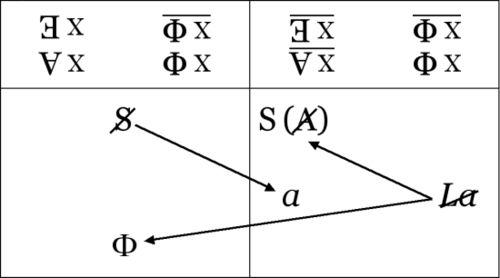
Sexuation_La

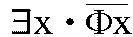
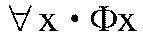
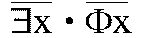
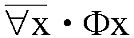
The four logical statements presented at the top of the diagram can be read as follows:

1.  ExceptionToCastration

there exists at least one of those in category x who is not subject to the phallic function

2. AllSubjectCastrated

all of those in the category of x are subject to the phallic function

3. Feminine_X_not determinedbyPhallic

there is not one of those in category x who is not subject to the phallic function

4.  Feminine_NotAll_x_subject

not all of those in category x are subject to the phallic function

*********

What this produces, then, are two seemingly contradictory or logically impossible statements on each side of the graph. The left side is the side of man, while the right side is the side of woman. Together they describe possible positions available to speaking beings, which is to say “Every speaking being situates itself on one side or the other” (Lacan, 1998: 79).

The logical statements on the left side can be understood to tell the story, or the logic, of the myth of the primal horde (Freud, 1950: 141-143). The one who would exist who is not subject to the phallic function, who has not undergone castration, would be the primal father.

Category x in this instance would then refer to the male position and all those in this position are subject to the phallic function, that is, they have undergone castration. There is, then, one man, the primal father, who is not subject to the function of castration which is the condition of possibility for all those in the male position. The contradiction here can be understood in the sense of an exception to a rule, in that it is the exception which is the condition of possibility for the rule to be a rule.

The statements on the right side can be understood to describe something of the tension between universals and particulars. The two statements might appear to present a blunt contradiction. If none of those in the category is not subject to the phallic function, then this would seem to suggest that all those in the category are subject to the phallic function.

But this is precisely what the second statement refuses. Taken separately, however, we can perhaps begin to make some sense of this. If the function of castration is the condition of possibility of entry into the symbolic order, then all speaking beings in order to be speaking beings would have to be subject to this function.

We can understand this first statement, then, as referring to each member on a one-by-one basis. Each woman – for this is the side of woman – in order to be a speaking being, must be subject to the phallic function. The second statement – the universal statement – should then be understood to refer to the group. The group as a whole, as a category, is not subject to the phallic function. What would this mean?

That, as a universal category, The Woman cannot be located within the symbolic order;  La femme n’existe pas.

If one side of the supposed relation between the sexes can be said not to exist, if one side cannot be collapsed into a signified totality, while the other side can only assume a signified position as incomplete, then clearly the model of equal partners balanced in a neutral or exteriorly moderated system of exchange becomes manifestly inappropriate.

Lacan’s claim that there is no rapport between the sexes, that they cannot be composed into a ratio, that they have no relation, furnishes us with a step beyond the superficial and reductive assumptions which so apparently benignly dominate the social sciences.

In reducing intersubjectivity and sexual relations to modes of economy, one not only assumes an untenable equality of status between the supposed operators, but one also misses the crucial point that the pleasure, the jouissance,which might be the currency of such an exchange is never itself so easily quantifiable.

Just as actual economic exchange is problematised with the inescapable notion of surplus value, so intersubjective relations are properly rendered more complex with a notion of surplus jouissance. This surplus of jouissance, the fact that relations can never be collapsed into a whole, a oneness, or even into a two, insofar as there is always, necessarily, the insistence of objet petit a, means that the accounting we would impose on relations always already fails.

Moreover, this failure is inscribed already in our attempts to know – to corral in knowledge – how the relation works, what the ratio is, what mediates the rapport.

It is in stepping beyond this limit that the social sciences might begin to explore, without seeking to end in a finite knowledge, what goes on between the sexes.

calum neill wo es war

Neill, C. (2011) Lacanian Ethics and the Assumption of Subjectivity, New York: Palgrave Macmillan.
Neill on signifer represents the subjectt for another signifier

The ethical invocation of Wo Es war, soll Ich werden is not something than can be responded to once and for all in an attainment of subjective security.

Rather it is momentary and perpetual. It is momentary insofar as it manifests in conscious life only fleetingly. It is perpetual insofar as it is indicative of the unconscious processes which necessarily continue unobserved. 20

What Descartes does not adequately answer here, but what is nonetheless raised in his text, is the question of what is going on when I am not thinking, i.e. when ‘I’ is not (re)presented in thought.

chiesa I think where I am not and am where I do not think

Chiesa, L. (2007). Subjectivity and Otherness: A Philosophical Reading of Lacan. Massachusetts: MIT Press.

Chiesa on Chapter 2

The discovery of a structural split in/of the subject subverts the Cartesian cogito while, at the same time, revealing its intimate relation to psychoanalysis. As Lacan repeatedly states, “I think where I am not, therefore I am where I do not think.” (39)

This is to say that the unconscious I, the subject of the enunciation, really thinks at the unconscious level: it (ça) thinks where the I qua ego and qua subject of the statement is not (conscious).

Conversely, the I qua linguistic ego is (conscious) where it, the unconscious subject, does not think.

Most importantly, the subversion of the Cartesian ego shows that its illusion of unity is possible only because of its strict interdependence with the Spaltung. There is no self consciousness without the unconscious, and vice versa.

Descartes’s formulation of a fundamental principle of self-consciousness could be said contemporaneously to decree, at the level of the history of thought, the formal birth of the unconscious (although this birth will remain implicit until Freud). Consequently, it is strictly speaking senseless to speak of a pre-Cartesian notion of the unconscious.

vanheule

Metaphor in psychosis: on the possible convergence of Lacanian theory and neuro-scientific research. HYPOTHESIS AND THEORY, 03 June 2015

Lacan considers the subject as an effect of this connotation and thus concludes that the subject is only half-said, which is expressed by the bar through S in the symbol for the subject: $.

In terms of the process of signification, $ is the result of a dialectical tension. At the level of the message, speech functions to build images regarding who we are. These images make up the ego, but are selective imaginary self-representations that exclude certain signifiers.

The unconscious subject consists of these“forgotten”signifiers,acrosswhichthe
subject is fundamentally scattered; hence the idea that the subject is divided.

In neurosis this division is experienced as internal, hence the neurotic tendency
to repress, where as in psychosis it is experienced as disconnected from one’s own intentions and as coming from without.

In his interpretation a special signifier is installed during the Oedipus complex: the paternal signifier or Name-of-the-Father. This signifier nominates the desire of the maternal figure with which the child is first confronted, and it opens up the
dimension of the law.

Through the Name-of-the-Father people understand themselves and others in terms of rules and standards that one should obey. They use this signifier to make sense of
desire and it helps them to experience permanency in social relations.

seminar XI

From Gallagher’s notes on Lacan’s Seminar XI 4 Fundamental Concepts of Psychoanalysis

The unconscious is an effect of language

It is only in the interaction between the living being, the inchoate subject, and the symbolic that the unconscious is constituted.

Much of the current Seminar is taken up with the role of the Vorstellungsrepresentanz, the representative of a representation

But what Lacan chooses to emphasise in his summary is the notion of the unconscious as a temporal pulsation which appears to be more primary than its linguistic structuring.

Now, in practice, what does that mean? In practice that means that the unconscious opens and closes, there is a temporal pulsation and you can see this concretely anytime you listen to somebody speaking, especially in an analytic session.

Somebody said to me no later than yesterday – he is complaining about the fact that he is being dominated by his female partner that ‘the terms of the relationship are always dictated to by Mary’. The intrusion of the little word ‘to’ is a manifestation of another discourse intervening here.

For a moment something opens and then closes to produce a disturbance of the preconscious organisation that governs his speech and it is there that as an analyst you are called on to intervene by revealing to the subject in his own speech something about his position of which he knew nothinghis own dictatorial stance with regard to his female partners. The intervention has to be a punctual one.

The unconscious, as Lacan says, is never going to be a tourist attraction because it is always just closing when you get there.

It is a commonplace in analysis to say that traumatic experiences are repeated, but trauma is precisely defined as what could not be mastered or assimilated or understood. In other words it is around what has failed to achieve a representation, a Vorstellung, that your history revolves.

… let me rather take a simple example from Freud’s Irma dream to which we already referred. Freud is told by a colleague that he is not doing a good job with Irma and he has the sort of reaction of annoyanace that any one of us might have but as he says ‘my disagreeable impression was not clear to me’.

Now that, I believe, is the missed encounter. It is what you cannot put your finger on in a particular situation that evokes one of the missed encounters that have structured your existence, a repetition that puts you in touch with the reality of that lack and gives rise to a desire that in Freud’s case gave rise to the dream that inaugurated psychoanalysis.

Transference, Lacan describes in this Seminar, as something that begins once there is a subject who is supposed to know. As such it is not limited to the analytic situation. If you think that your mother knows everything about your life then there is transference in this sense.

Analysis begins when the person enters into a transference with the analyst and if that does not occur, if the person does not assume, does not presume that you know then they do not come to talk to you and if they do come, they do not stay.

But the crucial moment in the development of the transference is when the presumption of knowledge is transformed into a love, a deceptive love which results in the closure of the unconscious.

Lacan spent a dozen or more sessions in the Seminar on Transference talking about the way, for example, in which Socrates was first approached by his disciples as the one who knew and then became an object of their love.

This transference love was seen by Freud from the beginning as the main agent of change in analysis. This love is deceptive because like all love it is esssentially narcissistic.

It is the assumption that what I am lacking you have and that you as my beloved can make up for what I am lacking. Tn persuading the other that he has what can complement us we assure ourselves of being able to continue to misunderstand what precisely we lack’.

In this Seminar Lacan modifies both the notion of repetition and the notion of transference and distinguishes them from one another. He would say that that notion of transference as simply repetition of a previous situation is a way for the analyst of disavowing his place in the transference and laying the whole responsibility for transference reactions on the shoulders of the analysand.

On the contrary Lacan emphasises that the desire of the analyst is much more a factor in the way the transference develops than the predispositions that the patient brings to the analysis.

For Lacan, Descartes anticipated Freud in his search not for knowledge but for certainty. Descartes subverted all knowledge by his methodical doubt and was left with only the certainty of a subject of thinking from whom all other qualities had been stripped.

Psychoanalysis gives this denuded subject at least the quality of being a desirer transforming the Cartesian Cogito into a Freudian Desidero.

But Freud is a true successor to Descartes when he writes to the Hegelian Putnam: ‘I have never been concerned with any comprehensive synthesis but with certainty alone’ and Lacan states quite categorically that it is certainty rather than hypotheses that should guide the interventions of the psychoanalyst.

The analyst is not the possessor of a general knowledge which is then applied to particular cases. The dictum of Picasso: ‘I do not search, I find’ is quoted approvingly by Lacan.

The analyst is not to construct theories about the subject who is speaking to him, he is there to hear and to reveal to that subject the incontrovertible signifiers which appear concretely in his spoken discourse.

[…]

Mathematics and logic will in fact come to counterbalance linguistics as the second major reference point for Lacan in his continuing attempts to give a scientific status to psychoanalysis and only those of the old guard who were willing to advance into this new territory continued to play an active role in his School.

His analysis of alienation and separation, which curiously is not mentioned here – goes well beyond the popular understanding which applied the concept to almost every social situation in which the individual could not do his or her own thing.

For Lacan the living being is necessarily faced with an alienating choice once they begin to use language. Your money or your life, your alienation in language or your autistic isolation to become a human being a price must always be paid.

The only way in which we can conquer the little freedom that is open to us is by coming to the realisation that even in the discourse of the Big Other there are gaps which bear witness to a lack and to a desire.

boothby death desire 1a

Boothby, Richard. (1991) Death and desire: psychoanalytic theory in Lacan’s return to Freud. London: Routledge.

Over the past forty years, however, the most significant treatment of Freud’s most unpopular conception has been the work of a renegade French analyst named Jacques Lacan.

Lacan does more than reemphasize Freud’s notion of the death drive, he re-installs it at the very center of psychoanalytic theory. To ignore the death instinct in [Freud’s] doctrine,” he insists, “is to misunderstand that doctrine completely” (E:S, 301).

Lacan characterizes Beyond the Pleasure Principle as the “pivotal point” in the evolution of Freud’s thought (S.II, 165).

But, further, it is not merely one concept among others. Perhaps more than any other point in the Freudian theory, it is with respect to the death drive that Lacan’s innovation is rightly called a “return to Freud.”

What makes the death-drive theory so important is its pivotal position in the structured totality of the psychoanalytic theory. For Lacan, the death drive is the key to understanding the topography of id, ego, and superego upon which Freud based the final and most complete elaboration of his theory

According to Lacan, the problem of the death drive opens psychoanalysis to question and, ultimately, to reformulation. But what sort of reformulation is announced here?

The answer is not immediately easy to determine. The question of the death drive in Lacan will take us to the heart of his theoretical innovations insofar as he links the meaning of death in psychoanalysis to the faculty of speech and language, on the one hand, and to the fate of desire, on the other.

In this way, two of the prime themes of Lacan’s thought, language and desire, can be seen to intersect in his treatment of the death drive. The question, one that will occupy us throughout this book, remains: How are language, desire, and death related?

“The function of desire must remain in a fundamental relation with death” (S.VII, 351).

The difficulty of Lacan’s style is not wholly unintentional. Convinced that the curative effect of analysis does not consist in explaining the patient’s symptoms and life history, convinced, that is, that the analyst’s effort to understand the patient only impedes the emergence of the unconscious within the transference and that what is effective in analysis concerns something beyond the capacity of the analyst to explain, Lacan’s discourse is calculated to frustrate facile understanding.

His aim in part is to replicate for his readers and listeners something of the essential opacity and disconnectedness of the analytic experience. Often what is required of the reader in the encounter with Lacan’s dense and recalcitrant discourse, as with that of the discourse of the patient in analysis, is less an effort to clarify and systematize than a sort of unknowing mindfulness.

We are called upon less to close over the gaps and discontinuities in the discourse than to remain attentive to its very lack of coherence, allowing its breaches and disalignments to become the jumping-off points for new movements of thought.

IMAGINARY

The imaginary was the first of the three orders to appear, introduced in 1936 by Lacan’s article on the “mirror stage.” It was inspired by research in ethology, which associated behavior patterns in animals with the perception of specific visual images. Lacan proposed that a similar “imaginary” function operates in human beings. In the “mirror phase,” the most rudimentary formations of psychic life are organized for the six- to eighteen-month-old infant as it identifies itself with a body image; either its own image in a mirror, or that of a caretaker or peer.

For Lacan, the “imaginary” designates that basic and enduring dimension of experience that is oriented by images, perceived or fantasized, the psychologically formative power of which is lastingly established in the primordial identification of the mirror phase.

Lacan’s first and arguably most original and far-reaching innovation in psychoanalytic theory was to characterize the Freudian “ego” as a formation of the imaginary.

The symbolic, announced in his 1953 paper on “The Function and Field of Speech and Language in Psychoanalysis,” was conceived by Lacan from the outset in dynamic opposition to the captures of the imaginary. Lacan’s notion of the symbolic is indebted to the linguistics of Ferdinand de Saussure and Roman Jakobson, and to the structural anthropology of Claude Levi-Strauss.

SYMBOLIC

The symbolic is the register of language and of linguistically mediated cognitions. In the “symbolic order,” Lacan envisions a complex system of signifying elements whose meaning is determined by their relation to the other elements of the system — a grand structure, then, in which meaning is free to circulate among associated elements or signifiers without necessarily referring to a particular object or signified.

In opposition to the gestalt principles and relations of perceptual resemblance that govern the semiotics of the imaginary, the order of the symbolic functions in accordance with rules internal to the signifying system itself. Lacanian psychoanalysis came fully into its own when Lacan identified the Oedipus Complex discovered by Freud with the formative moment in which the child, molded and snared by the imaginary, accedes to a symbolic mode of functioning. It is a good deal more difficult to characterize briefly the Lacanian sense of the “real.”

Especially in his later work, Lacan tries to show the interconnectedness of the imaginary, symbolic, and real, comparing them to the three interlocking rings of a Borromean knot.

But the notion of the real is perhaps best introduced as being precisely that which escapes and is lacking in the other two registers. Neither figured in the imaginary nor represented by the symbolic, the real is the always still – outstanding, the radically excluded, the wholly uncognized. As Lacan puts it, “the real is the impossible.”37

In Lacan’s sense, then, the real has very little to do with common “reality.” By the measure of everyday reality, the Lacanian real is closer to being un- or sur-real.

REAL

The real is sheer, wholly undifferentiated and unsymbolized force or impact. It is an experience of the real, therefore, that lies at the heart of trauma. However, the real is not simply a designation of something unknown external to the individual. It inhabits the secret interior as well. The real is therefore also to be associated with the active yet ineffable stirrings of organic need, the unconsciousness of the body. The tripartite distinction of imaginary, symbolic, and real constitutes the master key of Lacan’s work. To interpret his treatment of the death instinct will therefore ultimately require determining its relation to these three essential registers.

As I hope to demonstrate in the following chapters, this task offers a unique opportunity for clarifying the interrelation of Lacan’s three basic categories to one another. This is true in spite of the fact, or rather precisely because of the fact, that each of the three registers seems to claim the death instinct for its own.

From one point of view, Lacan clearly associates the death drive with the imaginary. “The point emphasized by Freud’s thought, but [that] isn’t fully made out in Beyond the Pleasure Principle,” Lacan asserts, “[is that] the death instinct in man [signifies] that his libido is originally constrained to pass through an imaginary stage” (S.I, 149).

At another point, however, it is the symbolic that appears as the order of death. Thus we read that “the nature of the symbol is yet to be clarified. We have approached the essence of it in situating it at the very point of the genesis of the death instinct” (S.III, 244).

Is the drive toward death to be associated primarily with the imaginary? with the symbolic? Or is it not more fittingly associated with the real? Lacan’s notion of the real — as lack or absence, as the impossible, as the unspeakable force of the trauma, or as the ineffable exigence of the body—seems eminently qualified to be linked with the activity of what Freud called a “death drive.”

As I hope to show in what follows, the problem of death is relevant to each of the three registers, but in a different way. Clarifying these differences yields not only a more adequate solution to Freud’s problem of the death drive but also a better understanding of Lacan’s own thought as it illuminates the relations of the imaginary, symbolic, and real to one another. 20

To begin with, Lacan raises the question of how, within the ego psychological strategy, the patient is ever to move beyond identification with the analyst. But Lacan’s real concern is more radical. From a Lacanian point of view, ego psychology requires that the treatment deepen the very imaginary elationships of the ego that lie at the root of the patient’s deepest conflicts.

Psychoanalysis that deserves the name must effect precisely the opposite, bringing about a certain deconstruction of already existing imaginary encrustations. Lacan suggests that “what is really at issue, at the end of analysis, [is] a twilight, an imaginary decline of the world, and even an experience at the limit of depersonalization” (S.I 232). 37

Lacan’s conception of the mirror phase requires us to think of the situation of the newborn in terms of a primal chaos of wholly unsymbolized somatic excitations. Identification with the imago is said to be “the psychic relationship par excellence” insofar as the imago functions to erect the most elemental forms of psychic life out of an anarchy of unformed and inarticulate organic strivings.18

Prior to the recognition of the primordial imagos of the mirror stage, the force of “instinct” remains dispersed amid a panoply of bodily energies. 58

The pressure of psychically unmastered instinct therefore constitutes, in effect, a force of psychical unbinding from inside the organism itself. … The function of the life instinct is to bind together and to establish unities.

The activity of the death drive, by contrast, is to effect unbinding and disintegration. The crucial polarity becomes … between the organic and the properly psychological, between the force of unbound instinctual energies and the bound structure of the ego. 83

The death drive designates the way the bound organization of the ego is traumatized by the pressure upon it of unbound instinctual energies. 84

In Lacanian terms the death drive represents the return of the real excluded by the imaginary.

The death drive designates the pressure of unbound energies against the limitations of the bound structure of the ego. What is subject to “death” is not the biological organism but the imaginary ego. 84

The effect of the death drive, like the traumatic repetitions that first alerted Freud to its existence, threatens to overload the psychical organization with a wave of unmastered energies. …

The death drive is reinterpreted as the impingement upon the bound structure of the ego of organismic energies as yet inadequately represented int he psychic system. The death drive is the force of the instinctual as such. 85

zupančič not-mother pt 1

Zupančič, Alenka. Not-Mother: On Freud’s Verneinung. E-flux Journal 2012

The negation itself is negated (we could say that we now get something like, “this is not not-mother”), yet something of it persists — the repression, the symptoms persist beyond becoming conscious of the repressed.

Here, we come across one of the crucial (and constitutive) discoveries of psychoanalysis, without which the latter would be little more than a hermeneutics of the unconscious, depending entirely on the (correct) interpretation, or translation, of the text deformed by the unconscious into its full and nondeformed version.

Soon after his early enthusiasm that things might indeed work this way, Freud came up against the problem that they actually don’t, that the right interpretation (and its acceptance) doesn’t yet eliminate the symptom, and that the real kernel of the unconscious is not to be situated — in the case of dreams, for example — in the latent content, as opposed to the manifest content, and as “deciphered” from it. Continue reading “zupančič not-mother pt 1”

zupančič April 2014 Toronto

philosophical ontological implications of psychoanalytic notions of sexuality and unconscious. Something happened to philosophy when this thing started to get articulated. One needs to think through this consequences of this unprecedented articulation. The concept of unconscious in its intrinsic link with sexuality is not simply concept of some newly discovered entity, of being. No.

It is not exactly an entity, it is not simply being nor non-being. Sexuality is constitutively unconscious. Fundamental negativity, non-being or gap implied in sexuality.

When Freud discovered sexuality what did this imply? He insisted against Jung, there is NO natural or pre-established place for human sexuality, it is constitutively out of its place. It is fragmented, dispersed.

3 Essays on Sexuality: Sexuality is nothing other than this out-of-placeness of its satisfaction. The sexual for Freud was not a substance to be properly described and circumscribed but rather the impossibility of its own circumscription and the limitation.

Sexual is NOT a separate domain of human activity or human life. Sexuality is something that exists in-itself only as something other. Sexuality is the very out-of-itselfness of being. Continue reading “zupančič April 2014 Toronto”

swales perverse patient

Swales, Stephanie S. Perversion: A Lacanian Psychoanalytic Approach to the Subject. Routledge, 2012.

A perverse patient will be especially likely to heed prohibitions if they are given by a trusted group psychotherapist whom the patient has put in the position of symbolic Other. In many cases, perverse patients are looking for ways to bolster their paternal functions, and a group therapist whom the pervert “elects” to the position of symbolic Other can have a good deal of influence on the patient as the subject-supposed-to-No!

This will only be possible, however, if the patient puts the therapist in the position of symbolic Other; if the patient relates to the therapist on the imaginary plane—as an other like himself—then the group therapist’s prohibitions will have no therapeutic effect. 236

Consequently, the therapist should look for signs that the patient is speaking to her or him as a symbolic Other before advising the patient to abstain from doing something. Such signs often include the patient’s admissions that there is some kind of knowledge—namely, unconscious knowledge — that is at work in her or him of which s/he her- or himself is ignorant, but about which the therapist is a knowledgeable authority. So too is symbolic transference evident when the patient thinks of the therapist as being the cause of her or his desire to be curious about himself and put his understandings of his life into question.

The necessary condition for true analytic or psychodynamic work is the patient’s having a question about himself that he addresses to an Other (the analyst or therapist) with the expectation that the Other (as subject-supposed-to-know) knows something about the answer that eludes the patient himself.

In my work with Ray, that question was “Why am I an exhibitionist, and how can I prevent committing future acts of exhibitionism?” Even though we understand the “constancy of [the pervert’s] jouissance as an answer, an answer which is already there” (Miller 1996b, p. 310) the pervert’s desire enables him to have a question that drives the progress of the analysis or therapy. 238

While the pervert may seem to want to get away with murder, what he really desires is to bolster the lawgiving Other’s existence. In his article, Clavreul made no mention of the pervert’s suffering due to the inadequacy of the paternal function. When the pervert’s subject position is seen as an attempt to prop up the paternal function, one can no longer maintain that the pervert cannot undergo traditional Lacanian analysis and that the only two positions available to the analyst of a pervert are those of moralizer and impotent voyeur. 239

Certainly, it is difficult to do analytic work with perverts. This is largely because the pervert prefers to play the role of object a (object cause of the Other’s jouissance) in relation to the therapist, causing her anxiety and jouissance. Analytic work with a pervert requires that the therapist maneuver the pervert into the role of split subject (as someone who sees himself as lacking at a certain level) so that the therapist can take up the role of object a as object cause of the patient’s desire to do therapeutic work. In working with a pervert, the therapist must be alert to ways to get the patient intrigued by his own unconscious manifestations when the pervert occasionally lapses back into the role of object a. 239

Situating the work at the symbolic level of desire means, for one thing, that the therapist should avoid responding to the patient’s requests for advice and interpretation.

Although it is common for a patient at the beginning stages of his psychotherapy to see his psychotherapist as a subject-supposed-to-know, the psychotherapist should not fall prey to the trap of believing that s/he holds privileged knowledge about the patient and what is good for him (or that if s/he does not give him advice, no one else in the patient’s life will do so; in the vast majority of cases, the patient gets plenty of advice from his PO, his group therapist and fellow participants, and his friends and family).

Interpreting from the position of subject-supposed-to-know incites an imaginary order relationship of rivalry with the patient in which the patient sooner or later tries to disprove the therapist’s theories and interpretations. Working at the level of demand means giving knowledge to the patient and fostering a relationship which is based on the patient’s dependency on that knowledge. In providing the patient with ready-made interpretations, the therapist puts words into the patient’s mouth and stymies the patient’s own curiosity about himself.

Working at the symbolic level of desire, however, involves the therapist’s expressions of desire that the patient do the work of psychotherapy.

Correspondingly, the therapist should aim to be positioned in the transference as the object-cause of the perverse patient’s desire to participate in psychotherapy and as the placeholder for the patient’s unconscious. This transferential position enables the patient to work through (via emotive speech) his issues with the Other.

Another way in which Lacan described the analytic progress of a subject is “the constant culmination of the subject’s assumption of his own mirages” (1953/2006a, p. 251).

One of the functions of the analytic method is to enable the subject to discover something about his unconscious, realizing that what he took to be his own individual thoughts and desires are actually ones he appropriated from the Other.

The subject calls who he thinks he is—the sum total of his ego misidentifications — radically into question.

The therapist aims to get the patient to speak about his experiences, fantasies, and dreams, to associate to them, and to be interested in possible Other, unconscious meanings of his utterances.

A difficult and delicate stage of the pervert’s treatment is the beginning stage. It is more difficult to get a perverse patient than a neurotic patient to question who he is and why he has become who he is. This is the question that psychoanalysis and psychodynamic psychotherapy aims to answer. This question, when unanswered, is what drives the patient to undergo psychotherapy. 241