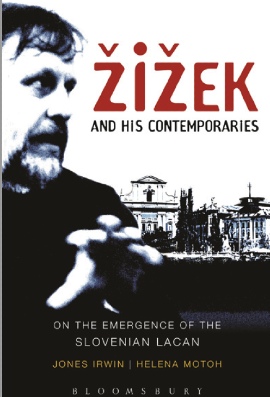
Alenka Zupančič interview

2014

Alenka Zupančič : The Lacanian concept of the Real allows for a problematization of this opposition which had become paralysing and unproductive philosophically. We must of course be wary of the tendency to see in this Lacanian move a simple affirmation of a naive realism – the Real understood in this objectivist fashion. The ‘Real’ for Lacan is not reducible to the discursive but neither is it simply an advocation of an ontological realism, understood unproblematically. Especially since Lacan introduces a key difference between the notion of the Real and that of being. They are related via a ‘third dimension’, that of the ‘signifier’, but they do not coincide.

What Lacan wants to tell us is that the signifier has ontological significance, the signifier tells us about ontology in a way that the notion of the signified is unable to (this latter being the usual realist referent; the object as the signified).

The signifier is interesting not because we could reduce everything to it and to different signifying operations (this reductionist question is completely false), but because there is something in the signifier and its operations that cannot be reduced back to the signifier and its operations.

This is the crucial point, and not some mythical or original outside of the signifier, irreducible to it. This is also what the ‘materialism of the signifier’ amounts to. Not simply to the fact that the signifier can have material consequences, but rather that the materialist position needs to do more than to pronounce matter the original principle. It has to account for a split or contradiction that is the matter. It has to grasp the concept of the matter beyond that imaginary notion of ‘something thick and hard’. I’m not saying: ‘For Lacan, the signifieris the real matter’, not at all.

I’m saying that, for Lacan, the signifier is what enables us to perceive the non-coincidence between being and the Real, and that this is what eventually leads to a new kind of materialism.

From this point of view, we can say that Lacan develops the modern moment in philosophy, but as Žižek says, ‘he develops it with a twist’. Then there is the new concept of the subject – another Lacanian ‘revolution’ in philosophy, retroactively relating the subject of the unconscious to the Cartesian cogito. This is often one of the great misunderstandings of Lacan (and psychoanalysis), that it jettisons the cogito, that it is anti-Cartesian pure and simple. This is a significant misunderstanding of the psychoanalytical concept of the ‘subject’ which was one of the main concepts for the delineation of a specific Lacanian orientation in the first place. This concept of ‘subject’ distinguished Lacan from the wider structuralist movement and their notion of a ‘subjectless structure’.

But somehow this conception of ‘subject’ is interpreted as anti-cogito, as the ‘subject’ is the unconscious subject. Therefore, it was important to clarify the connection between cogito and the unconscious and for example, there is an important anthology from the Ljubljana School of Psychoanalysis, where we explore this problematic in detail (Cogito and the Unconscious edited by Žižek [1998a] and including essays by all three thinkers as well as others in the Slovenian wider group of theorists). There is also the question of the radical break with premodern metaphysics involved in the Cartesian gesture, which Lacan judges crucial for the emergence of the subject of the unconscious.

This theme is crucial also for his understanding of ethics. In his important early seminar, Seminar VII, The Ethics of Psychoanalysis (Lacan 1992), he is discussing the history of ethical thought as it related for example to the metaphysical tradition. His specific example is Aristotle and there is obviously a debt here on one level to Aristotle’s Ethics as a text and conceptual scheme. However, there is also a clear and radical parting of the ways.

In my own work on ethics, in The Ethics of the Real: Kant, Lacan (Zupančič 2000), I draw out some of these themes. For example, I put forward a critique of what I term ‘bio-morality’ and which, in its contemporary developments, represents an allegiance (albeit in rather reduced ways) to Aristotle’s eudaimonistic ethics and metaphysics of being. This is not simply a criticism of Aristotle, but rather of what a revival of his conceptual paradigm today amounts to.

In relationship to the theme of ethics, I want to stress that what I develop out of Kant’s ethics must not be opposed or seen as completely distinct from politics. As Žižek very rightly pointed out, the contemporary fashion of playing (‘good’) ethics against (‘bad’) politics is more often than not a direct pendant of the ideology of late capitalism and its conception of democracy. Any rigorous political thought is conceived as potentially dangerous and leading to a possible ‘disaster’ (that is to say to a more fundamental change in how the present order functions), whereas ethics seems to be much safer, and centred mostly on our individual responsibility, rather than any kind of collective engagement. My own work on Kant and ethics already went against this tendency, pointing both at an unsettling dimension of Kantian ethics, as well as at its emphasis on the universal, rather than simply individual.

It is similar with psychoanalysis which supposedly also focuses on individual destinies and problems. Here, am I allowed to tell my joke about the grain of seed, or the man who thinks he is one?

He gets cured by the psychoanalysts and then he comes running back, crying that he has just been chased by a chicken. Don’t you know you are a human being, they say? Yes, I am cured. I know that I am a human being, and not a grain of seed. But, please, does the chicken know this? This is the crux of the politics (which is also an ethics) in the Ljubljana School of Psychoanalysis. It is not enough simply to deal with the plight of the ‘subject’ and fantasy, through psychoanalysis.

Rather, we must seek to transform the structures of the symbolic which sustain a given order, determine the Impossible-Real that they grapple with.

Sexuality

Alenka Zupančič: Yes, when we understand the question ‘why Freud and Lacan?’, or the question ‘why psychoanalysis?’, we come close to an understanding of the paradigmatic role which a revised notion of ‘sexuality’ must play in this discussion. Joan Copjec succinctly pointed out how, for example, in the term ‘sexual difference’ the term ‘sex’ has been replaced by the more neutered category of ‘gender’. As Joan – an allied member of the ‘Ljubljana School’ – put it: Gender theory performed one major feat: it removed the sex from sex. For awhile, gender theorists continued to speak of sexual practices, they ceased to question what sex or sexuality is; sex was no longer the subject of an ontological inquiry and reverted instead to being what it was in common parlance: some vague sort of distinction, but basically a secondary characteristic (when applied to the subject), a qualifier added to others, or (when applied to an act) something a bit naughty.

This is very far from what both Freud (from his early, 1905 text Three Essays on the Theory of Sexuality [Freud 1977]) and Lacan have been saying. For Freud, the notion of the ‘sexual’ is significantly broader than contemporary notions of sex. It is not a substance to be properly described and understood (by psychoanalysis), but more like an impasse that generates and structures different discursive edifices trying to respond to it. It is linked to a notion of a fundamental ontological impasse; this impasse is irreducible for Freud.

But we also see here all the accusations against psychoanalysis, that ‘Freud reduces everything to sex’. In one sense, this accusation is true but what it misses is the complexification and radicalization of what we mean by ‘sexuality’. Freud discovered human sexuality as a problem (in need of explanation), and not as something with which one could eventually explain every (other) problem. He ‘discovered’ sexuality as intrinsically meaningless, and not as the ultimate horizon of all humanly produced meaning. A clarification of this point is one of my ‘interventions’ in Why Psychoanalysis? Three Interventions (Zupančič 2008b). Lately, I dedicated a whole book to these questions – it came out in 2011 in Slovenia, but I’m still working on its English version.

On Materialism

The materialism of psychoanalysis is not simply materialism of the body;
and Lacan has learnt the philosophical lesson that is essential in this
respect: in order to be ‘materialist’ it is not enough to refer to the matter
as the first principle from which everything develops.

For, in this, we easily succumb to a rather idealistic notion of a somehow always-already spirited (‘vibrant’) matter. In recent debates, psychoanalysis – in the same package with all of the so-called post-structuralist thought – is often accused of relying on the formula ‘always-already’ as its magical formula. But this accusation misses the whole point: for psychoanalysis, ‘always-already’ is a retroactive effect of some radical contingency that changes given symbolic coordinates.

What a materialism worthy of this name has to do today is to propose a conceptualization of contingency (a break that comes from nowhere, ‘ex-nihilo’ so to say) in its complex relation to the structuring of the world.

Also, thinking is not simply opposed to things (and to matter), it is part of the thing it thinks, without being fully reducible to it. To advocate materialism and the ‘Real’ is not to advocate anti-thought. Quite the contrary, we might say – it calls for more and more thinking. And this is a problem that I sometimes detect in the recent flourishing of ‘new materialisms’ – a kind of abdication of thinking when it comes to more complex structures and arguments, as if common sense simplicities were inherently more ‘materialist’ than something
which is more complex and perhaps paradox ridden.

On Nietzsche

Alenka Zupančič: A key part of the Nietzschean legacy is I think working against the ‘moralisation’ of the symbolic, which Nietzsche describes so well in The Genealogy of Morals, for example, and which for example is also a key theme in relation to the thematic of the ‘moralisation of politics’, which I mentioned earlier.

Concerning nihilism and to quote Ray Brassier, from his text Nihil Unbound, there are things to be said for nihilism. It depends, of course, on what we mean by nihilism. If we mean by it a certain materialist position which recognizes contingency of, for example, our being in the world, and which points to a limit of ‘making sense of (all) things’, then we must say that to a great extent we cannot go beyond nihilism.

Yet this does not imply for Nietzsche that we sink in the depressive feelings of ‘worthlessness of all things’. On the contrary, it rather implies what he calls ‘gay science’. But, we must simultaneously avoid what Nietzsche calls ‘reactive nihilism’ and this is, of course, bound up with his whole critique of ressentiment (or ‘acting against’, reactiveness). To say that there is no ultimate cause of things is not to say that nothing itself is the ultimate cause of things, which amounts to putting the Nothing in the office of the Absolute.

Describing the difference between active and passive nihilism, Nietzsche famously says that man would ‘rather will nothingness than not will’ (On the Genealogy of Morals). And we could say that what defines (contemporary) passive nihilism is precisely that man would rather not will than will anything too strongly (because the latter supposedly inevitably leads to some kind of ‘nihilist’ catastrophe). And this seems to become synonymous with what ‘ethics’ now is in contemporary culture and society and the wider ‘moralisation of politics’, ‘biomorality’ etc. (to which I strongly oppose an ‘ethics of the Real’). There is a ‘deactivation’ of the will, which is also a deactivation of the ‘political will’, of the political as such as a paradigmatic space and temporality of antagonism, of the ‘Real’.

In my view, the genuinely new Nietzschean notion of nothingor n egativity is not simply that of ‘active nihilism’ as opposed to ‘passive nihilism’, but rather a transfiguration of nothing. Nothing/negativity is not a kind of ultimate absolute, but rather the smallest yet irreducible difference that is inscribed in being qua being. This is what I argue in my book. I use Nietzsche’s own metaphor of ‘the shortest shadow’. When speaking of going beyond the opposition real world/apparent world, Nietzsche describes this moment as ‘Midday; moment of the shortest shadow’ (Twilight of Idols).

Midday is thus not for him the moment when the sun embraces everything,
makes all shadows and all negativity disappear, and constitutes an undivided Unity of the world; it is the moment of the shortest shadow. And, what is the shortest shadow of a thing, if not this thing itself? Yet, for Nietzsche, this does not mean that the two becomes one, but, rather, that one becomes two. Why?

The thing (as one) no longer throws its shadow upon another thing; instead, it throws its shadow upon itself, thus becoming, at the same time, the thing and
its shadow, the real and its appearance. When the sun is at its zenith, things are not simply exposed (‘naked’, as it were); they are, so to speak, dressed in their own shadows. In other words: it is not simply that our representations do not coincide with things, it is rather that things do not simply coincide with themselves. There is thus an imperative to ‘think through’ this negativity. We
need to philosophize, as Žižek has said, philosophy is now more important than ever. It is not a game of textualism as some postmodernists would like to suggest perhaps.

The Subject

Alenka Zupančič: We can say that subject is ‘the answer of the Real’, as Lacan puts it somewhere, or that it is the effect of the rift/inconsistency of the structure. And we can indeed contrast this with the structuralist notion that there is a ‘structure without a subject’, a subjectless structure.

But what is at stake is above all a profound reconfiguration of what both ‘structure’ and ‘subject’ mean, refer to. We can begin with the notion of the structure which differs in Lacan from the classical structuralist notion. Very simply put: for Lacan, structure is ‘not-all’ (or ‘not whole’), which is what he articulates with the concept of the ‘barred Other’. This implies a lack, a contradiction as – so to say – ‘structuring principle of the structure’. Structure is always and at the same time more and less than structure. And this is where the new notion of the subject comes in. Subject is not the opposite of the structure, it is not some intentionality which uses structure to express itself, or which tries to get its more or less authentic voice heard through it.

Subject is a singular torsion produced by the inconsistency of the structure.

Take the simple example of the slips of the tongue: for Freud and Lacan, they do not bear witness to a hidden(unconscious) force repressed by the structure, which nevertheless betrays its presence by these slips.

Rather, they are singular existences of structure’s own inherent negativity. This is also the argument that I want to make in the context of the contemporary debates concerning realism, which often disqualify thought or thinking as something merely subjective (facing external reality). Put in a couple of formulas: Instead of taking it as something situated vis-à-vis being, we should conceive of thought as an objectivized (and necessarily dislocated) instance of the non-relation (contradiction, inconsistency) and rift inherent in being (in ‘objective reality’). Thinking is a necessarily displaced objectification (‘objective existence’) of this rift, that is, of the relation of being to its own
‘non-’, to its own negativity.

Although being is indeed independent of thinking, the rift that structures it only objectively exists as thought, and this perspective opens a new way of conceiving realism and/or materialism. This is precisely how I would also read the Lacanian subject. And this is why if we remove subject from the structure, we do not get closer to objective reality, but rather further away from it.

We can also say that the subject for Lacan is ‘objectively subjective’, there is an asymmetry in the subject, something in the subject which is not just subjective but which is also inaccessible to the subject.

We can see the connection back to Kant. The Kantian subject I would endorse is that ‘pure something, X, which thinks’, the transcendental unity of apperception. The point where subjectivity is not fully assumable and the point where the object is not reducible to or is ‘not yet’ objectivity (this is Lacan’s notion of objet petit a). Here, we see also that the Lacanian subject radicalizes the traditional ‘object’. The concept of the ‘object a’ is perhaps the most significant Lacanian conceptual invention.

Ethics

Alenka Zupančič: No, the notions of good and evil are not simply irrelevant to ethics, I would say, although they are indiscernible in advance. The responsibility we have is to decide what is good. It is difficult to overstate Kant’s significance in this respect. He did two things which may look incompatible: first, he founded ethics exclusively in human reason: no God or any other pre-established Good can serve as basis of morality. But instead of this leading to a kind of ‘relativised’, finitude-bound morality, it led to the birth of the modern thought of the absolute, the unconditional, and of the infinite as the possible, even imperative dimension of the finite.

Whatever objections we may raise to the Kantian ethics –for example, and already, from Hegel’s perspective – it was with Kant that the standing oppositions like absolute/contingent, lawful/unconditional, finite/infinite broke down, and the path was opened for a truly modern reconfiguration of these terms.

In the twentieth century, Kantian ethics has been largely domesticated to serve as an important ideological foundation of the contemporary democratic liberalism and of the gradual replacement of an emancipatory politics with the discourse of human rights or simply ethics.

I’ve always been astonished by the fact that a really radical, uncompromising and excess-ridden writing like Kant’s could be referred to in order to pacify the excess (of the political or something else). When the Nazi criminal Eichmann infamously defended himself by saying that in his doing he has been simply following the Kantian categorical imperative, this was of course an obscene perversion of Kant’s thought.

As Žižek succinctly formulated: what follows from Kant is not that we can use moral law as an excuse for our actions (‘oh, I wouldn’t do it, but the moral law commanded so’), we are absolutely responsible for the very law we are ‘executing’.

But Eichmann’s perverse defence did point at the unsettling core exposed by Kant: the unconditional law is one with (the excess of) freedom.

Lacan was probably the first to properly recognize this unsettling, excessive moment that Kant discovered at the very core of ethics.

When he wrote his famous essay ‘Kant with Sade’ (Lacan 2002b), the point was not that Kant is in truth as excessive as Sade, but rather that Sade is already a ‘taming’, a pacification – in terms perversion – of the impossible/real circumscribed by Kant. This is the thread I tried to follow in my book: Kant’s discovery of this unsettling, excessive negativity at the very core of Reason. I was not interested so much in ethics as ethics, as in this thing that Kant has formulated through his considerations of ethics.

Helena Motoh and Jones Irwin: Does this mean that the ‘ethics of psychoanalysis’ simply pits the Real against the symbolic or is there something else going on here? Also, how does the concept of ‘drive’ and especially the concept of ‘death drive’, which Žižek emphasizes,relate to an ethical dimension? Finally, what does the Lacanian concept of ‘desire’ (as he describes it in The Ethics of Psychoanalysis) have to do with this? Is ‘desire’ simply jettisoned in the later work?

Alenka Zupančič: In respect to the relation between symbolic and the Real, there are certainly oscillations and shifts at work already in Lacan, as well as in the work of the three of us (together and separately). The idea that the Real is a kind of unbearable, repulsive thickness beyond the symbolic, left out of it and inaccessible to it, may have had some presence in our work at some point. But I think it is fair to say that for many years now we are all struggling precisely with the problem of a different way of relating them as absolutely crucial. There are some differences in the way we go about it,

but the main and shared shift of perspective that orientates our work could be perhaps summed up as follows: the Real is not any kind of substance or being. It pertains to being (and to the symbolic) as its inherent contradiction/antagonism.

I started working on this issue first by getting a bit more into Nietzsche (the first, Slovene version of the Nietzsche book was published in 2001). Borrowing from Badiou his notion of the ‘minimal difference’ and relating it to Nietzsche’s notion of the ‘shortest shadow’, I tried to develop the notion of the Real as not that of some Thing, but of the fundamental non-coincidence of things with themselves. This non-coincidence is not caused by the symbolic; rather, the symbolic is already a response to it: it is discursivity as necessarily biased by the constraints of the contradiction in being.

Parallel to this work on Nietzsche was also my working on the theme of love, and later on comedy as possible ways of articulating what is at stake in the relation between the symbolic and the real. Lately, and for some time now, I have been working on this through the question of the ontological implications of the psychoanalytic notion of the sexual. I could perhaps put it in one formula: The real is part of being which is not being (or which is not qua being), but which as such dictates the (symbolic) logic of its appearance.

The real is part of being which is not being (or which
is not qua being), but which as such dictates the (symbolic) logic of
its appearance.

the Real is not any kind of substance or being. It pertains to being (and to the symbolic) as its inherent contradiction/antagonism.

Helena Motoh and Jones Irwin: Can you say a bit more about the two key Lacanian concepts (not without political ramifications of course) of ‘desire’ and ‘drive’. You have already explicated these, to some extent, but can you develop some of the tensions between them? Also, how do these concepts develop in your work, as they seem to have a paradigmatic status while undergoing some transformation for example from the ‘Ethics of the Real’ book to the book on ‘comedy’. Finally, are there philosophical tensions between your work and the other members of the troika on this fraught relationship between ‘desire’ and ‘drive’?

Alenka Zupančič: Certainly, you are right to point to these concepts as paradigmatic, and they are also crucial when it comes to the articulation of the relationship of the symbolic, the imaginary and the Real You are also correct that there are some differences here – one would expect nothing less in a philosophical movement worth its salt.

In my own work, I take up the themes of desire and drive throughout. In Ethics of the Real I focused mostly, although not exclusively, on Lacan from The Ethics of Psychoanalysis and The Transference (Seminars VII and VIII). The concept of desire is in the foreground in both, but there is also a shift that starts taking place there, a conceptual move from das Ding as the impossible/Real as the focal point of desire, to the introduction of the object a. This shift then gets a further and very complex elaboration in Lacan’s subsequent seminars. But to formulate what is at stake very briefly and simply, we could say that what is involved here is a move from the Real as the abyssal beyond of the symbolic,

to a concept (of the object a) which undermines the very logic and nature of the difference on which the previous conception of the Real was based.

Object a is neither symbolic nor Real (in the previous sense of the term). It refers to the very impossibility to sustain this kind of difference between the symbolic and the Real, and it is this impossibility that is now the Real.

This also opens the door for a more systematic introduction of the concept of the drive. The notion of the object a is crucial both for desire and drive, they are different ways of relating this impossible non-ontological dimension (a) to what is, to being. In the Seminar X (Anxiety) Lacan provides a formula that I think is absolutely crucial and which I also took as the guiding line of my work after Ethics: he says that love is a sublimation, and then defines sublimation in a very surprising way, namely that sublimation is what makes it possible for jouissance to condescend to desire. If one remembers the famous definition of sublimation from Lacan’s seminar on The Ethics of Psychoanalysis (‘sublimation is what elevates an object to the dignity of the Thing’) then the shift is indeed dramatic and surprising. This new notion of sublimation becomes directly associated with the question of the drive, for sublimation is also defined as a ‘nonrepressive satisfaction of the drive’.

Now, in Lacan, as well as in our reading of him, there is indeed perceptible a turn from the logic of desire to that of the drive as somehow truer. But this is not simply a turn (of interest) from the symbolic to the Real, as it sometimes seems. What is at stake is rather the recognition of the fact that the status of the Real as the impossible Beyond of the symbolic is actually an effect of desire and its logic. Desire casts the internal contradiction that drives it in terms of the inaccessible Beyond to which it can only approach asymptomatically. With drive, the contradiction remains internal, and the impossible remains accessible as the impossible. This, I think, is absolutely crucial, and this is what

I tried to formulate with the formula the ‘Real happens’: the point of Lacan’s identification of the Real with the impossible is not simply that the Real is some Thing that is impossible to happen. On the contrary, and in this reading, the whole point of the Lacanian concept of the Real is that the impossible happens. This is what is so surprising, traumatic, disturbing, shattering – or funny – about the Real. The Real happens precisely as the impossible. It is not something that happens when we want it, or try to make it happen, or expect it, or are ready for it. It is always something that doesn’t fit the (established or the anticipated) picture, or fits it all too well. The Real as impossible means that there is no ‘right’ time or place for it, and not that it is impossible for it to happen (‘On love as comedy’, Zupančič 2000).

The Real happens precisely as the impossible. It is not something that happens when we want it, or try to make it happen, or expect it, or are ready for it.

So what is important to stress in this whole ‘turn’ to the logic of the drive is the following: this is not simply a turn to the drive on account of its supposedly being closer, truer to the Real (as established independently), but rather a turn toward a different conception of the Real as such.

With drive, the Real is no longer a relational notion (sustaining questions like ‘what is our attitude toward the Real?’). It rather suggests something like: our relation to the Real is already in the Real. This is why questions like ‘How to get outside to the Real?’ seem to be the wrong kind of questions.

This is because there is no outside of the Real from which one would approach the Real.

Žižek politics

Žižek: A modest rejoinder

“Although I am far from a well-meaning liberal, I simply cannot recognise myself in the

Josh Cohen’s review of my last two books misrepresents my position so thoroughly that I think a short clarification is required. I prefer to disregard his resumé of my reading of Hegel which begins with a total nonsense: “Where, in the standard reading of Hegel, one element comes into conflict with another external to it, in Žižek’s reading, conflict is internal or ‘immanent’ to the first element.” It is precisely in the standard reading of Hegel that conflict is internal to the first element, while in my reading, the “first element” is a retroactive illusion, it “becomes first” in the course of the dialectical process. There is no place here to dwell on the central topic of my reading of Hegel which is absent from Cohen’s resumé (how to move beyond transcendental approach without falling back into pre-critical realism), or on how Cohen totally misses the point of my deployment of the antagonism internal to the void itself. More interesting for most of the readers is Cohen’s total misrepresentation of my political stance. He attributes to me a grim vision in which today’s late capitalism appears as the worst of all possible worlds, worse than Nazism or Stalinism:

The grim prospect of ’non-eventful survival in a hedonist-utilitarian universe’ licenses Žižek to prefer even the most catastrophic political experiment to our current set-up. As he writes: ‘Better the worst of Stalinism than the best of the liberal-capitalist welfare state.

In view of later developments, Cohen would undoubtedly attribute to me the claim: “Better the worst of Isis than the best of liberal democracy…” Yes, I did write the statement he quotes a couple of times, but I always strongly qualified it, like here: “Better the worst Stalinist terror than the most liberal capitalist democracy. Of course, the moment one compares the positive content of the two, the Welfare State capitalist democracy is incomparably better.” So the least one can say is that, since I admit that a liberal-capitalist state is “incomparably better” to live in than Stalinism, I must mean something quite different from the simple claim that Stalinism is better than a liberal welfare state. (Incidentally, it should be obvious that I allude here to the well-known Winston Churchill’s quip about democracy as the worst of all political systems, with the proviso that compared to it, all others are worse…) Another example: yes, I wrote: “The change will be most radical if we do nothing.” But here is the context:

We are now approaching a certain zero-point – ecologically, economically, socially… -, things will change, the change will be most radical if we do nothing, but there is no eschatological turn ahead pointing towards the act of global Salvation.”

What is clear from this passage is that if we do nothing, we will slowly slide towards the ecological-economic-social catastrophe – it’s a call to us to do something. Do what? Here my stance is simply open: there are situations where it is better to do nothing (since our engagement just strengthens the system) – sometimes I refer to this as the Bartleby-politics; there are situations where we have to engage in a strong global act (like the struggle to defeat Fascism); and there are situations where one should engage in modest local struggles. The last point is especially important since it belies Cohen’s claim that, in Trouble in Paradise, “Žižek insists that liberal capitalism is the worst of all possible worlds because it closes up all the gaps through which its inconsistencies could be made visible.” Really? Here is a passage from Trouble in Paradise:

The alternative of pragmatic dealing with particular problems and waiting for a radical transformation is a false one, it ignores the fact that global capitalism is necessarily inconsistent: market freedom goes hand in hand with the US support of its own farmers, preaching democracy goes hand in hand with supporting Saudi Arabia. This inconsistency, this need to break one’s own rules, opens up a space for political interventions: since inconsistency is necessary, since the global capitalist system has to violate its own rules (free market competition, democracy), to insist on consistency, i.e., on the principles of the system itself, at a strategically selected points at which the system cannot afford to follow its principles, leads to changing the entire system. In other words, the art of politics resides in insisting on a particular demand which, while thoroughly ‘realist’, disturbs the very core of the hegemonic ideology and implies a much more radical change, i.e., which, while definitely feasible and legitimate, is de facto impossible. Obama’s project of universal healthcare was such a case: although it was a modest realist proposal, it obviously disturbed the core of American ideology. In today’s Turkey, a simple demand for actual multicultural tolerance (which goes by itself in most of Western Europe) has an explosive potential. In Greece, the simple call for a more efficient and non-corrupted state apparatus, if meant seriously, implies a total overhaul of the state. This is why there is no analytic value in blaming directly neoliberalism for our particular woes: today’s world order is a concrete totality within which specific situations ask for specific acts. A measure (say, a defense of human rights) which is in general a liberal platitude, can lead to explosive developments in a specific context.”

This is the reason why I now fully support the struggle of the Syriza government in Greece. If one looks closely at their proposals, one cannot help noticing that what they advocate are measures which, 40 years ago, were part of the standard moderate Social-Democratic agenda – it is a sad sign of our times that today you have to belong to a radical Left to advocate these same measures.

There is much more to say, but I hope these brief remarks make it clear why, although I am far from a well-meaning liberal, I simply cannot recognise myself in the lunatic-destructive figure described by Cohen.

Žižek desire Other pt1

Žižek, S. (2005). Connections of the Freudian Field to Philosophy and Popular Culture. Interrogating the Real. In R. Butler & S. Stephens (Eds.), Interrogating the Real (pp. 62-88). New York, NY: Continuum.

So, in this subjective destitution, in accepting my non-existence as subject, I have to renounce the fetish of the hidden treasure responsible for my unique worth. I have to accept my radical externalization in the symbolic medium. As is well known, the ultimate support of what I experience as the uniqueness of my personality is provided by my fundamental fantasy, by this absolutely particular, non-universalizable formation.

Now, what’s the problem with fantasy? I think that the key point, usually overlooked, is the way that Lacan articulated the notion of fantasy which is, ‘OK, fantasy stages a desire, but whose desire?

My point is: not the subject’s desire, not their own desire. What we encounter in the very core of the fantasy formation is the relationship to the desire of the Other: to the opacity of the Other’s desire. The desire staged in fantasy, in my fantasy, is precisely not my own, not mine, but the desire of the Other.

Fantasy is a way for the subject to answer the question of what object they are for the Other, in the eyes of the Other, for the Other’s desire. That is to say, what does the Other see in them? What role do they play in the Other’s desire?

What is their role in the desire of the Other?’ This is, I think, absolutely crucial, which is why, as you probably know, in Lacan’s graph of desire, fantasy comes as an answer to that question beyond the level of meaning, ‘What do you want?’, precisely as an answer to the enigma of the Other’s desire.

Here, again, I think we must be very precise. Everybody knows this phrase, repeated again and again, Desire is the desire of the Other.’ But I think that to each crucial stage of Lacan’s teaching a different reading of this well-known formula corresponds.

pluth logical time on badiou

Pluth, E. and Hoens, D. (2004) What if the Other is Stupid? Badiou and Lacan on ‘Logical Time’ In Think Again Alain Badiou and the Future of Philosophy. Edited by Peter Hallward. 182-190.

The enthusiast knows he or she is making claims that cannot be proved, but is courageous enough to proceed and is confident that the claim is true and that sufficient reasons for it will show up. The enthusiast is by definition modest. He or she has neither the modesty of someone who decides nothing (‘I cannot decide, there are not enough premises, I don’t have enough information, my knowledge is too limited’, etc.) nor the modesty of the fanatic who says that he or she is sure about a claim but that it is only a subjective point of view and that, of course, others may have another opinion (the contemporary, liberal ideology of tolerance, where everything is ‘an interesting opinion’).

The enthusiast is modest in making a claim precisely because of how he or she is positioned ‘on the way to’ truth. Or put differently, the enthusiast leaves the gap between the singular decision and a universal truth open until the situation changes in such a way that the singular can be universally assumed as ‘a given’.

Furthermore, the situation is limited by the way it is set up, and in particular by the fact that there are only two possibilities: either one is white or black. A’s entire reasoning process is based on these two possibilities. Whatever claim A then makes can already be verified within the terms of the situation.

While we have been trying to point out the similarities between Badiou’s theory of decision or intervention and the situation in ‘Logical Time’, the two don’t quite match, and the reason for this is very simple: there is no event in ‘Logical Time’. In the absence of an event, it is difficult to see what the act is based on.

Elsewhere in Badiou’s theory, of course, decisive acts, or truth-processes, are contingent upon events. By contrast, an event seems radically excluded from the situation of ‘Logical Time’, because there are only two signifiers, or two names, available (black or white), and they fully describe all the elements of the situation among which one has to choose.

Apart from these problems inherent to the situation described in ‘Logical Time’, the situation there does allow both Badiou and Lacan to show the importance of a singular moment of acting which precedes an intersubjective verification process.

This implies that the individual decision might be mistaken. What is important is what follows. Using the distinction between enthusiasm and fanaticism again, we see that there are two modes of acting: the enthusiast can enthusiastically make mistakes, but what will always differentiate the enthusiast from the fanatic is the way he or she fails.

The fanatic resembles a prisoner who might have learned the truth from a whisper in his ear by the prison warden. Like this prisoner, the fanatic does not go through the anxious moment of the act.

As Badiou formulates it, ‘only the intervener will know if there was something that happened’. A fanatic is not actually intervening, because he or she has not made a decision and therefore does not participate in a truth process.

Only someone who has decided can put a decision to the test. This reminds us of one of the commonly acknowledged features of enthusiasm: enthusiasm is contagious, it needs others with whom it can share its ‘divine insight’. The fanatic does not need others because in the end he or she is completely satisfied with a mystical union with supersensible truths.

Put in these terms, of course, no one would want to be a fanatic: fanaticism is pathological. Therefore, to avoid fanaticism, one might be inclined to think of the undecidable as something which ought to be preserved in its undecidability. The question then is whether such an advocate of the undecidable is really so very different from the fanatic.

Whereas the fanatic immediately embraces revelations that cannot be discussed, thereby negating the undecidable directly, the advocate of the undecidable would, in ‘Logical Time’, remain forever positioned in that uncomfortable, anxious moment of conclusion, never acceding to a process of verification, in fear of doing injustice to the truth-moment of anxiety.

The enthusiast goes through the truth-moment of anxiety, and remains faithful to that moment precisely by replying to it: by replying to it with an act. As Lacan puts it in his unpublished Seminar on anxiety: ‘to act is to pull a certitude out of anxiety’.

Put in these terms, of course, no one would want to be a fanatic: fanaticism is pathological. Therefore, to avoid fanaticism, one might be inclined to think of the undecidable as something which ought to be preserved in its undecidability.

The question then is whether such an advocate of the undecidable is really so very different from the fanatic. Whereas the fanatic immediately embraces revelations that cannot be discussed, thereby negating the undecidable directly, the advocate of the undecidable would, in ‘Logical Time’, remain forever positioned in that uncomfortable, anxious moment of conclusion, never acceding to a process of verification, in fear of doing injustice to the truth-moment of anxiety.

The enthusiast goes through the truth-moment of anxiety, and remains faithful to that moment precisely by replying to it: by replying to it with an act. As Lacan puts it in his unpublished Seminar on anxiety: ‘to act is to pull a certitude out of anxiety’.

At the opening of his discussion of ‘Logical Time’, Badiou declares that what is at stake for him is the fixing of an ‘irreducible gap’ between his theory and Lacan’s. We have shown that when it comes to an understanding of the act, both thinkers are quite similar. Where Badiou differs from Lacan is in his ability to draw explicit ethical and political lessons from the kind of act described in ‘Logical Time’. In political terms, Badiou’s conclusion implies adherence to a familiar Leninist principle:

When the popular insurrection bursts out, it is never because the calculable moment of this insurrection has come. It is because there is nothing left for it but to rise up, which is what Lenin said: there is a revolution when ‘those on the bottom’ no longer want to continue as before, and the evidence imposes itself, massively, that it is better to die standing than to live lying down. [Lacan’s] anecdote shows that it is the interruption of an algorithm that subjectivates, not its effectuation (TS 272–3).

Any revolutionary act must work with the troubling undecidability inherent to a symbolic universe, and acts precisely as a reply to the real of an event.

But as we have shown, Badiou nonetheless emphasizes the necessary struggle or work to be done to name this event. This process of naming eventually creates a new symbolic order whose operational closure, to use Lacanian terminology, will be ensured by other master signifiers.

zupančič the act

Zupančič, Alenka. The Ethics of the Real. New York: Verso. 2000. pp. 94-95.

This is why we have to maintain that it is only the act which opens up a universal horizon or posits the universal, not that the latter, being already established, allows us to ‘guess’ what our duty is, and delivers a guarantee against misconceiving it. At the same time, this theoretical stance has the advantage of making it impossible for the subject to assume the perverse attiude we discussed in Chapter 3: the subject can not hide behind her duty – she is responsible for what she refers to as her duty. 94

This brings us back to the indistinguishability of good and evil. What exactly can this mean? Le us start with what it does not mean. It does not refer to the incertitude as to whether an act is (or was) ‘good’ or ‘bad’.

It refers to the fact that the vcry structure of the act is foreign to the register constituted by the couplet good/bad – that it is neither good nor bad. We can situate this discussion in yet another perspective. The indistinguishability of good and evil here simply indicates that any act worthy of the name is by definition ‘evil ‘ or ‘bad ‘ (or will be seen as such), for it always represents a certain ‘overstepping of boundaries’, a change in ‘what is’, a ‘transgression’ of the limits of the given symbolic order (or community). This is clear in Kant’s discussion of the execution of Louis XVI . It is also clear in the case of Antigone. Continue reading “zupančič the act”

Žižek

Excerpt from: Slavoj Žižek Event: Philosophy in Transit Penguin Books.  January 2014.

For Lacan, the Unconscious is not a pre-logical (irrational) space of instincts, but a symbolically ar-ticulated knowledge ignored by the subject.)

These ‘unknown knowns’ were indeed the main cause of the troubles the US encountered in Iraq, and Rumsfeld’s omission proves that he was not a true philosopher. ‘Unknown knowns’ are the privileged topic of philosophy – they form the transcendental horizon, or frame, of our experience of reality.

At its most elementary, event is not something that occurs within the world, but is a change of the very frame through which we perceive the world and engage in it.

Finally, Kelvin grasps that Solaris, this gigantic brain, directly materializes our innermost fantasies which support our desire; it is a machine that materializes in reality my ultimate fantasmatic object that I would never be ready to accept in reality, though my entire psychic life turns around it. Harey is a materialization of Kelvin’s innermost traumatic fantasies.

The way to break out of the Hollywood frame is thus not to treat the Thing as just a metaphor of family tension, but to accept it in its meaningless and impenetrable presence. This is what happens in Lars von Trier’s Melancholia (2011), which stages an interesting reversal of this classic formula of an object-Thing (an asteroid, alien) that serves as the enabling obstacle to the creation of the couple.

At the film’s end, the Thing (a planet on a collision course with Earth) does not withdraw, as in Super 8; it hits the Earth, destroying all life, and the film is about the different ways the main characters deal with the impending catastrophe (with responses ranging from suicide to cynical acceptance). The planet is thus the Thing – das Ding at its purest, as Heidegger would have it: the Real Thing which dissolves any symbolic frame – we see it, it is our death, we cannot do anything.

The film begins with an introductory sequence, shot in slow motion, involving the main characters and images from space, which introduces the visual motifs. A shot from the vantage point of space shows a giant planet approaching Earth; the two planets collide. The film continues in two parts, each named for one of two sisters, Justine and Claire.

In part one, ‘Justine’, a young couple, Justine and Michael, are at their wedding reception at the mansion of Justine’s sister, Claire, and her husband, John. The lavish reception lasts from dusk to dawn with eating, drinking, dancing and the usual family conflicts (Justine’s bitter mother makes sarcastic and insulting remarks, ultimately resulting in John attempting to throw her off his property; Justine’s boss follows her around, begging her to write a piece of advertising copy for him). Justine drifts away from the party and becomes increasingly distant; she has sex with a stranger on the lawn, and, at the end of the party, Michael leaves her.

In part two, ‘Claire’, the ill, depressed Justine comes to stay with Claire and John and their son, Leo. Although Justine is unable to carry out normal everyday activities like taking a bath or even eating, she gets better over time. During her stay, Melancholia, a massive blue telluric planet that had been hidden behind the sun, becomes visible in the sky as it approaches Earth. John, who is an amateur astronomer, is excited about the planet, and looks forward to the ‘fly-by’ expected by scientists, who have assured the public that Earth and Melancholia will pass each other without colliding. But Claire is getting fearful and believes the end of the world is imminent. On the internet, she finds a site describing the movements of Melancholia around Earth as a ‘dance of death’, in which the apparent passage of Melancholia past Earth initiates a slingshot orbit that will bring the planets into collision soon after. On the night of the fly-by, it seems that Melancholia will not hit Earth; however, after the flyby, background birdsong abruptly ceases, and the next day Claire realizes that Melancholia is circling back and will collide with Earth after all. John, who also discovers that the end is near, commits suicide through a pill overdose. Claire becomes increasingly agitated, while Justine remains unperturbed by the impending doom: calm and silent, she accepts the coming event, claiming that she knows that life does not exist elsewhere in the universe. She comforts Leo by making a protective ‘magic cave’, a symbolic shelter of wooden sticks, on the mansion’s lawn. Justine, Claire and Leo enter the shelter as the planet approaches. Claire continues to remain agitated and fearful, while Justine and Leo stay calm and hold hands. The three are instantly incinerated as the collision occurs and destroys Earth.

This narrative is interspersed with numerous ingenious details. To calm Claire, John tells her to look at Melancholia through a circle of wire which just encompasses its circular shape in the sky, thus enframing it, and to repeat this 10 minutes later so she will see that the shape has become smaller, leaving gaps within the frame – a proof that Melancholia is moving away from the Earth. She does this, and grows jubilant when she sees a smaller shape. However, when she looks at Melancholia through the frame some hours later, she is terrified to see that the shape of the planet has now expanded well beyond the frame of the wire circle. This circle is the circle of fantasy enframing reality, and the shock arrives when the Thing breaks through and spills over into reality.

There are also wonderful details of the disturbances that happen in nature as Melancholia approaches the Earth: insects, worms, roaches and other repellent forms of life usually hidden beneath the green grass come to the surface, rendering visible the disgusting crawling of life beneath the idyllic surface – the Real invading reality, ruining its image. (This is similar to David Lynch’s Blue Velvet, in which, in a famous shot after the father’s heart attack, the camera moves extremely close to the grass surface and then penetrates it, rendering visible the crawling of micro-life, the repelling Real beneath the idyllic suburban surface.)…

This fact offers yet another example of the split between reality – the social universe of established customs and opinions in which we
dwell – and the traumatic, meaningless brutality of the Real: in the film,

John is a ‘realist’, fully immersed in ordinary reality, so when the coordinates of this reality dissolve, his entire world breaks down;

Claire is an hysteric who starts to question everything in a panic, but nonetheless avoids complete psychotic breakdown;

and the depressed Justine goes on as usual because she is already living in a melancholic withdrawal from reality.

The film deploys four subjective attitudes towards this ultimate Event (the planet-Thing hitting the Earth) as Lacan would understand them.

John, the husband, is the embodiment of university knowledge, which falls apart in its encounter with the Real;

Leo, the son, is the cherubinic object-cause of desire for the other three;

Claire is the hysterical woman, the only full subject in the film (insofar as subjectivity means doubts, questioning, inconsistency);

and this, surprisingly, leaves to Justine the position of a Master, the one who stabilizes a situation of panic and chaos by introducing a new Master-Signifier, which brings order into a confused situation, conferring on it the stability of meaning.

Her Master-Signifier is the ‘magic cave’ that she builds to establish a protected space when the Thing approaches. One should be very careful here: Justine is not a protective Master who offers a beautiful lie – in other words, she is not the Roberto Benigni character in Life Is Beautiful. 11

What she provides is a symbolic fiction which, of course, has no magic efficacy, but which works at its proper level of preventing panic. Justine’s point is not to blind us from the impending catastrophe: the ‘magic cave’ enables us to joyously accept the End. There is nothing morbid in it; such an acceptance is, on the con-

subject failed articulation

ŽIŽEK, SLAVOJ. A reply: with enemies like these, who needs friends? Revue Internationale de Philosophie 2012. 439-457.

Download Revue internationale de philosophie here.

Communism should no longer be conceived as the subjective (re)appropriation of the alienated substantial content — all versions of reconciliation conceived as “subject swallows the substance” should be rejected.

The Hegelian subject has no substantial actuality, it comes second, it only emerges through the process of separation, of overcoming of its presuppositions, and these presuppositions are also just a retroactive effect of the same process of their overcoming.

The result is thus that there is, at both extremes of the process, a failure-negativity inscribed into the very heart of the entity we are dealing with.

If the status of the subject is thoroughly “processual,” it means that it emerges through the very failure to fully actualize itself.

This brings us again to one of the possible formal definitions of subject: a subject tries to articulate (“express”) itself in a signifying chain, this articulation fails, and by means and through this failure, the subject emerges: the subject is the failure of its signifying representation — this is why Lacan writes the subject of the signifier as $, as “barred.”

In a love letter, the very failure of the writer to formulate his declaration in a clear and efficient way, his oscillations, the letter’s fragmentation, etc., can in themselves be the proof (perhaps the necessary and the only reliable proof) that the professed love is authentic — here, the very failure to deliver the message properly is the sign of its authenticity. If the message is delivered in a smooth way, it arouses suspicions that it is part of a well-planned approach, or that the writer loves himself, the beauty of his writing, more than his love-object, i.e., that the object is effectively reduced to a pretext for engaging in the narcissistically-satisfying activity of writing.

And the same goes for substance: substance is not only always-already lost, it only comes to be through its loss, as a secondary return-to-itself — which means that substance is always-already subjectivized.

In “reconciliation” between subject and substance, both poles thus lose their firm identity.

Let us take the case of ecology: radical emancipatory politics should aim neither at the complete mastery over nature nor at the humanity’s humble acceptance of the predominance of Mother-Earth. Rather, nature should be exposed in all its catastrophic contingency and indeterminacy, and human agency assumed in the whole unpredictability of its consequences — viewed from this perspective of the “other Hegel,” the revolutionary act no longer involves as its agent the Lukacsean substance-subject, the agent who knows what it does while doing it.

One is even tempted to talk here about Marx’s “idealist reversal of Hegel”: in contrast to Hegel who was well aware that the owl of Minerva takes of only at the evening dusk, after the fact, i.e., that Thought follows Being (which is why, for Hegel, there can be no scientifi c insight into the future of society), Marx reasserts the primacy of Thought: the owl of Minerva (German contemplative philosophy) should be replaced by the singing of the Gaelic rooster (French revolutionary thought) — in the proletarian revolution, Thought will precede Being.

Does, however, this mean that the ultimate subjective position we can adopt is that of a split which characterizes the fetishist disavowal? Is all we can do take the stance of “although I know well there is no big Other, the big Other is only the sedimentation, the reified form, of intersubjective interactions, I am compelled to act as if the big Other is an external force which controls us all”?

Lack in the Other

It is here that Lacan’s fundamental insight into how the big Other is “barred,” lacking, in-existing even, acquires its weight: the big Other is not the substantial Ground which secretly pulls the strings, it is inconsistent/lacking, its very functioning depends on subjects whose participation in the symbolic process sustains it. Instead of either the submersion of the subject into its substantial Other or the subject’s appropriation of this Other we thus get a mutual implication through lack, through the overlapping of the two lacks, the lack constitutive of the subject and the lack of/in the Other itself. It is perhaps time to read Hegel’s famous formula “One should grasp the Absolute not only as substance, but also as subject” more cautiously and literally: the point is not that the Absolute is not substance, but subject. The point is hidden in the “not only… but also”: the interplay between the two, which also opens up the space of freedom — we are free because there is a lack in the Other, because the substance out of which we grew and on which we rely in inconsistent, barred, failed, marked by an impossibility.

However, what kind of freedom is thereby opened up? One should raise here a clear and brutal question in all its naivety: but if we reject Marx’s critique of Hegel and stick to Hegel’s notion of the owl of Minerva which takes off only in the evening — i.e., if we accept Hegel’s claim that the position of a historical agent who is able to identify its own role in the historical process and act accordingly is inherently impossible, since such a self-referentiality makes it impossible for the agent to take into account to impact of its own intervention, how this act itself will affect the constellation —, what are the consequences of this position for the act, for emancipatory political interventions?

Does it mean that we are condemned to blind acts, to risky steps into the unknown whose final outcome totally eludes us, to interventions whose meaning we can establish only retroactively, so that at the moment of the act, we can only hope that history will show mercy (grace) and crown our intervention with a minimum of success?

But what if, instead of conceiving this impossibility to take into account the consequences of our acts as a limitation of our freedom, we conceive it as the zero-level (negative) condition of our freedom?

We are free only against the background of this non-transparency: if it were to be possible for us to fully predict the consequences of our acts, our freedom would effectively be only the “known necessity” in the pseudo-Hegelian way, i.e., it would consist in freely choosing and wanting what we know to be necessary. In this sense, freedom and necessity would fully coincide: I act freely when I knowingly follow my inner necessity, the instigations that I found in myself as my true substantial nature… but if this is the case, we are back from Hegel to Aristotle, i.e., we are no longer dealing with the Hegelian subject who itself produces (“posits”) its own content, but with an agent bent on actualizing its immanent potentials, its positive “essential forces,” as the young Marx put it in his deeply Aristotelian critique of Hegel. What gets lost here is the entire dialectics of the constitutive retroactivity of sense, of the continuous retroactive (re)totalization of our experience.

But, again, what does this mean for our ability to act, to intervene into ongoing history? There are in French two words for “future” which cannot be adequately rendered in English: futur and avenir. Futur stands for future as the continuation of the present, as the full actualization of the tendencies which are already here, while avenir points more towards a radical break, a discontinuity with the present — avenir is what is to come /a venir/, not just what will be.

Say, in today’s apocalyptic global situation, the ultimate horizon of the “future” is what Dupuy calls the dystopian “fixed point,” the zero-point of the ecological breakdown, of global economic and social chaos, etc. — even if it is indefinitely postponed, this zero-point is the virtual “attractor” towards which our reality, left to itself, tends.

The way to combat the catastrophe is through acts which interrupt this drifting towards the catastrophic “fixed point” and take upon themselves the risk of giving birth to some radical Otherness “to come.” (We can see here how ambiguity the slogan “no future” is: at a deeper level, it does not designate the closure, the impossibility of change, but what we should be striving for — to break the hold of the catastrophic “future” cover up and thereby open up the space for something New “to come.”) 455

Žižek May 9 2013 madness and Hegel

Žižek 9 May 2013 and broken down into 8 videos on YouTube
13.40 Antonio Damascio “Descartes Error” Cognitivist rejection of Descartes.  Descartes draw a strict line of description neutral abstract thinking and animality, Descartes drew a strict distinction.
18:00 Smoking gun on Heidegger
21:25 Deleuze and Hegel: Hegel should simply be ignored. Forget Hegel.
28.00 Pittsburgh Hegelians

29:30 The Concept of Madness
Plato describes Socrates being seized by an idea.  A description of someone in a hysterical seizure.  Then we know Plato, the hypothesis of the evil spirit, universalized madness, debates between Derrida and Foucault.  And Hegel dismissed as ultimate madman of philosophy.
31:20 Anti-Event Philosophers
Platonic Idea we have some eternal order/ideas existing in immutable way, nothing really happens, all that really happens is remembrance, rediscovering all that already is deep within ourselves, rediscovering truth that is already there. The ultimate philosopher of ANTI-EVENT.
Hegel has a system, dialectical movement, but in the course of dialectical movement, things are already becoming what they eternally are.

34:00 NO it isn’t like this says Ž.  No event in Plato? Look at what actually happens in Plato, (see Badiou), the zero-level of the Platonic experience, we live ordinary daily life immersed in our daily shit, then we encounter an idea, Saul’s conversion in to St. Paul, something happens a radical cut and you discover another dimension. No wonder Plato was celebrating Love as Madness, Plato emphasized Love as the beginning of Wisdom.

We should never forget how it all begins for Plato: you are in your daily universe, thinking about daily shit, and then you confront someone who is your love, and your life is forever changed, you can feel this brutal encounter in Plato, if you are passionately in love then in your most intimate rational interests: parents, colleagues, children, can vanish, you experience a weird indifference to moral obligation to those around you. Falling in Love is the Platonic Event. This is missing in ‘Oriental’ thought. The oriental idea you are in undisturbed state of bliss, you get too engaged and fall into. Plato emphasizes this falling into as FULL engagement.

38:00 Descartes Cogito is precisely a PURE EVENT. Here Descartes misunderstands himself. Cogito is NOT a substance which is thinking. No. Cogito is this experience of a thing that exists only in sofar as it is thinking, only in the course of the process of thinking. What is CRUCIAL is not to forget that when he describes this pure experience of COGITO he’s not playing a intellectual game, he’s describing a concrete mystical/spiritual experience, you have this THE NIGHT OF THE WORLD, when you withdraw in a kind of psychotic reduction, you withdraw from reality into the abyss of your soul, the point of darkess, darkness as the absolute depth of your soul. What Descartes is describing as ‘Cogito Ergo Sum’ is precisely this thought disconnected from reality, this pure moment of inwardness which is at the same time the moment of MADNESS.

Hegel was well aware of how in order for Human Spirit, our Symbolic universe to develop we have to go through the zero-point of madness, Hegel is more Foucaultian than Foucault, madness is not just a possibility of things go wrong, but our rational world emerges only as a defence against the threat of madness. Even if most of us our not mad, the only way to understand human reason is as a reaction as a form of madness, a form of madness. Wonderful passage in Freud’s reading in his analysis of paranoia, Judge Schreber, Freud says that in a paranoiac system what we usually take as the sign of madness is on the contrary an attempt to get out of madness, the paranoiac construct is an ersatze normality, the true madness is the night of the World, the withdrawal from reality. The paranoiac is a crazy attempt to cure yourself. Lacan sometimes along these lines proposed there is a moment of madness in all rationality, every rationality is an attempt to get out of madness. Platonic Event, encounter the IDEA. We can formulate the basic Platonic experience independently of this idealist substantialist metaphysics. In authentic moments of LOVE, POLITICAL ENGAGEMENT, we encounter some kind of ABSOLUTE, something strikes you, morality can act as ABSOLUTE, did you see that bullshit the life of PI.

44:00 Ang Lee wants to meet Ž. But in the novel, when you must do something, when you experience something as ethical pressure, you must do it because you cannot NOT do it. You CANNOT NOT DO IT. Absolute is something much more fragile something that belongs to the order of appearance than ordinary reality, Absolute is you have a duty, you can say fuck off if you are an unethical person. You cannot not do it. An entity totally powerless fragile, but nonetheless you CANNOT get rid of it. The more fragile the more it has a hold over you.

I think therefore I am, I am only so far as I am caught in the process of thinking.

46:00 HEGEL Philosopher of the EVENT

In what sense for Hegel is TRUTH itself evental? Appearance misleading false appearance is immanent to TRUTH. Yes of course first you cling to one idea its partially true, the other side is partial, then a higher synthesis NO NO. The ABC in the conflict between appearance and reality, the truth is in appearance. Innocent bystander, you are in a certain situation, what matters is not what you sincerely think deep in yourself, but how your situation appears to an observer, even if appearance is false, it is socailly determining, it is stronger. The drama of false appearances. There can be more truth in superficial appearances. Through totally invented accusation, the two women discover that they are attached. Inner self-experience doesn’t get it all, it is the 3rd party external observation.

1:05 Derrida started to imitate his American followers who misunderstood him. The TRUTH CAN ARISE OUT OF A MISRECOGNITION.
Immanence of Appearance to TRUTH. Something starts as misleading appearance but triggers a process making it true. This is Hegelian dialectic. Alenka Zupancic: Evental Status of a TRUTH. The truth emerges out of a series of EVENTS, out of an evental process, what begins as a misleading process becomes a TRUTH. This holds at a fundamental level of SEXUALITY.

1:10 infantile sexuality this notion is oppressed today, it is as if this is the price we are paying for our permissivity. Everything is permitted today, do it with dogs, but children are innocent, pedophilia is the ultimate crime. Innocent child as returned with a vengence. Children are the innocent observers, we can participate in orgies etc, but children must not know about it, parents who are swinging, if you mention this to my son but don’t tell my son, on condition that the child doesn’t know it, we need an innocent gaze.

So we should ask: Who are the typical bad guys. Fred Jameson says this about WIRE the HBO series, today the only acceptable bad guys in movies are terrorists, serial killers and pedaphiliacs. House of Cards, with Kevin Spacey, you can still be the point of identification as a murderer, all other murderers are relativized. Copjec told me there was that hit series HOME ALONE, a celebration of children, invincible, they always win, a protection of the innocence. Let’s go a step further.

What is so scandalous about infantile sexuality?

The scandal resides in 2 features:

1. Alenka Zupancic, infantile sexuality is something weird, its neither biologically grounded, nor fitting symbolic cultural norms.  Biologically sexuality is made for copulation. It invades before biologically mature sexuality.  The problem here is its not we have first infantile, then once puberty enter we can start fucking in a normal way, no it ruins the entire field. The way infantile sexuality approaches sexual topic remains in power to the end.

Quote from Laplanche: drives precede what is innate and instinctual. Instinctually biologically fucking with genitals, but you don’t start at biologically and then get cultural, no you start with unnatural sexuality,

It is instinctual sexuality (fuck to get children) which is adaptaive, it has evolutionary function, infantile drives already present in the unconscious. why this strange intrusion in children neither biology (biologically infantile sexuality is meaningless), nor culture, normativity.  But some wierd in-between.

The reason for this strange excess, is the link between sexuality and cognition. Against the standard idea of sexuality as instinctual force which is sublimated though culture, one should assert the link between sexuality and cognition.

1:20 Childrens’sexuality is not masturbatory pre-genital, it is deeply cognitive, where do babies come from? And it is deeply embedded in fantasies, the small child sees some strange things, the enigma of the other’s desire, he feels something obscene in adults, what do they want from me, This is for Laplanche, the original experience of subjectivity, what do the others see in me?  I have something in me that others see in me but I don’t know what.  Children’s sexuality is grounded in such a cognitive search, but there is always a missing link you never get the answers, that why you have fantasies.

1:24 What I’m saying is 2 things: 1. these are childish fantasies, when you reach puberty you know answers, NO.  You need Fantasies to the end.  THis is what Lacan means by there is no sexual relation.  To get aroused you need fantasy excess.  The problem for psychoanalysis, is not vulgar pan-sexualism, the enigma of psycho-analysis is the opposite, what are we thinking when we are doing sex, there has to be some detail, you imagine the curl of the hair: somebody observing you, the scent of her hair, her calves.

The structure of infantile sexuality which is a cognitive missing link remains here to the end. We never reach maturity. The structure of sexuation through cognitive missing link and fantasy, this structure remains to the end.

1:27  Did you see David Lynch’s Blue Velvet. This is a nice fantasy structure. The best scene, Kyle observes from the closet Dennis Hopper, breathing through oxygen mask etc. Chion said only way to read the scene is a visualized audio hallucination. Oxygen breathing, this is a child listening to parent’s copulating, he hears strange sounds, the parent’s fucking but he doesn’t know what fucking is, so makes up scenario, imagines daddy breathing etc.

1:29  Judith Butler Narrative
There is normal sex, heterosexual, straight, and then we have this childish games, that if not refocused on heterosex, they are used as subordinated moments for genital sex. If I like to look at you it is ok only if its foreplay to proper penetration its okay.

Butler/Deleuze Version: we have polymorphous perverse paradise of plural practices which is violently normativized to a genital paradigm. This is also false.  There is no plurality of perversions and then bad patriarchy which subordinates it. NO wrong. It is not enough to reassert infantile sexuality which is polymorphous perverse sexuality which is then totalized regulated by the Oedipal genital norm.  Infantile sexuality is not the original base of sexuality which is then captured and regulated by the heterosex norm.

The idea here is that Alenka Zupancic, copulation fucking is a central point but precisely as such it ESCAPES normativity. THERE IS NO SEXUAL RELATIONSHIP.

We do have this perverse polymorphous mastabatory practices, but always against the background of a cogntive hole, could have been filled in by a full genital sex, but this can’t be done there is no formula here.  There is no knowledge here, there is no formula for sex. Full sex copulation, its space has be sustained by perverse scenarios.

Already Lacan says Seminar XX, simple observation, turns around completely the standard idea that Catholic church its sexual teaching privileges normative genital sexuality at the expense of oppressed perverse infantile drives etc.  As if the only thing church tolerates is genital straight heterosexuality NO. Absolutely NOT TRUE.

If you look at the church imaginary it is full or oral/anal drives and art, saints eating shit, fondling each other, but never fucking, copulation is prohibited in the church imaginary. Reject Catholic sexual morality imposes normative sexuality on polymorphous perverse sexuality of humans.

One should insist that there is nothing necessarily asocial in partial drives, they function as glue as society, in contrast to the sexual straight couple.

Pre-genital oral, anal drives, the Church and Army is full of this.  What they feel threatened by is copulation, the couple.

Zupancic there is something profoundly disruptive at stake in copulation, the kind of social bond it proposes (copulation) that Christianity proposes, it doesn’t need copulation, natural copulation is utterly banned from the religious imaginary.

Christianity is all about jouissance of the body, the body of God as constituting another person’s jouissance, partial drives and the satisfaction they procure are abundantly present. In its libidinal aspect, satisfaction and bonding by way of partial objects with the exclusion of sexual coupling.  Infantile sexuality is part of Christianity. The pure enjoyment, enjoyment for sake of enjoyment is not banned, what is banned is sexuality in form of copulation. Christianity fully acknowledges the polymorphous perverse satisfaction of drives but Christianity desexualizes the pleasure they provide.  Why this oppression of Sexuality in Church?

1:41 What happens in copulation is precisely a certain link, coupling of 2 dimension which make it problematic for Church. On the one hand sexuality in sense of partial drives, you can’t find satisfaction put finger up here, squeeze here, technical stuff of how to do it  then we have the inter-subjective LINK, but isn’t the tendency today that the 2 should be kept apart.

If you are frigid = problem of partial drives.  Sexual topic is reduced to question of partial drives. Sexual topic is reduced to topic of partial drives, if you can’t get erection do this … sexuality is subordinated to, does it contribute to your relation to other. What happens in intense copulation the 2 dimensions go together.

The mystery of sexuality is intense bodily enjoyment and connection with Other, not in this metaphysical sense, communicating with sould no fuck soul, it is brutally concrete, not connecting with souls, the more you reduce the other to an object, the more you have spiritual surrender.

The Church prefers missionary position, this is way to maintain distance from other,  in other words the Church wants to protect us from the miraculous EVENTAL, traumatic event of SEXUALITY. a traumatic event that can’t be reduced to reproductive copulation.

1:44.20 This missing link, no sexual relationship, the last trap here. If you read Lacan, you must notice AMBIGUITY. 1. massively endorses philosophic topic, division between animal and humans. Animals=instinct you know when to copulate. Humans we need fantasies, poetry it doesn’t function. This idea of Opposing nature as domain of immediate BALANCE, no, we have to do a step: This idea that it’s not enough to say man is de-natured animal, Nature is already de-natured it doesn’t know it.
Alenka Zupancic: are you aware of something, conscious of something. UNCONSCIOUS of something. Both nature and man don’t know how to do it. Nature doesn’t know that it doesn’t know. Lacan gives some hints in Seminar II. LAMELLA undead object. at the level of animal sexuality. Oscillates Lacan between simple celebration of humanity, Man doesn’t have instinctual coordinates, which is why has to invent things NO Nature has gap itself, The battler is DENATURALIZING nature. The ultimae idealist resistance, we have nature, then somehow things go wrong with humans.

This wonderful idea in Shcelling, Benjamin, this idea human language was created to give words to the pain that is already in nature, to redeem the pain in nature. If we drop this mystical topic, and say radical discord that is ALREADY IN NATURE. with humanity nature becomes UNCONSCIOUS of its own DISCORD. THis is the way I read quantum physics, the latter denaturalizes nature, what we get is not culture but not nature in the usual way we understand it.
151:00 What would be materialist theology. Kierkargards idea of anxiety: tried to develop logical proof of God, while he’s trying to deduce existence of God, God himself is watching with anxiety, because if he fails, then God himself like the cat walking over the cliff on thin air, will suddenly drop. Will god’s existence depend on philosophy proving his existence.

Like monarch anxiety if General Assembly deciding if partial or absolute monarch.
Crazy as it may sound, each of us as subjects are in position of GOD, our existence depends on the other, fuck it, I exist if the whole world disappears, for you to exist you depend radically on the others.

The lesson of Quantum physics, at the micro level, things can go on, you can cheat ontologically. Einstein answer to Borg, God does not cheat. Ok, maybe God doesn’t cheat but he can be cheat, at quantum level things can happen that God doesn’t know about. IT isn’t is God cheating, NO. We can cheat on GOD.

Ž politics between fear and terror the act 2006

Slavoj Zizek.  Politics between Fear and Terror Atkinson Hall, University of California, San Diego. November 15, 2006.

Ethics of the Real, an act.

Here it is!  What would be a more AUTHENTIC ACT?

The lie is the form of tragedy itself. The true horror, Gulag, Holocaust is that they are more tragic than tragedy.  Tragedy still presupposes a minimum of dignity.

What dies on the cross is God himself. The catastrophe of the Holocaust was a catastrophe for God himself.

What we know, known knowns, there are known unknowns.

There is always a minimal tension in us between belief and disbelief. Did the ancient Greeks believe in their myths?

How social groups work We never simply have rules.  You obey you’re in, you disobey you’re out.  No, if you obey rules, sometimes you’re seen as an idiot.  Not simply obey the rules, but to know which rules to violate.   The first question you ask yourself, “Is it really prohibted, do it but do it discreetly, or is it really prohibited.”  Or the opposite, something is secretly a call to do it, but in a certain way: You are allowed, permitted to do it, a freedom of choice on condition you do not do what you are permitted.  Japan in workers can use 40 days of holiday, but they are expected not to use the right in its full extent.

The famous Judith Butler anecdote: You Owe Me No Apology! I used vulgar words. So I saw I did something terribly wrong, and called her later to apologize. Our entire ethical substance hangs on these implicit rule, cannot be normalized or canonized. This is one of the problems of political correctness, it tends to legalize what should function as spontaneous set of rules. The moment you have to do it the battle is already lost. It is obscene to say, “I oppose to rape” and then to give arguments. I want to live in a society where the I don’t have to argue for this.

animal to subject

Žižek “Notes on a Debate ” Criticism. 46:4 (2004) 661-666.

On Badiou and Deleuze:

However, what unites them above this difference is that both perform the same paradoxical philosophical gesture of defending, as materialists, the autonomy of the “immaterial” order of the Event.  As a materialist, and in order to be thoroughly materialist, Badiou focuses on the idealist topos par excellence: How can a human animal forsake its animality and put its life in the service of a transcendent Truth? How can the “transubstantiation” from the pleasure-oriented life of an individual to the life of a subject dedicated to a Cause occur?

In other words, how is a free act possible? How can one break (out of) the network of the causal connections of positive reality and conceive of an act that begins by and in itself?

In short, Badiou repeats within the materialist frame the elementary gesture of idealist anti-reductionism: human Reason cannot be reduced to the result of evolutionary adaptation; art is not just a heightened procedure of providing sensual pleasures, but a medium of Truth; and so on. Additionally, against the false appearance that this gesture is also aimed at psychoanalysis (is not the point of the notion of “sublimation” that the allegedly “higher” human activities are just a roundabout “sublimated” way to realize a “lower” goal?), therein resides already the significant achievement of psychoanalysis: its claim is that sexuality itself, sexual drives pertaining to the human animal, cannot be accounted for in evolutionary terms.

This makes clear the true stakes of Badiou’s gesture: in order for materialism to truly win over idealism, it is not enough to succeed in the “reductionist” approach and demonstrate how mind, consciousness, and so forth can nonetheless somehow be accounted for within the evolutionary-positivist frame of materialism. On the contrary, the materialist claim should be much stronger: it is only materialism that can accurately explain the very phenomena of mind, consciousness, and so forth; and, conversely, it is idealism that is “vulgar,” that always already “reifies” these phenomena. 665

bosteels event

Bosteels, Bruno.”What is an Event?” Lecture 02 Jul 2012
Bruno Bosteels “Event,” Encyclopedia of Political Theory. ed. Mark Bevir, vol. 2, Routledge (2010), 878-880.
Event
Follow-up discussion here

The event is arguably the core concept in contemporary European philosophy. While there is no shortage of references to the event in the Anglo-American tradition, from Alfred North Whitehead to Donald Davidson, the concept serves above all to define the principal stake of so-called Continental thought, from Martin Heidegger to Jacques Derrida to Catherine Malabou and from Michel Foucault to Gilles Deleuze to Alain Badiou.

Genealogically, the event emerges with particular force toward the late sixties, marking a possible crossover point between structuralist and subject-centered approaches. Among the features that are relatively invariant in the use of its concept, we can mention the event’s contingent, unpredictable, singular, and radically transformative nature. Beyond these basic invariant traits, however, each individual thinker also gives the event a specific inflection. Major polemics thus concern the unicity or plurality of events, their ontological or nonontological inscription, their immanence or transcendence to the world as is, and their susceptibility to a hermeneutical or a dialectical understanding. Finally, the primacy attributed to the event in contemporary philosophy is not immune to criticisms and attacks from a political point of view, insofar as eventfulness, contingency, and difference in the context of late capitalism can be seen as descriptive of the current functioning of the global market, instead of promising its revolutionary transformation.

Genealogically speaking, we might say that the event becomes the central topic of theoretical and philosophical reflection precisely in the wake of the worldwide “events” of 1968. To think this revolutionary sequence, then, entails not only investigating what happened but also asking the underlying question of how to think the happening of that which happens. In French, this is often called the événementialité of the event, awkwardly translated as the “eventality” of the event, with the task of thinking, whether in history, in political theory, or in philosophy, being described as événementialisation, “eventalization.” Of course, we can also enumerate many conceptual precursors for this notion, such as Aristotle’s tuchè or “chance” as opposed to “automatism” or automaton; the role of clinamen, “deviation” or “swerve,” for ancient atomists after Lucretius; Machiavelli’s fortuna, “fortune” or “chance” in relation to virtù as “capacity” or “power” for intervention; Mallarmé’s coup de dés or “dice throw” as the attempt to “abolish” chance; Nietzsche’s “destiny” of breaking in two the history of humanity; or Heidegger’s Ereignis as “enowning.” These concepts have been variously retrieved among contemporary thinkers of the event, but they appear as precursors only in retrospect and as a result of such retrievals, which do not begin to give shape to a common doctrine until the late sixties in what is then frequently called post-metaphysical or anti-foundational thinking.

More specifically, the concept of the event bridges two traditions that otherwise are at loggerheads: a humanist, subject-centered approach and an anti-humanist focus on the action of the structure. An event is neither the expression of free human action nor the causal effect of structural determinisms.

Instead, an event occurs precisely when and where a certain dysfunction or systematic deadlock becomes visible through the intervention of a subject who, by gaining a foothold in this gap in the structure, at the same time profoundly reshuffles the coordinates that otherwise continue to be determining in the last instance.

The event, in other words, transversally cuts across the traditional oppositions of freedom and necessity, action and system, spontaneity and organization, movement and the State.

Among the event’s defining features we should list its contingency, its unpredictability, its singularity, and its transformative capacity. Beyond this basic consensus, however, we find a wide range of divergent and often polemical orientations.

In the Heideggerian tradition, for example, there is good reason to speak of the event only in the singular, as the event of being itself—being which “is” not but “happens” or “occurs.” This then raises the difficult question, which thinkers as diverse as Derrida and Deleuze grapple with in much of their work, of defining the relation between the unique event of being qua being and the occurrence of plural events in the everyday sense of the term.

For Badiou, on the contrary, the event is that which is not being qua being. In this orientation, therefore, ontology, as the science of being, can literally say nothing of the event, which rather calls for an intervening doctrine of the subject as operative in various fields or conditions, such as art, politics, or science.

A related polemic concerns the immanent or transcendent nature of the event with regard to the situation at hand. Here a Deleuzian orientation, which involves a reevaluation of virtuality outside the traditional binary of the real and the possible, will insist on the presence of the unique event of being as if folded into particular accidents. To this image of the event as fold, by contrast, we can oppose to notion of a radical break, which Badiou, for example, finds at work in Nietzsche and Mallarmé. Neither immanent nor transcendent, in fact, the event crosses out this very opposition for Badiou.

The method for thinking the event also changes depending on which of these basic orientations we adopt. Thus, if in everything that happens the virtuality of the one and only event of being is always already present, then our approach will ultimately take the form of a hermeneutic interpretation in which each item or entity (this or that occurrence) can also simultaneously be read as the expression of the immanence of being (the happening of all that occurs).

Conversely, if an event is inscribed in a specific situation by way of this situation’s deadlock and yet depends on a break with (existing representations of) being, then our approach will most likely take the guise of a dialectical articulation (not in the orthodox terms of negation and the negation of negation but as a logic of scission and of the exception).

The proliferation of theories of the random, multiple, contingent, and radically transformative event, however, can also be seen as the product of late capitalism, rather than as a counteracting force. Marx was after all quite enthusiastic about the power of capitalism to break down old feudal, patriarchal, or idyllic bonds and hierarchies.

But, if it is indeed capitalism itself that reveals all presence to be a mere semblance covering over random multiplicity, then the event as the core concern of post- metaphysical thought might turn out to be little more than descriptive of, if not complicitous with, the status quo.

Difference, multiplicity, or the primacy of events and becomings over subjects and objects, far from giving us critical leverage, thus would define our given state of affairs under late capitalism and its attendant cultural logic.

Further Readings

Badiou, A. (2005). Being and Event. Trans. Oliver Feltham. London: Continuum.

Casati, R., and Varzi, A. C., eds. (1996). Events. Aldershot-Dartmouth: International Research Library of Philosophy. Davidson, D. (1980). Essays on Actions and Events. New York: Oxford University Press.

Deleuze, G. (1990). The Logic of Sense. Trans. Mark Lester with Charles Stivale. Ed. Constantin V. Boundas. New York: Columbia University Press.

Derrida, J. (1982). “Signature Event Context,” Margins of Philosophy. Trans. Alan Bass. Chicago: University of Chicago Press. 309-330.

Foucault, M. (2003). “On the Archaeology of the Sciences: Response to the Epistemology Circle.” The Essential Foucault. Ed. Paul Rabinow and Nikolas Rose. New York: The New Press. 392-404.

Heidegger, M. (1999). Contributions to Philosophy (From Enowning). Trans. Parvis Emad and Kenneth Maly. Bloomington: Indiana University Press. Lyotard, J.F. (1990). Peregrinations: Law, Form, Event. New York: Columbia University Press.

Malabou, Catherine. (2004). The Future of Hegel: Plasticity, Temporality and Dialectic. Trans. Lisabeth During. New York: Routledge.

Rajchman, J. 1991. Philosophical Events. Essays on the Eighties. New York: Columbia University Press.

Whitehead, Alfred North. (1978). Process and Reality. New York: The Free Press.