Fink, B. (2015). Lacan on Love An Exploration of Lacan’s Seminar VIII Transference. Cambridge: Polity.
Chapter 5: Lacan’s Imaginary Register
not-all Žižek
Fink, B. (2015). Lacan on Love An Exploration of Lacan’s Seminar VIII Transference. Cambridge: Polity.
Chapter 5: Lacan’s Imaginary Register
Fink, B. (2015). Lacan on Love An Exploration of Lacan’s Seminar VIII, Transference. Cambridge: Polity.
The father’s intent may be to convey to his son that he must seek out a woman of his own, yet the son may take it as a prohibition of all love for women or even as a prohibition of all love, period.
This possible explanation of the cleavage between love and desire clearly involves no fall on the mother’s part. The great divide arises owing to the father’s perceived castration threat, which may be understood by the child literally or figuratively — that is, as a loss of the real, physical organ or as a loss of the father’s esteem and love. 22
[…]
If we bring together several of Freud’s formulations, then, a man’s love and desire can converge on one and the same woman, perhaps even durably, if and only if
(1) his feeling of having been betrayed by his mother has been worked through;
(2) He is no longer shocked that he might be inhabited by sexual desire for his mother and sister(s) and has seen through the incest taboo insofar as he realizes there is something incestuous involved in his relations with every woman; and
(3) has come to grips with castration, that is, has allowed himself to be separated from his primary source of jouissanc as a child without constantly striving to get it back. How any of these, much less all three, could be accomplished, without a thoroughgoing analysis is hard to imagine! 24
Neill, C. (2011) Lacanian Ethics and the Assumption of Subjectivity, New York: Palgrave Macmillan.
Neill on signifer represents the subjectt for another signifier
The ethical invocation of Wo Es war, soll Ich werden is not something than can be responded to once and for all in an attainment of subjective security.
Rather it is momentary and perpetual. It is momentary insofar as it manifests in conscious life only fleetingly. It is perpetual insofar as it is indicative of the unconscious processes which necessarily continue unobserved. 20
What Descartes does not adequately answer here, but what is nonetheless raised in his text, is the question of what is going on when I am not thinking, i.e. when ‘I’ is not (re)presented in thought.
Verhaeghe, P. (1998). Causation and Destitution of a Pre-ontological Non-entity: On the Lacanian Subject. In D. Nobus (Ed.), Key Concepts of Lacanian Psychoanalysis (pp. 164-189). New York: State University of New York Press.
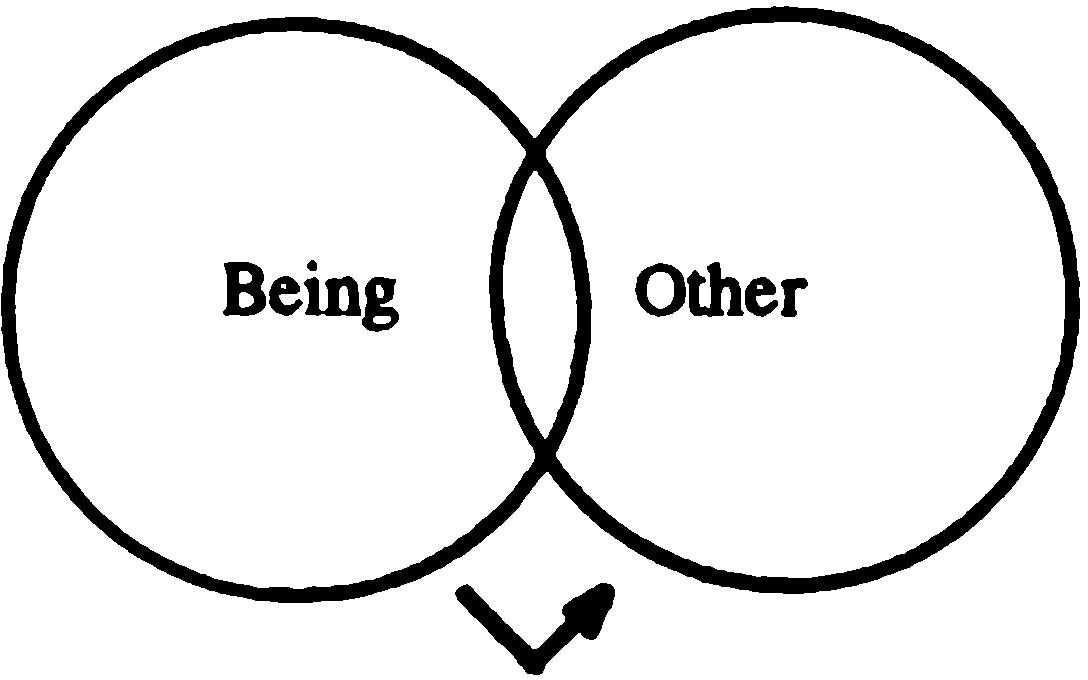
In the first part, we demonstrated how the subject is caused by the primary experience of a lack. The attempt at solving this lack by using signifiers entails a confrontation with another lack, this time within the chain of signifiers.
In this second part, we will concentrate on the two constitutive processes within this causation of the subject: alienation and separation. The first one is fully elaborated by Lacan and can easily by traced back to Freud . The second one concerns Lacan’s interpretation of the end and the finality of the analytic treatment. His theoretical development in these matters comprises an ever shifting interpretation of this idea of separation.
 aaaa
aaaa
asdfasdf
Verhaeghe, P. (1998). Causation and Destitution of a Pre-ontological Non-entity: On the Lacanian Subject. In D. Nobus (Ed.), Key Concepts of Lacanian Psychoanalysis. (pp. 164-189). New York: State University of New York Press.
Lacan not only distances himself from this substantiated interpretation of the unconscious, he even subverts it: the unconscious is of the order of the … the ‘non-realised,’ the ‘unborn,’ ‘limbo’ (les limbes). As a process , it is always situated at the border; in itself, it is a void, an abyss … This abyss is pre-ontological: not of the order of to be or not to be, but of the order of the not-realised.
And if this unconscious becomes realised, it always happens in a bungled, failed way.
There is cause only in something that doesn’t work.
Hence, we find ourselves again dealing with two levels . On the one hand, there is the chain of signifiers with the lack between them (Freud : the repressed) . This is the level of the automaton, of the law and predictability, and thus of science. Underlying this chain, we find a more fundamental lack, concerning the real beyond any signifier (Freud : the primal repressed) . This is the level of the tuche, of cause and unpredictability.
The interaction between the two levels consists in the never ending attempt of the chain of signifiers to produce an answer to the real. This attempt fails and results in the exact opposite: the more signifiers produced, the further one moves away from this real. Therefore, in Seminar XX, Lacan defines the real as ‘what does not stop not writing itself.
What is this real all about? Lacan is quite clear on this point. The real beyond the signifier, functioning as cause, is drive-ridden, and that is why Lacan took the drive as his starting-point.
With this aspect of the real, the meeting is always a failed one, because it contains no signifier. In the course of his teaching, Lacan enumerated the various manifestations of the real: the Other of the Other, the sexual relationship, Woman (La femme), all of them summarized in the notation of the barred Other 
Verhaeghe, P. (1998). Causation and Destitution of a Pre-ontological Non-entity: On the Lacanian Subject. In D. Nobus (Ed.), Key Concepts of Lacanian Psychoanalysis (pp. 164-189). New York: State University of New York Press.
Verhaeghe part 1
Verhaeghe part 1a
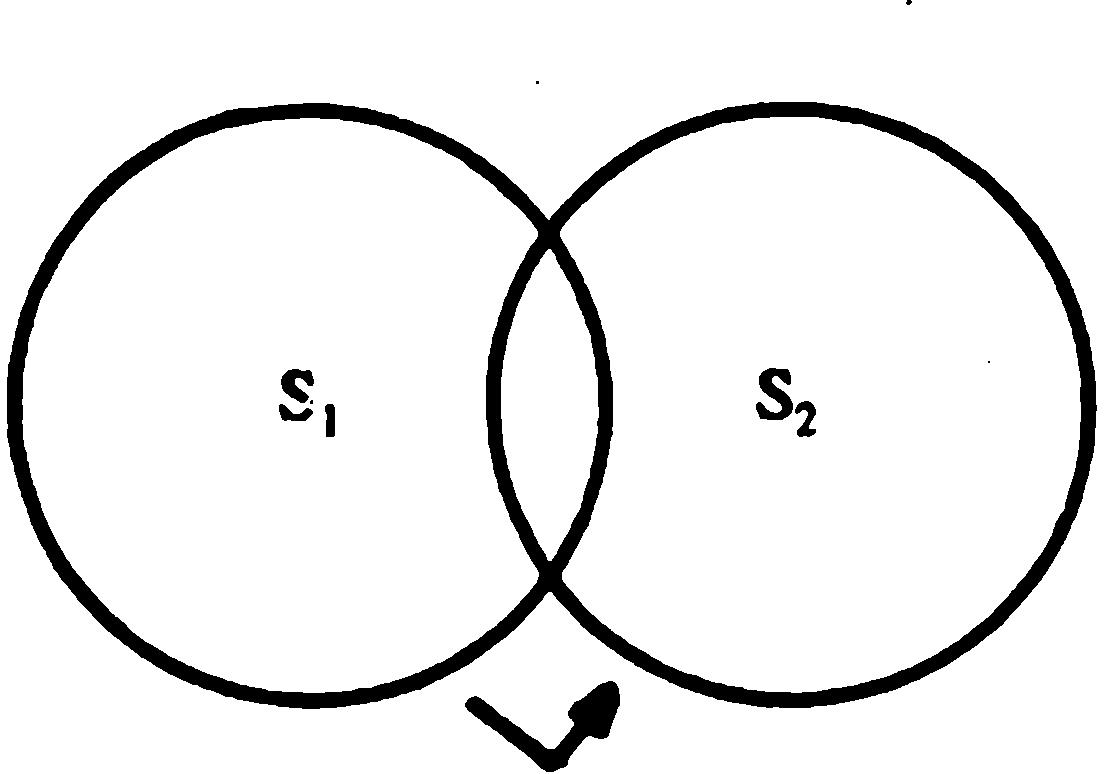
In Seminar XI, Lacan began his discussion of the causation of the subject with something that was already well-known to his audience: the drive, being always a partial drive, revolves around a lack. However, at that point, Lacan surprised his audience by stating that there are two lacks.
The first one is the lack in the chain of signifiers, the interval between two signifiers.
This is the typically hysterical – and thus Freudian – level in which desire can never be fully expressed, let alone satisfied . In Lacanian terms, this reads that the subject, confronted with the enigma of the desire of the Other, tries to verbalise this desire and thus constitutes itself by identifying with the signifiers in the field of the Other, without ever succeeding in filling the gap between subject and Other.
Hence, the continuous movement from signifier to signifier, in which the subject alternately appears and disappears. The ensuing alienation is a continuous flywheel movement around the lack in the chain of signifiers, resulting in what Lacan called l’avènement du sujet, the advent of the subject. 168
Phylogeny: the evolutionary history of a kind of organism, the evolution of a genetically related group of organisms as distinguished from the development of the individual organism; the evolutionary history of a group of organisms, especially as depicted in a family tree.
Ontogeny: the development or course of development especially of an individual organism; the development or developmental history of an individual organism.
*****
A total aside from Adrian Johnston
The symbolic order is a historically contingent formation at the phylogenetic level, the level transcending the ontogenetic life history of the individual. In an inverse correlation, for the particular subject whose self-identity is mediated by this pre-existent system, this same symbolic order is effectively transcendental in that it serves as a possibility condition for this form of subjectivity itself.
Without a symbolic order, the individual would not be a proper subject. The massive time lag between the different diachronic speeds of phylogeny and ontogeny is partially responsible for this dual status of the symbolic as paradoxically both historical (with respect to the phylogenetic collective) and transcendental (with respect to the ontogenetic individual).
This temporal discrepancy makes it seem, from the vantage point of the individual subject’s perspective, as if the symbolic order is synchronic, which it de facto is given the slowness of its rates of change versus the comparative brevity and rapidity of the individual’s life history.
Butler fails to fully appreciate Lacan’s philosophical audacity in tacitly relying upon a rigid distinction between the historical and the transcendental to critique him. But, what about Butler’s key assertion that the Lacanian transcendental emperor wears no clothes, in other words, that the binding force of the symbolic rests upon an empty performative act? Is there no other reason for the symbolic’s authority apart from the bald, blunt assertion of this authority by those theorizing about it?
Again, the transcendence of the symbolic order in relation to particular subjects is of paramount importance here. Individuals neither choose what kind of symbolic order to be born into nor have the liberty to capriciously forge their own idiosyncratic symbolic orders ex nihilo. Furthermore, beyond Lacanian theory itself, psychoanalysis in general is committed to the notion that, as the saying goes, “the child is the father of the man.”
*****
The innovation begins when Lacan surprises his audience by stating that there is yet another lack, which he calls anterior and real in comparison to its counterpart.
Furthermore, the lack in the chain of signifiers is only a retake on this primal lack, the originality of which resides in the fact that it has to be understood in the context of [ ‘avenement du vivant (the advent of the living being) .
This entails the emergence of sexual reproduction in phylogeny, which is repeated with every ontogeny.
At this point, the level of Unbegriff (incomprehension), beyond the psychological comprehensibility of the previous lack, is reached .
The anterior lack concerns the price life has to pay for the acquisition of sexual reproduction. From the moment an organism becomes capable of reproducing itself in a sexual way, it loses its individual immortality and death becomes an unavoidable necessity .
At birth, the individual loses something and this loss will be represented later on by
all other substitute objects. 168
The subject encounters a lack in the discourse of the Other, in which the desire of the Other ‘crawls, slips, escapes, like the ferret, ‘ producing an enigma to which the subject has to produce an answer.
It is at that point that the subject recurs to the anterior lack which entails its own disappearance. As an answer to the riddle of the desire of the Other, it presents itself and thus its disappearance: does the Other desire me, can s/he afford to lose me?
This fantasy, in which one’s own death is depicted as a form of testing the limits of the love
of the Other, is fairly well-known in adults and children alike: Veut-il me perdre ?, Does he want to lose me?
Žižek, S. (2015). Afterword: The Minimal Event: From Hystericization to Subjective Destitution. In A. Hamza (Ed.), Repeating Žižek. (pp. 269-285). Durham: Duke University Press.
The void filled in by fantasmatic content (by the “stuff of the I,” as Lacan called fantasy) is opened up by the ultimate failure of the subject’s symbolic representation:
it is not that every symbolic representation simply fails, is inadequate to the subject it represents (“words always betray me . . .”); much more radically, the subject is the retroactive effect of the failure of its representation.
It is because of this failure that the subject is divided—not into something and something else, but into something (its symbolic representation) and nothing, and fantasy fills in the
void of this nothingness.
And the catch is that this symbolic representation of the subject is primordially not its own: prior to speaking, I am spoken, identified as a name by the parental discourse, and my speech is from the very outset a kind of hysterical reaction to being-spoken-to: “Am I really then, that name, what you’re saying I am?”
The speaking subject persists in this in-between: prior to nomination, there is no subject, but once it is named, it already disappears in its signifier—the subject never is, it always will have been.
I am the enigma for the Other, so that I find myself in the strange position (as in detective novels) of someone who all of a sudden finds himself persecuted, treated as if he knows (or owns) something, bears a secret, but is totally unaware what this secret is.
The formula of the enigma is thus: “What am I for the Other? What as an object of the Other’s desire am I?”
Because of this gap, the subject cannot ever fully and immediately identify with his or her symbolic mask or title; the subject’s questioning of his or her symbolic title is what hysteria is about: “Why am I what you’re saying that I am?” Or, to quote Shakespeare’s Juliet: “What’s in a name?” (Romeo and Juliet, Act II, scene 2).
We are dealing here with what Louis Althusser called “ideological interpellation”: the symbolic identity conferred on us is the result of the way the ruling ideology “interpellates” us—as citizens, democrats, or patriots.
Hysteria emerges when a subject starts to question or to feel discomfort in his or her symbolic identity: “You say I am your beloved— what is there in me that makes me that? What do you see in me that causes you to desire me in that way?”
The hysterical subject is the subject whose very existence involves radical doubt and questioning, his or her entire being is sustained by the uncertainty as to what he is for
the Other; insofar as the subject exists only as an answer to the enigma of the Other’s desire, the hysterical subject is the subject par excellence.
In contrast to it, the analyst stands for the paradox of the desubjectivized subject, of the subject who fully assumes what Lacan calls “subjective destitution,” that is, who breaks out of the vicious cycle of intersubjective dialectics of desire and turns into an acephalous being of pure drive.
With regard to this subjective destitution, Shakespeare’s Richard II has in store a further surprise in store for us: not only does the play enact the gradual hystericization of the unfortunate king; at the lowest point of his despair, before his death, Richard enacts a further shift of his subjective status that brings him to subjective destitution …
Conversely, as beloved, both child and mother give what they do not have:
In this way, what both the child and the mother give without having is the phallus: a temporary superimposition of lacks is obtained
Chiesa, L. (2007). Subjectivity and Otherness: A Philosophical Reading of Lacan. Massachusetts: MIT Press.
For the sake of clarity, it may be convenient at this preliminary stage to list briefly the main tenets of Lacan’s reinterpretation of the Oedipus complex: (64)
(1) the Oedipus complex provides the individual subject with the necessary key to enter the symbolic order understood as the Law of culture;
(2) this is possible only if, in parallel, the subject is sexuated: if he or she assumes
his or her symbolic position as man or woman;
(3) the process through which the Oedipus complex is produced can be compared to a metaphor; by substituting itself for the signifier Desire-of-the-Mother, the signifier
Name-of-the-Father (the symbolic father as the bearer of the Law) initiates phallic signification in the child … Lacan rereads what is arguably the most well-known theory of psychoanalysis through linguistics;
(4) the child is introduced to the three logically sequential “stages” of the Oedipus complex through three different “crises.” Each crisis is based on the subject’s assumption of a distinctive lack of a distinctive object. Frustration, defined as an imaginary lack of a real object, first and foremost the mother’s breast, initiates the child to the first stage, that of the “pre-Oedipal” dual relation with the mother, which Lacan rethinks in terms of the triad child – mother – (imaginary) phallus. The child then accedes to the second stage as soon as he realizes that the mother is “deprived,” that she lacks (in the Real) a symbolic object, the (symbolic) phallus; at this stage, which could easily be related to Freud’s phallic phase, the child is involved in an aggressively imaginary rivalry with the (imaginary) father in order to control the mother. This stage corresponds to the doxastic idea of what the Oedipus complex is: “loving” the mother and “hating” the father (for Lacan, both boys
and girls love the mother).
Lastly, the third stage is initiated by the (real) father who shows the child that he is the one who has what the mother lacks: the child realizes that he cannot compete with him. This is the child’s castration proper, to be understood as a symbolic lack of an imaginary object, the imaginary phallus.
The Oedipus complex is completely resolved when the child, irrespective of sex, identifies symbolically with the father, and thus internalizes the Law.
Chiesa, L. (2007). Subjectivity and Otherness: A Philosophical Reading of Lacan. Massachusetts: MIT Press.
The discovery of a structural split in/of the subject subverts the Cartesian cogito while, at the same time, revealing its intimate relation to psychoanalysis. As Lacan repeatedly states, “I think where I am not, therefore I am where I do not think.” (39)
This is to say that the unconscious I, the subject of the enunciation, really thinks at the unconscious level: it (ça) thinks where the I qua ego and qua subject of the statement is not (conscious).
Conversely, the I qua linguistic ego is (conscious) where it, the unconscious subject, does not think.
Most importantly, the subversion of the Cartesian ego shows that its illusion of unity is possible only because of its strict interdependence with the Spaltung. There is no self consciousness without the unconscious, and vice versa.
Descartes’s formulation of a fundamental principle of self-consciousness could be said contemporaneously to decree, at the level of the history of thought, the formal birth of the unconscious (although this birth will remain implicit until Freud). Consequently, it is strictly speaking senseless to speak of a pre-Cartesian notion of the unconscious.
Žižek: A modest rejoinder
“Although I am far from a well-meaning liberal, I simply cannot recognise myself in the
Josh Cohen’s review of my last two books misrepresents my position so thoroughly that I think a short clarification is required. I prefer to disregard his resumé of my reading of Hegel which begins with a total nonsense: “Where, in the standard reading of Hegel, one element comes into conflict with another external to it, in Žižek’s reading, conflict is internal or ‘immanent’ to the first element.” It is precisely in the standard reading of Hegel that conflict is internal to the first element, while in my reading, the “first element” is a retroactive illusion, it “becomes first” in the course of the dialectical process. There is no place here to dwell on the central topic of my reading of Hegel which is absent from Cohen’s resumé (how to move beyond transcendental approach without falling back into pre-critical realism), or on how Cohen totally misses the point of my deployment of the antagonism internal to the void itself. More interesting for most of the readers is Cohen’s total misrepresentation of my political stance. He attributes to me a grim vision in which today’s late capitalism appears as the worst of all possible worlds, worse than Nazism or Stalinism:
The grim prospect of ’non-eventful survival in a hedonist-utilitarian universe’ licenses Žižek to prefer even the most catastrophic political experiment to our current set-up. As he writes: ‘Better the worst of Stalinism than the best of the liberal-capitalist welfare state.
In view of later developments, Cohen would undoubtedly attribute to me the claim: “Better the worst of Isis than the best of liberal democracy…” Yes, I did write the statement he quotes a couple of times, but I always strongly qualified it, like here: “Better the worst Stalinist terror than the most liberal capitalist democracy. Of course, the moment one compares the positive content of the two, the Welfare State capitalist democracy is incomparably better.” So the least one can say is that, since I admit that a liberal-capitalist state is “incomparably better” to live in than Stalinism, I must mean something quite different from the simple claim that Stalinism is better than a liberal welfare state. (Incidentally, it should be obvious that I allude here to the well-known Winston Churchill’s quip about democracy as the worst of all political systems, with the proviso that compared to it, all others are worse…) Another example: yes, I wrote: “The change will be most radical if we do nothing.” But here is the context:
We are now approaching a certain zero-point – ecologically, economically, socially… -, things will change, the change will be most radical if we do nothing, but there is no eschatological turn ahead pointing towards the act of global Salvation.”
What is clear from this passage is that if we do nothing, we will slowly slide towards the ecological-economic-social catastrophe – it’s a call to us to do something. Do what? Here my stance is simply open: there are situations where it is better to do nothing (since our engagement just strengthens the system) – sometimes I refer to this as the Bartleby-politics; there are situations where we have to engage in a strong global act (like the struggle to defeat Fascism); and there are situations where one should engage in modest local struggles. The last point is especially important since it belies Cohen’s claim that, in Trouble in Paradise, “Žižek insists that liberal capitalism is the worst of all possible worlds because it closes up all the gaps through which its inconsistencies could be made visible.” Really? Here is a passage from Trouble in Paradise:
The alternative of pragmatic dealing with particular problems and waiting for a radical transformation is a false one, it ignores the fact that global capitalism is necessarily inconsistent: market freedom goes hand in hand with the US support of its own farmers, preaching democracy goes hand in hand with supporting Saudi Arabia. This inconsistency, this need to break one’s own rules, opens up a space for political interventions: since inconsistency is necessary, since the global capitalist system has to violate its own rules (free market competition, democracy), to insist on consistency, i.e., on the principles of the system itself, at a strategically selected points at which the system cannot afford to follow its principles, leads to changing the entire system. In other words, the art of politics resides in insisting on a particular demand which, while thoroughly ‘realist’, disturbs the very core of the hegemonic ideology and implies a much more radical change, i.e., which, while definitely feasible and legitimate, is de facto impossible. Obama’s project of universal healthcare was such a case: although it was a modest realist proposal, it obviously disturbed the core of American ideology. In today’s Turkey, a simple demand for actual multicultural tolerance (which goes by itself in most of Western Europe) has an explosive potential. In Greece, the simple call for a more efficient and non-corrupted state apparatus, if meant seriously, implies a total overhaul of the state. This is why there is no analytic value in blaming directly neoliberalism for our particular woes: today’s world order is a concrete totality within which specific situations ask for specific acts. A measure (say, a defense of human rights) which is in general a liberal platitude, can lead to explosive developments in a specific context.”
This is the reason why I now fully support the struggle of the Syriza government in Greece. If one looks closely at their proposals, one cannot help noticing that what they advocate are measures which, 40 years ago, were part of the standard moderate Social-Democratic agenda – it is a sad sign of our times that today you have to belong to a radical Left to advocate these same measures.
There is much more to say, but I hope these brief remarks make it clear why, although I am far from a well-meaning liberal, I simply cannot recognise myself in the lunatic-destructive figure described by Cohen.
Žižek, S. (2005). Connections of the Freudian Field to Philosophy and Popular Culture. Interrogating the Real. In R. Butler & S. Stephens (Eds.), Interrogating the Real (pp. 62-88). New York, NY: Continuum.
First, already in the 1940s, ‘Desire is the desire of the Other’ alludes simply to the paranoiac structure of desire, to the structure of envy, to put it simply.
Here, the desire of the subject is the desire of the Other; it is simply this kind of transitive, imaginary relationship. It’s basically the structure of envy – 1 desire an object only insofar as it is desired by the Other, and so on.This is the first level, let us say the imaginary level.
Then we have the symbolic level where ‘Desire is the desire of the Other’ involves this dialectic of recognition and, at the same time, the fact that what I desire is determined by the symbolic network within which I articulate my subjective position, and so on. So it is simply the determination of my desire: the way my desire is structured through the order of the big Other. This is well known.
But I think Lacan’s crucial final formulation arrives only when the position of the analyst is no longer defined as starting from the place of the big Other (A), that is to say, the analyst as embodiment of symbolic order, but when the analyst is identified with the small other (a), with the fantasmatic object. In other words, when the analyst gives body to the enigma of the impenetrability of the Other’s desire.
Here, ‘Desire is the desire of the Other’ means I can arrive at my desire only through the complication of the Other’s desire precisely insofar as this desire is impenetrable, enigmatic for me. I think this is the first crucial point, usually forgotten, about fantasy: how true fantasy is an attempt to resolve the enigma of the Other’s desire. That’s the desire that is staged in fantasy. It’s not simply that I desire something, that I make a fantasy. No.