Zupančič Odd One In

The subject’s universe will really change only at the moment when she attains the knowledge that the Other knows (that it does not exist).

In psychoanalysis (if it is worthy of its name) the main problem also does not lie simply in the subject becoming conscious of her unconscious, of all that (often painfully) determines her actions and experiences.

This is insufficient: the main problem is precisely how to shift and change the very symbolic and imaginary structures in which this unconscious is embodied outside herself, in the manner and rituals of her conduct, speech, relations to others — in certain situations that keep “happening” to her.

In short, it is not simply that in analysis the subject has to shift her position (or even adapt herself ); the major part of the analytic work consists precisely in shifting the external practices, in moving all those “chickens” in which the subject’s unconscious (and her relation to herself ) are externalized.

And one of the major obstacles that can occur in analysis is precisely that the subject can become all too eager to change herself and her perception of the world, convinced that in analysis she will experience a kind of intimate revelation as a result of which everything will be different and easier when she reenters the world.

In other words, the subject is ready to do quite a lot, change radically, if only she can remain unchanged in the Other (in the Symbolic as the external world in which, to put it in Hegel’s terms, the subject’s consciousness of herself is embodied, materialized as something that still does not know itself as consciousness).

In this case, belief in the Other (in the modern form of believing that the Other does not know) is precisely what helps to maintain the same state of things, regardless of all subjective mutations and permutations.

The subject’s universe will really change only at the moment when she attains the knowledge that the Other knows (that it does not exist). (16-17 Odd One In)

Tracy McNulty

Demanding the Impossible: Desire and Social Change

Volume 20, Number 1 2009
doi 10.1215/10407391-2008-015
d i f f e r e n c e s : A Journal of Feminist Cultural Studies

What is the relationship between desire and social change?

the ethical stance or subjective position of an individual might incite a change of position in other people

The larger question these examples raise is whether the subjective stance of one person can initiate broad change or inspire collective action by means other than the group psychology: in other words, not by appealing to a particular set of values or ideals, or by cementing the group through identification or libidinal cathexes, or by offering some kind of external or even transcendental foundation for the ego, but by foregrounding the experience of the willing subject.

One can be determined to live a good or a moral or a selfless life, and yet this determination often fails inasmuch as it is fundamentally in conflict with an unconscious position, which it attempts to repress or control.

Desire, on the other hand, supposes the subject of the unconscious: it is not sustained by identification with something “outside” the subject that would allow it to repress the drives or facilitate its refusal to know anything about the unconscious. When Lacan offers as a formulation of the ethics of psychoanalysis the imperative not to give up on one’s desirene pas céder sur son désir—he suggests that desire is what admits of no compromise or concession, and that it therefore always bears some relation to death (Ethics 319).

Hallward is interested not in the role of the ideal in soliciting identification, but in the force of will and the voluntarist dimension of change. His examples are all the more provocative in that they include not only the great leaders who have given their names to religious and political movements but individuals working in relative obscurity whose apparently very modest acts have unexpectedly brought about important social transformations

I propose to take a more psychoanalytic approach to the problem by considering the individual act not principally as an instance of will or determination, but for the way it lays bare the stakes of desire. What distinguishes desire from determination or will?

What distinguishes desire from determination or will?

The interest of the question “What would Jesus do?” for example, is that it makes an implicit distinction between Jesus as a support for identification and Jesus as a subject of desire. The question supposes a kind of immovability in the desire of Jesus, something nonnegotiable: it implies that Jesus would not make concessions, that he would not waver.

If the answer to the question is somehow obvious, it is not because it concerns some specific content or principle, but because desire is an orientation or a stance with respect to the impossible object that causes it, and not a response to a particular case or circumstance.

The question is of a very different order than “What would Jesus say?” or “What would Jesus teach?” because it isn’t a matter of ideals, agendas, or programs.

It is also different from “What would Jesus want?” or “What would Jesus tell you to do?” because it is not a matter of demands or of satisfying a leader or an idealized role model by doing what we think he wants.

Desire gives rise to a new object, an object that did not exist before, that intervenes in the world so as to transform it

it is fidelity to an impossible cause of desire, not fidelity to a constituency

Desire is an orientation or a stance with respect to the impossible object that causes it, and not a response to a particular case or circumstance

Desire presents a challenge because it concerns the status of the act and not the affirmation of ideals or beliefs. It makes us aware of how the ideals we espouse make it possible not to act.

how desire differs from the idealizing love at stake in identification and therefore about its transformative potential.

Anxiety is the affect of psychoanalysis, because it responds to the analyst’s desire to know by overcoming the censorship applied to unconscious thoughts. Only by traversing this anxiety can the subject come to have another knowledge about what is happening to him or her, and thus find liberation from the repetition-compulsion of the fantasy.

Desire must find expression in an act or in the production of a new object that intervenes in the world so as to transform it.

This is the essence of sublimation, in which the absolutely singular and subjective nature of desire manages to find expression in the production of an object that is collectively valorized.

The “great man” is someone whose object constitutes a sublimation not only for himself but for his age.

Each of the examples I have discussed bears witness to the tension between the anxiety induced by desire and the effects it produces, and the restorative tendency to silence or efface that desire and to shore up the ego. They also qualify the possible optimism about social change by reinforcing the extent to which this change occurs at an individual level, through a painstaking process of self-overcoming that is by no means certain and that only occurs in a minority of cases.

Religious history in particular suggests that it is much easier to hide behind the ideal ego or to take comfort in the illusion of the all-powerful father than to confront the Other’s desire or absence. This is why psychoanalysis is ultimately pessimistic about the possibility of social change and hesitates to affirm the social beyond the “minimal social link” inaugurated by the transference. If the members of the group do not also traverse castration, the anxiety that results from the confrontation with the Other’s desire will simply provoke repression and violence, and not a change of position.

anxiety is the affect of freedom

But while the desire of the founder may not be sufficient in and of itself to incite change, these examples also make clear that the anxiety it induces can have a transformative effect.

This is because it exposes the profound freedom of an act founded on desire, in and beyond the castration or lack it implies. Translated into a more existential idiom, my argument is really that anxiety is the affect of freedom.

Freud sees in Moses a free man, one who threw off the shackles of superstition and nature worship to create a space for the subject as something other than a product of nature or the object of a capricious deity.

Desire is what is most free in the subject, because it involves a liberation from the fantasy of seduction and its particular colonization of the psychic object. Freud sees in Moses a free man, one who threw off the shackles of superstition and nature worship to create a space for the subject as something other than a product of nature or the object of a capricious deity.

While Jewish legend promotes the idea that Moses is the chosen instrument of God, the much more interesting truth is that the man Moses invents something new for civilization: something we can all draw upon and that no God can take away. The difference between ideals and desire is the difference between ascribing their freedom to an omnipotent God and assuming responsibility for that freedom themselves.

In the same way, Freud himself will attempt to free the subject of the unconscious from the shackles of morality and to prevent its reduction to an object of scientific observation.

But he makes clear that this freedom can come only through traversing anxiety and not avoiding it. It is a difficult freedom, whose stakes are nowhere better expressed than in the words imputed to Jesus: “I lay down my life in order to take it up again.”

While these words have been interpreted by many as a promise of eternal life, I believe that the anxiety and solitude with which Jesus approaches his own death points to a more difficult interpretation. His act emphasizes that there is something more than “mere life” and that desire opens onto a life that can be accessed only by traversing death. In a similar vein, the practice of psychoanalysis is founded on the supposition that true freedom comes only from traversing the death drive and not repressing or avoiding it.

desire finds expression in an act or in the production of a new object that intervenes in the world so as to transform it

Freud invents a mechanism that allows the analysand to free himself by confronting castration. But the end of analysis could be construed not merely as a liberation but as a call to change the world by demanding that it make place for a new object.

It involves the assumption of the truth that there is no object for desire, but more importantly, the necessity of constructing a new object: if there is no object or aim that would satisfy desire, this also means that desire is not bound by any existing object and is therefore innately transcendent. The logical conclusion of an analysis supposes that desire finds expression in an act or in the production of a new object that intervenes in the world so as to transform it.

But as Hallward reveals through the simple example of a man who clears space for a new soccer field, this new object need not be something so lofty. What is important is that it create a space for the subject, a space that was not there before. The creation of this new object gives rise to social change without even aspiring to do so, because it is not guided by ideals or goals, but by the desire of a subject.

The creation of this new object gives rise to social change without even aspiring to do so, because it is not guided by ideals or goals, but by the desire of a subject.

Tracy McNulty 2013

The New man’s Fetish The Southern Journal of Philosophy Volume 51, Spindel Supplement 2013
neill calum phallus sexuation

Neill, C. (2009) ‘Who Wants to be in Rational Love?’, Annual Review of Critical Psychology, 7, pp. 140-150.

We can understand that part of what Lacan is pointing to here in his invocation of the phallus as something which cannot be reduced to a mere physical appendage is that sexual difference is never simply a matter of the difference between two complimentary entities (in the sense of ying-yang).

There is always a necessary third party; the phallus. We are sexed in terms of our relation with or to this third position and, therefore, the difference between the sexes is always more than a simple difference. Rather the differences themselves are different. The phallus as a moment of the Other comes radically between the male and female subject. There is no direct relation between them but only distinct relations to a third. […]

In saying that there is no ratio between the sexes, then, we could understand Lacan to be saying that while there clearly is a relating of some sorts between the sexes, there is a conjunction, there is no stability and there is no way of notating this; “the sexual relation cannot be written” (Lacan 1998: 35), which would be to say that it is beyond comprehension

An important question we might raise here is, if there is no saying it all, no unproblematic communication between the sexes, then does this imply that there might be such an unproblematic communication between subjects of the same sex?

Clearly, the answer would be no. Language is necessarily a medium and thus mediator. So why emphasise that there is no rapport between the sexes when there is no rapport between subjects? […]

while perhaps obvious, needs to be stated simply because it is here, in the sexual relation that we hope to find the communicative success which eludes us in other areas of life. Even here, there is no rapport. The Other is always the third party. We might hope to, in our ideal of sex, engage in a true coming together, a communication without or outwith language but such an idea is never anything more than a fantasy;

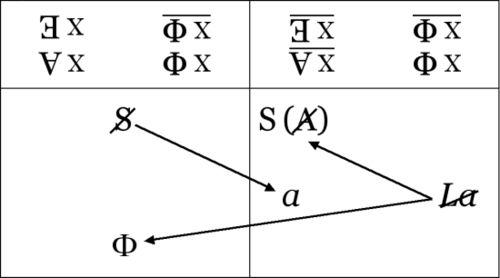
Sexuation_La

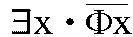
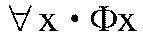
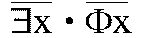
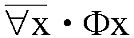
The four logical statements presented at the top of the diagram can be read as follows:

1.  ExceptionToCastration

there exists at least one of those in category x who is not subject to the phallic function

2. AllSubjectCastrated

all of those in the category of x are subject to the phallic function

3. Feminine_X_not determinedbyPhallic

there is not one of those in category x who is not subject to the phallic function

4.  Feminine_NotAll_x_subject

not all of those in category x are subject to the phallic function

*********

What this produces, then, are two seemingly contradictory or logically impossible statements on each side of the graph. The left side is the side of man, while the right side is the side of woman. Together they describe possible positions available to speaking beings, which is to say “Every speaking being situates itself on one side or the other” (Lacan, 1998: 79).

The logical statements on the left side can be understood to tell the story, or the logic, of the myth of the primal horde (Freud, 1950: 141-143). The one who would exist who is not subject to the phallic function, who has not undergone castration, would be the primal father.

Category x in this instance would then refer to the male position and all those in this position are subject to the phallic function, that is, they have undergone castration. There is, then, one man, the primal father, who is not subject to the function of castration which is the condition of possibility for all those in the male position. The contradiction here can be understood in the sense of an exception to a rule, in that it is the exception which is the condition of possibility for the rule to be a rule.

The statements on the right side can be understood to describe something of the tension between universals and particulars. The two statements might appear to present a blunt contradiction. If none of those in the category is not subject to the phallic function, then this would seem to suggest that all those in the category are subject to the phallic function.

But this is precisely what the second statement refuses. Taken separately, however, we can perhaps begin to make some sense of this. If the function of castration is the condition of possibility of entry into the symbolic order, then all speaking beings in order to be speaking beings would have to be subject to this function.

We can understand this first statement, then, as referring to each member on a one-by-one basis. Each woman – for this is the side of woman – in order to be a speaking being, must be subject to the phallic function. The second statement – the universal statement – should then be understood to refer to the group. The group as a whole, as a category, is not subject to the phallic function. What would this mean?

That, as a universal category, The Woman cannot be located within the symbolic order;  La femme n’existe pas.

If one side of the supposed relation between the sexes can be said not to exist, if one side cannot be collapsed into a signified totality, while the other side can only assume a signified position as incomplete, then clearly the model of equal partners balanced in a neutral or exteriorly moderated system of exchange becomes manifestly inappropriate.

Lacan’s claim that there is no rapport between the sexes, that they cannot be composed into a ratio, that they have no relation, furnishes us with a step beyond the superficial and reductive assumptions which so apparently benignly dominate the social sciences.

In reducing intersubjectivity and sexual relations to modes of economy, one not only assumes an untenable equality of status between the supposed operators, but one also misses the crucial point that the pleasure, the jouissance,which might be the currency of such an exchange is never itself so easily quantifiable.

Just as actual economic exchange is problematised with the inescapable notion of surplus value, so intersubjective relations are properly rendered more complex with a notion of surplus jouissance. This surplus of jouissance, the fact that relations can never be collapsed into a whole, a oneness, or even into a two, insofar as there is always, necessarily, the insistence of objet petit a, means that the accounting we would impose on relations always already fails.

Moreover, this failure is inscribed already in our attempts to know – to corral in knowledge – how the relation works, what the ratio is, what mediates the rapport.

It is in stepping beyond this limit that the social sciences might begin to explore, without seeking to end in a finite knowledge, what goes on between the sexes.

johnston vicious super-ego part 2 of 2

Johnston, A. (2001) The vicious Circle of the Super-Ego: The Pathological Trap of Guilt and the Beginning of Ethics. Psychoanlytic Studes (3): 3/4. 411-424.

Lacan is not so much interested in proposing a new prescriptive ethics as in comprehending the precise nature of moral masochism’, in fully grasping how the constellation of the id, the super-ego, and the socio-symbolic Umwelt of reality ‘pathologize’ the ethical field.

At most, this Lacanian analytic diagnosis of moral masochism should be interpreted as a preparatory clearing of the ground for a genuine ethics, as a mapping out of the obstacles hindering the construction and enactment of a non-pathological ‘metaphysics of morals’.

The introduction of the Law generates desire ex nihilo. Instead of forbidding a pre-existent set of urges in the individual, it teaches the subject what to covet, if only as an inaccessible vanishing point whose appearance of possible accessibility is a mirage engendered by the seemingly contingent nature of the Law and its authority.

Lacan is not so much interested in proposing a new prescriptive ethics as in comprehending the precise nature of ‘moral masochism’,

in fully grasping how the constellation of the id, the super-ego, and the socio-symbolic Umwelt of reality ‘pathologize’ the ethical field. At most, this Lacanian analytic diagnosis of moral masochism should be interpreted as a preparatory clearing of the ground for a genuine ethics, as a mapping out of the obstacles hindering the construction and enactment of a non-pathological ‘metaphysics of morals’.

At the beginning of this quotation, Lacan alludes to an observation that Freud formulates in his 1924 paper ‘The economic problem of masochism’. In the concluding paragraphs of that essay, Freud notes that the more the subject complies with reality’s prohibition of aggression, the greater the guilt the subject feels, the harsher the demands of the super-ego become.

Unlike external authorities, which can only observe and punish externalized acts of transgression, the super-ego sees and judges the subject’s ‘inner’ intentions. Freud pinpoints this as a paradox of sorts: the more the subject overtly obeys the rules of reality, the more the super-ego (unconsciously) inflicts the negative affect of guilt.

This paradox is illuminated by the theory of the super-ego as presented in Civilization and Its Discontents: the super-ego is a subliminatory channel for the id’s sadism; the id diverts the aggressive drives onto the subject’s own ego when the reality principle prevents it from discharging this aggression against others;

thus, the more the ‘moral’ subject refrains from enacting these aggressive drives in reality (i.e., the more he/she heeds the ‘ethical’ principles of his/her social milieu), the more the id is compelled to utilize the super-ego to ‘work off’ aggression against the ego (hence, the greater the feeling of guilt, since Freud claims that guilt is the ‘pain’ consciously experienced by the ego as a result of the unconscious subliminatory dynamic occurring at the level of id and super-ego). How does Lacan integrate this line of Freudian reasoning?

it isn’t simply a matter of claiming that the Law arouses desire out of nowhere through its prohibitions: it’s also the case that obedience to the Law is cemented in place by the struggle to fend off these desires, that the more rigid the subject’s adherence to the rules, the presumably greater is his/her need to repress increasingly powerful urges to contravene it.

Consequently, when Lacan speaks about being guilty for having ‘ceded’ or ‘given ground’ relative to one’s desire, what he really means is the following:

the more the subject surrenders (to) his/her desires by obeying the restrictions of the Law, the more guilty he/she feels,

since such concessions only aggravate the (unconscious) volatility and intensity of these same desires (namely, ‘internal’ repressed desires which never fail to escape the notice of the omniscient authority of the sadistic super-ego). 419

Near the end of his 1974 television interview, Lacan clearly advances this claim in saying that, “Freud reminds us that it’s not evil, but good, that engenders guilt” (Lacan, p. 45). At no point does Lacan contest the Freudian definition of guilt as a negative affect resulting from the super-ego’s punishment of the ego.

Hence, Lacan, in following Freud here, isn’t treating guilt as a properly ethico-moral sentiment, but, rather, as a symptom of super-ego aggression (with this aggression itself being acknowledged as arising from ceded, aim-inhibited desires whose intensity increases the longer and more severely they’re held in check).

Consequently, one can be ‘guilty’ before the tribunal of the super-ego without, for all that, being actually guilty in an ethico-moral sense per se. 419

Lacan merely brings one to the point where the essential question that must be answered if a psychoanalytic ethics is to be possible at all poses itself:

Can conscience function beyond the super-ego, namely, is the subject able to break out of the cycle running from Law to desire to guilt?

If not, then the Freudian diagnosis of conscience as a symptomatic by-product of the superego’s id-driven sadism really does represent the end of ethics in any meaningful, philosophically consistent mode.

Both Freud and Lacan have made signiŽficant inroads into demystifying the origins and mechanisms of feeling guilty. However, it remains doubtful if psychoanalysis has yet pronounced its deŽfinitive verdict as regards being guilty.

mcgowan politics requires the enemy or outsider

McGowan, Todd. Enjoying What We Don’t Have: The Political Project of Psychoanalysis. 2013.

In the last instance, Beauvoir’s own political project involves working to eliminate the association of woman with the missing signifier and thus to constitute an egalitarian society in which no one bears the mark of exclusion. But as long as one remains attached to the task of the including everything that is missing – even if one views this as an impossible ideal never to be realized, as Derrida and Robert Langdon do – one transforms the absent signifier into an actual one when in fact it is nothing but a certain necessary distortion within signification itself.

Beauvoir recognizes the internal limit that the missing signifier marks and then attempts to overcome this limit through advocating for inclusion. Inclusion at once goes too far and doesn’t go far enough. 279

One can neither elevate everyone to the status of the empowered (male) subject nor eliminate entirely the idea of the subject. But one can combat the idea of the subject as an integral whole. It is on this ground that one might struggle against the repressiveness of patriarchal society. When one opposes male and female in order to exclude the latter, one presupposes the wholeness of the male subject and fails to recognize the way in which the incompleteness of the signifying structure actually serves to constitute this subjectivity.

The point is not simply the banal one that the concept of the male depends on the existence of its opposite but that the missing signifier is part of the concept: the barrier to “male” functioning as a complete identity is an internal one. The task of a psychoanalytic politics involves bringing conceptual location of the feminine – or the missing signifier – to light. 279

The missing signifier indicates the failure of any set to close itself as a whole. By emphasizing this failure through one’s political activity, one works to effect a fundamental change in the relationship between inclusion and exclusion.

As long as the logic of wholeness or success predominates, inclusion within a set will provide a certain symbolic identity for those who are included, and those who are excluded will experience the absence of this identity. The logic of the whole secures a stable barrier that creates vastly different experiences on each of its sides, but this stable barrier is always an illusory one.

The logic of the failure of any closure does not eliminate the barrier between inside and outside or deconstruct the difference between inclusion and exclusion. Instead, it reveals the speculative identity of inclusion and exclusion. The two position become visible as the same through their very difference.

Politics requires the enemy or the outsider. It requires a gap within the signifying structure where there can be no understanding. But psychoanalytic thought allows us to relate to this gap – and to the enemy – in a new way.

We cannot understand the gap, but we can identify with it as that which defines us, as that which produces our enjoyment rather than destroying it.

This is, as Juan-David Nasio has it, the goal of the psychoanalytic process. He claims: “Before the analysis, the loss had been a badly healed scar, while at the end of analysis there is also a loss, but a loss carried out in the manner of a cut with creative effects.” The gap in signification becomes a fecund limit, a limit that we enjoy. This type of recognition is not confined … to the psychoanalytic clinic. It is possible wherever we bring psychoanalytic thinking to bear on our situation. We can take the logic of the clinic and unleash it in our political practice. In fact, this logic is inseparable from any authentic politics. 280

When male subjects identify themselves with the feminine and begin to think of themselves in these terms, they do not, of course, immediately transform the material conditions that inform this identity. Actual women continue to live as second-class citizens. Many would object to such an identification for just this reason. But it does have the effect of reinventing subjectivity as such and, in this way, leading to the transformation of the material conditions of women. If men began to take up the identification with the feminine, we would not live in a world without divisions; instead, we would live in a world with an internal rather than an external division. The divide between male and female subjectivity would become what it already is: a division within the subject itself.

The recognition that the missing signifier operates within the signifying structure rather than outside deprives politics of the long-cherished ideal of total inclusion, an ideal that often animates concrete struggles, but it provides political action with a new form.

Instead of working directly to expand the umbrella of rights to include more of those excluded, the political act would involve the refusal, on the part of those on the inside, to accept the benefits that insider status provides.

Recognizing that the missing signifier is internal to the signifying structure, the male subject insists on taking up the relationship to the symbolic structure that the female subject bears. The question of feminism becomes a personal question for every male subject.

By personalizing the question, male subjects affirm their own failure to attain the status of real men and thereby testify to the void that undermines – and defines – every identity.

By identifying with the absent signifier, we do not insist on subverting the system but on adhering to the truth of the signifying system and forcing that truth to manifest itself. 281

Žižek ethics of the real

Ágota Kristóf’s The Notebook awoke in me a cold and cruel passion

Slavoj Žižek The Guardian, Monday 12 August 2013

The young twins are thoroughly immoral – they lie, blackmail, kill – yet they stand for authentic ethical naivety at its purest

There is a book through which I discovered what kind of a person I really want to be: The Notebook, the first volume of Ágota Kristóf’s trilogy, which was followed by The Proof and The Third Lie.

When I first heard someone talk about Ágota Kristóf, I thought it was an east European mispronunciation of Agatha Christie; but I soon discovered not only that Ágota is not Agatha, but that Ágota’s horror is much more terrifying than Agatha’s.

The Notebook tells the story of young twins living with their grandmother in a small Hungarian town during the last years of the second world war and the early years of communism. The twins are thoroughly immoral – they lie, blackmail, kill – yet they stand for authentic ethical naivety at its purest.

A couple of examples should suffice. One day they meet a starving deserter in a forest and bring him some things he asks them for.

When we come back with the food and blanket, he says: ‘You’re very kind.’
We say: ‘We weren’t trying to be kind. We’ve brought you these things because you absolutely need them. That’s all.’

If there ever was a Christian ethical stance, this is it: no matter how weird their neighbour’s demands, the twins naively try to meet them. One night, they find themselves sleeping in the same bed as a German officer, a tormented gay masochist. Early in the morning, they awaken and want to leave the bed, but the officer holds them back:

Don’t move. Keep sleeping.’
‘We want to urinate. We have to go.’
‘Don’t go. Do it here.’
We ask: ‘Where?’
He says: ‘On me. Yes. Don’t be afraid. Piss! On my face.’
We do it, then we go out into the garden, because the bed is all wet.

A true work of love, if there ever was one! The twins’ closest friend is a priest’s housekeeper, a young voluptuous woman who washes them, playing erotic games with them. Then something happens when a procession of starved Jews is led through the town on their way to the camp:

Right in front of us, a thin arm emerges from the crowd, a dirty hand stretches out, a voice asks: ‘Bread.’
The housekeeper smiles and pretends to offer the rest of her bread; she holds it close to the outstretched hand, then, with a great laugh, brings the piece of bread back to her mouth, takes a bite, and says: ‘I’m hungry too.’

The boys decide to punish her: they put some ammunition into her kitchen stove so that when she lights it in the morning, it explodes and disfigures her. Along these lines, it is easy for me to imagine a situation in which I would be ready, without any moral qualms, to murder someone, even if I knew that this person did not kill anyone directly.

Reading reports about torture in Latin American military regimes, I found particularly repulsive the (regular) figure of a doctor who helped the actual torturers conduct their business in the most efficient way: he examined the victim and monitored the process, letting the torturers know how much the victim will be able to endure, what kind of tortures would inflict the most unbearable pain, etc.

I must admit that if I were to encounter such a person, knowing that there is little chance of bringing him to legal justice, and be given the opportunity to murder him discreetly, I would simply do it, with a minimum of remorse about taking justice in my own hands.

What is crucial in such cases is to avoid the fascination of evil that propels us to elevate torturers into demonic transgressors who have the strength to overcome our petty moral considerations and act freely. Torturers are not beyond good and evil, they are beneath it. They do not heroically transgress our shared ethical rules, they simply lack them.

The two brothers also blackmail the priest: they threaten to let everybody know how he sexually molested Harelip, a girl who needs help to survive, demanding a weekly sum of money from him. The shocked priest asks them:

‘It’s monstrous. Have you any idea what you’re doing?’
‘Yes, sir. Blackmail.’
‘At your age … It’s deplorable.’
‘Yes, it’s deplorable that we’ve been forced to this. But Harelip and her mother absolutely need money.’

There is nothing personal in this blackmail: later, they even become close friends with the priest. When Harelip and her mother are able to survive on their own, they refuse further cash from the priest:

‘Keep it. You have given enough. We took your money when it was absolutely necessary. Now we earn enough money to give some to Harelip. We have also taught her to work.’

Their cold-serving of others extends to killing them if asked: when their grandmother asks them to put poison into her cup of milk, they say:

‘Don’t cry, Grandmother. We’ll do it; if you really want us to, we’ll do it.’

Naive as it is, such a subjective attitude in no way precludes a monstrously cold reflexive distance. One day, the twins put on torn clothes and go begging. Passing women give them apples and biscuits and one of them even strokes their hair. Another woman invites them to her home to do some work, for which she will feed them.

We answer: ‘We don’t want to work for you, madam. We don’t want to eat your soup or your bread. We are not hungry.’
She asks: ‘Then why are you begging?’
‘To find out what effect it has and to observe people’s reactions.’
She walks off, shouting: ‘Dirty little hooligans! And impertinent too!’
On our way home, we throw the apples, the biscuits, the chocolate, and the coins in the tall grass by the roadside.
It is impossible to throw away the stroking on our hair.

This is where I stand, how I would love to be: an ethical monster without empathy, doing what is to be done in a weird coincidence of blind spontaneity and reflexive distance, helping others while avoiding their disgusting proximity.

With more people like this, the world would have been a pleasant place in which sentimentality would be replaced by a cold and cruel passion.

zizek on malabou descartes malabranche autism

Žižek. S. “Descartes and the Post-Traumatic Subject.” Filozofski vestnik. 29. 2 (2008): 9-29.
Žižek. S. “Descartes and the Post-Traumatic Subject: On Catherine Malabou’s Les Nouveaux Blessés.” Qui Parle. 17.2 (2009): 123–147.
online
PDF download

Catherine Malabou Replies to Žižek

In the new form of subjectivity (autistic, indifferent, without affective engagement), the old personality is not “sublated” or replaced by a compensatory formation, but thoroughly destroyed — destruction itself acquires a form, becomes a (relatively stable) “form of life” – what we get is not simply the absence of form, but the form of (the) absence (of the erasure of the previous personality, which is not replaced by a new one).

More precisely, the new form is not a form of life, but, rather, a form of death – not an expression of the Freudian death drive, but, more directly, the death drive. 15

does she not forget to include herself, her own desire, into the observed phenomenon (of autistic subjects)? in an ironic reversal of her claim that the autistic subject is unable to enact transference, it is her own transference she does not take into account when she portrays the autistic subject’s immense suffering. This subject is primordially an enigmatic impenetrable thing, totally ambiguous, where one cannot but oscillate between attributing to it immense suffering and blessed ignorance.

What characterizes it is the lack of recognition in the double sense of the term: we do not recognize ourselves in it, there is no empathy possible, AND the autistic subject, on account of its withdrawal, does not enact recognition (it doesn’t recognize US, its partner in communication). 17

chow butterfly

Teresa de Lauretis. “Popular Culture, Public and Private Fantasies: Femininity and Fetishism in David Cronenberg’s ‘M. Butterfly'” Signs, 24.2 (1999): 303-334.

When, on their way to prison, in the paddy wagon scene, Song, naked at his feet, tries to convince Rene to accept the Butterfly fantasy as a gay fantasy (“under the robes, beneath everything, it was always me…. I am your Butterfly”), Rene rejects him, saying: “I’m a man who loved a woman created by a man. Anything else simply falls short.”‘ He cannot accept Song’s transvestite fantasy of Butterfly, ostensibly because his fantasy is heterosexual; one could say, heterosexist. But what is a woman created by a man if not the masquerade of femininity? Then it is not the revelation of Song’s maleness — which Rene has obviously disavowed, known and not known, all along — that causes him to lose his love object, but the end of the masquerade. With it comes the realization that what he loved was not Song but Butterfly, the masquerade of femininity; that the object of his desire is a fantasy object, Butterfly, and that object alone can sustain his desire. 321

Butterfly, then, is a fetish in the classical,  psychic sense  defined by Freud: it  is an object which  wards off  the  threat of  castration always looming above the male subject and allays his  fear of homosexuality. It is quite literally an object, the sum  of the accoutrements  that  make up the masquerade of femininity: the oriental woman  costume, the long black hair, the face paint and rouge, the long red fingernails – all the props that Rene will barter from the prison guard for his final performance.

But the fetish is a particular object, set in a mise-en-scène and a scenario, a narrative, from which it acquires its psychic value as object and signifier of desire. This is Butterfly, a fantasy object which enables Rene’s desire and the very possibility of existing as a desiring subject, for desire is the condition of psychic existence. 321

The distinction between our two conceptualizations of the Butterfly trope in the film is the distinction between fetish and phallus.

By saying that Song’s Butterfly is the phallus, which must remain veiled, masqueraded (“the veiled thing that is the ‘oriental woman”‘), Chow adheres to the Lacanian definition of woman’s position in desire: she wants to be the phallus, the signifier of the desire of the Other. But what about Song’s desire? Since the Butterfly fantasy is also the scenario of Song’s desire, to equate “Butterfly” with the phallus is to assume that Song’s homosexual desire is from the position of a woman (woman as phallus).

Which is to see homosexuality as sexual and gender inversion, in the old sexological formula that Lacan’s theory raises to a higher level of abstraction.27 Here is where my reading and Chow’s part ways or diverge — on the issue of the nature of desire and the conditions of spectatorial identification.

Not surprisingly, the film elicits in me a very different fantasy.  …

[Chow denies or minimizes] the significance of Song’s homosexual desire  for Rene, although her identification, unlike theirs, is not with Gallimard but with Song; in other words, Chow’s referring to Song as “she” signals her  identification of Song as a woman, but also her identification with Song as a woman. However, if one defines Song as a woman solely on account of gender, without consideration of sexuality and desire, the motivation for his actions and his sexual relationship with Rene can only be a political one: Song is a spy, does what he does for  the love of his country, not of Rene — a characterization the film ironizes (most evidently in the two scenes between Song and Comrade Chin) and openly disallows.

Alternatively,  Song’s motivation  is  one of anticolonial  resistance and revenge: he just plays the role of Butterfly to turn the orientalist fantasy against its colonial, imperialist creator. In my view, the film also belies this reading, especially (but not only) in the paddy wagon scene after the trial, when Song tries in vain to convince Rene to accept his transvestite fantasy of Butterfly as a gay fantasy. There, when the spying game is all played out, it seems to me beyond doubt that, whatever else he may be, Song is a man who loves a man.

vanheule foreclosure delusional metaphor

Vanheule, Stijn. The Subject of Psychosis: A Lacanian Perspective. Palgrave Macmillan, 2011.

A delusion is primarily a speech event which is why he studies delusions in terms of ruptures in the conventinal use of speech. 98
… at the basis of psychotic outbreak a dramatic mental decomposition can be found and a delusion is an adaptive reaction to this problem of disintegration. … Delusions defend the subject against radical breakdown. … [but] delusions do not inherently provide stability. Only to the extent that a delusion creates an anchor, based on which the process of signification is stablized, can it be thought to be a stabilizing factor in mental life. 99-100

analyst discourse

Bryant, Levi R. “Žižek’s New Universe of Discourse: Politics and the Discourse of the Capitalist” International Journal of Žižek Studies (Vol 2, no. 4) 1-48.

Discourse of Critical Theory

a –> S1
S2     $

As Žižek writes in the introduction to The Sublime Object of Ideology,

In contrast to [the] Althusserian ethics of alienation in the symbolic ‘process without a subject’, we may denote the ethics implied by Lacanian psychoanalysis as that of separation. The famous Lacanian motto not to give way on one’s desire [ne pas céder sur son desir]– is aimed at the fact that we must not obliterate the distance separating the Real from its symbolization: it is this surplus of the Real over every symbolization that functions as the object-cause of desire. To come to terms with this surplus (or, more precisely, leftover) means to acknowledge the fundamental deadlock (‘antagonism’), a kernel resisting symbolic integration-dissolution (Žižek 1989: 3). 34

Are analysis and engaged political activity consistent with one another? As Lacan remarks at the end of The Four Fundamental Concepts of Psychoanalysis, “[t]he analyst’s desire is not a pure desire. It is a desire to obtain absolute difference, a desire which intervenes when, confronted with the primary signifier, the subject is, for the first time, in a position to subject himself to it” (Lacan 1998: 276).

The analysand begins analysis in the dimension of the imaginary, treating everything and everyone as the Same. Over the course of analysis what emerges is an absolutely singular constellation of signifiers, specific to this subject and this subject alone as determinants of his unconscious (hence Lacan’s reference to
the subject being in a position to subject himself to this primary signifier).

Lacan goes so far as to suggest that the primary signifiers uncovered in analysis are pure non-sense. “…[T]he effect of interpretation is to isolate in the subject a kernel, a kern, to use Freud’s own term, of non-sense…” (Ibid: 250). If this primary signifier has the status of non-sense, then this is precisely because it is not common but particular to the subject and no other.

It is thus difficult to see how it is possible to get a politics out of the discourse of the analyst, for the discourse of the analyst does not aim at collective engagement or the common– which is necessary for politics –but the precise opposite.

Nonetheless, there is a kernal of truth in Žižek’s characterization of his own position in terms of the discourse of the analyst. Unlike the politics of the discourse of the master premised on the fantasy of imaginary organic totality, any revolutionary politics must speak not from the position of totality, but from the standpoint of the Real, of antagonism, of the remainder, or of that which the other social ties function to veil or hide from view.

In other words, revolutionary political engagement differs from the politics of the State and master in that it approaches the social from the perspective of the Real, treating this as the truth of social formations.

As Žižek remarks, All ‘culture’ is in a way a reaction-formation, an attempt to limit, canalize — to cultivate this imbalance, this traumatic kernel, this radical antagonism through which man cuts his umbilical cord with nature, with animal homeostasis.

It is not only that the aim is no longer to abolish this drive antagonism, but the aspiration to abolish it is precisely the source of totalitarian temptation: the greatest mass murders and holocausts have always been perpetrated in the name of man as harmonious being, of a New Man without antagonistic tension (Žižek 1989: 5).

Where the politics of the master treats this imbalance or traumatic kernel of radical antagonism as an accident to be eradicated and overcome, the critical-revolutionary politics treats the tension as the truth that allows a whole set of social symptoms to be discerned and engaged.

For example, Marx does not treat discontent among the proletariat as an anomalous deviation disrupting the social to be summarily dismissed, but rather as the key to the systematic organization of capitalism and the perspective from which capitalist production is to be understood, and as the potential for revolutionary transformation.

The mark of any critical-revolutionary political theory will thus be that objet a, the remainder, the gap, the traumatic kernel, occupies the position of the agent in the social relation.

from repetition to drive p.496 lost object to loss itself as object

What does the drive mean from a philosophical standpoint? In a vague general sense, there is a homology between the shift from Kant to Hegel and the shift from desire to drive: the Kantian universe is that of desire (structured around the lack, the inaccessible Thing-in-itself), of endlessly approaching the goal, which is why, in order to guarantee the meaningfulness of our ethical activity, Kant has to postulate the immortality of the soul (since we cannot reach the goal in our terrestrial life, we must be allowed to go on ad infinitum).

For Hegel, on the contrary, the Thing-in-itself is not inaccessible, the impossible does happen here and now―not, of course, in the naïve pre-critical sense of gaining access to the transcendent order of things, but in the properly dialectical sense of shifting the perspective and conceiving the gap (that separates us from the Thing) as the Real. With regard to satisfaction, this does not mean that, in contrast to desire which is constitutively non-satisfied, the drive achieves satisfaction by way of reaching the object which eludes desire. True, in contrast to desire, the drive is by definition satisfied, but this is because, in it, satisfaction is achieved in the repeated failure to reach the object, in repeatedly circling around the object. Following Jacques-Alain Miller, a distinction has to be introduced here between a lack and a hole: a lack is spatial, designating a void within a space, while a hole is more radical, it designates the point at which this spatial order itself breaks down (as in the “black hole” in physics).

Therein lies the difference between desire and drive: desire is grounded in its constitutive lack, while the drive circulates around a hole, a gap in the order of being. In other words, the circular movement of the drive obeys the weird logic of the curved space in which the shortest distance between two points is not a straight line, but a curve: the drive “knows” that the quickest way to realize its aim is to circulate around its goal-object. At the immediate level of addressing individuals, capitalism of course interpellates them as consumers, as subjects of desire, soliciting in them ever new perverse and excessive desires (for which it offers products to satisfy them); furthermore, it obviously also manipulates the “desire to desire,” celebrating the very desire to desire ever new objects and modes of pleasure. However, even if it already manipulates desire in a way which takes into account the fact that the most elementary desire is the desire to reproduce itself as desire (and not to find satisfaction), at this level, we do not yet reach the drive.

The drive inheres in capitalism at a more fundamental, systemic, level: the drive is that which propels forward the entire capitalist machinery, it is the impersonal compulsion to engage in the endless circular movement of expanded self-reproduction.

We enter the mode of the drive the moment the circulation of money as capital becomes an end in itself, since the expansion of value takes place only within this constantly renewed movement. (One should bear in mind here Lacan’s well-known distinction between the aim and the goal of drive: while the goal is the object around which the drive circulates, its true aim is the endless continuation of this circulation as such.)

The capitalist drive thus belongs to no particular individual―it is rather that those individuals who act as the direct “agents” of capital (capitalists themselves, top managers) have to display it.

Miller recently proposed a Benjaminian distinction between “constituted anxiety” and “constituent anxiety,” which is crucial with regard to the shift from desire to drive: while the first designates the standard notion of the terrifying and fascinating abyss of anxiety which haunts us, its infernal circle which threatens to draw us in, the second stands for the “pure” confrontation with the : objet petit a as constituted in its very loss.

Miller is right to emphasize here two features: the difference which separates constituted from constituent anxiety concerns the status of the object with regard to fantasy. In a case of constituted anxiety, the object dwells within the confines of a fantasy, while we get only the constituent anxiety when the subject “traverses the fantasy” and confronts the void, the gap, filled up by the fantasmatic object. Clear and convincing as it is, Miller’s formula misses the true paradox or, rather, ambiguity of the objet a, the ambiguity which concerns the question: does the objet a function as the object of desire or of the drive?

That is to say, when Miller defines the objet a as the object which overlaps with its loss, which emerges at the very moment of its loss (so that all its fantasmatic incarnations, from breast to voice to gaze, are metonymic figurations of the void, of nothing), he remains within the horizon of desire―the true object-cause of desire is the void filled in by its fantasmatic incarnations. While, as Lacan emphasizes, the objet a is also the object of the drive, the relationship is here thoroughly different: although in both cases the link between object and loss is crucial, in the case of the objet a as the object-cause of desire, we have an object which is originally lost, which coincides with its own loss, which emerges as lost, while, in the case of the objet a as the object of the drive, the “object” is directly the loss itself―in the shift from desire to drive, we pass from the lost object to loss itself as an object.

That is to say, the weird movement called “drive” is not driven by the “impossible” quest for the lost object; it is a drive to directly enact the “loss”― the gap, cut, distance ― itself. There is thus a double distinction to be drawn here: not only between the objet a in its fantasmatic and post-fantasmatic status, but also, within this post-fantasmatic domain itself, between the lost object-cause of desire and the object-loss of the drive.  497

Ž critique stavrakakis

Taken from Žižek’s criticism of Lacanian Left by Yannis Stavrakakis.

Because he ignores this excess of drive, Stavrakakis also operates with a simplified notion of “traversing the fantasy” – as if fantasy is a kind of illusory screen blurring our relation to partial objects. This notion may seem to fit perfectly the commonsense idea of what psychoanalysis should do: of course it should liberate us from the hold of idiosyncratic fantasies and enable us to confront reality the way it effectively is… this, precisely, is what Lacan does NOT have in mind – what he aims at is almost the exact opposite.

In our daily existence, we are immersed into “reality” (structured-supported by the fantasy), and this immersion is disturbed by symptoms which bear witness to the fact that another repressed level of our psyche resists this immersion. To “traverse the fantasy” therefore paradoxically means fully identifying oneself with the fantasy – namely with the fantasy which structures the excess resisting our immersion into daily reality, or, to quote a succinct formulation by Richard Boothby:

Traversing the fantasy‘ thus does not mean that the subject somehow abandons its involvement with fanciful caprices and accommodates itself to a pragmatic ‘reality,’ but precisely the opposite: the subject is submitted to that effect of the symbolic lack that reveals the limit of everyday reality. To traverse the fantasy in the Lacanian sense is to be more profoundly claimed by the fantasy than ever, in the sense of being brought into an ever more intimate relation with that real core of the fantasy that transcends imaging.

Boothby is right to emphasize the Janus-like structure of a fantasy: a fantasy is simultaneously pacifying, disarming (providing an imaginary scenario which enables us to endure the abyss of the Other’s desire) AND shattering, disturbing, inassimilable into our reality.

The ideologico-political dimension of this notion of “traversing the fantasy” was rendered clear by the unique role the rock group Top lista nadrealista (The Top List of the Surrealists) played during the Bosnian war in the besieged Sarajevo: their ironic performances which, in the midst of the war and hunger, satiricized the predicament of the Sarajevo population, acquired a cult status not only in the counterculture, but also among the citizens of Sarajevo in general (the group’s weekly TV show went on throughout the war and was extremely popular).

Instead of bemoaning the tragic fate of the Bosnians, they daringly mobilized all the clichés about the “stupid Bosnians” which were a commonplace in Yugoslavia, fully identifying with them – the point thus made was that the path of true solidarity leads through direct confrontation with the obscene racist fantasies which circulated in the symbolic space of Bosnia, through the playful identification with them, not through the denial of this obscenities on behalf of “what people really are.”

No wonder, then, that, when Stavrakakis tries to provide some concrete examples of this new politics of partial jouissance, things go really “bizarre.” He starts with Marshal Sahlins’ thesis that the Paleolithic communities followed “a Zen road to affluence”: although deeply marked by divisions, exchange, sexual difference, violence and war, they lack the “shrine of the Unattainable,” of “infinite Needs,” and thus the “desire for accumulation”. In them,

enjoyment (jouissance) seems to be had without the mediation of fantasies of accumulation, fullness and excess. /…/ they do show that another world may, in principle, be possible insofar as a detachment of (partial) enjoyment from dreams of completeness and fantasmatic desire is enacted. /…/ Doesn’t something similar happen in the psychoanalytic clinic? And isn’t this also the challenge for radical democratic ethics? (281)

The way the Paleolithic tribesmen avoided accumulation was to cancel the lack itself – it is the idea of such a society without the excess of “infinite Needs” which is properly utopian, the ultimate fantasy, the fantasy of a society before the Fall.

What then follows is a series of cases of how “political theorists and analysts, economists, and active citizens – some of them directly inspired by Lacanian theory – are currently trying to put this radical democratic orientation to work in a multitude of empirical contexts.”(281)

For example: “A group of cooperative workers /Byrne and Healy/ have examined tried to restructure their enjoyment in a non-fantasmatic way”(281) – it would be certainly interesting to hear in detail how this “restructuring” was structured! Then come Robin Blackburn’s proposal for the democratization of Pension Funds, Roberto Unger’s proposal to pass from a family to a social inheritance system, Toni Negri’s proposal of a minimum citizenship income, the projects of participatory budgeting in Brazil…(282) – what all this has to do with jouissance feminine remains a mystery.

The vague underlying idea is that, in all these cases, we are dealing with modest pragmatic proposals, with partial solutions which avoid the excess of radical utopian re-foundation – definitely not enough to qualify them as cases of jouissance feminine which is precisely Lacan’s name for an absolute excess.

Stavrakakis’s attempt to relate Lacanian concepts like jouissance, signifier of the lack in the Other, etc., to concrete socio-political examples is thus thoroughly unconvincing.

When he quotes Joan Copjec’s precise thesis on how suppléance “allows us to speak well of our desire not by translating jouissance into language, but by formalizing it in a signifier that does not mean it but is, rather, directly enjoyed”(279), he reads it as a “way to think of enjoyment and the production of a signifier of lack in a democratic perspective”(279) – but does Copjec’s description not fit perfectly also nationalism?

Is the name of our Nation not such a suppléance? When a passionate patriot exclaims “America!”, does he thereby not produce a signifier which “does not translate jouissance into language, but formalizes it in a signifier that does not mean it but is, rather, directly enjoyed” – when “America!” is passionately exclaimed, it is the signifier itself which is enjoyed?

Stavrakakis’ political vision is vacuous: it is not that his call for more passion in politics is in itself meaningless (of course today’s Left needs more passion), the problem is rather that it resembles all too much the joke quoted by Lacan about a doctor asked by a friend for a free medical advice – reticent to render his service without payment, the doctor examines the friend and then calmly states: “You need a medical advice!”

Paradoxically, with all his (justified) critique of Freudo-Marxism, Stavrakakis’ position can be designated as “Freudo-radical democracy”: he remains within Freudo-Marxism, expecting from psychoanalysis to supplement the theory of radical democracy in the same way Wilhelm Reich, among others, expected psychoanalysis to supplement Marxism.

In both cases, the problem is exactly the same: we have the appropriate social theory, but what is missing is the “subjective factor” – how are we to mobilize people so that they will engage in passionate political struggle? Here psychoanalysis enters, explaining what libidinal mechanisms the enemy is using (Reich tried to do this for Fascism, Stavrakakis for consumerism and nationalism), and how can the Left practice its own “politics of jouissance.”

The problem is that such an approach is an ersatz for the proper political analysis: the lack of passion in political praxis and theory should be explained in its own terms, i.e., in the terms of political analysis itself. The true question is: what is there to be passionate about? Which political choices people experience as “realistic” and feasible?