subject of desire subject of drive

Žižek, The Lesbian Session Lacanian Ink 2000  And here too

What we get after “traversing the fantasy,” i.e. the pure being of drive which emerges after the subject undergoes “subjective destitution,” is NOT a kind of subjectless loop of the repetitive movement of drive, but, on the contrary, the subject at its purest; one is almost tempted to say: the subject “as such.”   Saying “Yes!” to the drive, i.e. precisely to that which can never be subjectivized, freely assuming the inevitable (the drive’s radical closure), is the highest gesture of subjectivity.

It is thus only after assuming a fundamental indifference towards the Other’s desire, getting rid of the hysterical game of subjectivization, after suspending the intersubjective game of mutual (mis)recognition, that the pure subject emerges …

We have thus Roark as the being of pure drive in no need of symbolic recognition (and as such uncannily close to the Lacanian saint

Roark displays the perfect indifference towards the Other characteristic of drive, while Dominique remains caught in the dialectic of desire which is the desire of the Other: she is gnawed by the Other’s gaze, i.e. by the fact that others, the common people totally insensitive to Roark’s achievement, are allowed to stare at it and thus spoil its sublime quality. The only way for her to break out of this deadlock of the Other’s desire is to destroy the sublime object in order to save it from becoming the object of the ignorant gaze of others

Roark, of course, is well aware of how her attempts to ruin him result from her desperate strategy to cope with her unconditional love for him, to inscribe this love in the field of the big Other; so, when she offers herself to him, he repeatedly rejects her and tells her that the time is not yet ripe for it: she will become his true partner only when her desire for him will no longer be bothered by the Other’s gaze — in short, when she will accomplish the shift from desire to drive.

What the hystericized prime mover must accept is thus the fundamental existential indifference: she must no longer be willing to remain the hostage of the second-handers’ blackmail  “We will let you work and realize your creative potential, on condition that you accept our terms,”

she must be ready to give up the very kernel of her being, that which means everything to her, and to accept the “end of the world,” the (temporary) suspension of the very flow of energy which keeps the world running.

In order to gain everything, she must be ready to go through the zero-point of losing everything. And far from signalling the “end of subjectivity,” this act of assuming existential indifference is perhaps the very gesture of absolute negativity which gives birth to the subject.

What Lacan calls “subjective destitution” is thus, paradoxically, another name for the subject itself, i.e. for the void beyond the theatre of hysterical subjectivizations.

Ayn Rand’s work thus contains two radically different narratives which are not to be confused:

1) the standard masculine narrative of the struggle between the exceptional One (Master, Creator) and the “crowd” which follows the universal norm,

2) as well as the feminine narrative of the shift from desire to drive, i.e. from the hysteric’s entanglement in the deadlocks of the Other’s desire to the fundamental indifference of the desubjectivized being of drive.

For that reason, the Randian hero is not “phallocratic” — phallocratic is rather the figure of the failed Master (Wynand in The Fountainhead, Stadler in Atlas Shrugged): paradoxical as it may sound, with regard to the formulas of sexuation, the being of pure drive which emerges once the subject “goes through the fantasy” and assumes the attitude of indifference towards the enigma of the Other’s desire is a feminine figure.

What Rand was not aware of was that the upright, uncompromising masculine figures with a will of steel that she was so fascinated with, are, effectively, figures of the feminine subject liberated from the deadlocks of hysteria.

Such a reading also enables us to draw a crucial theoretical conclusion about the limits of subjectivity: hysteria is not the limit of subjectivity — there is a subject beyond hysteria.

What we get after “traversing the fantasy,”i.e. pure being of drive which emerges after the subject undergoes “subjective destitution” is not a kind of subjectless loop of the repetitive movement of drive, but, on the contrary, the subject at its purest; one is almost tempted to say: the subject “as such.”

Saying “Yes!” to the drive, i.e. precisely to that which can never be subjectivized, freely assuming the inevitable (the drive’s radical closure), is the highest gesture of subjectivity.  It is thus only after assuming a fundamental indifference towards the Other’s desire, getting rid of the hysterical game of subjectivization, after suspending the intersubjective game of mutual (mis)recognition, that the pure subject emerges.

One can see, now, in what precise sense, the struggle between the hysterical feminine heroine and the persistent male hero, which forms the center of Ayn Rand’s both great novels, can be conceived as a barely concealed presentation of a lesbian (psychoanalytic) session: of the painful process in the course of which the feminine analysand traverses her fantasy and thus overcomes her hysterical position.

parallax ethics real

Žižek, S. Parallax View MIT Press, 2006. Pages 81-84.

That is to say: how should we interpret the great feminine “No!” of Isabel Archer at the end of The Portrait of a Lady?  Why doesn’t Isabel leave Osmond, although she definitely doesn’t love him and is fully aware of his manipulations? The reason is not the moral pressure exerted on her by the notion of what is expected of a woman in her position — Isabel has sufficiently proven that, when she wants to, she is quite willing to override conventions: “Isabel stays because of her commitment to the bond of her word, and she stays because she is unwilling to abandon what she still sees as a decision made out of her sense of independence.”

In short, as Lacan put it apropos of Sygne de Coufontaine in The Hostage, Isabel is also “the hostage of the word.” So it is wrong to interpret this act as a sacrifice bearing witness to the proverbial “feminine masochism”: although Isabel was obviously manipulated into marrying Osmond, her act was her own, and to leave Osmond would simply equal depriving herself of her autonomy.

Continue reading “parallax ethics real”

Paul Verhaeghe

Verhaeghe, Paul. Does the Woman Exist? from Freud’s Hysteric to Lacan’s Feminine  Trans. by Marc du Ry (1997, 1999) pp. 114-115.

The Discourse of the Analyst

Within the structural framework of the four discourses, the discourse of the analyst is the exact opposite of that of the master and is the last in the series of permutations or revolutions. This does not necessarily imply that it brings a solution to the latter; the etymological meaning of revolution is after all a return to the point of departure. The product of analytic discourse is the master signifier S1, which means that it brings us back to the starting point, the discourse of the master. This is the danger inherent in the discourse of the analyst which is all too often realised. The general structure is as follows.

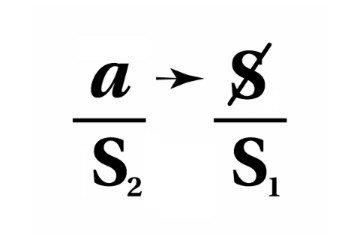
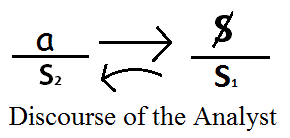
In the place of the agent we find objet a, the cause of desire. It is this lost object which grounds the listening position of the analyst; it obliges the other to take his own divided being into account. That is why we find the divided subject in the position of the other: a —> $.

This relationship between agent and other is impossible because it turns the analyst into the cause of desire of the other, eliminating him as a subject and reducing him to the mere residue, the waste of the signifying chain.

That is one of the reasons why Lacan stated that it is impossible to be an analyst. The only thing you can do is to function as such for somebody for a limited period of time. This impossible relationship from a to divided subject is the basis for the development of the transference, through which the subject will be able to circumscribe his object. This is one of the goals of an analysis. It is what Lacan has called “la traversee du fantasme,” the crossing of the fundamental fantasy.  Normally — that is, following the discourse of the master who sets the norm — this relationship is unconscious and partakes of the disjunction of impotence: $ // a.  The discourse of the analyst, as the inverse of that of the master, brings this relationship to the forefront in an inverted form: a —> $. From impotence it goes to impossibility, with the difference that it is an impossibility whose effects can be explored: qui ne cesse pas de ne pas s’écrire.” The product of this discourse is the master signifier or, in Freudian terms, the Oedipal determinant particular to that subject. It is the function of the analyst to bring the subject to that point, albeit in a paradoxical way: the analytical position functions by means of a non-functioning of the analyst as subject, which reduces him to the position of object. That is why the end result of analytic discourse is radical difference: in the world of make-believe, “le monde du semblant,” we are all narcissistically alike, but beyond this world we are all fundamentally different. Analytic discourse yields a singular subject, constructing and deconstructing itself throughout the process of analysis; the other party is nothing but a stepping stone. This reminds me of several folk tales and fairy tales in which the beloved, the object of desire, can no longer speak for one reason or another; in this situation the hero has to create a solution in which he is essentially confronted with his own being, a being which was unknown to him before.

The position of knowledge is remarkable in this discourse. One of the major twists in Freud’s theory and practice concerned precisely this; the way an analyst makes use of his knowledge. This way, indicated by the discourse of the analyst, is a paradoxical way; knowledge functions in the position of the truth, but — as the place of the agent is taken by object a this knowledge cannot be brought into the analysis.

The analyst knows, oh yes, he does know, but he cannot do much with it as long as he takes up the position of analyst. That is why this knowledge can be termed a Docta Ignorantia, a “learned ignorance,” as Nicholas of Cusa called it in the Fifteenth century. The analyst has wisely learned not to know, and in so doing he opens up a way for another to gain access to what determined his or her subjectivity.

The product of the discourse of the analyst is an S1 a master signifier. The revelation of this signifier, which determines the vicissitudes of the analysand, is meant to annihilate its effects. It is strange, says Lacan, that the discourse most opposed to that of the master yields a product which is precisely the basis of the master discourse itself.  Obviously, this has to take place in a completely different style: “II doit se trouver a l’ oppose de toute volonte au moins avouee de maitrise,” the analyst has to function at the opposite pole from any conscious desire for mastery.  This is a structural expression of what is peculiar to the analytic position, even though it is all too often precisely on this point that the analyst fails …

The particularity of the discourse of the analyst resides not only in the avoidance of the classical hysterical solution — the introduction and removal of a master figure — but also in a structural working through of its necessary failure. The effectiveness of the discourse of the analyst is twofold. On the one hand, it forces the patient in the direction of the discourse of the hysteric: the answer to a —> $ can only result in $ —>S1 which obliges the patient to subjectivise, to come to terms with the hidden truth of his symptom. Instead of offering his problems to someone else to solve, the patient is confronted with a permutation through which he has to see himself as the centre of the problem. In this way, it is possible for the analysand to come to the truth of his symptom, by exploring his fundamental fantasy. On the other hand, in the discourse of the analyst, the impossibility at the heart of hysterical structure shows up very explicitly as the impossibility of setting up and simultaneously refusing the master. Between S2 // S1 in the discourse of the analyst there is a barrier on jouissance: one has to choose, the two together are impossible.

This is where one can experience the dialectical value of this formalisation of discourse: based on the reactions of the analysand to an interpretation, the analyst knows quite quickly which position is ascribed to him. If he is situated on the axis S1 —> S2 then he will be taken up in the hysterical series: $ —> S1 —> S2

Only the analytical sequence is able to deliver the truth of the symptom:

a —> $ —> S1.

This is on condition that it does not topple over into the “envers,” its other side: the discourse of the master. Insofar as this toppling does happen, it always ends up as a diluted form of the master discourse, namely, the discourse of the university. (114-115)

Discourse of Hysteric

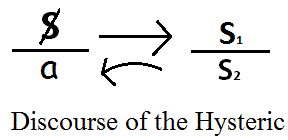
The questions put to the master are basically the same: “Tell me who I am, tell me what I want.” Although this master can be found in different places — it could be a priest, a doctor, a scientist, an analyst, even a husband — there is always one common factor: the master is supposed to know, he is supposed to know and to produce the answer. That is why we find knowledge, S2, in the position of product. Typically, this answer always misses the point. S2 as general knowledge is impotent in producing a particular answer to the particular driving force of objet a in the place of truth: a//S2. This inevitably results in a never ending battle between the hysterical subject and the particular master on duty. …

Structurally, the discourse of the hysteric results in alienation for the hysterical subject and in castration for the master. The answer given by the master will always miss the point, because the true answer concerns objet a, the object which is forever lost and cannot be put into words. The standard reaction to this failure is to produce even more signifiers but they only lead one further and further from the lost object in the position of truth. This impossibility causes the failure of the master, and entails his symbolic castration. Meanwhile, the master, in the position of the other as S1, has produced an ever increasing body of S2, of knowledge. It is this very knowledge that the hysterical subject experiences as profoundly alienating: as an answer to her particular question she receives a general theory, …. Whether or not she complies with it, whether or not she identifies herself with it, is besides the point. In every case, the answer will be felt as alienating. Knowledge as a product is unable to say anything important about objet a in the place of truth: a//S2 (Verhaeghe, Does the Woman 110).

[The master’s] truth is that he is also castrated, divided and subject to the Law. The paradox is that in striving to attain jouissance, the only thing he can produce is a knowledge which always falls short and which automatically makes him fail as a master. Indeed, if he wants to display his knowledge he has to speak, but the moment he does, he reveals his division. the only way for a master to say master is to keep away from the game of desire.
[…] Only he who does not desire is not submitted to castration, remains undivided and can occupy the position of master. … The idealised father of the hysteric is the dead father, the one who, freed from all desire, is no longer subjected to the fundamental lack and can produce in his own name, S1, a knowledge, S2, concerning jouissance. Verhaeghe 112

Discourse of University (Verhaeghe, Does the Woman 116-117)

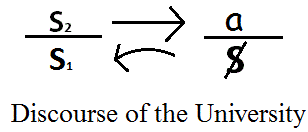
In the discourse of the university, the master functions as a formal guarantee for knowledge, thereby denying the ever-problematic division of the one who knows. In the end, this denial will be a failure. It is this knowledge that takes up the position of agent in the discourse of the university. If we turn the terms in the discourse of the master back a quarter, we obtain the discourse of the university as a regression of the discourse of the master, and as the inverse of the discourse of the hysteric. The agent is a ready-made knowlege, whereas the other is reduced to mere object, cause of desire: S2 –>a

The history of psychoanalysis illustrates this aim of the discourse of the university: Freud is reduced to a merer guarantee of a closed and well-established knowledge. The problematic aspect of his work is put aside, only his name remains as the master signifier necessary for the guarantee: “Made in …” The unifying aspect of this S1 already shows itself in the fact that post-Freudianism reduced Freud to a massive whole, a monolith without any internal dynamic. Certainly, the ‘evolution’ in his work was recognised, but only in the sense of a cumulative progression, which began before Freud (‘dynamic’ psychiatry), and resulted after him in the pinnacle known as Ego psychology …

This knowledge is presented as an organised and transparent unity which can be applied straight from the textbook. the hidden truth is that it can only function if one can guarantee it with a master-signifier.

In the position of the other, we find the lost object, the cause of desire. The relationship between this object and the signifying chain is structurally impossible: the object is precisely that element, Das Ding, which is beyond the signifier. As a result, the product of this discourse is a growing division of the subjuct: the more knowledge one uses to reach the object, the more one becomes divided between signifiers, and the further one moves away from home, that is, from the true cause of desire: S2–>a.

The product of this discourse demonstrates its failure since the result is nothing but the divided subject $. This is a consequence of the impossible relationship between S2 –>a. Knowledge does not yield jouissance, only a subject divided by a knowledge expressed in signifiers. This subject, $, can never be identified with an S1 because it would require a state of non-division. Between truth and product, the disjunction of impotence insists: S1//$.

Moreover, there is no relationship between the subject and the master-signifier in this discourse; the master is supposed to secrete signifiers without there being any relationship with his own subjectivity: S1//$. This illusion is behind the ‘objectivity’ required in classical science.

Žižek cartestian subject cogito

Žižek, Slavoj. SIC Cogito and the Unconscious. Durham: Duke University Press 1998

Introduction: Cogito as a Shibboleth

There  are  two  standard  ways  to  approach  the  relationship  between  philosophy  and psychoanalysis.  Philosophers  usually  search  for  so-called philosophical  foundations  of psychoanalysis”:  their  premise  is  that,  no  matter  how  dismissive  psychoanalysis  is  of philosophy, it nonetheless has to rely on a series of conceptual presuppositions (about the nature  of  drives,  of  reality,  etc.)  that  psychoanalysis  itself  does  not  render  thematic  and that  bear  witness  to  the  way  in  which  psychoanalysis  is  only  possible  within  a  certain philosophical  horizon.

On  the  other  hand,  psychoanalysts  at  their  worst,  indulge  in  so-called “psychoanalyzing of philosophers,” trying to discern pathological psychic motivations beneath  fundamental  philosophical attitudes  (philosophical  idealism  as  the  last  vestige  of the  childish  belief  in  the  omnipotency  of  thoughts;  paranoiac  systematizing  as  the foundation  of  the  need  to  form  all-embracing  philosophical  systems,  etc.).  Both  these approaches  are  to  be  rejected.  While  the  psychoanalytic  reduction  of  philosophy  to  an expression of psychic pathology is today, deservedly, no longer taken seriously, it is much more difficult to counter the seemingly self-evident claim that psychoanalysis cannot relate anything  truly  relevant  to  philosophy,  since  psychoanalysis  must  itself  rely  on  a  set  of philosophical presuppositions that it is unable to reflect upon.

What if, however, references to the Freudian subject are not external to philosophy, but can, in fact, tell us something about  the  modern,  Cartesian  subject?

What  if  psychoanalysis  renders  visible  something that  the  modern  philosophy  of  subjectivity  accomplishes  without  knowing  it,  its  own grounding  gesture,  which  philosophy  has  to  disavow  if  it  is  to  assume  its  place  within academic  knowledge?

To  use  Lacan’s  pun,  what  if  psychoanalysis  renders  visible  the ex-timate  kernel  of  modern  subjectivity,  its  innermost  core  that  philosophy  is  not  ready  to assume, which it tries to keep at a distanceor, to put it in a more fashionable way, what if psychoanalysis  renders  visible  the  constitutive  madness  of  modern  philosophy?

We  are thus  playing  a  double  strategic  game:  this  ex-timate  kernel  of  philosophy  is  not  directly accessible  to  the  psychoanalysis  conceived  of as a  branch  of psychology  or psychiatry  — what we encounter at this level are, of course, the “naive” pre-philosophical theses. What one has to do, is to bring to light the philosophical implications of psychoanalysis, that is, to  retranslate,  to  transpose psychoanalytic  propositions  back  into  philosophy, to “elevate them  to  the  dignity  of  philosophical  propositions”:  in  this  way,  one  is able  to discern  the ex-timate  philosophical  kernel  of  psychoanalysis,  since  this  transposition  back  into philosophy explodes the standard philosophical frame. This is what Lacan was doing all the time:  reading  hysteria  or  obsessional  neurosis  as  a philosophical  “attitude  of  thought towards  reality”  (the  obsessional  compulsion  to  think” if  I  stop  thinking,  I  will  cease  to exist” — as the truth of the Cartesian cogito ergo sum), etc., etc. Are we thus not again engaged in “psychoanalyzing philosophy”? No, since this reference to  madness  is  strictly  internal  to  philosophy  —  the  whole  of  modern  philosophy,  from Descartes onward, involves an inherent reference to the threat of madness, and is thus a desperate attempt to draw a clear line that separates the transcendental philosopher from the madman ( Descartes: how do I know I’m not hallucinating reality? Kant: how to delimit metaphysical  speculation  from  Swedenborgian  hallucinatory  rambling?  ).

This  excess  of madness against which modern philosophy fights is the very founding gesture of Cartesian subjectivity.

…At  this point,  anyone  versed  in  postmodern  deconstructionism will  utter  a sigh  of  bored  recognition:  of  course,  the  Cartesian  ego,  the  selftransparent  subject  of Reason,  is  an  illusion;  its  truth  is  the  decentered,  split,  finite  subject  thrown  into  a contingent,  nontransparent  context,  and  this  is  what  psychoanalysis  renders  visible…. Things,  however,  are  more  complicated.

[…]

1

It  is  against  this  background  that  one  should  appreciate  the  paradoxical  achievement  of Lacan,  which  usually  passes  unnoticed  even  by  his  advocates:  on  the  very  behalf  of psychoanalysis, he  returns  to  the  modern  rationalist  notion  of  subject.  Philosophers  and psychoanalysts,  of  course,  promptly  exclaim  “We  are  here  on  our  home  terrain!”  and proceed  to  reduce  the  Freudian  subject  to  a  psychological  subject  of  introspection,  to philosophical self-consciousness, to Nietzschean will to power…. Lacan’s underlying thesis here  is  even  more  radical  than  with  the  unconscious:

not  only  has  the  Freudian  subject nothing  to  do  with  the  self-transparent,  unified  self-consciousness,  it  is  the  Cartesian subject  itself  (and  its  radicalization  in  German  Idealism,  from  Kant’s  transcendental apperception to self-consciousness from Fichte onward) … the  standard  philosophy  of  subjectivity, … misrecognize the gap that separates the Cartesian subject (when it is “brought to its  notion”  with  Kant)  from  the  self-transparent  ego,  or  from  man,  from  the  “human person.”

What  they fail to  see  is that  the Cartesian subject  emerges  precisely  out of  the “death of man” “transcendental subjectivity” is philosophical antihumanism at its purest.

One  can  see,  now,  why,  in  his  seminar  on  The  Four  Fundamental  Concepts  of  Psycho-Analysis, Lacan asserts that the subject of psychoanalysis is none other than the Cartesian cogito:  the  Freudian  unconscious  emerges  through  the  very  reduction  of  the  “person’s” substantial content to the evanescent punctuality of the cogito.

In  this  precise  sense, one  could  say  that  Martin Luther  was  the first  great antihumanist: modern subjectivity is not announced in the Renaissance humanist celebration of man as the  “crown  of  creation”, that  is,  in  the  tradition  of  Erasmus  and  others  (to  which  Luther cannot but appear as a “barbarian”), but rather in Luther’s famous statement that

man is the excrement who fell out of God’s anus.

Modern subjectivity has nothing to do with the notion of man as the highest creature in the “great chain of being,” as the final point of the  evolution  of  the  universe:  modern  subjectivity  emerges  when  the  subject  perceives himself  as  “out  of  joint,”  as  excluded  from  the  “order  of  the  things,”  from  the  positive order of entities. For that reason, the ontic equivalent of the modern subject is inherently excremental:  there  is  no  subjectivity  proper  without  the  notion  that,  at  a  different  level, from  another  perspective,  I  am  a  mere  piece  of  shit.

For  Marx,  the  emergence  of  working-class subjectivity is strictly codependent to the fact that the worker is compelled to sell the very substance of his being (his creative power) as a commodity on the market, that is, to reduce the agalma, the treasure, the precious kernel of his being, to an object that can be bought for a piece of moneythere is no subjectivity without the reduction of the  subject  positive-substantial  being  to  a  disposable  “piece  of  shit.”

In  this  case  of  the correlation between the Cartesian subjectivity and its excremental objectal counterpart, we are  not  dealing  merely  with  an  example  of  what  Foucault  called  the  empirico- transcendental couple that characterizes modern anthropology, but, rather, with the split between  the  subject  of  the  enunciation  and  the  subject  of  the  enunciated:

2

If  the Cartesian subject is to emerge at the level of the enunciation, he is to be reduced to the “almost-nothing” of a disposable excrement at the level of the enunciated content.

Or,  to  put  it  in  a  slightly  different  way,  the  intervention  of  the  subject  undermines  the standard premodern opposition between the universal order and the hubris of a particular force whose egotistic excess perturbs the balance of the universal order: “subject” is the name  for  the  hubris,  the  excessive  gesture,  whose  very  excess  grounds  the  universal order;  it  is  the  name  for  the  pathological  abject,  clinamen,  deviation  from  the  universal order,  that  sustains  this  very  universal  order.  The  transcendental  subject  is  the “ontological  scandal,”  neither  phenomenal  nor  noumenal,  but  an  excess  that  sticks  out from the “great chain of being,” a hole, a gap in the order of reality, and, simultaneously, the agent whose “spontaneous” activity constitutes the order of (phenomenal) reality. If, for  the  traditional  ontology,  the  problem  was  how  to  deduce  chaotic  phenomenal  reality background image from the eternal order of the true reality (how to account for the gradual “degeneration” of the  eternal  order),  the  problem  of  the  subject  is  that  of  the  imbalanced  excess,  hubris, deviation, that sustains the order itself. The central paradox of the Kantian transcendental constitution  is  that  the  subject  is  not  the  absolute,  the  eternal  grounding  principle  of reality, but a finite, temporal entity — precisely as such, it provides the ultimate horizon of reality.

The very idea of the universe, of the all of reality, as a totality that exists in itself, is  thus  rejected  as  a  paralogism:  what  appears  as  an  epistemological  limitation  of  our capacity  to  grasp  reality  (the  fact  that  we  are  forever  perceiving  reality  from  our  finite, temporal standpoint), is the positive ontological condition of reality itself. Our  philosophical  and  everyday  common  sense  identifies  the  subject  with  a  series  of features:  the  autonomous  source  of  spontaneous,  self-originating  activity  (what  German Idealists called “self-positing”); the capacity of free choice; the presence of some kind of “inner  life”  (fantasizing);  etc.

Lacan  endorses  these  features,  but  with  a  twist:  the autonomous  source  of  activity  —  yes,  but  only  insofar  as  the  subject  displaces  onto  an Other the fundamental passivity of his being (when I am active, I am simultaneously interpassive, i.e., there is an Other who is passive for me, in my place, like the weepers, the hired women who cry for me at funerals in so-called “primitive” societies); the free choice —  yes,  but,  at  its  most  radical,  the  choice  is  a  forced  one  (i.e.,  ultimately,  I  have  a freedom of choice only insofar as I make the right choice); the presence of fantasizing — yes,  but,  far  from  coinciding  with  the  subject  in  a  direct  experience  of  “inner  life,”  the fundamental fantasy is that which cannot ever be “subjectivized,” that which is forever cut off from the subject….

What Lacan focuses on is this specific twist, this additional turn of the screw that confronts us with the most radical dimension of subjectivity. How, then, does this endeavor of ours relate to Heidegger’s well known attempt to “think through” the horizon of subjectivity? From our perspective, the problem with Heidegger is, in  ultima  analisi,  the  following  one:

the  Lacanian  reading  enables  us  to  unearth  in  the Cartesian subjectivity its inherent tension between the moment of excess (the “diabolical Evil” in Kant, the “night of the world” in Hegel) and the subsequent attempts to gentrify-domesticate-normalize  this  excess.

Again  and  again,  post-Cartesian  philosophers  are compelled,  by  the  inherent  logic  of  their  philosophical  project,  to  articulate  a  certain excessive moment of “madness” inherent to cogito, which they then immediately endeavor to “renormalize.” And the problem with Heidegger is that his notion of modern subjectivity does not seem to account for this inherent excess — in short, this notion simply does not “cover” that aspect of cogito on account of which Lacan claims that cogito is the subject of the unconscious.

3

One of the basic presumptions of contemporary doxa is that the Cartesian cogito paved the way for the unheard-of progress of modern science that profoundly affected the everyday life of mankind. Today, however, it seems as if the Cartesian cogito itself has acquired the status of a prescientific myth, superseded by the very progress of knowledge it unleashed. For  that  reason,  the  title  Cogito  and  the  Unconscious  is  bound  to  give  rise  to  two immediate associations: that it is to be understood as designating the antagonism between cogito  (the  transparent  subject  of  self-consciousness)  and  the  unconscious,  its  opaque Other that subverts the certitudes of consciousness; and, consequently, that cogito is to be repudiated  as  the  agency  of  manipulative  domination  responsible  for  all  present  woes, from  patriarchal  oppression  to  ecological  catastrophes.  The  specter  of  the  “Cartesian paradigm”  roams  around,  simultaneously  proclaimed  dead  and  feared  as  the  ultimate threat  to  our  survival.

In  clear  contrast  to  this  predominant  doxa,  Lacan  pleads  for  a psychoanalytic return to cogito.

Today’s  predominant  position  involves  the  assertion  of  multiple  subjectivities  against  the specter  of  (transcendental)  Subject:  the  unified  Subject,  the  topic  of  transcendental philosophy, the constitutive source of all reality, is dead (or so we are told), and the void of its absence is filled in by the liberating proliferation of the multiple forms of subjectivity– feminine, gay, ethnic….

One should thus abandon the impossible search for the Subject that  is  constitutive  of  reality,  and,  instead,  focus  attention  on  the  diverse  forms  of asserting  one’s  subjectivity  in  our  complex  and  dispersed  postmodern  universe….

What, however,  if  we  perform  the  exact  opposite  of  this  standard  operation,  and  endeavor  to think a subject bereft of subjectivity (of the self-experience of a historical agent embedded in a finite horizon of meaning)?

What kind of monster remains when we subtract from the background image subject  the  wealth  of  self experience  that  constitutes  subjectivity?  The  present  volume provides an answer to this question: its underlying premise is that

the Cartesian subject is this monster, that it emerges precisely when we deprive the subject of all the wealth of the “human person.”

Notes […]

2. See Jacques Lacan, Érits: A Selection ( New York: Norton, 1977), 300.

3. For a more detailed account of this excess, see, in the present volume, Slavoj Žižek, The Cartesian Subject versus the Cartesian Theater.
Ž four discourses four subjects

Žižek, Slavoj. “Four Discourses, Four Subjects” in Cogito and the Unconscious. ed. Slavoj Žižek, Duke UP, 1998. 75-113.

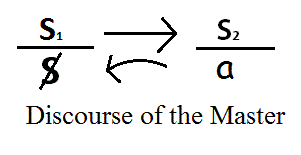
The illusion of the gesture of the Master is the complete coincidence between the level of enunciation (the subjective position from which I am speaking) and the level of the enunciated content, that is, what characterizes the Master is a speech-act that wholly absorbs me, in which “I am what I say,” in short, a fully realized, self-contained performative.

Such an ideal coincidence, of course, precludes the dimension of fantasy, since fantasy emerges precisely  in order to fill in the gap between the enunciated content and its underlying position of enunciation.

Fantasy is an answer to the question, “You are telling me this, but why? What do you really want by telling me this?”

The fact that the dimension of fantasy nonetheless persists thus simply signals the ultimate unavoidable failure of the Master’s discourse.

There is thus no reason to be dismissive of the discourse of the Master, to identify it too hastily with “authoritarian repression”: the Master’s gesture is the founding gesture of every social link.  Let us imagine a confused situation of social disintegration, in which the cohesive power of ideology loses its efficiency: in such a situation, the Master is the  one who invents a new signifier, the famous “quilting point,” which again stabilizes the situation and makes it readable; the university discourse that then elaborates the network of Knowledge that sustains this readability by definition presupposes and relies on the initial gesture of the Master.  The Master adds no new positive content — he merely adds a signifier, which all of a sudden turns disorder into order, into “new harmony,” … Therein resides the magic of a Master: although there is nothing new at the level of positive content, “nothing is quite the same” after he pronounces his Word. …

The University discourse is enunciated from the position of “neutral” Knowledge; it addresses the remainder of the real  (say, in the case of pedagogical knowledge, the “raw, uncultivated child”), turning it into the subject .   .  The “truth” of the university discourse, hidden beneath the bar, of course, is power (i.e., the Master-Signifier):
the constitutive lie of the university discourse is that it disavows its performative dimension, presenting what effectively amounts to a political decision based on power as a simple insight into the factual state of things.

What one should avoid here is the Foucaultian misreading: the produced subject is not simply the subjectivity that arises as the result of the disciplinary application of knowledge-power, but its remainder, that which eludes the grasp of knowledge-power. “Production” (the fourth term in the matrix of discourses) does not stand simply for the result of the discursive operation, but rather for its “indivisible remainder,” for the excess that resists being included in the discursive network (i.e., for what the discourses itself produces as the foreign body in its very heart). 78

Suffice it to recall the market expert who advocates strong budgetary measures (cutting welfare expenses, etc.) as a necessity imposed by his neutral expertise devoid of any ideological biases: what he conceals is the series of power-relations (from the active role of state apparatuses to ideological beliefs) that sustain the “neutral” functioning of the market mechanism. 79

In the hysterical link, the . . over a stands for the subject who is divided, traumatized, by what an object she is for the Other, what role she plays in Other’s desire: “Why am I what you’re saying that I am?” … What she expects from the Other-Master is knowledge about what she is as object (the lower level of the formula).

In contrast to hysteria, the pervert knows perfectly what he is for the Other: a knowledge supports his position as the object of Other’s (divided subject’s) jouissance. For that reason, the matheme of the discourse of perversion is the same as that of the analyst’s discourse.

Lacan defines perversion as the inverted fantasy (i.e., his matheme of perversion is a-$), which is precisely the upper level of the analyst’s discourse. The difference between the social link of perversion and that of analysis is grounded in the radical ambiguity of objet petit a in Lacan, which stands simultaneously for the imaginary fantasmatic lure/screen AND for that which this lure is obfuscating, for the void behind the lure.

*So when we pass from perversion to the analytic social link, the agent (analyst) reduces himself to the void, which provokes the subject into confronting the truth of his desire. Knowledge in the position of “truth” below the bar under the “agent,” of course, refers to the supposed knowledge of the analyst, and, simultaneously, signals that the knowledge gained here will not be the neutral objective knowledge of scientific adequacy, but the knowledge that concerns the subject (analysand) in the truth of his subjective position.

In this precise sense, the analyst’s discourse produces the master signifier, the swerve of the patient’s knowledge, the surplus element that situates the patient’s knowledge at the level of truth: after the master signifier is produced, even if nothing changes at the level of knowledge, the same knowledge as before starts to function in a different mode. The master signifier is the unconscious sinthome, the cipher of enjoyment, to which the subject was unknowingly subjected.

*Text here is modified according to https://www.terada.ca/discourse/?p=7106

So, if a political Leader says “I am your Master, let my will be done!” this direct assertion of authority is hystericized when the subject starts to doubt his qualification to act as a Leader (“Am I really their Master?” What is in me that legitimizes me to act like that?”); it can be masked in the guise of the university discourse (“In asking you to do this, I merely follow the insight into objective historical necessity, so I am not your Leader, but merely your servant who enables you to act for your own good. …”); or, the subject can act as a blank, suspending his symbolic efficiency and thus compelling his Other to become aware of how he was experiencing another subject as a Leader only because he was treating him as one.

It should be clear, from this brief description, how the position of the “agent” in each of the four discourses involves a specific mode of subjectivity:

– the Master is the subject who is fuly engaged in his (speech) act, who, in a way, “is his word,” whose word displays an immediate performative efficiency;

– the agent of the university discourse is, on the contrary, fundamentally disengaged: he posits himself as the self-erasing observer (and executor) of “objective laws” accessible to neutral knowledge (in clinical terms, his position is closest to that of the pervert).

– the hysterical subject is the subject whose very existence involves radical doubt and questioning, his entire being is sustained by the uncertainty as to what he is for the Other; insofar as the subject exists only as an answer to the enigma of the Other’s desire, the hysterical subject is the subject par excellence.

Again, in clear contrast to it, the analyst stands for the paradox of the desubjectivized subject, of the subject who fully assumed what Lacan calls “subjective destitution” that is, who breaks out of the vicious cycle of intersubjective dialectics of desire and turns into an acephalous being of pure drive.

dean discourse of analyst pervert on lenin

Dean, Jodi. Žižek’s Politics. New York: Routledge. 2006. Print.

Discourse of the Analyst

The discourse of the analyst has the same structure as the perverse discourse. The difference between the discourse of the analyst and the perverse discourse rests in the ambiguity of objet petit a (occupying here the position of agent).

  • In the perverse discourse, objet petit a designates the subject’s ($ in the position of addressee) enjoyment. That is, the pervert is the one who knows what the subject desires and makes himself into an instrument of that desire.  Accordingly we see how the formula places knowledge (S2) in the position of truth, supporting the object that speaks. (89)
  • In the discourse of the analyst, this knowledge (S2) is the “supposed knowledge of the analyst.” This means that in the analytic setting, the subject presumes that the analyst knows the secret of its desire. But, this presumption is false.  The enigmatic analyst simply adopts this position, reducing himself to a void (objet petit a) in order that the subject will confront the truth of her desire.  The analyst is not supported by objective or historical knowledge. rather, the position is supported only by the knowledge supposed by the subject through transference. Analysis is over when the subject comes to recognize the contingency and emptiness of this place. Žižek follows Lacan in understanding this process as “traversing the fantasy,” of giving up the fundamental fantasy that sustains desire. (89)

Thus, whereas the pervert knows the truth of desire, the analyst knows that there is no truth of desire to know.

The process of traversing the fantasy, of confronting objet petit a as a void, involves “subjective destitution” As the addressee of the speaking object, the subject gives up any sense of a deep special uniqueness, of certain qualities that make him who he is, and comes to see himself as an excremental remainder, to recognize himself as an object. Neither the symbolic order nor the imaginary realm of fantasy provides any ultimate guarantees. They cannot establish for the subject a clear, certain, and uncontested identity. they cannot provide him with fundamental, incontrovertible moral guidelines. What is left out, then, is the authority of the Master (S1, now in the position of production). (89)

Žižek views the discourse of the analyst as homologous to revolutionary emancipatory politics. What speaks in revolutionary politics is thus like objet petit a, a part that is no part, a part that cannot be recuperated into a larger symbolic or imaginary unity. Such a part, in other words, is in excess of the whole.

In emphasizing the structural identity between revolutionary politics and the discourse of the analyst, moreover, Žižek is arguing that the revolutionary act proper has no intrinsic meaning. It is a risk, a venture that may succeed or fail. Precisely what makes revolution revolutionary is that it leaves out (produces as remainder) the authority of a Master: there are no guarantees.(90)

For Žižek, what was remarkable about Lenin was his willingness to adopt this position. Žižek emphasizes two specific moments: 1914 and 1917. In 1914 Lenin was shocked and alone as all the European Social Democratic parties (excluding the Russian Bolsheviks and the Serb Social Democrats) turned to patriotism … falling ini with the prevailing nationalist fervor. Yet this very catastrophic shattering of a sense of international workders’ solidarity, … “cleared the ground for the Leninist event, for breaking the evolutionary historicism of the Second International — and Lenin was the only one who realized this, the only one who articulated the Truth of the catastrophe” … Likewise in April 1917, most of Lenin’s colleagues scorned his call for revolution. Even his wife, Nadezhda Krupskaya, worried that Lenin had gone mad, but Lenin knew that there was no proper time for revolution, that there are no guarantees that it will succeed.  More importantly he knew that waiting for such an imagined proper time was precisely the way to prevent revolution from occuring. … Lenin is remarkable in his willingness to take the risk and engage in an act for which there are no guarantees. We should recall that the odds were fully against Lenin — in peasant Russia he did not even have a working class that could take power. (90)

Against communist dogma regarding the laws of historical development and the proper maturity of the working class, Lenin urged pushing through with the revolution. He did not rely on objective laws of history. He also did not wait for permission or democratic support.  He acted without grounds, inventing new solutions in a moment when it was completely unclear what would happen. He refused to wait for authorization or do what other thought he “ought” to do, doing instead what he had to do. Lenin, then, takes the position of objet petit a. The truth of his view does not rest in  laws of history but in its own formal position in an uncertain situation, a position marked by the Leninist Party (91).

Unlike (Agamben), Žižek does not abandon law and sovereignty. Lenin’s greatness is not simply that of a risk taker but of a founder, one who takes responsibility for introducing a new order. … addressing the fundamental political problems of the day — antatgonism in an era post-property and the exclusions and violence of neoliberal capitalism — is a matter not of escaping or abandoning the law but of traversing the fantasies that support the law, confronting the  perversity and enjoyment in our relations to law.  … possibility of moving from law to love. (92-93)

pluth object a the act

Pluth, Ed. Signifiers and Acts: Freedom in Lacan’s Theory of the Subject. Albany: State University of New York Press, 2007.

By keeping object a separate from the ideal ego, the analyst emphasizes the originally separating role of object a itself.  I take this to mean that another dimension of object a is brought to the fore — not its dimension as something that the Other is supposed to desire, and that I must therefore desire or identify myself with in order to get recognized by the Other.  Rather what we see here is the dimension of object a as the Other’s desire as such, in its very inscrutability.  This means that the object a refers one to the originally inscrutable and eventlike nature of the Other’s desire.

A subject can perhaps only be separated from its identity, from its ego-ideal, as well as from object a as something that is desired by the Other, when the eventlike nature of the Other’s desire is recalled. This shows that the other aspect of object a, it’s imaginary aspect as an object that the Other desires, is an invention. When the object a as the Other’s desire as such is recalled, the ego ideal loses its ground. The plane of identification would then be crossed.  The subject would no longer have any motivation to identify with the analyst or with any particular signifier (131).

What crossing the plane of identification, traversing the fantasy, or an act amounts to is a return to an original position, one in which a subject is first subjected to a signifier.  Does this not also mean to the moment at which a subject is first produced by a signifier?

WE KNOW THAT AN ACT IS SUPPOSED TO TRANSFORM AND ALSO RECREATE A SUBJECT.

There is a fundamental difference between fantasy and act, and what happens during an act is perhaps not simply the continuation of a fantasy structure. …  An act entails an entirely different relation to the Other’s desire, and that, as a result, the relation to the Other entailed in an act is such that one cannot speak about an identification occurring in it (132).

In an act, there is a relation to the Other’s desire that does not consist of identifying with what that desire is supposed to be for — a quest for the signified of that desire.  Rather, the signifying impasse characteristic of the Other’s desire is preserved and handled in a new way in an act, instead of being merely avoided or covered up, which is what an identification does, and this would be the “real” dimension of an act the way in which the real “excedes” in an act, as Badiou would put it.

If identification can still be spoken of here, then what we have is not an identification with a particular signifier that functions as an object of the Other’s desire but an “identification” with desire as such.  The end of analysis can then be seen not as a mere repetition of the subject’s origin, but a repetition that recreates, bringing about a new way for the subject to be in relation to signifiers, the Other, and the real.

A distinction needs to be made between:

  • the Other as a site that can function to guarantee meanings and grant recognitions and
  • the Other’s desire, which ruins any such site.