analytic discourse chapter 4

Campbell, Kirsten. Jacques Lacan and Feminist Epistemology. Florence, KY, USA: Routledge, 2004. page 106

.. a standard feminist epistemological position is that systems of representations form the known object. This position implies that a representational model of language is inadequate because those systems of signs are neither neutral nor transparent. However, feminist epistemologies often do not explicitly address or develop the implications of this position.

This chapter uses Lacan’s model of psychoanalytic discourse as a template to develop a theory of feminist knowledge as a transformative discursive practice.

Analytic Discourse

Analytic discourse In Lacan’s model, the exclusion of ‘an element of impossibility’ founds and structures all discourse (S17: 50).

Lacan represents that excluded term by an algebraic a. In analytic practice, the analysand recognizes the relation of his or her discourse to its excluded term a, such that the analysand recognizes the foundation of his or her discourse upon the exclusion of this term. That recognition is an act of symbolization, in which the analysand articulates the signifier of its otherwise excluded term (Fink 1999: 49).

In psychoanalytic practice, the analysand represents the excluded signifier, so that it is not repressed but is inscribed in his or her signifying chain.

The analysand’s inscription of the signifier of the a changes the relation of symbolic elements in that signifying chain, so producing a new signifying chain. In this way, the analysand produces new meaning or signification.

For feminist epistemology, the importance of the Lacanian theory of analytic discourse is that it provides a template that it can use to analyse other transformative discourses. 106

It could be argued that feminist epistemology cannot appropriate a Lacanian model of psychoanalytic knowledge because it derives from clinical practice. In this argument, any such appropriation either reduces feminist practice to psychoanalytic practice or relies on an unsustainable analogy between them. However, my use of Lacan’s model as a template to theorize feminist discourse … does not claim that feminist knowledge is analytic knowledge in another mode, nor that feminist knowledge is able to be (or needs to be) produced in the clinical operations of resistance, transference, and so on. 107

It is evident that the transferential relation of analyst and analysand does not produce feminist knowing. However, my use of the Lacanian model of knowledge does not rely on such an analogy between feminist and psychoanalytic practices because it reconfigures that model in the feminist field. As I argued in Chapter 2, rereading the Lacanian theory of analytic discourse through feminism positions that model within social and political relations. With this rereading, it becomes possible to use Lacanian theory to understand how feminist knowledge changes how we know ourselves and our others. 107

The Lacanian approach identifies three elements in an analysis of discourse:

  1. the structure of signifiers of a given discourse, or, the common features of feminist knowledges;
  2. the relation of the structure of the discourse to its repudiated and yet foundational term a, or, the nature of that discursive practice;
  3. the operation of that discourse in the production of meaning, or, an account of its operation.

In the next section, I use this Lacanian model to understand how feminist knowledge operates as a discourse.

symbolic identification

Campbell, Kirsten. Jacques Lacan and Feminist Epistemology. Florence, KY, USA: Routledge, 2004. 104

A symbolic relationship to the other: symbolic identification

Lacan proposes another form of identificatory relation besides that of narcissistic, imaginary incorporation: symbolic identification. For Lacan, identification in the symbolic register is both part of the formation of the subject, and a psychic process of the subject. As I described earlier in this chapter, for Lacan symbolic identification is a process of introjection of the trait unaire – the unitary trait – of the symbolic Father In that process, the subject identifies with the phallic signifier as the mark of the Father, and thereby incorporates the Symbolic father as an I (Lacan 1964c: 256– 257). In the later Lacanian theory of the four discourses, the phallic signifier is the master signifier – the signifier that represents the subject as subject.

However, in primary and secondary feminist identifications, there does not appear to be an introjection of the paternal signifier as a representative of the Father’s Law. Therefore, either symbolic identification is absent from the production of the feminist subject, which condemns her to the narcissistic reflection of imaginary relations, or else it does operate, but not as an identification with the paternal signifier.

While Lacan proposes that symbolic identification is an assimilation of the paternal figure, he also describes it more generally as a process of introjection of a signifier. For this reason, it is possible to reformulate symbolic identification in these more general terms as the psychic assimilation of a symbolic element.

That symbolic element is a master signifier, which shapes the structure of the discursive chain and produces the subject. Reformulating symbolic identification in this way permits us to understand its role in feminist identificatory relations, and to provide a fuller account of those relations. In particular, the reconception of this process of introjection of a master signifier further explains the operation of ego-ideal feminist identifications.

By using this concept of symbolic identification, we can understand how the ego-ideal identifications with feminist politics and persons are a process of introjecting the signifier ‘feminism’. In that process, a subject identifies with the signifier ‘feminism’ and introjects it as an ego-ideal.

This explanation provides a conceptual basis for Brennan’s description of the feminist ego-ideal, because symbolic identification explains the process by which the subject assimilates the signifier ‘feminism’, thereby changing the paternal super-ego.

Lacan argues that the master signifier represents the subject as a subject, both to itself and to others. Therefore, the horizontal tie of identification can be reformulated as a process in which ‘feminism’ functions as a signifier which represents the subject to itself and to other subjects, and by which those subjects recognize each other’s signifier.

In this process of symbolic identification, the subject introjects the signifier ‘feminism’, and the signifying chains that attach to it. In that process, the subject enters those signifying chains of feminist discourses. By entering these discourses, a subject enters into a symbolic relation to other women.

Symbolic identification permits the subject to engage in a process that exteriorizes affect in intersubjective dialogue. By incorporating feminist discourses, the subject is able to enter into a symbolic exchange between women. The signifying elements of these discourses provide the representational material for that exchange. This intersubjective dialogue renders in signification the affective identifications between women that form the nucleus of feminist identifications. Those affective relations shift from being an emotion of the individual subject to being a dialogue between subjects, and from object relations to subject relations. 103

In this way, symbolic identification permits the subject to acknowledge the differences between herself and other subjects. It does not construct a relation between subjects as an imaginary desire for unity that entails a méconnaissance of others, but as the representation of the difference of an other that enables a relation to the other.

Symbolic identification forms political relations that do not require that an other is loved as self, but rather that subjects engage with each other as speaking subjects. Imaginary identification is a means of seeing the self in an other, and an other in the self. Symbolic identification marks an entry into discourse with the other. Discourse is a means of speaking with, and listening to, the other in intersubjective dialogue. Feminist discourses mediate the relations between women because they symbolize relations to others. In the recognition of the other as a speaking being, conversation can take place between two subjects who have equal entitlement to take up a position in a discursive exchange. Discursive exchange opens feminism to negotiation and thereby to change, rather than being frozen in imaginary relations.

If symbolic identification makes possible the recognition of an other woman, it also makes possible the recognition that at least two subjects participate in a dialogue. Importantly, that recognition moves past an ethics of reciprocal identification to a symbolic identification with the other as speaking subject

That shift constructs a collective that the negotiations of coalitional politics form. These intersubjective dialogues enable the articulation of new and different discursive social links between women.

If feminism is ‘phantasmic’, it is a phantasm that has political effect because it produces political subjects and collectivities. Feminist identifications are not established once and for all, but are constantly made and remade in the affective, imaginary and symbolic relations between women. However, this account also suggests that there is a link between symbolic relationships between women and the production of feminist discourse. In the next chapter, I explore this relationship by examining the discursive practices of feminist knowers and developing a model of feminist discourses. 104

imaginary identification

Campbell, Kirsten. Jacques Lacan and Feminist Epistemology. Florence, KY, USA: Routledge, 2004. page 101

The relation of aggression to, and mastery of, the other can be seen in feminist identifications. For example, in 1981 bell hooks described how: “as I moved from one women’s group to another trying to offer a different perspective, I met with hostility and resentment. White women liberationists saw feminism as ‘their’ movement and resisted any efforts by non-white women to critique, challenge or change its direction.” (1981: 190)

hooks’s description of the aggression and hostility that greet her reveals the other side of feminist identifications. hooks describes imaginary perceptions of commonality that construct the feminist subject as ‘white’ and women of ‘colour’ as an other to the white feminist. When the ‘other’ insists on her difference, she is met with the aggression of an imaginary identification that seeks to master difference and reduce it to identity. Typically of the next feminist generation, Chambers (1995: 27) and Jee Yuan Lee (1995: 209) identify the aggression and fixity of such imaginary identifications as one of the most difficult problems facing the third-wave reconstruction of feminism. However, Lee also points out that an acknowledgement of the multiple axes of oppression is crucial to the contemporary rearticulation of feminist politics (1995: 211). Because an imaginary relation to the other refuses to acknowledge the politics of the differences between women, it prevents that rearticulation. … Without such a recreation, feminist politics will enact the imaginary mastery of an other which reproduces the social relations of power that enable a subject to enact that mastery. That reproduction does not challenge the operation of power within the feminist movement.

In its refusal to recognize the politics of power within the feminist movement, imaginary identification condemns feminists to reproducing rather than resisting those politics of power. 102

A feminist identification that operates in the imaginary order thus reproduces the violence of contemporary social relations. It imagines the feminist movement as the relation of a woman to another identical to herself, rather than as formed in the negotiated relations between women.

That woman treats her relation to other women with all the contempt that power gives – the power to refuse another’s subjectivity. An imaginary feminist identification, which leads a subject to refuse the particularity and specificity of another subject, condemns her to participating in ‘the same falsely universalizing pretensions as the masculine knowledge’ (Lennon and Whitford 1994a: 3). In an identification in the imaginary register, ‘feminism’ shifts from being an identificatory object to being an object of idealization. It renders the discourses of feminism in the singular, feminisms as feminism, and the many feminist subjects as a universal ‘feminist’ subject. It fixes feminism in the narcissistic gaze of a subject, who is able to gaze at others in this way because the social order gives her the power to do so. Such an act of aggression and mastery militates against an ethics of mutual recognitions.

Without a recognition of the difference of an other, a feminist subject cannot have an ethical relation to that other. An ethical relation is not possible because the other is denied its existence as other and as such can exist only as the subject desires it to. Reciprocal relations require two subjects, not one. The other woman is not allowed to be herself, but only to reflect the self of the powerful subject.

Imaginary identifications constitute the possibility of the recognition of, and relation to, others because they form relations between subjects. However, in the relation of self to other women, there also needs to be recognition of the alterity of the other woman. She must be recognized not only in her similarity and commonality but also in her difference and non-identity.102

group psychology identification

Campbell, Kirsten. Jacques Lacan and Feminist Epistemology. Florence, KY, USA: Routledge, 2004.

For Freud, vertical identification secures the relation of the leader to the members of the group. Each member of the group adopts the perceived attributes of its leader, and in so doing replaces his or her ego-ideal with that of an idealized model of the leader. In this way, each member of the group comes to possess the same ego-ideal. Horizontal identification secures the relation between members of the group, as each member of the group identifies with the ego-ideal of other members. However, the feminist movement cannot be said to have a leader of the type that Freud describes (that is, the prescribed, fixed status of a Pope of the Church or a General of the Army). Rather, it generally rejects ‘leaders’ because it insists upon an anti-hierarchical politics, in which ‘groups’ attempt to organize themselves within models of co-operative and collective decision-making.

In this sense, feminism attempts to resist the vertical tie of group member to leader while emphasizing the horizontal tie between members of its communities. How then is it possible to account for the operation of identifications within the feminist movement? Freud suggests that what he calls ‘leading ideas’ can serve in the place of the ego-ideal provided by the leader of a group, and as such can secure the intersubjective relations of the members of a group (1921: 125).

Drawing on Freud, Teresa Brennan suggests that a feminist ‘body of writing’ can serve as an ego-ideal (1986: 10). In terms of the subject, then, the ‘leading ideas’ of feminism can serve as the ego-ideal of the vertical tie of identification. The identification is with the political ideas of feminism. For example, bell hooks (1981) argues that many women of colour identify with and enact feminist ideas, even while disidentifying with second-wave feminism because of their perception of its racism. More recently, Rebecca Walker (1995a) put forward a similar argument in relation to her third-wave generation. Despite the complexity of naming them, there is a set of commitments or ‘leading ideas’ that the term ‘feminism’ represents. According to this model, each subject identifies with, and thus incorporates, these ‘leading ideas’ of feminist politics. In this way, the body of ideas that forms ‘feminist politics’ serves as the ego-ideal for the subject. They function as the object that the subject identifies with and ‘wants to be like’. For example, Veronica Chambers offers a typical third-wave description of her encounter with feminist ideas, in which she discovers ‘a context for my political existence. A vocabulary for my situation. An agenda to empower myself and others’ (1995: 21). However, Brennan suggests that this process is more complex than the assimilation of the abstraction called ‘feminist politics’. Brennan perceives not only a body of ideas but also ‘a person, people’ as objects of feminist identifications (1986: 10). For example, third-wave feminist Rebecca Walker describes how ‘[l]inked with my desire to be a good feminist was a deep desire to be accepted, claimed and loved by a feminist community that included my mother, godmother, aunts and close friends’ (1995a: xxx). 97

However, the feminist movement is not simply constituted by a series of identificatory ties of each member to an ‘ideal’. The collective nature of a political movement implies more than each individual’s commitment to a set of ideas or role model. It also implies that these individuals perceive themselves as members of a political movement and that these individuals identify with each other as members of that movement. This relation is an identification with the other members of the movement, as well as with the ideals that produce political engagement. There is, it seems, another ‘emotional tie’ at work in the feminist movement. How do we understand that emotional tie? In his discussion of the psychology of the group, Freud argues that, in addition to the vertical tie of identification to the ‘ideal’, there is also a tie between group members. Freud argues that in this relation between group members, each member has ‘put one and the same object in the place of their ego-ideal and have consequently identified themselves with one another in their ego’ (1921: 147). This horizontal tie between members of a group can be seen within the feminist movement. Members recognize others as ‘feminists’ because of a shared commitment to a political project. Each member identifies in others a shared ego-ideal of ‘feminist politics’. In this sense, each subject has put ‘one and the same object’ – feminism – in the place of their ego-ideal and ‘have consequently identified themselves with one another in their ego’. That identification creates a relation between subjects as members of a collective movement. For example, in the introduction to the anthology, To Be Real, Walker argues that ‘these thinkers stake out an inclusive terrain from which to actively seek the goals of social equality and individual freedom they all share’ (1995a: xxxv). These ego-ideal identifications construct both a feminist subject and its relation to other feminist subjects, forming a feminist ‘we’. Brennan suggests that the ego-ideal identification of feminists offsets the categorical imperatives of the patriarchal super-ego, which permits an evasion of the commands of the Father, and makes it possible to think ‘outside’ patriarchy (1986: 10). Certainly, it appears that a feminist ego-ideal displaces the patriarch’s. However, the possibility of such a process also suggests that the Father’s intervention may not be as effective as he would wish.

If, as I have argued, the paternal super-ego is not necessarily effectively secured in, or does not secure, the formation of the female subject, its failure permits an evasion of its normative injunctions and hence creates a possibility of feminist ego-ideal identification.

In this model, feminist identifications take three forms. The first is an affective primary relation with other women. The second and third involve ego-ideal identifications with the ‘ideals’ of feminist politics and with others as members of a political movement. In Freudian terms, both horizontal and vertical ties form feminist subjects. An example of this process can be seen in Elissa Marder’s description of the label ‘feminist’ as ‘seemingly personally conferred (I declare myself a feminist) and collectively confirmed (I am acknowledged by others as participating in feminism)’ (1992: 149). This personal conferral – ‘I identify myself as’ – and that collective confirmation – ‘I identify myself with others and others identify me as’ – produce feminist subjects and the relation between them.

If identification is ‘the detour through the other that defines a self’, then that process forms a feminist ‘self’. Primary identification enables a feminist subject to engage with other women. It institutes a relation between female subjects, and enables a recognition of, as well as a relation to, other women. In this way, it enables feminists to identify with other women and to imagine a relation to them.

Fuss describes how Fanon’s psychoanalytic theory repeatedly calls for ‘“an ethics of mutual identifications”…a world of reciprocal recognitions’ (1995: 144). The construction of an affective relation to other women provides the possibility of an ethics of mutual identifications with, and reciprocal recognitions of, other women. The operations of ego-ideal identifications enable feminist subjects to recognize and imagine themselves as a political movement. After all, feminism is a movement of people, an imagined community that coheres in demonstrations, writing, meetings, actions, projects, conferences, and other forms of activism. The mechanism of ego-ideal identifications enables feminists to perceive themselves as members of a movement. The identifications of its members form this collectivity, both with the ideals of feminist politics and with other subjects identifying with those ideals. This political relation enables feminist conversations to take place, because it forms a feminist ‘I’ and a feminist ‘we’. Therefore feminist subjects are not ‘autonomous, self-making, self-determining subject[s]’ (Alarcón 1994: 141). Rather, a relation to other subjects and to feminist politics produces feminist subjects. 99

Loving the self as other: imaginary identification

This description of identificatory relations between political subjects should not be mistaken for a second-wave ‘sisterhood’ of women united by their identity. Identificatory ties are a means of establishing both commonality and difference, which work to produce both unity with, and differentiation from, others. Lacanian theory provides a means of further understanding this complicated process. While drawing on the Freudian theory, Lacan’s account provides a more complex distinction between imaginary and symbolic identification. This distinction enables us to understand the different identificatory processes at work in the production of feminist subjects, and to draw out the politics of feminist identifications. Like Freud, Lacan recognizes the importance of identification in the formation of the subject, but inflects the Freudian theory through his own theory of the mirror stage. Malcolm Bowie points out that Lacan understands primary identification as being formed in the mirror stage, and accordingly emphasizes its narcissistic and egoistic aspects (1991: 33– 34). For Lacan, the mirror stage can be understood ‘as an identification’ which forms the ego-ideal and hence precipitates the ego (É: 2). For Lacan, identifications are always situated in the imaginary order because they reflect the ego’s narcissistic perceptions.

This Lacanian theory is crucial to understanding feminist identifications because it describes the other side of identification – the desire of the ego that the other mirror the self. 10

Lacan argues that in imaginary identifications, the object is caught in the ego’s méconnaissance or misrecognition of the other as self. The ego misrecognizes the other in its specular reflections, perceiving the other as identical to itself. The identificatory object is known only as the same as self, and with that misrecognition comes a refusal of difference.

In a desire for sameness, the ego perceives only those qualities that are identical to it, so that it refuses difference in the object. The identificatory object functions not as an Other but as an imaginary counterpart, an other that the self imagines to reflect it.

Those imaginary misrecognitions can be seen at work in the feminist movement when a knower, while identifying with other women, does not perceive another woman’s difference, but instead only her similarity. An example of a literal méconnaissance can be seen in Veronica Chambers’s critique of Naomi Wolf’s failure to ‘see’ the colour of her beauty myth (1995: 27). Such an imaginary identification produces the effect of a refusal to recognize the differences between women. In refusing the differences between women, imaginary relations do not recognize other identifications that women may themselves have.

Rightly or wrongly, the third wave emerges from a perception of second wave refusal of difference. It contends that feminism cannot reflect only the concerns of white, middle-class women, but must recognize ‘the multiple, interpenetrating axes of identity’ (Drake and Heywood 1997a: 3). This refusal of the difference between women is symptomatic of the relation of aggressivity to, and mastery of, others of imaginary identification. In this relation to others, the self appropriates the other in an act of violence, reducing the other to an imaginary counterpart whose difference has been mastered. If the other insists upon her difference, the egoistic self greets her with hostility arising from an anxiety of difference. Such an identificatory operation ‘is itself an imperial process, a form of violent appropriation in which the Other is deposed and assimilated into the lordly domain of self’ (Fuss 1995: 145). 100

identification

Campbell, Kirsten. Jacques Lacan and Feminist Epistemology. Florence, KY, USA: Routledge, 2004.

In his study of the psychical dynamics of groups, Group Psychology and the Analysis of the Ego (1921), Freud argues that identification is the key psychic mechanism of the group. For Freud, ‘social feelings for other persons rest on identifications with other people’ (1923: 377). In this way, it forms a relationship between subject and others, constituting both the subject and its relation to other subjects. If this process establishes the subject and its relation to others, then what sort of identifications or ‘emotional ties’ form feminist subjects?

Spivak points out that feminism asks ‘not merely who am I? but who is the other woman?’ (1987: 150). This question suggests the production of an emotional tie to another: an identification with other women. In that process, a subject recognizes a relation to other women. The identificatory relation forms an emotional tie to, and affective relation with, other women. In the affective relation, a subject identifies her self in the other woman. This affective relation to others is a particular type of identification. According to Freud, it is ‘direct and immediate’, and is an operation of primary identification (1923: 370). In that operation, the ego of the subject incorporates the identificatory object. The incorporation of the object changes the structure of the ego and hence changes the self of the subject (1923: 368). Diana Fuss describes identification as ‘the detour through the other that defines a self’ (1995: 2). In this process, the other woman becomes part of the self, disrupting phallic identifications which otherwise constitute the subject. Using Freud’s account, identification with other women can be seen as a primary identification of a feminist subject, which forms the nucleus of that subject. In that assimilatory process, the figure of an other woman is brought from the ‘outside’ to the ‘inside’ of the subject, changing the subject in terms of its relation to both self and other. The incorporation of the figure of an other woman grounds the production of that subject in an identification with other women. This identification permits the construction of ties between women. For example, Lisa Bowleg offers a typical third-wave account of the relationship between her identification with other women and her sense of feminist community. For Bowleg, ‘[i]f alliances between women symbolize feminism in its broadest sense, then my entire girlhood was a lesson in feminist training’ (1995: 48). 95

It is possible to link this primary feminist identification of a relationship to other women to the formation of the female subject. I argued previously that a relationship to another woman, the mother, constitutes the female subject, which thereby structures her in relation to the maternal object. A primary identification with other women reproduces the originary relation of the young girl and her mother, because it reproduces that affective relation to the mother as an other woman. In this way, an affective relationship to other women finds its antecedent in the formation of a female subject position.

Kaja Silverman argues that ‘without activating the homosexual-maternal fantasmic, feminism would be impossible’ (1988: 125). This affective relation is possible because of the production of the female subject in relation to the maternal figure. I argued earlier that the identificatory relation to the maternal permits mobility of identifications. Crucially, it permits a non-phallic identification with other women, because it is possible to constitute a relation to others not through a relation to the father but through a relation to another woman, the mother. Because the paternal figure does not fix female identifications nor the phallic function define female subjectivity, the female subject has the structural possibility of a non-phallic relation to other women. However, these primary affective relations invoke the incorporation of a relationship to another woman, rather than a loving pre-Oedipal symbiosis.

This affective relationship does not reproduce pre-Oedipal maternal relations without symbolic mediation, since the subject is already produced as a subject and is therefore already within language. Rather, it reproduces the structure of maternal identification, such that the operation of primary identification constructs an affective relation to another subject. For this reason, a primary identification with other women reproduces the maternal relation in all its complexity and difficulty.

That complexity and difficulty is evident in the conflict between self-described second-wave mothers and third-wave daughters (Detloff 1997). A primary affective relation to other women does not itself produce a feminist subject. This relation does not guarantee or secure a political subject, because it does not necessarily produce political commitments to feminism. Third-waver Aminatta Forna points out that ‘[s]isterhood is not a natural bond or empathy, it simply requires a sufficient number of shared political concerns’ (1999: 151).

However, a primary identification permits a relation to other women that disrupts the operation of phallic identification, and thereby opens the subject to other possible models of the subject, including those of feminism. For this reason, it is possible to politicize that affective relation and then to reconstruct it as a political identification with feminism. Freud’s theory of intersubjective identification in Group Psychology provides a useful way to begin to elaborate the construction of those political identifications. In Group Psychology, Freud describes two forms of group identification: a vertical relation to the leader and a horizontal relation between the members of the group (1921: 124).  96

primary secondary identification

Campbell, Kirsten. Jacques Lacan and Feminist Epistemology. Florence, KY, USA: Routledge, 2004.

In both Freudian and Lacanian theory, the primary and secondary identifications structure the female subject in relation to the mother. Primary identification occurs prior to the object-cathexes of the Oedipus complex and involves an affective relation to the parent, who is then incorporated into the subject to form the nucleus of the ego and the ideal ego. The parent is assimilated as an object ‘inside’ the subject, forming a prototypical self. This process is the ‘individual’s first and most important identification…a direct and immediate identification’ (Freud 1923: 370).

For Freud, the young girl’s formation of a prototypical self ‘rests on her primary affectionate attachment to her mother and takes her as a model’ (1933: 168). Lacan argues that this process takes place in the mirror stage. He also suggests that this primary constitution of the subject involves identification with desire of the phallic mother (É: 320). In these accounts, the first and primary identification of the young girl with her mother forms her prototypical ‘self’. Secondary identification also involves the process of the incorporation of the parental object into the ego. However, in contrast to primary identification, this secondary process takes place in the context of the object-cathexes of the Oedipus complex. It marks the dissolution of the Oedipus complex, since it is a process of identification with the same-sex parent (Freud 1923: 373). For both Freud and Lacan, that identification forms the super-ego. 9 Lacan argues that this secondary identification is symbolic, a process of introjection of the paternal signifier of the father. Lacan perceives these oedipal identifications as having a secondary ‘pacifying and normalising role’ (Bowie 1991: 33). This outcome of the Oedipus complex is an ideal one, and represents its masculine resolution.

The resolution of the Oedipus complex for the young girl poses great difficulty for Freud and Lacan. In his later paper ‘Femininity’, Freud argues that the young girl turns from her mother in rivalry and resentment. However, in that paper he also argues that the young girl takes her mother as a model of femininity in primary identification, and then identifies with the mother as a feminine rival for the father (1933: 168). This description of maternal identification is in keeping with Freud’s earlier description of secondary identification as taking the same-sex parent as its object. Lacan recognizes the contradictions within Freud’s account and attempts to evade them by arguing that the young girl does not identify with the mother but with the paternal object the mother desires, the phallus (S3: 172). However, this argument has the effect that he faces similar difficulties to Freud, but in relation to the paternal rather than maternal identification of the young girl (S2: 262). Moreover, his account implies a maternal identification in that the young girl identifies with the mother’s desire for the phallus, and so takes up a feminine position and becomes a sexed subject. Despite the contradictions within and between the Freudian and Lacanian accounts of the production of female subjectivity, central to both theories is the production of female subjectivity through the primary and secondary maternal identification of the young girl. Unlike the boy, the girl becomes a subject through a series of identifications with her mother. That relation to the maternal forms the female subject through an identificatory relation to an other woman. 92

In these accounts, an incorporation of the maternal figure structures the female subject in a relation to the mother. That formation, and the resulting subjective structure which sustains that relation to the maternal figure, forms and structures the female subject in a relationship to another woman. But what of the Father?

In the Freudian and Lacanian accounts, the Father intervenes in the child’s matriarchal universe to secure phallic identification, such that a ‘successful’ resolution of the Oedipus complex involves an incorporation of the figure of the Father. Yet, for the young girl, that resolution involves identification with the parent of the opposite sex, namely, by identifying with what she is not. Moreover, she must also identify with her mother in order to assume a ‘feminine’ position.

Freud admits that the Oedipus complex is often not resolved as such for the girl, and her incorporation of the paternal figure is less ‘successful’ than the boy’s. Lacan also perceives the ‘successful’ resolution of the Oedipus as problematic for women because of its phallic ordering (S17: 85). In these formulations, ‘feminine’ identification with the Law of the Father is not as efficacious or as immediate for the female subject. Accordingly, the paternal super-ego does not work as effectively in securing ‘feminine’ phallic identification. Freud proposes that the super-ego is less developed in women than in men – a suggestion that he acknowledges will not please feminists (1925b: 342). Nevertheless, if we remember that the super-ego is formed by the introjection of the figure of the father, the representative of paternal, cultural authority, then that ‘lesser’ development suggests not a weaker morality but a weaker paternal super-ego. As the work of the psychologist Carol Gilligan (1982) on moral reasoning in men and women suggests, it may be that women follow other ‘moral’ imperatives besides those proclaimed by the Father. For Lacan, the paternal super-ego is the bearer of Kantian morality (S1: 102; 1958). Gilligan’s critique of a Kantian moral framework suggests that, for a female subject …  94

This description of the production of the female subject recognizes that the young girl may (and most often will) undertake paternal identification and so resolve the otherwise ‘indeterminate’ position of not all in either normative masculine or feminine identifications.

However, a primary and secondary identification with the mother, and a less successful paternal identification, also forms that subject. For this reason, the female subject does not necessarily reproduce normative phallic identifications because she may not identify with the Law of the Father.

An effect of the failure to secure female subjectivity in phallic identification is that the female subject has a certain identificatory mobility. Her identifications are not necessarily exhausted or made rigid by phallic identification. Rather, the formation of the female subject in maternal identification produces an identificatory relation to another woman, which has the possibility of being non-phallic.

The production of the not all of the female subject offers the potential for a non-phallic identification, and hence for an identification with other women. How then do we understand the relationship between this formation of the female subject and the formation of feminist subjects? 94

female feminine feminist

Campbell, Kirsten. Jacques Lacan and Feminist Epistemology. Florence, KY, USA: Routledge, 2004.

How does that subject become a political subject? Is there a relationship between female and feminist subjects? To answer these questions, we need next to consider the relationship between the formation of female and feminist subjects. In the Lacanian account of the production of the female subject, while the phallic function may fail to secure the position of the not all, that position may also resolve into normative ‘masculine’ or ‘feminine’ Oedipal identifications. These ‘normative’ identifications reflect norms of how to be a sexuated subject, and as such are fictional representations of ‘masculinity’ and ‘femininity’. While these Oedipal norms may (and do) fail, they nevertheless represent masculine and feminine identity. Although all identifications are labile, they work to secure the otherwise ‘unstable’ female subject within the ideals of ‘masculinity’ or ‘femininity’.

For Lacan, all speaking beings are inscribed on either side of the Graph of Sexuation (S20: 79). Subjects are by definition sexed, and therefore have masculine or feminine structures.

The female subject can ‘choose’ to take up a place on the masculine side of sexuation. Lacan describes how ‘[o]ne ultimately situates oneself there by choice – women are free to situate themselves there if it gives them pleasure to do so. Everyone knows there are phallic women’ (S20: 71). This female subject takes up a masculine position in phallic identification. This is a subject position of identification with the Law of the Father. 90

In this position, it is not that the female subject exhibits ‘masculine’ traits, but rather that she refuses to recognize that she does not have the phallus. In this position, the subject accepts the terms by which the Law of the Father defines ‘masculinity’ and ‘femininity’, with a concomitant privileging of masculine identity and consolidation of the father’s law.

Alternatively, the female subject can take up a feminine position. That position also requires a masculine identification, insofar as the female subject identifies with the Law of the Father and the operation of the phallus (as the mark of desire) (Evans 1996: 220). In the Lacanian account, the female subject recognizes that the father has what she does not, the phallus. She arrives at the feminine position through the desire for the phallus and its symbolic substitute, the child of the father. For that female subject, the phallus/child operates as the objet a, or the object of desire. Unsurprisingly, that position is arrived at with difficulty because of the absence of the threat of castration and the necessity of identification with the other (masculine) sex. These operations of normative Oedipal identification confront the female subject with a Symbolic order that says all and nothing. In both positions, the female subject identifies with the Law of the Father, the phallic signifier becomes a masculine all, rendering her not all as a nothing.

The female subject appears to be caught within a symbolic field that appears as a universal and transcendental, rather than a contingent, order. These normative identifications do not disrupt a phallocentric subject or socio-symbolic order. They do not disrupt the operation of the phallic signifier, nor contend that other signifiers could structure the subject or the Symbolic order.

However, a fundamental tenet of psychoanalytic theory is the ‘problematic, if not impossible, nature of sexual identity’; the contingency of sexuation, the failure of identity, and the incompleteness of the symbolic field (Rose 1982a: 28). For psychoanalysis, ‘femininity’ is a symptom of that contingency, failure and incompleteness. It is a symptom because female subjectivity is an ‘indetermination’ of a not all, posited as an exception to the phallic function.

For this reason, the ‘riddle’ of femininity has proven to be a source of much difficulty for psychoanalysis. For example, both Freud and Lacan begin by understanding the production of the female subject in the same identificatory structures as the male subject, but in their later work come to recognize the inadequacy of this account. They encounter the difficulty that the phallus ‘guarantees’ the masculine but not feminine subject.

Phallic identification does not determine the female subject because it does not necessarily secure, nor is it secured in, her formation. How, then, do we provide an account of the identificatory instability of the female subject? 91

not all

Campbell, Kirsten. Jacques Lacan and Feminist Epistemology. Florence, KY, USA: Routledge, 2004.

Lacan argues that the position of exception to the phallic signifier is not that of negation or contradiction but of indeterminacy (S20: 103).

The not all of the female subject is a position which the symbolic does not capture. As a position which the law of the signifier does not determine, the not all is a limit to its claim to represent an infinite set of all (S20: 103). It marks both the limit of the phallic signifier (as its exception) and the failure of that limit (as its infinite excess). The not all is an objection to the universal claim of the masculine (S20: 103). The not all of a female subject is a position of a non-universal subject, and so is a position of specificity and particularity. The logic of that position is ‘one by one’ (S20: 10). In the position of not all, the female subject is a specific and particular subject: women ‘do not lend themselves to generalization. Not even, I say this parenthetically, to phallocentric generalization’ (1975e: 18). For Lacan, women do not lend themselves to generalization ‘since we cannot speak of more than one’ (1974: 40). 89

De Lauretis objection which sounds alot like Butler’s

De Lauretis emphasizes the radically indeterminate and unstable nature of this subject, and for this reason rejects a Lacanian theory of the subject. She argues that it proposes ‘a subject constructed in language alone, an “I” continuously prefigured and preempted by an unchangeable symbolic order’, and so cannot address a feminist notion of the subject as ‘a multiple, shifting, and often self-contradictory identity’ (1988: 9).

However, my reformulation of the later Lacanian account of the sexed subject emphasizes its social production as an unstable subject that can therefore be engendered as political. It does not conceive the female subject as an ontological femininity, nor as founded in sexual difference.

The position of the not all is not an ontological description of women, but rather a description of the position of the female subject in socio-symbolic relations. This concept of the female subject locates women neither ‘outside’ nor ‘inside’ the socio-symbolic order. Rose points out that ‘the former relegates women outside language and history, the latter simply subordinates them to both’ (1982a: 57). Rather, resistance can be found in the faltering of the phallic function, which provides the possibility for imagining the socio-symbolic contract otherwise. This possibility is that the phallic Symbolic order does not define all (others) because it fails to know the female subject.

The not all is a position that is neither ‘inside’ nor ‘outside’ the Symbolic order but is in excess of its phallic imaginary. It represents the failure of a metaphysics of phallic identity, and in that failing lies the possibility of an epistemological shift that is able to account for, and move beyond, its limits. This strategy recognizes that is a masculine fantasy that does not represent women. As such, does not describe ‘women’, but is rather a site of feminist contestation. The female subject becomes a position of strategic engagement that recognizes that in ‘feminist theory one speaks as a woman, although the subject “woman” is not a monolithic essence defined once and for all, but rather a site of multiple, complex and potentially contradictory sets of experience’ (Braidotti 1992: 182). This conception of the not all of women requires understanding the female subject not as an ontological ground of the feminist subject, but as a political project which aims to ‘bring about new forms of representation and definition of the female subject’ (Braidotti 1992: 182). It thereby reveals that the possibility of the feminist knower – a knower engaging in the transformation of the failure of the phallic signifier and the socio-symbolic order which it guarantees – is contingent upon a political project of new forms of the socio-symbolic relations and subjectivity.  89-90

campbell sexuation

Campbell, Kirsten. Jacques Lacan and Feminist Epistemology. Florence, KY, USA: Routledge, 2004. p 86.

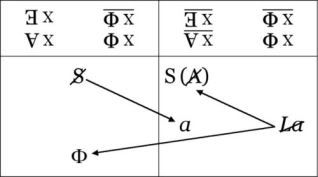
Similarly to the earlier accounts of the sexed subject, the phallus remains the pivot of the later Lacanian account of sexual difference. Lacan’s ‘Graph of Sexuation’ represents sexed identity in relation to the phallic function (S20: 79).

The phallic function is ‘the function that institutes lack, that is, the alienating function of language’ (Fink 1995: 103).

A relation to the phallus structures the masculine and feminine positions, which the formulae of sexuation represent (S20: 79– 80). Because it turns on the phallic function (S20: 59), ‘there is no such thing as a sexual relationship’ (S20: 12).For this reason, a relation between the sexes is an impossibility.

Lacan claims that the ‘male way’ of jouissance produces the non-relation between the sexes (S20: 56– 57). The phallic function produces the jouissance of the masculine subject, the enjoyment of the (phallic) organ on which ‘all’ turns.

Lacan argues that the phallic function inscribes the male subject ‘man as whole’ or ‘as all’ (l’homme comme tout) (S20: 79).

Joan Copjec describes that inscription as producing ‘a universe of men’, a masculine universal (1994: 235).

The masculine subject claims to be a man who is whole and all, a master of himself who ‘[b]y denying the trauma of primary Castration . . . unconsciously perpetuates the suppression of the person’s own division and the belief in her or his autonomy’ (Ragland-Sullivan 1987: 305).

The masculine claim rests on the exception of castration – such that he defines his universality in relation to an other without the phallus. The masculine subject represents his ontological lack as the castration of the feminine other.

That other position of the subject is that of  — a fantasy that affirms that the masculine subject has the phallus.

In this fantasy, desires the phallus, confirming that he has it. If the whole of the sexual relation is a fantasy, it is a masculine fantasy of as the cause of his desire (S20: 131). The cause of his desire is the objet a – the originary missing object that can never be found (S20: 86).

Zizek identifies that missing object as the Mother-Thing on which masculine fantasy turns (1989: 119). For the masculine subject, the feminine represents a fantasy object that can answer his desire for universality and completeness: she confirms that he does not suffer castration.

In its relation to the masculine subject, the feminine is a fantasy of a castrated other that confirms that she is castrated and he is not. The operation of the phallic function produces this fantasy.

For this reason, Lacan argues that does not exist. She exists only as a fantasy of the masculine subject, formed in his phallic jouissance and in his desire (86).

No woman can fulfil that fantasy. In this way, The fantasy Woman does not exist in the real, because no woman could enact the fantasy that he substitutes for her. Lacan points out in his earlier work on feminine masquerade that women may attempt to fulfil that fantasy (É: 321). However, while a woman may attempt to play out the masculine fantasy, in doing so she does not exist as other than in and through fantasy.

Lacan indicates the impossibility of by his bar through the definite article ‘The’. When interviewed in 1973, Lacan formulates the impossibility of ‘Woman’ as ‘The Woman does not exist’ (1974: 38). In Encore, Lacan makes it clear that, by that formulation, he does not mean that women do not exist but that the masculine fantasy of is an impossibility (S20: 72– 73).

If Lacan’s later account of the sexuated subject went no further than this description of masculine and feminine subjects, then it would only be a more elaborated version of the classical Lacanian theory of sexuation. As such, the phallus would still function as a transcendental guarantee of subjectivity and the Symbolic order. Such an account would therefore remain vulnerable not only to the feminist objection of androcentrism, but also to the compelling deconstructionist critique of ‘phallogocentrism’ (Derrida 1980).

However, in Encore, Lacan confronts the question of ‘What does woman want?’, which leads to a reworking of his theory of the female subject. In Encore, Lacan describes how ‘what I am working on this year is what Freud expressly left aside: Was will das Weib? “What does woman want?”’ (S20: 80). Lacan responds to that question with some of his most misogynist statements. He suggests that women tell nothing of their body or their pleasure, and that in fact they know nothing of their bodies or their pleasures (S20: 74– 75). Ultimately, Lacan reduces this mystical unknown Other to the unknowable maternal Thing (S20: 99). The question of what do women want implies a desire to know women, insofar as Lacan wants to know what women want. What is in question is Lacan’s knowledge of women. However, what Lacan puts into question is what women themselves know. His answer? Nothing. What emerges in Lacan’s discussion of what women want is a succession of gestures of rhetorical mastery, which understand this unknown object as ignorant of itself, and finally as unknowable. The drive to master that object is evident in Lacan’s claimed status of Knowing Master: ‘[i]t’s just that they don’t know what they’re saying – that’s the whole difference between them and me’ (S20: 73). However, these gestures of mastery are at play within the same text in which the ‘truth’ of women is in excess of a phallic regime, and constantly threatens to breach its symbolic logic.

The question of what women want opens the way for Lacan’s conception of the female subject as ‘not all’ (pas toute). In Encore, the position of the female subject is not rendered as nothing, but as not all of the phallus: ‘I said “of woman”, whereas in fact woman does not exist, woman is not whole (pas toute)’ (S20: 7).  (87)

In this formulation, the not all of the female subject is a not all of the phallic function. Lacan argues that ‘when any speaking being whatsoever situates itself under the banner “women”, it is on the basis of the following – that it grounds itself as being not-whole in situating itself in the phallic function’ (S20: 72). If the exception of castration defines ‘all’ of the masculine position (S20: 79), then the position of the female subject is that of an exception.

The masculine rests on the exception of feminine (castration). It rests on her being other than the phallic all. With this exception, the phallus cannot be posited as a universal and so cannot define all, because it has the status of a universal that rests on a non-universal.

Reading the Graph of Sexuation in Encore from the side of the masculine subject positions the female subject as an exception to the phallic signifier and hence as a signification of its limit. The phallus does not define her sexed subjectivity, because she comes to be a sexed subject through normative identifications with a member of the opposite sex.

It does not define her body, for the phallus does not symbolize her body (S3: 176). It does not represent her sexuality, since her jouissance is not a phallic jouissance (S20: 74). Lacan argues that ‘[a] woman can but be excluded by the nature of things, which is the nature of words and it must be said that if there is something that women complain about enough for the time being, that’s it’ (S20: 73).

To be a woman is not to be excluded from language. For Lacan, ‘[i]t’s not because she is not wholly in the phallic function that she is not there at all. She is there in full (à plein). But there is something more (en plus)’ (S20: 74). The paradox of the female subject is that she is within the phallic law of the signifier and yet ‘there is something more’.

The not all of the female subject should therefore be understood as the failure of the law of the signifier to represent her sexed subjectivity. The not all of the female subject is constituted in its failure to represent her subjectivity as other than phallic.

Her position of ‘Other’ is then a position of being other than the phallic subject. Therefore, the phallic signifier does not define the female subject. The not all is not that which is Other to the phallus, but that which it does not define. The Lacanian account of the position of the female subject is the failure of the symbolic to represent that subjectivity.

The Graph of Sexuation should therefore be read as a Graph of Male Sexuation and of the operation of masculine subjectivity. It does not describe the female subject other than in terms of the phallic function. For this reason, Lacan’s Graph can only represent the female subject as not defined by the law of the signifier.

In this later model of sexuation, the phallus only guarantees a masculine subject and symbolic order. The subjective and symbolic structures that it supports are therefore incomplete – there is always ‘something more’, such that the phallic order always produces an excess to itself. The phallus fails to effect closure of what otherwise appears to be a transcendental Symbolic order. For this reason, the not all provides a means to reconceive the female subject. (88)
campbell sexuation and the later lacan

Campbell, Kirsten. Jacques Lacan and Feminist Epistemology. Florence, KY, USA: Routledge, 2004. p 84.

… a feminist theory of knowledge that insists that the knower is sexed cannot then argue that the feminist knower does not have a sex. To do so is to reinstitute the universal knowing subject which feminist epistemology compellingly critiques.

The relation between the female subject and feminist knower therefore remains a crucial issue for feminist theories of knowledge. However, existing theories consider this issue in terms of foundational concepts of knower that fix it in already given terms. These theories begin their analysis with a concept of the knower that substantiates it as a sexed knower or as a political subject. This approach mires feminist epistemology in a series of circular debates concerning female/feminist subjects, which oscillate between arguments for and against which subject can serve as the better foundation for feminist knowledges. However, these debates do not actually put those foundational terms into question, and fail to consider the production of those subjects. They assume a given sexual identity (the female knower) and a given political identity (the feminist knower) so that these models do not explain the constitution of the feminist knower. Rather than assuming the prior existence of sexed knower or the political subject, we need to explain their formation. Moreover, we need to explain the relationship between these subjects. To evade the circularity of existing debates, I begin with an analysis of the relation between the formation of the sexed female subject, and the constitution of the knower as feminist subject.

Reading femininity How do we become sexed subjects?

Butler argues that ‘psychoanalysis has a crucial role to play in any theory of the subject’ (2000b: 140). Feminists theorizing subjectivity have predominantly read Lacanian theory as and for an account of the constitution of ‘femininity’. Those engagements with Lacan’s work focus upon his account of the operation of the phallic signifier in relation to the ‘feminine’ subject and sexuality, particularly upon the theory of sexual difference presented in Alan Sheridan’s translation of Écrits.

In this classical Lacanian theory, sexed subjectivity is assumed in relation to the phallic signifier. Masculine subjects are defined by having the phallus and feminine subjects by being the phallus (É: 320). When subjectivity is assumed in the Symbolic order, the masculine or feminine subject is sexually differentiated in its relation to the phallus. In this account, the speaking subject is always a sexed subject defined by the phallic signifier of the Symbolic order, whether it is the masculine subject that has the phallus or the feminine subject that is the phallus. For both sexes, sexuation pivots on the phallus.

Two readings dominate the anglophone feminist reading of the classical Lacanian theory of femininity. The first response, which Nancy Fraser (1992) exemplifies, refuses Lacan’s account as hopelessly and irrevocably phallocentric. The second response, which Ellie Ragland-Sullivan (1987) exemplifies, is a sympathetic interpretation of Lacanian theory that argues that it provides a compelling description of the difficulty of phallic femininity. However, these debates continually return to the problem of sexual difference that constructs femininity as either phallic or Other to the phallus, thereby defining femininity in relation to the phallus.

Moreover, neither of these readings offers a theory of the female/feminist knower because they do not unpack the relationship between these two identities. Such a theory requires a closer examination of the formation of ‘feminine’ subjectivity. It cannot reduce the feminist knower to either her ‘femininity’ or her ‘sexuality’, because it needs to address her political as well as subjective formation. In other words, it must address the distinction ‘between different notions of political identity – between the idea of a political identity for feminism (what women require) and that of a feminine identity for women (what women are or should be)’ (Rose 1986: 103).

How then is it possible to provide a psychoanalytic account of these two identities that is ‘beyond the phallus’? One way is to explore another reading of Lacan.

The feminist reception of Lacan has been based on the ‘classical’ Lacanian account of the sexed subject presented in Écrits, rather than his later seminars of the 1970s. The focus of Anglo-American feminist theory upon Écrits may be attributable to the delay in the publication and translation of Lacan’s later work on femininity, in particular his seminar Encore (1972– 1973) (S20).

Encore was not published until 1975 and, with the exception of two chapters that Jacqueline Rose translates in Feminine Sexuality (1982), remained untranslated until 1998. Lacan’s later work proposes a more complex account of the production of the female subject that avoids the phallocentric circularity of his classical theory of sexed subjectivity. In the next section, I examine the later Lacanian concept of the sexed subject in Encore, developing and redeploying it as a feminist theory of the formation of the female subject and its ‘feminine’ sexuation.  (85)

campbell discourse of analyst pt 2

Campbell, Kirsten.Jacques Lacan and Feminist Epistemology. Florence, KY, USA: Routledge, 2004. p 81.

Analytic knowledge/feminist knowledge

In analytic discourse, the analysand as knowing subject takes up the position of the barred subject – the subject of the unconscious. The analysand acknowledges the pain and psychic cost of entering the Symbolic order because he or she articulates the lack that all speaking subjects suffer. To know this truth is to know the lack of castration (S17: 58). The love of truth enables the analysand to know ‘this weakness’, to recognize the failure and limits of its knowledge.

Refusing the comforts of the fantasy of a secure and securing identity, the analysand recognizes its split and contradictory self.

In her description of situated feminist knowledges, Donna Haraway argues that feminist epistemologies should privilege the notion of the knower as ‘split and contradictory self’. Haraway contends that ‘[s]plitting, not being, is the privileged image for feminist epistemologies. . . . The knowing self is partial in all its guises, never finished, whole, simply there and original; it is always constructed and stitched together imperfectly’ (1991: 193).

This conception of the knower acknowledges her production. The knower recognizes herself as a speaking subject and so her formation in symbolic and social fields. In this position, the knowing subject critically articulates existing orders of representation, and the cost of entering those symbolic economies. By reinscribing that cost into the order of representation, she refuses the position of Master in her acknowledgement of her temporality, disunity and division.

However, the aim of psychoanalysis is to enable the analysand to accept its lack-in-being. Through analysis, the analysand articulates the truth of subjectivity: ontological lack. The analysand consents to that symbolic debt paid by the speaking subject because it accepts the castration that signifies its division and incompleteness.

The analysand represents that loss as castration, which is rendered symbolically through a relation to the phallic signifier.

In this way, the analysand sutures its fundamental lack-in-being through the signification of ontological lack as the sexual difference of castration. By contrast, the feminist knowing subject articulates that symbolic debt but genders, politicizes and refuses it.

While, pace Zizek, subjects may exchange common lack in the Symbolic order, feminism insists that women bear it in their signification of the ontological loss of all subjects (81).

The ‘Woman’ functions as the sign of phallic lack because she comes symbolically to embody ontological (all) lack.

In this way, the female subject pays the debt of the speaking subject in the Symbolic order. In Lacanian terms, the symbolic price that is paid for becoming a subject is the giving up of the mother, and the lack-of-being of all subjects. In feminist terms, women pay this price.

Ragland-Sullivan argues that ‘female depression, passive aggression, and disturbed children is simply too great a price to pay’, and her list is far from being a complete enumeration of the cost of such a social order (1987: 301). However, a feminist subject refuses that cost for herself, other women and other subjects. Unlike the analysand, the feminist knowing subject does not articulate the truth of the Symbolic order simply in order to come to terms with herself. Her knowing position emerges from a relation not only to herself but also to others. In this way, a political relation to others constitutes her position. With that political relation, the position of the knowing subject shifts from psychoanalysis to feminism.

In psychoanalytic discourse, the analyst stands as the cause of the discourse (in the place of the a). The analyst is the silent partner of the analytic process who functions as the addressee of the analysand’s demand for love and knowledge. This address to another introduces the intersubjective dimension of analytic practice. Without the analyst, the analytic process could not unfold because it is through the transferential operation of demand and identification that the analysand produces a hysterical discourse that introduces his or her desire. In this way, the analysand’s relation to an other – the analyst – as a relation to self structures the analytic process.

Unlike psychoanalytic discourse, a political relation to others structures feminism. The feminist subject addresses her desire to know and to love to others, constituting the intersubjective dimension of that address. Other women provide her discourse with its cause. This political address to others distinguishes her position from that of the analysand. Her relation to others, rather than the analysand’s relation to self, produces her speaking position. In her political relation to her others, the knowing subject addresses her desire for knowledge to other women. This address inflects her knowledge, structuring it as an intersubjective negotiation of political principles.

Feminist knowledge seeks to found its act of knowing in the political. Lacan argues that it is not by accident that women inaugurate the revolutionary discourse of psychoanalysis (S17: 62). The analysand Anna O., the subject of the first psychoanalytic case history, named psychoanalysis the ‘talking cure’ (Freud and Breuer 1895: 83). The case of ‘Anna O.’ can be read as an account of the hysterical analysand, or it can be reread through Anna’s own name, Bertha Pappenheim, who was a historical subject with speech, agency and knowledge. In that subjective position, the analysand Anna O. can be recast as the feminist Bertha Pappenheim. Anna O. undoubtedly suffered as a hysteric; it was the hysterical symptom that drove her to her two doctors, Breuer and Freud (82).

However, she also has a speaking position that is not that of the hysterical analysand. Throughout her life, Bertha Pappenheim ‘was a pioneer in German social work as well as a leader in feminist and Jewish women’s organisations’ (Decker 1992: 136). Hannah Decker points out that, unlike Dora, ‘an avocation-turned-career had been the salvation of “Anna O.” ’ (1992: 108).

Bertha Pappenheim was truly able to love and to work. We can see in her life the movement from hysteria, silence and depression to ethical and political engagement, a shift from passive symptom to feminist practice.

If we consider the feminist position as analogous to that of the analysand, and the Discourse of the Hysteric as leading to the Discourse of the Analyst, then it is possible to see the relation between the ‘protofeminism’ of hysteria and feminist discourse (Forrester and Appignanesi 1993: 68).

However, while both have discursive structures that originate in the question of sexual difference and unsatisfied demand, what distinguishes the two is the shift from symptom to signifying practice. One discourse produces a symptom; the other produces a political knowledge. This shift is evident in Anna O.’s life, shifting her position of hysterical analysand to that of the feminist, and from analytic discourse to feminist discourse (83).

campbell discourse of analyst

Campbell, Kirsten. Jacques Lacan and Feminist Epistemology. Florence, KY, USA: Routledge, 2004. p 79.

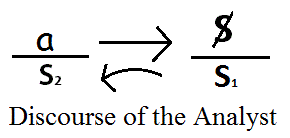
For Lacan, The Discourse of the Analyst is revolutionary because it articulates the truth of the (unconscious) subject.  … psychoanalytic knowledge is a process of symbolizataion which acknowledges the lack of the subject and which recognizes its subjection to the signifier.  The  knowledge of the Analyst is savoir, symbolic knowledge. Psychoanalysis produces knowledge (savoir), rather than learninig (connaissance) or representation (représentation) (S17 32). The Discourse of the Analyst articulates savoir, knowledge of the laws of the Symbolic order. 79

For Lacan, the Discourse of the Analyst stands in opposition to that of the Master (S17: 99– 100). It is revolutionary because it operates against the closure and rigidity of discourse of the Master’s discourse, since ‘it is opposed to all will of mastery, engaging in a continuous flight from meaning and closure, in a displacement that never ceases’ (Bracher 1994: 124). In psychoanalysis, the analysand traverses the imaginary objet a, the fantasy which sustains its identity and which fixes the structures of its discourse in repetition. It comes to recognize ‘that the Other is lacking, that the object is separated from the Other, that the Other does not have a final answer’ (Adams 1996: 79). The analysand recognizes the lack in the Other – the symbolic a, its excluded element. The reinscription of the symbolic a into the analysand’s signifying chain shifts the fixed structure of their discourse. Because the Discourse of the Master excludes that a, the inscription of that element disrupts it.(79)

The a is the cause of psychoanalytic knowledge. The reinscription of the excluded a permits the analysand to reconfigure its structure of signifiers, and, with that reorganization of signification, to produce new meaning and knowledge. In Lacan’s account, the knowing subject of psychoanalysis is an analyst and an analysand, since analytic discourse produces both. Yet the positions of analyst and analysand are not the same, either in Lacan’s descriptions of their analytic roles or in their structural positions.

The schema of psychoanalytic discourse does not describe the speaking position of the subject that it produces (the analysand), but that of the transferential figure that supports the production of that subject (the analyst). Lacan’s schema describes the production of one subject, the analysand, not two. Logically, the analyst and analysand cannot occupy the same position, because they represent different speaking positions. Otherwise, it would not be possible to exclude ‘wild analysis’ from the psychoanalytic field, as it would be the figure of the analyst, and not the structural operation of psychoanalytic practice, which produced analytic effects upon the discourse of the analysand.

Lacan’s schema thus describes the operation of analytic discourse and the production of the analysand, rather than that of the analyst. In contrast to the analysand, the analyst occupies an imaginary position of mastery. The analyst is structurally posited as the subject supposed to know (le sujet supposé savoir) (S11: 232).

The analyst functions as the supposed subject of knowledge because the analysand posits the analyst as the Master who can answer the question of his desire (S11: 234). Lacan notes that if the Discourse of the Analyst opposes that of the Master, it is also its counterpoint (S17: 99). It is the analyst who is the master (S17: 38). The Analyst, both structurally and institutionally, is in the position of the Master. However, while the analyst may have knowledge on his side, he must refuse this position of the Master.

If the psychoanalyst understands him or herself as the master Clinician and Theoretician – the one who is able to ‘know’ the desire of the analysand and who is able to intervene in the analysand’s knowledge in the act of interpretation – then he or she insists upon being the knowing Master, offering their interpretation as knowledge and that knowledge as complete, whole and comprehensive. It is this desire and enjoyment of knowledge that the analyst must refuse in order for the analysand to come to their own truth (Nobus 2000: 95).

According to Lacan, the analyst must institute the analysand as master of their speech (S17: 59). For these reasons, we should understand Lacan’s schema not as describing the knowledge of the analyst, but that of the analysand. It is the analysand who must refuse a relation of mastery to knowledge, in order that he or she can recognize the truth of their unconscious desires. This relation to knowledge is a refusal of the imaginary position of the Master, with his dreams of unity and omnipotence. The discourse of the analysand provides a means of conceiving of a knowledge that does not invoke mastery. (80)

If feminist epistemology is to deploy the theory of analytic discourse, that theory needs to be understood as a description of the knowledge of the analysand rather than the mastery of the Analyst. This reformulation of Lacan’s theory retains his concept of the structure of analytic discourse but emphasizes the position of the knowing subject which that discourse produces. This reconfiguration shifts analytic knowledge from being a Discourse of the Master Analyst to being the Discourse of the Analysand. (81)