objet a death drive negativity

But there is a paradox which complicates this critique of Hegel: is not absolute negativity, this central notion of Hegelian thought, precisely a philosophical figure of what Freud called the “death drive”? Insofar as ― following Lacan ― the core of Kant’s thought can be defined as the “critique of pure desire,” is not the passage from Kant to Hegel then precisely the passage from desire to drive? The very concluding lines of Hegel’s Encyclopedia (on the Idea which enjoys repeatedly transversing its circle) point in this direction, suggesting that the answer to the standard critical question ― “Why does the dialectical process always go on? Why does dialectical mediation always continue its work?” ― is precisely the eppur si muove of the pure drive. 495

This structure of negativity also accounts for the quasi-“automatic” character of the dialectical process, for the common reproach concerning its “mechanical” character: belying all the assurances that dialectics is open to the true life of reality, the Hegelian dialectic is like a processing machine which indifferently swallows up and processes all possible contents, from nature to history, from politics to art, delivering them packaged in the same triadic form.  492

What further complicates the scheme are objects and signifiers which somehow overlap with their own lack: for Lacan, the phallus is itself the signifier of castration (this introduces all the paradoxes of the signifier of the lack of signifier, of how the lack of a signifier is itself “remarked” in a signifier of this lack), not to mention l’objet petit a,;the object-cause of desire which is nothing but the embodiment of lack, its place-holder. The relationship between object and lack is here turned around: far from lack being reducible to the lack of an object, the object itself is a spectral positivization of a lack. And one has to extrapolate this mechanism into the very (pre-)ontological foundation of all being: the primordial gesture of creation is not that of an excessive giving, of assertion, but a negative gesture of withdrawal, of subtracting, which alone opens up the space for the creation of positive entities. This is how “there is something rather than nothing”: in order to arrive at something, one has to subtract from nothing its nothing(ness) itself, that is, one has to posit the primordial pre-ontological Abyss “as such,” as nothing, so that, in contrast to (or against the background of) nothing, something can appear.

What precedes Nothing is less than nothing, the pre-ontological multiplicity whose names range from Democritus’s den to Lacan’s objet a,. The space of this pre-ontological multiplicity is not between Nothing and Something (more than nothing but less than something); den is, on the contrary, more than Something but less than Nothing. The relationship between these three basic ontological terms―Nothing, Something, den―thus takes the form of a paradoxical circle, like Escher’s famous drawing of the interconnected waterfalls forming a circular perpetuum mobile: Something is more than Nothing, den is more than Something (the objet a is in excess with regard to the consistency of Something, the surplus-element which sticks out), and Nothing is more than den (which is “less than nothing”). 495

The underlying problem here is to determine which of the Freudian negations is the primordial one―which one opens up the space for all the others. From the Lacanian perspective, the most obvious candidate may appear to be the notorious “symbolic castration,” the loss which opens up and sustains the space of symbolization―recall, in relation to the Name-of-the-Father as the bearer of symbolic castration, how Lacan, as we have seen, plays on the French homophony between le Nom-du-Père and le Non-du-Père. But it seems more productive to follow a more radical path of thinking beyond the father (père) to what is even worse (pire). Again, the most obvious candidate for this “worse” is the (death) drive, a kind of Freudian correlate of what Schelling called the primordial “contraction,” an obstinate repetitive fixation on a contingent object which subtracts the subject from its direct immersion in reality. 495

180 gaze

Slavoj, Žižek, “Neighbors and Other Monsters: A Plea for Ethical Violence.” The Neighbor: Three Inquiries in Political Theology. Slavoj Žižek, Eric L. Santner, and Kenneth Reinhard. 2006. 134-190.

This is how today’s ideology functions: a successful businessman who, deep in himself, thinks that his economic activity is just a game in which he participates, while his “true Self” expresses itself in spiritual meditation that he regularly practices, is not aware that this “true Self” is a mere delusion enabling him to successfully participate in the economic activity. He is like a Jew who knows there is no God, but nonetheless obeys the kosher rules.  179

Furthermore, is Lacan’s point not also that I am only as seen through a blind spot in what I see, through the stain in the field of the visible which is strictly correlative to the subject’s existence? Is this not what Lacan’s formula $<> a (the “impossible” correlation between the void of subjectivity and the stain of the object) amounts to? 180

Is this not also the anti-panopticon lesson of the recent trend of “-cam” Web sites, which realize the logic of “The Truman Show”? (On these sites, we are able to follow continuously some event or place: the life of a person in his or her apartment, the view on a street, etc.) Do they not display an urgent need for the fantasmatic Other’s Gaze serving as the guarantee of the subject’s being: “I exist only insofar as I am looked at all the time”?

Similar to this is the phenomenon, noted by Claude Lefort, of the TV set that is all the time turned on, even when no one effectively watches it. It serves as the minimum guarantee of the existence of a social link.

Thus, the contemporary situation is the tragicomic reversal of the Benthamic-Orwellian notion of the panopticon society in which we are (potentially) observed all the time and have no place to hide from the omnipresent gaze of the Power.

Today, anxiety arises from the prospect of not being exposed to the Other’s gaze all the time, so that the subject needs the camera’s gaze as a kind of ontological guarantee of his or her being.

And, last but not least, is the only position outside illusion really the impossible position of a totally desubjectivized self-exposure?

Does Wajcman not confound here two quite distinct experiences: the psychotic exposure to the all-seeing gaze of the Other and the experience that nothing in truth looks back at me because “there is no big Other,” because the Other is in itself inconsistent, lacking?

In Lacan’s perspective, it is wrong to say that the subject exists only insofar as it is exempted from the Other’s gaze; rather, the subject’s ($) existence is correlative to the lack in the Other, to the fact that the big Other itself is barred.

There is a subject only insofar as the Other is itself traversed by the bar of an inherent impossibility.

Here, we should bear in mind that l’objet petit a signals and simultaneously fills in the lack in the Other, so that saying that the subject is correlative to l’objet petit a equals saying that it is correlative to the lack in the Other.

Far from assuming this lack, the psychotic persists in the illusion of a consistent (noncastrated) Other who is not just a fiction, in other words, who is not just “my own gaze in the field of the Other.” 180-81

universal bartleby

Daly, Glyn. “Politics of the political: psychoanalytic theory and the Left(s).” Journal of Political Ideologies (October 2009), 14(3), 279–300

In this sense our autonomy is at once more precarious and more radical. Today we are bombarded with all sorts of choices (consumption, lifestyles, customization of computers, cell-phones, iPods, MySpace, Facebook, etc.) that identify us as ‘free individuals’. Yet we also possess the capacity to refuse the field of choosing and freedom; to reject the very modality of making changes to our lives and to break with the terms and conditions that are implicit in the latter.

Along the lines of the famous monologue from Trainspotting, we are in a position in which we can choose ‘not to choose life’.  This involves a more radical ethical freedom in which one can assume a certain position of ‘being impossible’: i.e. a position of refusing the terms of socio-political engagement and identitarian inscription; of refusing the terms of existing possibility.

In other words, what is needed is the development of forms of political subjectivity that do not embrace the conventions and protocol of existing hegemonic engagement.

Both Žižek’s Bartleybyan politics and Badiou’s politics of subtraction—i.e. the effective withdrawal from official political/participatory structures in such a way that it undermines simultaneously their symbolic purchase and constitutive logics—point in a different direction. Thus it is not so much a question of siding with the underdog in the game of existing democracy, but rather rejecting the very terms of the latter. In other words, it involves a critique of how democracy, through its mythologization of the idea that all underdogs are potential winners provided they play the game effectively, can become drawn into, and start to function on behalf of, the dominant politico-economic forces.

Second, and related, the political focus is placed not so much on marginalized groups/identities in general but rather on those whose position (or perhaps, more accurately, lack of position) embody the symptomal truths of our age — i.e. those whose situation appears naturalized as irresolvable, inert and beyond any feasible or direct solution.

These are the displaced and the destitute, the poverty-trapped, the vagrants, homeless and slum-dwellers. They are the radically excluded who are constitutively excessive, who cannot be accommodated and who present a kind of dysfunctional resistance that is nevertheless necessary to the functioning of the whole. They are the nameless ‘unfortunate’ who are passed over, treated with gentrified deliquescence and kept at a non-threatening distance through the ‘ethical’ concerns of charity and aid. What is needed is a politics that strives to overcome this distancing and to confront directly the primordial repressions that are central to the operation of capitalism as a global economic and socio-cultural system.

It is against this background that distinct approaches to the Lacanian traversing the fantasy emerge.

In radical democratic thought, the lesson of the traversal is one that tends to imply that we should assume a proper distancing in order to avoid getting caught up in the ‘cataclysmic desire of fantasy’. The problem therefore is one of adopting the right predisposition: to detach ourselves from objet (a) and to thereby affect a condition where we can ‘really enjoy our partial enjoyment’.

– Radical politics should consequently restrict itself to revolutionary-reform rather than revolution as such. In general, political engagement should not be excessive but should avoid substantial projects of overhaul in favour of the finite, provisional and pragmatic.

– Yet it is precisely in these terms that radical democracy appears to remain stuck in the register of desire: real emancipation is postponed eternally; we should be enthusiastic in the chase but never believe that we hold it in our grasp. This is a politics of desire, of infinite deferral. It becomes effectively ‘a constant search for something else… (with) no specifiable object that is capable of satisfying it’.

Radical democratic desire, in this sense, is sustained by not having the ‘object’ of democracy. Democracy is always finally elsewhere. In this context, political subjectivity becomes one of establishing a kind of homoeostatic predisposition or proper distancing: one avoids excess in order to avoid disappointment in never attaining the real Thing.

Yet for Žižek traversing the fantasy does not mean to proceed to a non-fantasmatic or even a post-fantasmatic universe defined simply in terms of a containment and/or domestication of excess (this in itself would be something of a fantasy). There is no transcendence of the fantasmatic (the structuring of desire) as such.

Traversal in this sense is the opposite of exorcism. The point is not simply to expel excess but rather to inflect/assume the latter: to take responsibility for the inherency of excess that is integral to human drive.

Traversal, in this sense, puts one in touch with the object of drive — the hole presupposed by all demand and around which Being revolves.

To put it in the terms of Star Wars, the problem is not to bring balance to the force but to recognize that the force itself is the result of a certain (tilted) excess — a Real intervention/structuringand that it is only through contingence with the latter that alternative possibilities (a different kind of force, or indeed political) can be shown.

The freedom which is gained here, which can be called post-fantasmatic, is thus not one of overcoming alienation but precisely a freedom through alienation in its most radical sense: i.e. the acceptance of the fact that imbalance/excess is our most basic condition towards which we cannot exercise any pre-given partiality or disposition.

Ž’s Lacanian radicalism can be thought of as something that tries to break out of the endless cycle of desire and to move towards a certain logic of love (involving both desire and drive).

While this may sound hopelessly sentimental, we should recall that in Lacan love is distinguished from desire in coming to terms with the non-ideal and the non-all and with accepting precisely the lack in the Other. Love is its own excess, an uncompromising ‘violence’ that goes beyond mere antagonism (i.e. it does not externalize blockage/failure but accepts this as the very condition of being). Through love one finds, and indeed makes, the universal-divine in all its contingent fragility and failing.

Perhaps a more appropriate way of thinking about this shift is in terms of opening the possibility of a politics of excess; a politics that effectively chooses ‘something else’ — i.e. something other than the current mode of choosing.

It refuses to embrace today’s alibis where social ‘problems’ are displaced onto charities, ethical committees, focus groups and all the institutions of political deferral up to and including existing democracy. In this way it places ‘us’ in the scene and refuses not to take responsibility for the contemporary totality and its symptoms. Such a politics is distinguished from radical democratic hegemony in that it does not give up on the real thing or view concrete projects as merely the ersatz fillers of the empty place.

The point is rather to see how this very division between the universal (as empty place) and particular (contingent filler) is inherent to the latter.

In other words, the universal-divine is manifested … through substantial engagement; through finding and making the universal in the particular and through ‘excessive’ commitment, without excuses or dependency on the Other.   It is a politics that affirms that the only way out is the way in.

object-cause of desire and object loss of drive

Taken from Žižek’s criticism of Lacanian Left by Yannis Stavrakakis.  Glynn Daly compares the politics of Žižek and Essex Lacanians

Modern society is defined by the lack of ultimate transcendent guarantee, or, in libidinal terms, of total jouissance. There are three main ways to cope with this negativity: utopian, democratic, and post-democratic.

The first one (totalitarianisms, fundamentalisms) tries to reoccupy the ground of absolute jouissance by attaining a utopian society of harmonious society which eliminates negativity.

The second, democratic, one enacts a political equivalent of “traversing the fantasy”: it institutionalizes the lack itself by creating the space for political antagonisms.

The third one, consumerist post-democracy, tries to neutralize negativity by transforming politics into apolitical administration: individuals pursue their consumerist fantasies in the space regulated by expert social administration.

Today, when democracy is gradually evolving into consumerist post-democracy, one should insist that democratic potentials are not exhausted – “democracy as an unfinished project” could have been Stavrakakis’ motto here. The key to the resuscitation of this democratic potential is to re-mobilize enjoyment: “What is needed, in other words, is an enjoyable democratic ethics of the political.”(269) The key question here is, of course, WHAT KIND OF enjoyment:

Libidinal investment and the mobilization of jouissance are the necessary prerequisite for any sustainable identification (from nationalism to consumerism). This also applies to the radical democratic ethics of the political. But the type of investment involved has still to be decided. (282)

Stavrakakis’ solution is: neither the phallic enjoyment of Power nor the utopia of the incestuous full enjoyment, but a non-phallic (non-all) partial enjoyment. In the last pages of his book, trying to demonstrate how “democratic subjectivity is capable of inspiring high passions”(278), Stavrakakis refers to the Lacanian other jouissance, “a jouissance beyond accumulation, domination and fantasy, an enjoyment of the not-all or not-whole”(279). How do we achieve this jouissance? By way of accomplishing “the sacrifice of the fantasmatic objet (a)” which can only “make this other jouissance attainable” (279):

The central task in psychoanalysis – and politics – is to detach the objet (a) from the signifier of the lack in the Other /…/, to detach (anti-democratic and post-democratic) fantasy from the democratic institutionalization of lack, making possible the access to a partial enjoyment beyond fantasy. /…/ Only thus shall we be able to really enjoy our partial enjoyment, without subordinating it to the cataclysmic desire of fantasy. Beyond its dialectics of disavowal, this is the concrete challenge the Lacanian Left addresses to us. (280-282)

The underlying idea is breathtakingly simplistic: in total contradiction to Lacan, Stavrakakis reduces objet (a) to its role in fantasy – objet (a) is that excessive X which magically transforms the partial objects which occupy the place of the lack in the Other into the utopian promise of the impossible fullness of jouissance.

What Stavrakakis proposes is thus the vision of a society in which desire functions without objet (a), without the destabilizing excess which transforms it into a “cataclysmic desire of fantasy” – as Stavrakakis puts it in a symptomatically tautological way, we should learn to “really enjoy our partial enjoyment.”

For Lacan, on the contrary, objet (a) is a(nother) name for the Freudian “partial object,” which is why it cannot be reduced to its role in fantasy which sustains desire; it is for this reason that, as Lacan emphasizes, one should distinguish its role in desire and in drive.

Following Jacques-Alain Miller, a distinction has to be introduced here between two types of lack, the lack proper and hole: lack is spatial, designating a void WITHIN a space, while hole is more radical, it designates the point at which this spatial order itself breaks down (as in the “black hole” in physics).

Therein resides the difference between desire and drive: desire is grounded in its constitutive lack, while drive circulates around a hole, a gap in the order of being.

In other words, the circular movement of drive obeys the weird logic of the curved space in which the shortest distance between the two points is not a straight line, but a curve: drive “knows” that the shortest way to attain its aim is to circulate around its goal-object. (One should bear in mind here Lacan’s well-known distinction between the aim and the goal of drive: while the goal is the object around which drive circulates, its (true) aim is the endless continuation of this circulation as such.)

Miller also proposed a Benjaminian distinction between “constituted anxiety” and “constituent anxiety,” which is crucial with regard to the shift from desire to drive: while the first one designates the standard notion of the terrifying and fascinating abyss of anxiety which haunts us, its infernal circle which threatens to draws us in, the second one stands for the “pure” confrontation with objet petit a as constituted in its very loss.

Miller is right to emphasize here two features: the difference which separates constituted from constituent anxiety concerns the status of the object with regard to fantasy. In a case of constituted anxiety, the object dwells within the confines of a fantasy, while we only get the constituent anxiety when the subject “traverses the fantasy” and confronts the void, the gap, filled up by the fantasmatic object.

However, clear and convincing as it is, this Miller’s formula misses the true paradox or, rather, ambiguity of objet (a): when he defines objet (a) as the object which overlaps with its loss, which emerges at the very moment of its loss (so that all its fantasmatic incarnations, from breasts to voice and gaze, are metonymic figurations of the void, of nothing), he remains within the horizon of desire – the true object-cause of desire is the void filled in by its fantasmatic incarnations.

While, as Lacan emphasizes, objet (a) is also the object of drive, the relationship is here thoroughly different: although, in both cases, the link between object and loss is crucial, in the case of objet (a) as the object-cause of desire, we have an object which is originally lost, which coincides with its own loss, which emerges as lost,

while, in the case of objet (a) as the object of drive, the “object” IS DIRECTLY THE LOSS ITSELF – in the shift from desire to drive, we pass from the lost object to loss itself as an object.

That is to say, the weird movement called “drive” is not driven by the “impossible” quest for the lost object; it is a push to directly enact the “loss” – the gap, cut, distance – itself.

There is thus a DOUBLE distinction to be drawn here: not only between objet (a) in its fantasmatic and post-fantasmatic status, but also, within this post-fantasmatic domain itself, between the lost object-cause of desire and the object-loss of drive.

The weird thing is that Stavrakakis’ idea of sustaining desire without objet (a) contradicts not only Lacan, but also Laclau, his notion of hegemony: Laclau is on the right track when he emphasizes the necessary role of objet (a) in rendering an ideological edifice operative. In hegemony, a particular empirical object is “elevated to the dignity of the Thing,” it start to function as the stand-in for, the embodiment of, the impossible fullness of Society.

Referring to Joan Copjec, Laclau compares hegemony to the “breast-value” attached to partial objects which stand-in for the incestuous maternal Thing (breast).

Laclau should effectively be criticized here for confounding desire (sustained by fantasy) which drive (one of whose definitions is also “that what remains of desire after its subject traverses the fantasy”): for him, we are condemned to searching for the impossible Fullness.

Drive – in which we directly enjoy lack itself – simply does not enter his horizon.

However, this in no way entails that, in drive, we “really enjoy our partial enjoyment,” without the disturbing excess: for Lacan, lack and excess are strictly correlative, the two sides of the same coin.

Precisely insofar as it circulates around a hole, drive is the name of the excess that pertains to human being, it is the “too-much-ness” of striving which insists beyond life and death (this is why Lacan sometimes even directly identifies drive with objet (a) as surplus-jouissance.)

Ž at EGS 2012 Žižek_Big_Other.mp4

Žižek doesn’t accord much to Lacan’s seminar on Ethics of Psychoanalysis.  He said it ended in a deadlock.   Lacan immediately turned away.  Jean Claude Milner, “Do not give way as to your desire” Lacan says this only once or twice in one lecture.  He never returns to it.  This is because it is not Lacan’s position.  He was trying to work something out and things are more complicated. Continue reading “Ž at EGS 2012 Žižek_Big_Other.mp4”

objet (a)

Schroeder, L. Wall Street’s Bonus Obsession. Cardozo L. Rev. 33   2011-2012  pp. 2308-2356.

quoting Ž

However, what we must avoid at any price is conceiving of this left-over as simply secondary, as if we have first the substantial fullness of the Real and then the process of symbolization which “evacuates” jouissance, yet not entirely, leaving behind isolated remainders, islands of enjoyment, objets petit a. If we succumb to this notion, we lose the paradox of the Lacanian Real: there is no substance of enjoyment without, prior to, the surplus of enjoyment.

The substance is a mirage retroactively invoked by the surplus.

The illusion that pertains to a qua surplus-enjoyment is therefore the very illusion that, behind it, there is the lost substance of jouissance in other words, a qua semblance deceives in a Lacanian way: not because it is a deceitful substitute of the Real, but precisely because it invokes the impression of some substantial Real behind it; it deceives by posing as a shadow of the underlying Real.  [Žižek Tarrying with the Negative 36-37]

Imaginary

Baron, Paula. “Enter the Imaginarium: The Mirror, the Object and the Feminist Project” Australian Feminist Law Journal 43 2011

In terms of individual development, the child is born into the Real, a brief period characterized by a lack of differentiation and therefore a lack of subjectivity. At arond 18 months of age, the child experiences the ‘mirror stage’ which provides entry into the Imaginary.

This mirror stage is the point at which the child recognizes his or her reflection in the mirror. The child’s entry into the Symbolic occurs later, as a result of the Oedipal process. In this latter stage, the intervention of a third party into the mother-child dyad ushers the child into the social world of law and language, the child sacrificing sensual need (the Real) and egotistical demand (the Imaginary) for the laws and values if its culture. This developmental path has been described as the subject’s passage from a ‘Being-in-Itself ‘(the Real) to a ‘Being-for-Itself’ (the Imaginary) to a ‘Being-for-Others’ (the Symbolic).

In Lacanian theory, the Symbolic is the privileged site for overcoming the disabling effects of the Imaginary and the disruptions of the Real.  “What we do as humans is structured by reflected images that lure our desire and reinforce our egos, but we remain grounded in a symbolic network that pervasively supports our speech, ritual and even our perception of the world, and we from time to time come to the edge and touch upon the nameless, the Real that is always there but usually mediated by language.”

The Imaginary is  thus inescapable  and necessary, yet for Lacan, it is  ‘always  trouble’: illusory, deceptive  and  inherently  seductive.  The Imaginary  ‘constantly  exercises  its  seductions  or temptations, inviting one to “fill in”  the unavoidable “gaps” in one’s self and world descriptions or conceptions through recourse to all manner of imaginary fullness’.

We have seen that mirroring is key to the individual’s entry into the Imaginary in Lacanian theory.  The child’s recognition  of her reflection is  at once her first experience of unity and wholeness and a fundamental alienation in her being.

The mirror stage, according to Lacan, gives rise to consciousness, the ego, illusions of coherence, self-sufficiency, unity and the idea of a body:

[In  the mirror stage]  the  child, who experiences  herself as a  fragmented,  incoherent  collection of desires and memories, happens upon an image of herself in a looking glass’ or reflective surface. This image  stimulates the  idea of an entity entirely independent  of others: the  Imago. As the  child grows older, the imago in  turn, becomes invested with all sorts of expectations from without….This primary identification  with the  mirror image  and the consequent imago is  a mistake….because …the subject is necessarily divided, split between the familiar Ego, which posits independence,  and the Id, the locus of unconscious desire.  (Lacan Book III The Psychoses, 1955-56 p. 43)

For Lacan, the ego is nothing in and of itself, but rather a ‘series  of identifications, equivalancies, and oppositions’. As noted in the quote above, there is a split between the chaos and vulnerability of the  individual’s embodied first-person experience and the ideal of the third-person surface perspective. This split can never be reconciled, leading to the individual’s frustration (which is turned upon the self or projected on to others). Because the Imaginary has an inherently  binary logic  (self and other), it functions  to create sameness and ‘a  struggle for recognition that requires the destruction or enslavement of others so as to maintain one’s own identity’.

The Imaginary is thus characterized by rivalry, jealousy, aggression and competition. It is the Symbolic which assures peace by imposing distributive justice: this is mine, that is yours.

The Imaginary in Lacanian theory is inherently narcissistic and isolating: Whereas in the symbolic we experience the power of the social order over us, in the Imaginary.. .we feel isolated within the shell that the ego seems to provide’.

This rise  of the  Imaginary  has  been theorized  by McGowan, following  Zizek, as  a symptom of the  transformation to the so-called  ‘Society  of Enjoyment’. This is  a complex notion that highlights the relationship between the Imaginary and the Symbolic in Lacan’s work. According to Lacan, entry to the  Symbolic takes  place through  the  exercise of the paternal function, sometimes called the Name-of-the-Father. This is the intervention of the third party in the mother-child dyad which, as was noted above, ushers the child into the Symbolic, subjecting his drives to the social order, law and language.

The paternal function was so named because, in Lacan’s time,  this  intervention  was commonly achieved by the  father in  a nuclear family structure, but the function can be successfully achieved by someone (indeed, something) else.

Lacan also theorized that, in the movement to the nuclear family, there was a conflation of the Symbolic father with the reality of the (often wanting) father.  The father was thus conceived as having a dual character: the  ‘good’  father, who prohibited enjoyment; and the  ‘obscene’  father who mandated enjoyment. In McGowan’s view, the transformation to the Society of Enjoyment is the result of the decline of the paternal function, that is, the loss of the ideal, prohibiting father and the concomitant rise  of the primal, obscene fathers.


master signifier jew

Rex Butler basically from his book Žižek Live Theory of which a portion is available here

But what exactly is wrong with the empirical refutation of anti-Semitism? Why do we have the feeling that it does not effectively oppose its logic, and in a way even repeats it (just as earlier we saw the cultural studies-style rejection of competing interpretations of the shark – ‘It is not really like that!’ – far from breaking our fascination with the shark, in fact continuing or even constituting it)?

Why are we always too late with regard to the master-signifier, only able to play its interpretation against the object or the object against its interpretation, when it is the very circularity between them that we should be trying to grasp?

Undoubtedly, Zizek’s most detailed attempt to describe how the master-signifier works with regard to the Jew is the chapter “Does the Subject Have a Cause?” in Metastases of Enjoyment.

As he outlines it there, in a first moment in the construction of anti-Semitic ideology, a series of markers that apparently speak of certain ‘real’ qualities is seen to designate the Jew, or the Jew appears as a signifier summarizing – Zizek’s term is ‘immediating, abbreviating’ – a cluster of supposedly effective properties. Thus:

(1) (avaricious, profiteering, plotting, dirty . . .) is called Jewish.

Then, in a second moment, we reverse this process and ‘explicate’ the Jew with the same series of qualities. Thus:

(2) X is called Jewish because they are (avaricious, profiteering, plotting, dirty . . .).

Finally, we reverse the order again and posit the Jew as what Zizek calls the ‘reflexive abbreviation’ of the entire series. Thus:

(3) X is (avaricious, profiteering, plotting, dirty . . .) because they are Jewish (ME, 48-9).

In this third and final stage, as Zizek says, Jew ‘explicates’ the very preceding series it ‘immediates’ or ‘abbreviates’. In it, ‘abbreviation and explication dialectically coincide’ (ME, 48).

That is, within the discursive space of anti-Semitism, Jews are not simply Jews because they display that set of qualities (profiteering, plotting . . .) previously attributed to them. Rather, they have this set of qualities because they are Jewish.

What is the difference? As Zizek emphasizes, even though stage (3) appears tautological, or seems merely to confirm the circularity between (1) and (2), this is not true at all. For what is produced by this circularity is a certain supplement ‘X’, what is ‘in Jew more than Jew’: Jew not just as master-signifier but as objet (a).

As Zizek says, with stage (3) we are not just thrown back on to our original starting point, for now Jew is ‘no longer a simple abbreviation that designates a series of markers but the name of the hidden ground of this series of markers that act as so many expression-effects of this ground’ (ME, 49).

Jew is not merely a series of qualities, but what these qualities stand in for.

Jew is no longer a series of differences, but different even from itself.

But, again, what exactly is meant by this?

How is the Jew able to move from a series of specific qualities, no matter how diverse or even contradictory, to a master-signifier covering the entire ideological field without exception?

How is it that we are able to pass, to use an analogy with Marx’s analysis of the commodity form that Zizek often plays on, from an expanded to a ‘general’ or even ‘universal’ form of anti-Semitism (ME, 49)?

The first thing to note here is that stages (1) and (2) are not simply symmetrical opposites.

In (1), corresponding perhaps to that first moment of ideological critique we looked at with Jaws, a number of qualities are attributed to the Jew in an apparently immediate, unreflexive way: (profiteering, plotting . . .) is Jew.

In (2), corresponding to that second moment of ideological critique, these same qualities are then attributed to the Jew in a mediated, reflexive fashion: Jew is (profiteering, plotting . . .). In other words, as with the shark in Jaws, we do not so much speak directly about the Jew, but about others’ attempts to speak of the Jew.

Each description before all else seeks to dispute, displace, contest others’ attempts to speak of the Jew. Each description is revealed as a meta-description, an attempt to say what the Jew and all those others have in common.

Each description in (1) is revealed to be an implicit explication in (2). Each attempts to name that difference – that ‘Jew’ – that is left out by others’ attempts to speak of the Jew. Each attempts to be the master-signifier of the others.

And yet – this is how (3) ‘returns’ us to (1); this is how the Jew is not just a master-signifier but also an objet (a) – to the very extent that the Jew is only the relationship between discourses, what allows us to speak of others’ relationship to the Jew, there is always necessarily another that comes after us that speaks of our relationship to the Jew.

Jew in this sense is that ‘difference’ behind any attempt to speak of difference, that ‘conspiracy’ behind any named conspiracy. That is, each description of the Jew can be understood as the very failure to adopt a meta-position vis-à-vis the Jew.

Each attempt to take up a meta-position in (2) is revealed to be merely another in an endless series of qualities in (1).

That master-signifier in (2) that tries to name what all these different descriptions have in common fails precisely because we can always name another; the series is always open to that difference that allows it to be named.

And ‘Jew’, we might say, is the name for this very difference itself: objet (a)

there is no big Other

Imagine experiencing oneself abandoned by God, left to one’s own devices, with no big Other secretly watching over one and guaranteeing a happy outcome — is this not another name for the abyss of freedom?   111

What to make, then, of the standard reproach that Hegel transposes Christianity-a religion of love and passion, of total subjective engagement into a narrative representation of “abstract” speculative truth? Although Christianity is the “true” religion, in it the truth still appears in the medium of representation (and not in its own conceptual medium), so that speculative philosophy is the truth (the true-adequate form) of the Christian truth (content); the passion and pain of subjective engagement are thus dismissed as a secondary narrative husk to be discarded if we want to reach the truth in its own conceptual element. What this critique misses is that the casting off of the pathetic-narrative existential experience-the transubstantiation of the subject from a “concrete” self immersed in its life world into the subject of pure thought — is itself a process of ”abstraction” which has to be accomplished in the individual’s “concrete” experience, and which as such involves the supreme pain of renunciation.  111

Precisely by the fact that Christianity is, at its deepest core, already atheistic, a paradoxically atheistic religion. When Christ says to his followers deceived after his death on the Cross that, whenever there is love between them, he will be there, alive among them, this should not be read as a guarantee that Christ-Love is a Third term in the relationship of love, its guarantee and foundation, but, on the contrary, as another way of proclaiming the death of God: there is no big Other which guarantees our fate; all we have is the self-grounded abyss
of our love.

What this means is also that Hegel really is the ultimate Christian philosopher: no wonder he often uses the term “love” to designate the play of the dialectical mediation of opposites. What makes him a Christian philosopher and a philosopher of love is the fact that, contrary to the common misunderstanding, in the arena of dialectical struggle there is no Third which unites and reconciles the two struggling opposites.   112

THE ATHEIST WAGER

In Lacan’s formulae of sexuation, “non-All” designates the feminine position, a field which is not totalized because it lacks the exception, the Master-Signifier. Applied to Christianity, this means that the Holy Spirit is feminine, a community not based on a leader. The shift to the feminine occurs already in Christ: Christ is not a male figure; as many subtle readers have noted, his strangely passive stance is that of feminization, not of male intervention.

Christ’s impassivity thus points towards the feminization of God: his sacrifice follows the same logic as that of the heroine of Henry James’s Portrait of a Lady, or of Sygne de Colifontaine in Claudel’s L’Otage. Christ is not a Master figure, but the objet a, occupying the position of the analyst: an embarrassing excess, answering questions with jokes and riddles that only confound his listeners further, already acting as his own blasphemy. 112

First, I conceive my position NOT as being somewhere in between atheism and religious belief, but as the only true radical atheism, that is, an atheism which draws all the consequences from the inexistence of the big Other. Therein resides the lesson of Christianity: as we have seen, it is not only that we do not believe in God, but that God himself does not believe in himself, so that he also cannot survive as the non-substantial symbolic order, the virtual big Other who continues to believe in our stead, on our behalf. Second, only a belief which survives such a disappearance of the big Other is belief at its most radical … the atheist subject engages itself in a (political, artistic, etc.) project, “believes” in it, without any guarantee. 116

My thesis is thus double: not only is Christianity (at its core, if disavowed by its institutional practice) the only truly consistent atheism, it is also that atheists are the only true believers. 116

In true ethics, one acts from the position of the inexistence of the big Other, assuming the abyss of the act deprived of any guarantee or support.

Authentic belief is to be opposed to the reliance on (or reference to) a(nother) subject supposed to believe: in an authentic act of belief, I myself fully assume my belief and thus have no need for any figure of the Other to guarantee that belief; to paraphrase Lacan, an authentic belief ne s’authorise que de lui-meme. In this precise sense, authentic belief not only does not presuppose any big Other (is not a belief in a big Other), but, on the contrary, presupposes the destitution of the big Other, the full acceptance of its inexistence. 118

A profoundly religious friend once commented on the subtitle of a book of mine, “the perverse core of Christianity”: “I fully agree with you there! I believe in God, but I find repulsive and deeply disturbing all the twists celebrating sacrifice and humiliation, redemption through suffering, God organizing his own son’s killing by men. Can’t we have Christianity without this perverse core?”  I could not bring myself to answer him: “But that is precisely the point of my book: what I want is all those perverse twists of redemption through suffering, the death of God, etc., but without God!”

Thus, as we have said, God has to die twice, first as real, then as symbolic; first in Judaism, then in Christianity. In Judaism, the God of the real survives as Word, as the virtual-dead Other whose specter is kept alive by the ritual performance of his subjects; in Christianity, this virtual Other itself dies. In Judaism, the God perceived directly as real dies; in Christianity, the God who is unconscious dies. The passage from paganism to Judaism is one of sublimation (the dead god survives as the symbolic Other) ; the death of Christ is not sublimation, in other words it is not the death of the real God who is resurrected in the Holy Ghost as the symbolic Other, like Julius Caesar who returns as sublimated in the symbolic title “Caesar.”  119

In strict parallel with this double move from paganism to Judaism and from Judaism to Christianity is the move from traditional authoritarian power to democracy and from democracy to revolutionary power: it is only in revolutionary power that the big Other really dies. In democracy, the place of power is empty, but the electoral procedure functions as a kind of ersatz-Other providing the legitimacy for power. That is to say, democracy-in the way this term is used today-concerns above all formal legality: its minimal requirement is the unconditional adherence to a certain set of formal rules which guarantee that antagonisms are fully absorbed into the agonistic game. “Democracy” means that, whatever electoral manipulation takes place, every political agent will unconditionally respect the results.  … there nevertheless is a “big Other” which continues to exist in democracy: the procedural “big Other” of electoral rules which must be obeyed whatever the result-and this “big Other,” this unconditional reliance on rules, is what a more radical politics threatens to suspend.  119

zupancic

2001 interview with Zupancic

Within reality as it is constituted via what Lacan calls the Imaginary and the Symbolic mechanisms, there is a “place of the lack of the Image,” which is symbolically designated as such. That is to say that the very mechanism of representation posits its own limits and designates a certain beyond which it refers to as “unrepresentable.” In this case, we can say that the place of something that has no image is designated symbolically; and it is this very designation that endows whatever finds itself in this place with the special power of fascination. Since this unrepresentable is usually associated with the transgression of the given limits of the Symbolic, it is spontaneously perceived as “evil,” or at least as disturbing.

In To Be or Not To Be, Lubitsch provides a very good example of “the image that occupies the very place of the lack of the Image.” At the beginning of the film, there is a brilliant scene in which a group of actors is rehearsing a play that features Hitler. The director is complaining about the appearance of the actor who plays Hitler, saying that his make-up is bad and that he doesn’t look like Hitler at all. He also says that what he sees in front of him is just an ordinary man. The scene continues, and the director is trying desperately to name the mysterious “something more” that distinguishes the appearance of Hitler from the appearance of the actor in front of him. One could say that he is trying to name the “evil” that distinguishes Hitler from this man who actually looks a lot like Hitler. He is searching and searching, and finally he notices a photograph of Hitler on the wall, and triumphantly cries out: “That’s it! This is what Hitler looks like!” “But sir,” replies the actor, “this picture was taken of me.” Needless to say, we as spectators were very much taken in by the enthusiasm of the director who saw in the picture something quite different from this poor actor. Now, I would say that there is probably no better “image” of the lack of the Image than this “thing” that the director (but also ourselves) has “seen” in the picture on the wall and that made all the difference between the photograph and the actor. One should stress, however, that this phenomenon is not linked exclusively to the question of evil, but to the question of the “unrepresentable” in general.

Paul Verhaeghe

Verhaeghe, Paul. Does the Woman Exist? from Freud’s Hysteric to Lacan’s Feminine  Trans. by Marc du Ry (1997, 1999) pp. 114-115.
The Discourse of the Analyst

Within the structural framework of the four discourses, the discourse of the analyst is the exact opposite of that of the master and is the last in the series of permutations or revolutions. This does not necessarily imply that it brings a solution to the latter; the etymological meaning of revolution is after all a return to the point of departure. The product of analytic discourse is the master signifier S1, which means that it brings us back to the starting point, the discourse of the master. This is the danger inherent in the discourse of the analyst which is all too often realised. The general structure is as follows.

In the place of the agent we find objet a, the cause of desire. It is this lost object which grounds the listening position of the analyst; it obliges the other to take his own divided being into account. That is why we find the divided subject in the position of the other: a —> $.

This relationship between agent and other is impossible because it turns the analyst into the cause of desire of the other, eliminating him as a subject and reducing him to the mere residue, the waste of the signifying chain.

That is one of the reasons why Lacan stated that it is impossible to be an analyst. The only thing you can do is to function as such for somebody for a limited period of time. This impossible relationship from a to divided subject is the basis for the development of the transference, through which the subject will be able to circumscribe his object. This is one of the goals of an analysis. It is what Lacan has called “la traversee du fantasme,” the crossing of the fundamental fantasy.  Normally — that is, following the discourse of the master who sets the norm — this relationship is unconscious and partakes of the disjunction of impotence: $ // a.  The discourse of the analyst, as the inverse of that of the master, brings this relationship to the forefront in an inverted form: a —> $. From impotence it goes to impossibility, with the difference that it is an impossibility whose effects can be explored: qui ne cesse pas de ne pas s’écrire.” The product of this discourse is the master signifier or, in Freudian terms, the Oedipal determinant particular to that subject. It is the function of the analyst to bring the subject to that point, albeit in a paradoxical way: the analytical position functions by means of a non-functioning of the analyst as subject, which reduces him to the position of object. That is why the end result of analytic discourse is radical difference: in the world of make-believe, “le monde du semblant,” we are all narcissistically alike, but beyond this world we are all fundamentally different. Analytic discourse yields a singular subject, constructing and deconstructing itself throughout the process of analysis; the other party is nothing but a stepping stone. This reminds me of several folk tales and fairy tales in which the beloved, the object of desire, can no longer speak for one reason or another; in this situation the hero has to create a solution in which he is essentially confronted with his own being, a being which was unknown to him before.

The position of knowledge is remarkable in this discourse. One of the major twists in Freud’s theory and practice concerned precisely this; the way an analyst makes use of his knowledge. This way, indicated by the discourse of the analyst, is a paradoxical way; knowledge functions in the position of the truth, but — as the place of the agent is taken by object a this knowledge cannot be brought into the analysis.

The analyst knows, oh yes, he does know, but he cannot do much with it as long as he takes up the position of analyst. That is why this knowledge can be termed a Docta Ignorantia, a “learned ignorance,” as Nicholas of Cusa called it in the Fifteenth century. The analyst has wisely learned not to know, and in so doing he opens up a way for another to gain access to what determined his or her subjectivity.

The product of the discourse of the analyst is an S1 a master signifier. The revelation of this signifier, which determines the vicissitudes of the analysand, is meant to annihilate its effects. It is strange, says Lacan, that the discourse most opposed to that of the master yields a product which is precisely the basis of the master discourse itself.  Obviously, this has to take place in a completely different style: “II doit se trouver a l’ oppose de toute volonte au moins avouee de maitrise,” the analyst has to function at the opposite pole from any conscious desire for mastery.  This is a structural expression of what is peculiar to the analytic position, even though it is all too often precisely on this point that the analyst fails …

The particularity of the discourse of the analyst resides not only in the avoidance of the classical hysterical solution — the introduction and removal of a master figure — but also in a structural working through of its necessary failure. The effectiveness of the discourse of the analyst is twofold. On the one hand, it forces the patient in the direction of the discourse of the hysteric: the answer to a —> $ can only result in $ —>S1 which obliges the patient to subjectivise, to come to terms with the hidden truth of his symptom. Instead of offering his problems to someone else to solve, the patient is confronted with a permutation through which he has to see himself as the centre of the problem. In this way, it is possible for the analysand to come to the truth of his symptom, by exploring his fundamental fantasy. On the other hand, in the discourse of the analyst, the impossibility at the heart of hysterical structure shows up very explicitly as the impossibility of setting up and simultaneously refusing the master. Between S2 // S1 in the discourse of the analyst there is a barrier on jouissance: one has to choose, the two together are impossible.

This is where one can experience the dialectical value of this formalisation of discourse: based on the reactions of the analysand to an interpretation, the analyst knows quite quickly which position is ascribed to him. If he is situated on the axis S1 —> S2 then he will be taken up in the hysterical series: $ —> S1 —> S2

Only the analytical sequence is able to deliver the truth of the symptom:

a —> $ —> S1.

This is on condition that it does not topple over into the “envers,” its other side: the discourse of the master. Insofar as this toppling does happen, it always ends up as a diluted form of the master discourse, namely, the discourse of the university. (114-115)

Discourse of Hysteric

The questions put to the master are basically the same: “Tell me who I am, tell me what I want.” Although this master can be found in different places — it could be a priest, a doctor, a scientist, an analyst, even a husband — there is always one common factor: the master is supposed to know, he is supposed to know and to produce the answer. That is why we find knowledge, S2, in the position of product. Typically, this answer always misses the point. S2 as general knowledge is impotent in producing a particular answer to the particular driving force of objet a in the place of truth: a//S2. This inevitably results in a never ending battle between the hysterical subject and the particular master on duty. …

Structurally, the discourse of the hysteric results in alienation for the hysterical subject and in castration for the master. The answer given by the master will always miss the point, because the true answer concerns objet a, the object which is forever lost and cannot be put into words. The standard reaction to this failure is to produce even more signifiers but they only lead one further and further from the lost object in the position of truth. This impossibility causes the failure of the master, and entails his symbolic castration. Meanwhile, the master, in the position of the other as S1, has produced an ever increasing body of S2, of knowledge. It is this very knowledge that the hysterical subject experiences as profoundly alienating: as an answer to her particular question she receives a general theory, …. Whether or not she complies with it, whether or not she identifies herself with it, is besides the point. In every case, the answer will be felt as alienating. Knowledge as a product is unable to say anything important about objet a in the place of truth: a//S2 (Verhaeghe, Does the Woman 110).

[The master’s] truth is that he is also castrated, divided and subject to the Law. The paradox is that in striving to attain jouissance, the only thing he can produce is a knowledge which always falls short and which automatically makes him fail as a master. Indeed, if he wants to display his knowledge he has to speak, but the moment he does, he reveals his division. the only way for a master to say master is to keep away from the game of desire.
[…] Only he who does not desire is not submitted to castration, remains undivided and can occupy the position of master. … The idealised father of the hysteric is the dead father, the one who, freed from all desire, is no longer subjected to the fundamental lack and can produce in his own name, S1, a knowledge, S2, concerning jouissance. Verhaeghe 112

Discourse of University (Verhaeghe, Does the Woman 116-117)

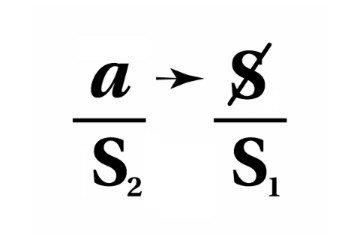
In the discourse of the university, the master functions as a formal guarantee for knowledge, thereby denying the ever-problematic division of the one who knows. In the end, this denial will be a failure. It is this knowledge that takes up the position of agent in the discourse of the university. If we turn the terms in the discourse of the master back a quarter, we obtain the discourse of the university as a regression of the discourse of the master, and as the inverse of the discourse of the hysteric. The agent is a ready-made knowlege, whereas the other is reduced to mere object, cause of desire: S2 –>a

The history of psychoanalysis illustrates this aim of the discourse of the university: Freud is reduced to a merer guarantee of a closed and well-established knowledge. The problematic aspect of his work is put aside, only his name remains as the master signifier necessary for the guarantee: “Made in …” The unifying aspect of this S1 already shows itself in the fact that post-Freudianism reduced Freud to a massive whole, a monolith without any internal dynamic. Certainly, the ‘evolution’ in his work was recognised, but only in the sense of a cumulative progression, which began before Freud (‘dynamic’ psychiatry), and resulted after him in the pinnacle known as Ego psychology …

This knowledge is presented as an organised and transparent unity which can be applied straight from the textbook. the hidden truth is that it can only function if one can guarantee it with a master-signifier.

In the position of the other, we find the lost object, the cause of desire. The relationship between this object and the signifying chain is structurally impossible: the object is precisely that element, Das Ding, which is beyond the signifier. As a result, the product of this discourse is a growing division of the subjuct: the more knowledge one uses to reach the object, the more one becomes divided between signifiers, and the further one moves away from home, that is, from the true cause of desire: S2–>a.

The product of this discourse demonstrates its failure since the result is nothing but the divided subject $. This is a consequence of the impossible relationship between S2 –>a. Knowledge does not yield jouissance, only a subject divided by a knowledge expressed in signifiers. This subject, $, can never be identified with an S1 because it would require a state of non-division. Between truth and product, the disjunction of impotence insists: S1//$.

Moreover, there is no relationship between the subject and the master-signifier in this discourse; the master is supposed to secrete signifiers without there being any relationship with his own subjectivity: S1//$. This illusion is behind the ‘objectivity’ required in classical science.