“Materialism, Subjectivity and the Outcome of French Philosophy” Cosmos and History: The Journal of Natural and Social Philosophy, 7:1 2011, 167-181.
Interview with Adrian Johnston by Michael Burns & Brian Smith (University of Dundee)
[…]
Now, this is not a criticism that’s unique to me. Both Žižek and Badiou have complained about this as well, and I think that there’s a middle path here that needs to be staked out. You have, for instance, the anti-scientism of much of 20th-century continental philosophy, especially with orientations like post-Marxist critical theory where a whole number of epistemological and ontological babies are thrown out with the bath water. The sciences are complicit with these very problematic, lamentable developments in the political and social registers, and therefore they have to be thoroughly critiqued, or we should find a way of sidelining them due to their complicity with a number of socio-political developments in the past century that are indeed to be bemoaned. I think that’s too ‘all or nothing.’
Our options seem to be either:
– an excessive over emphasis on the political that leads to a lot of very contentious, if not outright false, claims about disciplines like the sciences;
– or, at the other extreme, what I see in some of speculative realism, where issues in epistemology and ontology are dealt with in a vacuum.
Again, I come back to Hegel, with his manner of looking at all these things as interlinked moments of each other. He is not necessarily committed to some sort of organic system on the basis of that, but, nonetheless, one very much has the sense of the conjunctual status of these things, how they are co-articulated with each other; or, as Badiou would put it, philosophy as looking at the manner in which its conditions cross-resonate with one another and are involved in constellations of compossibility. That, for me, is a key middle path, whether one thinks of it in Hegelian or Badiouian terms, and I think that you see deviations on either side. Both speculative realism and, for instance, McDowell’s Pittsburgh Neo-Hegelianism, represent one kind of apolitical extreme, but something like Frankfurt School critical theory represents a deviation in the opposite direction where everything is political, and politics is so primary that it just blocks out of the picture very important philosophical considerations, again, of a more epistemological and ontological sort.
I see speculative realism as maybe an overreaction, in a certain way. It is an attempt to go back to being able to do philosophy without always conducting our thought under the shadow of things like the catastrophe of World War II, looking at rationally administered societies, etc.; we realize that, no, there are things here which can’t just be lumped in with those sets of considerations and quickly dismissed.
[…]
BS: So you’ve given us a negative critique of those positions. I want to move on to your positive construction of the subject. But I still want to talk about it in terms of reductionism. You are interested in the idea of the more than material subject as coming from a material base, but also at the same time it is influenced from above, where you draw on the symbolic in Lacan. So the subject is between these two sides. For you, is the subject a point of resistance against two potential reductive strategies: between a reduction to a material base, but also a similar kind of reduction, which would be to say that the subject is nothing more than a component of the social as a whole?
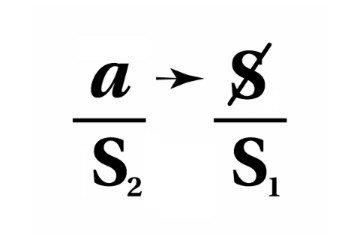
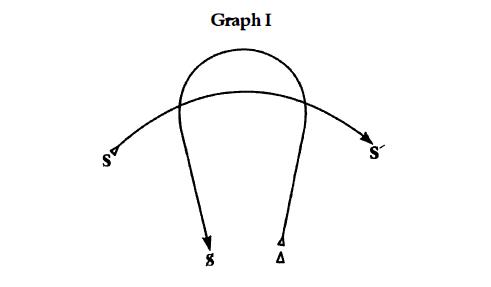
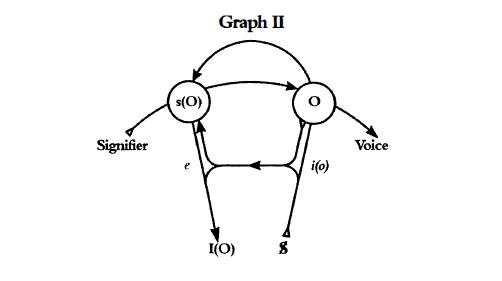
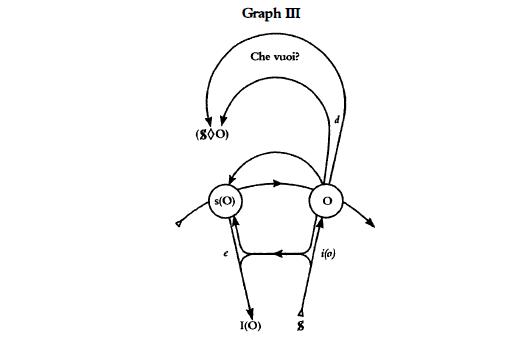
AJ: Absolutely. I fully endorse that reading of what I’m up to, or after, and it’s a wonderfully clear and succinct way of translating what in some of my earlier work I’ve talked about in Lacanian parlance in terms of the subject as occupying a point of overlap between points of inconsistency within the registers of the Real and the Symbolic, in that you have corresponding to Lacan’s barred big ‘O’ Other in terms of the internally inconsistent symbolic order, you also have at the same time this barred Real, which would be the idea of the internal inconsistency, in this case, picking up on only select facets of the Lacanian Real, that material an sich is itself inconsistent. It’s thanks to the meeting up of these two points of inconsistency that you have the fullest most robust sense of subjectivity that I think is very much at stake in Lacanian and post-Lacanian variants of materialism.
[…]
I think that one of the key differences is that part of what I’m after, and this is one of the things that I take from Žižek, is a commitment to the German Idealist traditon. If one wanted to paint in the broadest of broad brush strokes, one can say that the lowest common denominator of Kantian and post-Kantian German idealism is this notion of autonomous subjectivity, and, of course, this philosophical tradition sees itself as the cultural codification and consolidation of the French Revolution, among other things. This emphasis, then, on freedom as absolutely privileged is something which I very much agree with, and in this case, of course, there’s a real tension between myself and the background that I come out of (involving, among other things, German idealism as well as Žižek’s thought) and someone like Harman; one of the things that is clearly part of the agenda of the wing of speculative realism that he represents is this anti-anthropocentrism, this wanting to argue against human privilege: we’re not exceptional we’re just a certain weird set of objects amongst others and so on and so forth. Going back to Mike’s question, with which we began, I explicitly endorse the emphasis on the peculiarity of the human that goes back to Pico della Mirandola’s C15th Ode to the Dignity of Man and look at that as really the earliest precursor of the certain aspect of the theory of subjectivity that I wish to defend, and I do think that there is something odd, exceptional, whatever adjective you wish to use, about us. In fact, for me, we’re so strange that to do justice to the sorts of subjects that we are requires modifying our more global picture of being or nature, in order to consider ourselves as immanent to it.
That, or course, sets me very much at odds with the object-oriented camp in that I think that we are exceptional, and that we are exceptional in a way that has to do with freedom, with the fact that weird structures of reflexivity or recursion are very much an essential part of the structure of our subjectivity in a way in which prevents us then being collapsed down to a flat plane within which we’re just arrayed with other objects, with no acknowledgment or concession that there is some sort of fundamental difference-in-kind, or some sort of free-standing status that is established that makes a subject something which can’t just be considered an object. That, I think, is absolutely essential to my approach. This insistence, then, that autonomy is a key component of subjectivity, albeit an autonomy that is immanently emergent out of this level of being, or matter, or even objects, that then comes to establish itself as thereafter a sort of self-grounded auto-reflexively relating set of structures or processes, which you can’t do full justice to if you don’t recognize the kind of self-enclosure that is established in the constitution of the subject out of this pre- or non-subjective background–that to me is the big difference between myself and someone like Harman. As I might put it somewhat provocatively, I’m just not enough of a self-hating human. It’s what Freud would call moral masochism. I recently wrote an extended critique of Bill Connolly’s immanent naturalism and Jane Bennett’s vital materialism. With both of them, their ecologically-informed political stances drive their anti-humanism, their new version of what was already part of French philosophy with figures like Deleuze. For Hegelian reasons, I believe, as Hegel famously puts it in the1807 Phenomenology, one always has to think of substance also as subject, something that the Spinozism embraced by Connolly and Bennett deliberately avoids and forbids.
BS: That affirmation really reminds one of Sartre. I was wondering to what extent there would be an agreement between you and Sartre? When I read the Critique of Dialectical Reason, the main point that Sartre returns to endlessly throughout both volumes is how there is no group subject. The individual is never dissolved within a group. Would you agree with that, as Sartre does, in the sense that it’s just structurally impossible for that to happen or would you perhaps argue that it’s a real threat that the subject faces and has to resist?
AJ: I am initially tempted to try and find a way to have my cake and eat it too, with regards to the two alternatives that you propose. One thing I greatly appreciated about the event at Dundee was that Sartre came up several times. There was a recognition that though he had fallen out of fashion for quite some time among the Anglo-American world of scholars interested in French philosophy, where Sartre really was deemed passé in part because, I think, he was seen to be too close to more traditional conceptions of subjectivity, going back to the modern period, which he’s unapologetic about. His emphasis on radical freedom was considered to be too voluntarist, decisionist, etc. I’m delighted to see that interest in his work is reviving.
Badiou wants to combine the figures he identifies as his three French masters: Sartre, Althusser and Lacan–with Lacan already trying to combine aspects, arguably, of Sartre and Althusser, even if Lacan was not always aware of being up to that, in those terms. I’m very much in favour of struggling toward some way of integrating those two sides, and a lot of my own work is striving for that sort of rapprochement between what Sartre represents, on the one hand, and what Althusser represents, on the other.
Badiou does an admirable job of attempting to construct a theory of subjectivity at the intersection of those figures, and I appreciate some of the more Sartrean sides of him which often draw criticism. But, I’ve defended that part of his project in print. I am very sympathetic to the project Peter Hallward, another speaker at the Dundee event, is working out under the heading of «dialectical voluntarism,» which involves, among other things, reactivating Sartre and emphasizing the more Sartrean side of Badiou as crucial today. But, on the one hand, I think there are certain dimensions of subjectivity that are structurally irreducible to trans-individual group level phenomena or processes, in the way that you articulated it as per the first alternative of the two you presented me with in your question.
Also, I think that even if there’s something there that’s ineliminable, nevertheless, especially at the level of our experience of ourselves, in our practices, there can be the threat of, at least experientially, irreducibility being occluded, lost from view–a sense of dissolution or of being leveled down, reduced away, taken up without remainder into these non- or anti-individual matrices. I think that’s certainly a danger and a lot of how we position ourselves could be seen as a reaction to that threat. Even if it can’t, in the end, just do away with it structurally, it can so eclipse it from view that de facto it might as well, for all intents and purposes, be an elimination along those lines.
In the background are some dawning problems with different uses of the word «subject.» There’s a great deal of work to be done in terms of disambiguating certain terms that have been made to carry so much weight and have been loaded with so many different significations and connotations that sometimes we end up in debates with each other that are false debates, I think. For instance, the Badiou-verses-Žižek debate about subjectivity is a false conflict that’s based upon the fact that you have different parties using the word «subject» in different ways, and that if you start doing some labour of disambiguation you realize that there’s not necessarily the impasse or direct conflict that’s seen to be there, when we were fighting this semantic tug-of-war over this single word. So, this is as much a call to myself as to anyone else, since I use figures like Badiou and Žižek together, and draw on other resources and other traditions that speak of subjectivity. I do think we’re going to have to begin doing some labour to take that single word and tease out of it the different levels and layers that have been compressed into it. Hyper-compression has created, in some cases, false problems. We shouldn’t be spending our time mired in these false debates, but, instead, figuring out where the genuine bones of contention lie.
BS: So, for example, the way that you discuss the subject in Žižek and Lacan is closer to the individual in Badiou’s philosophy as opposed to the subject?
AJ: Yes, although both Slavoj and I are very adamant that one of the things that’s missing from Badiou is that you have the stark contrast between, on the one hand, the individual, the mere miserable human animal, and, on the other hand, you have the post-evental immortal subject that’s faithful to a given evental truth cause.
There’s this missing third dimension in Badiou, which would be what Žižek is after in many cases when he talks about subjectivity in terms of the Lacanian subject as a radicalization of the Freudian death drive, which itself captures what the German idealists were after, especially Hegel, when speaking of negativity. For both Žižek and myself there’s a lot that’s involved in this third dimension, which makes possible the shift from the mere creature wrapped up in interests of self-preservation, of pleasure, etc., and the possibility of what Badiou speaks of as subjectivity, this thorough-going fidelity that breaks with that animal background. Staking out that middle ground as what Žižek has called a vanishing mediator between these different dimensions is important to me.
[…]
Brassier is one of my closest fellow travellers in that both of us are adamant that modern science is not something to be held warily at arms length or even aggressively checked externally from the standpoint of philosophy; he and I agree that, instead, we need to, as many of the analytics have done, embrace the sciences, really accept that they are a fundamental part of our Weltanschauung and seek in them resources as opposed to problematic points to be resisted, criticized, rejected, etc. For me, the balancing act of my position, where I think it represents an alternative, is that, on the one hand, it involves concurring with Brassier that there is something fundamental about the sciences and that the progress we make in those disciplines cannot be ignored save for at the price of some kind of irresponsible intellectual bankruptcy; but, on the other hand, I don’t think that those sciences necessarily produce, in fact I think they point in the opposite direction, they don’t produce a reductive picture where everything can be explained from within the sciences themselves. I think that the sciences are showing how you can scientifically explain why everything can’t be explained scientifically, as it were. This goes back to that Hegelian phenomenological gesture in the section on ‘Observing Reason’ in the Phenomenology of Spirit that the sciences produce out of themselves, on their own grounds, an internal delimitation of their explanatory jurisdictions. You can say that you have an empirical explanatory ground for why an empirical experimental approach can’t account for everything that you’re after, which is different from just dogmatically insisting what ultimately would have to come down to a kind of a priori theoretical dogmatism, a sort that I don’t think is very defensible, for example, simply saying,“No, there’s this dimension which can’t be reduced down to that level and that’s it.” I think that to have a scientific account for why you can’t reduce everything to the sciences is a way to get what you want, for instance, to keep what, I will concede, for instance, religion, various kinds of theological approaches are describing, things that are there, I think, albeit in a very distorted form or in a kind of dualistic or anti-reductivitst stance. I think you can get all of that without having to fall back on what, in my view, are very shaky, a priori, foot-stamping, fist-banging sorts of postulates or insistences that are threatened by the sciences. My position sounds like having your cake and eating it too, but I do think that there are good scientific supports for the idea that a subject that is not itself capturable by the sciences emerges out of what the sciences are looking at, and I think that those disciplines themselves are providing the resources for that account, which I seek to harness in this very Hegelian way too, of stepping back and just allowing those disciplines to unfold their own resources and then, as Hegel put it, recollecting the results. But, of course, the picture that emerges is different from what a lot of people who aren’t sympathetic to this approach would think, which is that in the end you’re still going to fall into something like eliminative, or reductive materialism. I don’t think so.
BS: So, you think, in a sense, this divergence that you get between the subject’s actual behaviour and our explanation of that behaviour, via the best current scientific model, can be given a positive account? We are not limited to a simple negative account of qthis divergence, in terms of the weaknesses or flaws of our current, incomplete, science? This irreducibility can be accounted for in a positive sense, and that’s the role of philosophy, to try and give a positive account of the way in which science and subjectivity will never completely coincide and merge?
AJ: Absolutely.Even though Badiou and I disagree about the nature and status of the sciences and scientificity, nonetheless, in terms of certain aspects of my approach, I’m deeply indebted to him. I come back to this idea of philosophy’s role as putting certain of its conditions in cross-resonating relationship with each other and exploring their compossibility, and so one of the features of my work that sometimes gets more attention than others is the fact that I draw on resources from the natural sciences generally, and the life sciences especially. For me, it’s never just a matter of fixating upon those disciplines, it’s about trying to see how those disciplines become self-sundering, reaching this point where they’re beginning to demarcate their own boundaries. That calls for work from other sides too., How are certain resources from philosophy, psychoanalysis, political theory, etc. necessarily part of this picture as well, and how do we then start constructing the links between those different domains and developments? That’s very much what I’m after. There are important contributions that, for example, a Lacanian psychoanalytic framework brings. It’s not that we have to, in a one-way fashion, rework Lacanian psychoanalysis, rework the various philosophers and philosophical orientations that I’m talking about, due to these sciences. It’s also an issue of asking: how do we have to modify these sciences, or how would their research programmes have to alter, in light of key contributions from philosophy and psychoanalysis? The sciences have, in some cases, vindicated us, and it’s not just a matter of us having to make concessions to them; that’s part of the rhetoric I was deploying at the end of my talk last year in Dundee. The dialectical sword slices both ways. The sciences have reached the point where they are going to have to accept that their interpretations of their data and their research programmes require significant modification in light of the contributions, for the past two centuries, we’ve been making on the philosophical side of things.
BS: Isn’t one of the deepest ways in which that comes out is that for any reductive programme in science, and some other traditional approaches in science, there is the fundamental belief that the Real, or Nature, is in some sense consistent. Whereas what you’ve always been talking about, in the psychoanalytic aspect of your work, is precisely that the Real, or Nature, or whatever you want to call it, is not consistent, and it’s that which is going to be the fundamental shift from the point of view of science in its relation to philosophy.
AJ: Yes, and there’s a lot of work to be done in this regard. In addition to McDowell, one of the other key figures who features in a piece I recently finished is the London School of Economics’ philosopher of science Nancy Cartwright. I think her work is very important. She’s published a number of books, but the text that is really invaluable for my purposes, although it builds on earlier work of hers, is the 1999 book The Dappled World: A Study in the Boundaries of Science. On the basis of considerations internal to much more analytically orientated philosophy of science, she argues for a vision of Nature as a de-totalized jumble of constituents that are not bound together by some sort of seamless underlying fundamental unity. She pleads for that very much on strict philosophy of science grounds, claiming that if you’re an empiricist and realist, then the weight of the evidence should lead you to gamble in the opposite direction, not to invest your faith in what is a metaphysical article of faith regarding the ultimate unity, homogeneity, and seamlessness of reality, its reducibility to basic fundamental laws. Keep in mind that this is an article of faith that in practice is unprovable, even if all humanity for the rest of our existence were to spend its time crunching data; we would never get to the point where we would be able to take just a one-minute slice of the behavior of a mid-sized perceivable organism, like another human being or even a smaller animal, to reduce everything down to, say, the quantum constituents of this organism, and then to show that there’s a seamless linkage that flows from the base up to the more complex aggregate levels that proves reductionism is right. Reductionism is a metaphysical article of faith, it’s a gamble, it’s a hypothesis. Even though a lot people want to be realist about it, at it’s strongest it’s just what Kant called a regulative ideal, and what he calls specifically in the Prolegomena the cosmological idea of reason as a regulative ideal for natural scientific practice. It might be a good heuristic device and I think it does have its value, at that level, but I think that one shouldn’t mistake a good heuristic device for a solid basis for an ontology. I think we’re much closer to what Cartwright calls “the dappled world” or what you point to, for which I use Lacanian and Badiouian language, when I speak of this not-One, non-All nature as our best picture of nature. I think that there are both psychoanalytic and philosophy of science considerations that show that there is better evidence for Cartwright’s dappled world, or for the de-totalized real of Lacan and Badiou. There’s even better evidence just looking at the state of the sciences and their historical achievements and lack of achievements than there is for the old reductivist dogma.
BS: Isn’t this the reversal of the standard interpretation of the consequences of Gödel’s incompleteness theorems? The orthodox response has been to affirm consistency at the expense of completeness, as opposed to affirming completeness at the expense of consistency, due, mainly, to equating inconsistency with incoherence?
AJ: That’s right. A colleague of mine here, Paul Livingston, who is a person who does very interesting cross tradition work between the analytic and continental, has a book coming out entitled The Politics of Logic. The two main figures he discusses are Wittgenstein and Badiou. In addressing Badiou, Livingston goes back to how Gödel condenses in a very clear way this fundamental set of alternatives involving consistency: you have consistency but at the price of completeness. The alternative that you point to he very clearly lays out. We’ve had conversations about this, and he even noticed in some of my earlier work I run the terms «inconsistency» and «incompleteness» together, and that’s something I’m in the process of rethinking in the light of his work, because he did a lot of work in mathematics and analytical philosophy and logic, and he’s now turned his attention to Badiou. If you’re also already sensitive to these issues in terms of these sets of alternatives that are forced upon us with a real reckoning with Gödel, I think that this work by Livingston will be quite good. Livingston quite rightly identified that I tend to go for exactly what you were talking about there: a totality that is an inconsistent totality. That’s very much what I’m after, and, of course, it’s what you have in Hegel and Žižek as well, I think; you can see a definite chaining together of positions in terms of a chain of equivalence that represents something fundamental to our approaches despite whatever other differences you might isolate.
MB: We’re curious to ask where you see philosophy going in the next few years, with particular reference to how both European and Anglo-American philosophers are returning to Hegel and idealism in general, as a general resource. What do you see as the crucial philosophical questions for the current generation?
AJ: I’ve got to say I think this is one of the most exciting times to be in philosophy, despite, of course, the job market. You have the combination of absolutely brutal practical circumstances of the most depressing sort, but simultaneously some of the most promising work being done alongside this, in these circumstances. As critical as I am, for instance, of certain aspects of speculative realism, or other recent orientations, nonetheless I’m delighted to see these things happening. There’s a greater awareness of serious problems that were eclipsed from view due to certain dominant trends and obsessions in much of what counted for continental philosophy, especially in the Anglo-American world, throughout a good portion of the middle to late 20th century.
In large part thanks to Badiou and Žižek, there has been a really interesting break with the phenomenological and post-phenomenological developments that held such sway, and were so glaringly front and centre in terms of English-speaking work, in continental philosophy. What’s followed holds out the promise for a number of different new alliances between the kind of philosophical traditions we come out of and fields such as the sciences, but also, of course, analytic philosophy. One of the things that causes the analytic and continental traditions to separate from each other and become opposed stances is the disputed status of Hegel’s philosophy. In the beginning of the 20th century you have Russell and company in reaction to the excesses of late 19th century British Hegelianism: they reject Hegel completely, utterly break with him, in the same way that Descartes did with the scholastics. For most analytic philosophers who are around even today, their history of philosophy training involved going as far as P. F. Strawson’s Kant and then leaping over everything for about a century and landing with Frege, Russell, and Wittgenstein at the start of the 20th century, maybe a little Meinong before that, but that’s it. And, of course, Hegel was cut out of that picture. For all my reservations about Pittsburgh-style Neo-Hegelianism, I see it as one of the most promising developments in terms of overcoming analytical/continental divides involving using Hegel as providing a lingua franca in which we can begin having conversations with each other that we haven’t been able to have up until this point, given that the continental tradition is so deeply indebted to Hegel and to what he opens up in a number of ways. I’m very interested in reaching out and engaging with figures on the analytic side. One of the problems I have with a lot of speculative realism is, again, the people interested in it have not had any exposure or any serious sustained exposure to the analytic tradition, and therefore fail to realize what resources are out there in terms of people who’ve been working on the realism/anti-realism problem, issues having to do with scientific law and the status of causality, etc. You have just this wealth of material that’s yet to be fully tapped and that would allow for a lot of cross-fertilization.
One of the things I hope that’s going to happen is that the younger generation of people working in continental philosophy will be able to begin dissolving these long-standing disciplinary divides, not just by simply continuing to present the material they’ve been doing, but dipping into the wealth of material, the resources that are there, for instance, in the analytic tradition. That idea of bringing the strengths of both sides together is one thing I’m very hopeful for and that I’m now beginning to try to do myself in a more sustained fashion.
MB: Thus far your own work and your two most recent manuscripts have been focused on Zizek and Badiou, and I think something that’s differentiated your work from other people writing on Zizek and Badiou is that in both of these works a position seems to emerge that’s neither Zizek or Badiou but rather your own position and your own sort of constructive work. So where is your research and your project going, and what can we expect to see in the future from Adrian Johnston?
AJ: At this point, I’m writing the second volume of a two-volume materialism project. The first volume is entitled Alain Badiou and the Outcome of Contemporary French Philosophy: From Lacan to Meillassoux, casting Badiou in the position of Feuerbach à la Engels’ 1888 Ludwig Feuerbach and the End of Classical German Philosophy. Volume one is a kind of ground-clearing operation. I hope I’ve already settled my debts with Žižek, who, of course, I feel very close to in certain ways. But there are other figures, who I consider to be intellectual neighbours in relation to whom I feel very proximate and yet disagree stringently with on certain key points; these others are Lacan, Badiou, and Meillassoux. So, I settle my differences with them in the first volume as a way to set up the second volume, which is where I delineate what I’m after in its fullest form in terms of what I call transcendental materialism.
It will probably take me about another year to complete the second volume. Another forthcoming project is this book I co-authored with Catherine Malabou, which is now entitled Self and Emotional Life: Merging Philosophy, Psychoanalysis, and Neurobiology. My portion of that involves looking at the vexing Freudian-Lacanian problem of affects in relation to the unconscious and re-evaluating that in light of the resources of contemporary affective neuroscience. Those are the things that are on the chopping block.